
LED Strip Beam Angles & Optics: Lenses That Turn a Line Into a Controlled Beam
- 2026-09-30 17:39
- /
- Arraystar LED
Beam angle is the most under-specified parameter in linear lighting, and it determines almost everything about whether light ends up where you want it - a narrow beam rakes texture and throws far, a wide beam blankets surfaces, and asymmetric optics redirect light onto walls. Buying strip or wall washers by wattage or density without choosing the optic leaves the result to chance, producing glare, scalloping or light on the floor instead of the surface. Understand beam angles, lens types and aiming geometry and you can predict the lit result before installing.
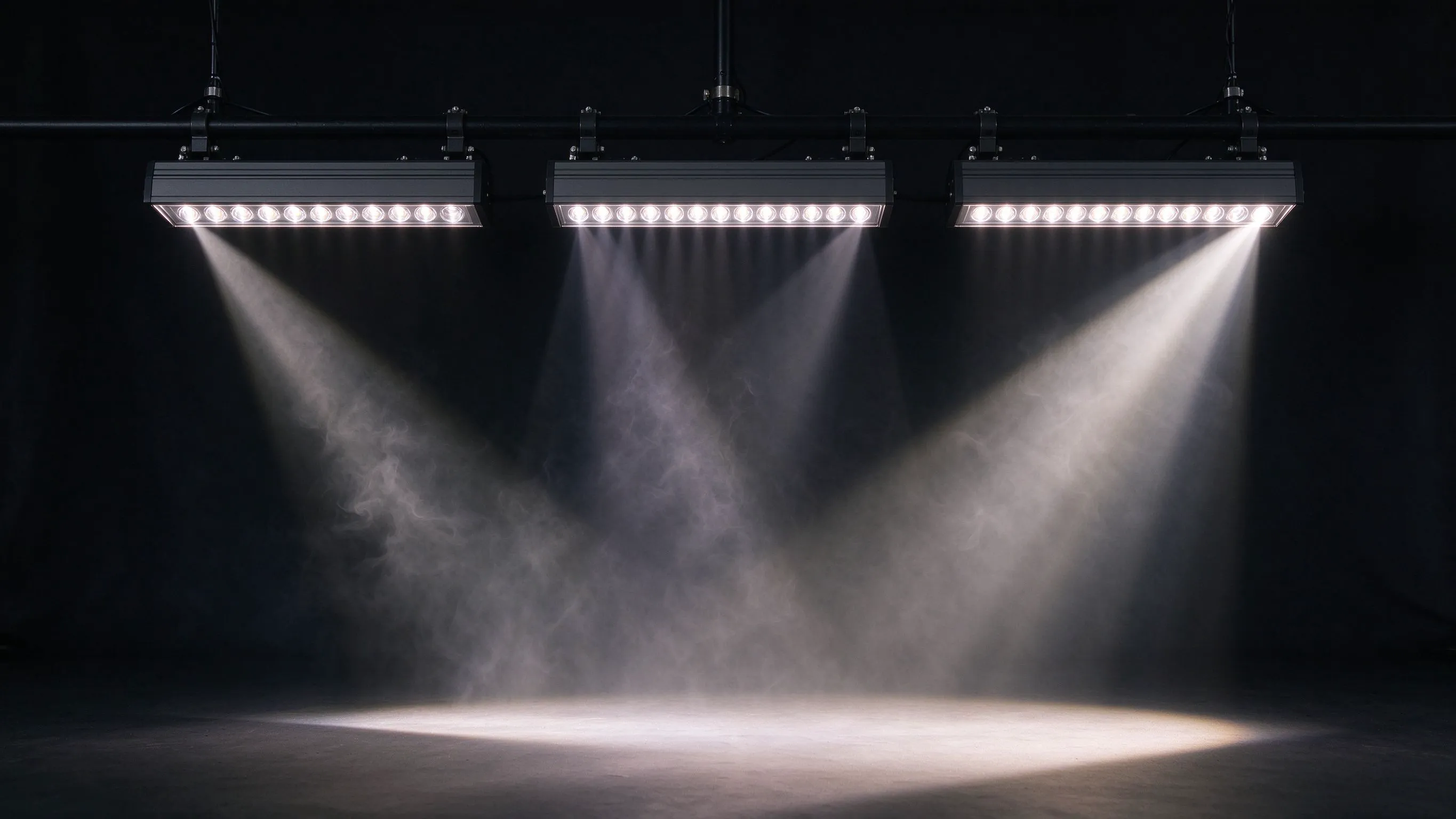
Beam Angle Defines Where the Light Goes
Beam angle is the spread of the light cone (typically measured between the points at 50% peak intensity). A narrow beam concentrates light for distance and drama; a wide beam spreads it for close even coverage. The same LED source with different lenses produces completely different lighting results, which is why optic choice matters as much as lumen count.
In linear and wall-washer lighting the optics also control direction - symmetric lenses spread evenly around the fixture, while asymmetric lenses aim the bulk of the light to one side (onto a wall or facade). Choosing beam angle and symmetry is how you put photons on the intended surface instead of wasting them.
Narrow Beams for Grazing, Distance and Accent
Narrow beams (roughly 15-30 degrees) keep light concentrated, so they throw far and rake across textured surfaces to reveal stone, brick and concrete grain. They're the choice for tall wall grazing, facade columns, accenting specific features and any application where the fixture is far from the target or texture drama is wanted.
The top-bend flex wall washer with its shaped narrow/raking optic is used close to tall textured walls to throw light up the surface and emphasize material. The same family with a different optic covers wider washing - the product line offers beam variants, which is why you specify the optic for the specific grazing vs washing job rather than ordering 'a wall washer' generically.
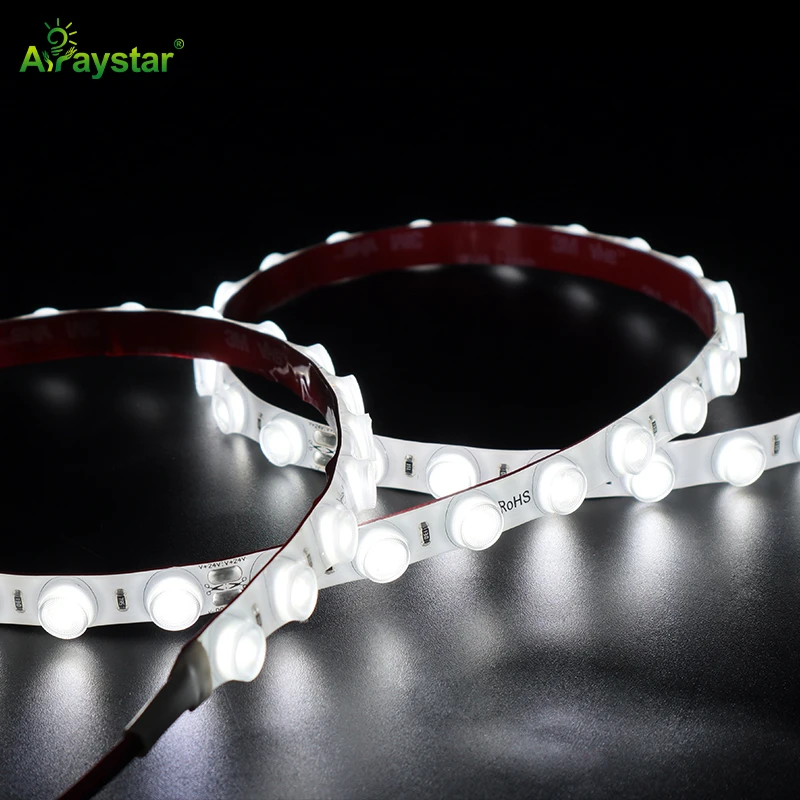
Beam angles and their linear-lighting applications.
| Beam/optic | Spread | Typical use |
|---|---|---|
| Narrow (~15-30 deg) | Concentrated, long throw | Tall grazing, columns, accent, distance |
| Medium (~30-60 deg) | Balanced | General wall washing, shelves |
| Wide/diffuse (>60 deg) | Broad even blanket | Close surfaces, light boxes, coves |
| Asymmetric | Aimed to one side | Wall/facade washing, shelves |
| 3D-conformable | Tracks curves | Curved/3D facades and forms |
Wide and Asymmetric Beams for Even Washing
Wide beams and diffuse optics spread light for close, even coverage - coves, light boxes, under-cabinet and broad wall washing where you want no hot spots. Asymmetric lenses are the specialist tool for vertical surfaces: instead of wasting half the light symmetrically, they redirect and shape it toward the wall with a distribution designed for even top-to-bottom coverage.
A second top-bend flex wall washer variant configured with a wider/asymmetric optic blankets broad wall sections evenly, and is the default for smooth wall washing and facade coverage where texture raking isn't the goal. The asymmetric distribution compensates for geometry so the bottom of the wall isn't over-lit and the top isn't dark.
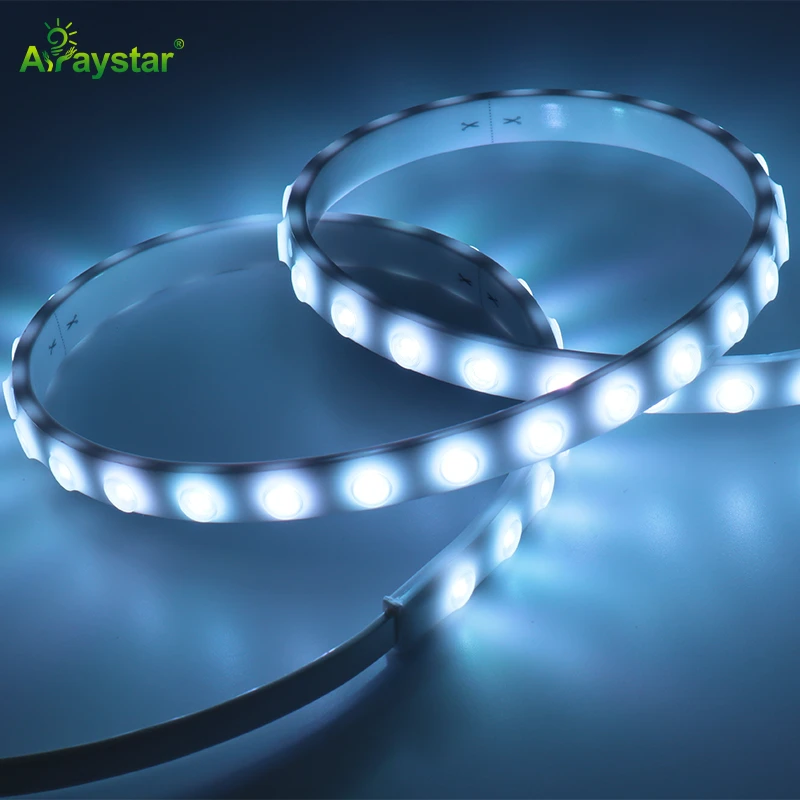
3D Optics for Curved and Free-Form Surfaces
On curved and three-dimensional facades, a fixed straight optic can't maintain its aim as the surface bends, so coverage breaks into bright and dead zones. 3D-bend wall washers combine conformable bodies with optics that keep pointing at the surface as the fixture follows the form.
The 3D free-bend flex wall washer tracks undulating and sculptural facades, columns and organic forms, maintaining the chosen beam relationship to the surface around the curves. It's the optic-plus-form solution for architecture that isn't flat - the beam angle stays correct even though the fixture itself is bending in multiple axes.
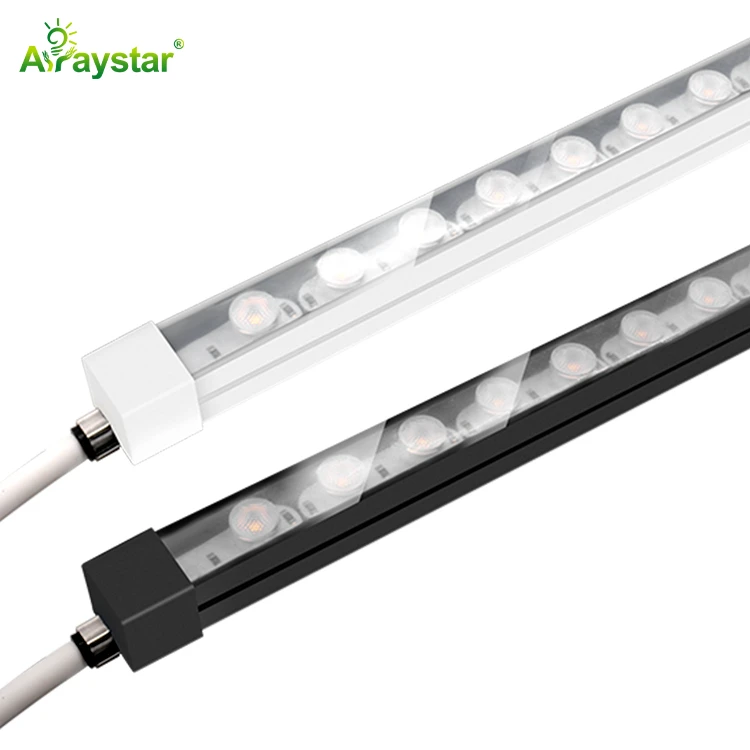
Aiming, Setback and Predicting the Result
- Pick beam by distance/texture: narrow for far/raking, wide for close/even.
- Use asymmetric optics for vertical walls so light lands on the surface.
- Set setback and tilt to the beam spread - test coverage before final fixing.
- Keep spacing consistent to avoid scalloping and overlap gaps.
- For curves use 3D-bend optics that re-aim as the fixture bends.
- Shield narrow bright sources from direct view to control glare.
The practical method: determine the target surface and its distance, choose narrow/medium/wide and symmetric/asymmetric accordingly, set the fixture setback and tilt to that beam, and test on site - the beam angle predicts the coverage cone, so a few minutes of aiming beats hours of wondering why the wall is patchy. Optics are the part of linear lighting that turns lumens into the effect you actually wanted.
Recommended Products
Frequently Asked Questions
What beam angle do I need for wall grazing or washing?
Use a narrow beam (~15-30 degrees) for grazing close to tall textured walls and columns to rake the surface and throw far; use a wider beam for close even wall washing and broad coverage. Choose asymmetric optics for vertical walls so light is aimed onto the surface evenly top to bottom rather than wasted symmetrically.
What does an asymmetric wall-washer lens do?
It redirects and shapes most of the light to one side - toward the wall or facade - instead of spreading symmetrically (half onto the floor/room), with a distribution designed to compensate for distance so the wall is evenly lit from top to bottom with less glare and waste. It's the correct optic for lighting vertical surfaces.
What happens if I use the wrong beam angle?
A beam that's too narrow from close range creates hot spots and scalloping; too wide from far away leaves the surface dim and under-lit; symmetric optics on a wall waste light onto the floor and leave the top dark. Match beam spread to distance and use asymmetric lenses for vertical surfaces, then set setback and tilt on site.
How do you keep beam angle correct on a curved facade?
Use a 3D free-bend flex wall washer that bends in multiple axes and keeps its optics aimed at the surface as it follows the curve. A straight fixed optic changes its angle as the facade bends, producing bright and dead patches; the conformable 3D fixture maintains the beam relationship around the whole form.
Is beam angle or lumen count more important for linear lighting?
They work together, but beam angle determines whether the lumens reach the target at all - a high-lumen fixture with the wrong optic wastes light, glares and leaves the surface patchy. Choose the optic (narrow/wide, symmetric/asymmetric) for the surface and distance first, then size lumens to the brightness you need within that beam.
Need help with your LED project?
Get factory-direct pricing, free samples and engineering support within 24 hours.
Email: info@arraystarled.com | Phone: +86-0755-2103-6746 | WhatsApp: 0086 1581 8514 077
Need to size your power supply? Use our LED Strip Power Calculator to find the right driver in seconds.







