Matching Neon Flex Colour Across Multiple Reels on One Sign
- 2026-10-28 10:03
- /
- Arraystar LED
Mixing two reels of neon flex on one long sign almost always shows a brightness or colour step where the lot changes. I now order all reels for a sign from the same lot number, match them side by side before install, and never open a replacement reel on site without a comparison.

Why two reels do not match
LEDs are binned: each reel comes from a batch that shares a loose target for colour temperature and brightness. Across batches, the white point can drift 100–200K and the brightness a few percent. On a short 3 m run the eye forgives it, but on a 10 m sign with the reels joined end to end, that step sits right in the middle of the wall and everyone sees it. I have had clients point at the join within ten seconds of switch-on. The drift is not a defect; it is normal bin spread, which is why ordering from one lot is the only reliable control.
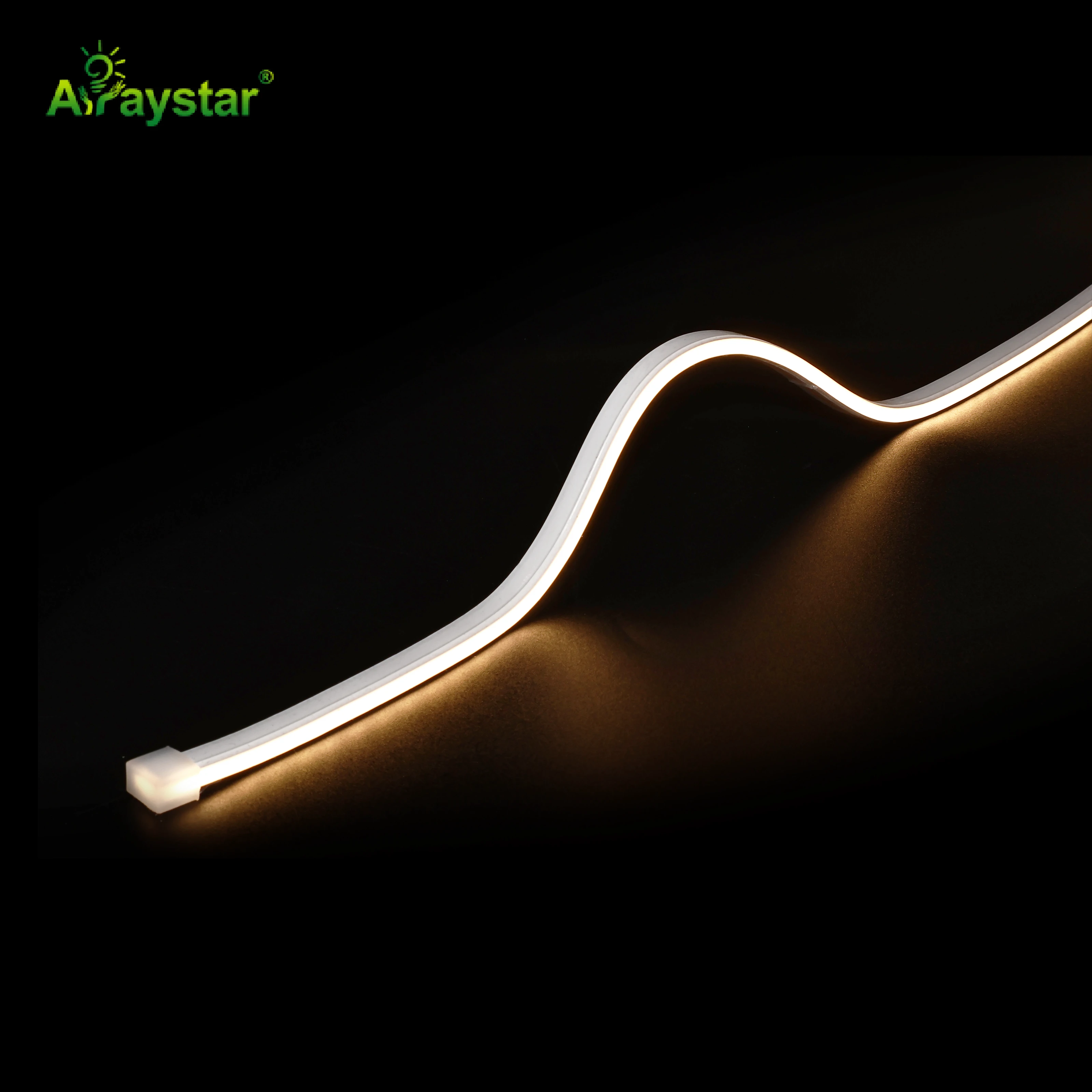
Binning and lot numbers in practice
- Order every reel for one sign from a single lot; ask the supplier to confirm the lot numbers on the packing list.
- Unbox and lay the reels side by side at the same 24V drive and the same distance, then compare them on a neutral bench.
- Run them for 10–15 minutes before judging; LEDs shift slightly as they warm up.
- Keep the lot labels; if a reel is damaged later, the replacement is ordered against that lot, not the model alone.
The lot number is the control. A reel of the exact same model from a different production week can read visibly warmer or dimmer, and that is not a defect — it is normal bin spread. The slim 2×6 mm and mini profiles I use for lettering are especially sensitive because the light source is small and the eye is close. I compare on a neutral grey bench, not a white or coloured wall, because the background shifts the apparent white point.
Where to place the join on purpose
Plan the join where the eye does not rest, not in the middle of a straight letter.
| Sign length | Reel plan | Join placement | Risk |
|---|---|---|---|
| Under 5 m | One reel | No join needed | Lowest |
| 5–10 m | Two same-lot reels | At a bend or corner | Low |
| Over 10 m | Multiple same-lot reels | At letter transitions | Manageable |
When a join is unavoidable, I put it at a corner, a bend, or a gap between letters — somewhere the eye does not hold a straight line. A step at a letter break barely registers; a step in the middle of a long horizontal stroke is a defect. This is why routing drawings matter: I mark the joins on the layout before the reel is even cut. I once put a join in the middle of a 4 m horizontal stroke because the reel ran out, and the client noticed it from across the lobby; it never happens again.
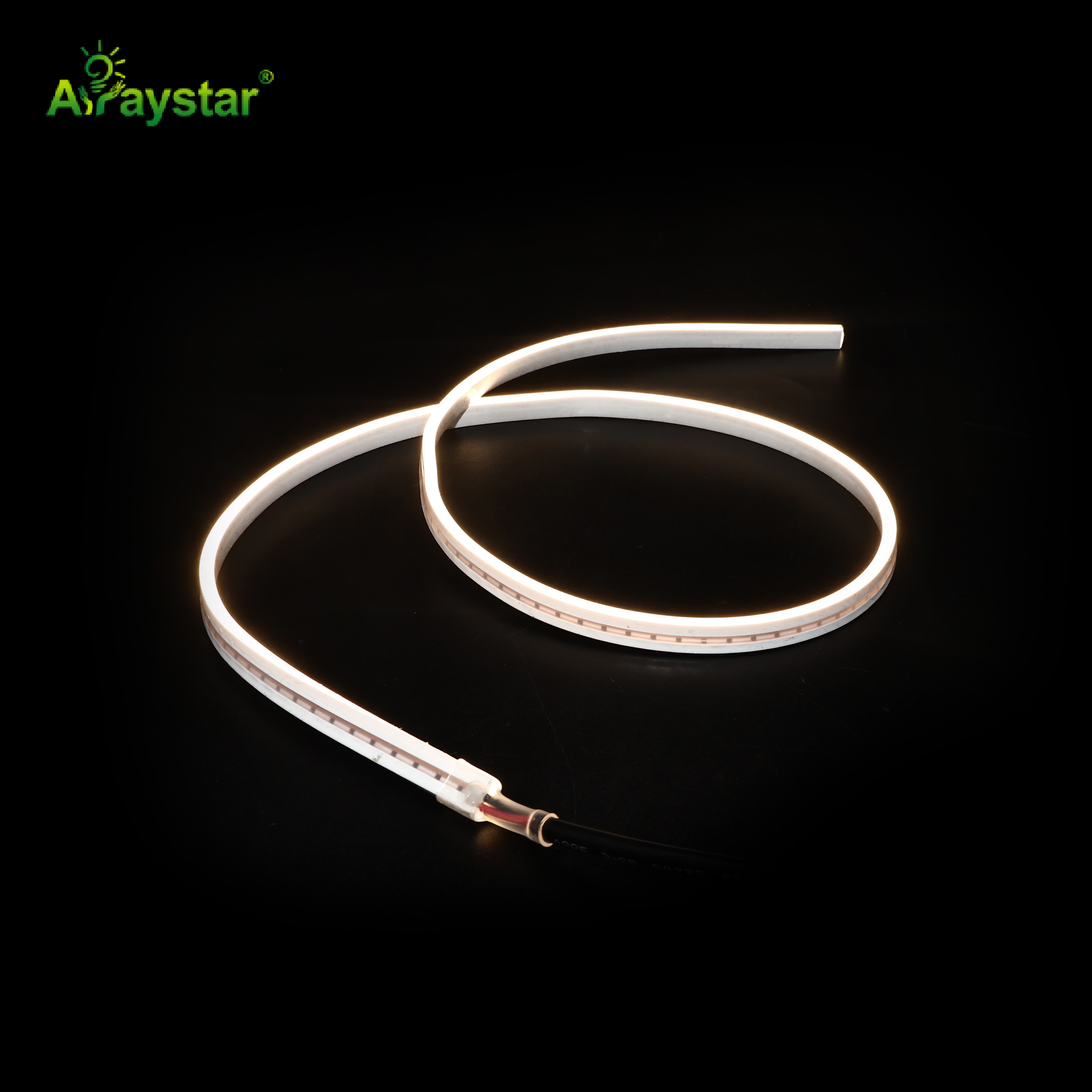
Driver drive that keeps brightness even
Even with matched reels, a far-end voltage dip makes the last metre dimmer. I keep the drive voltage at 24V at the flex end, budget 0.3–0.5V drop per metre on the feed, and feed long runs from the centre or add a second injection point. A consistent 23.5–24.5V along the whole run hides the small bin spread; an uneven voltage draws attention to it. The IP68 TPU strip in this range runs cleanly at the same drive, so the difference between reels comes down to lot, not power. Worked example: on a 12 m sign I feed from the centre, so each half sees a 6 m drop of about 0.4 V, keeping both ends at 23.6 V instead of letting one end sag to 23 V.
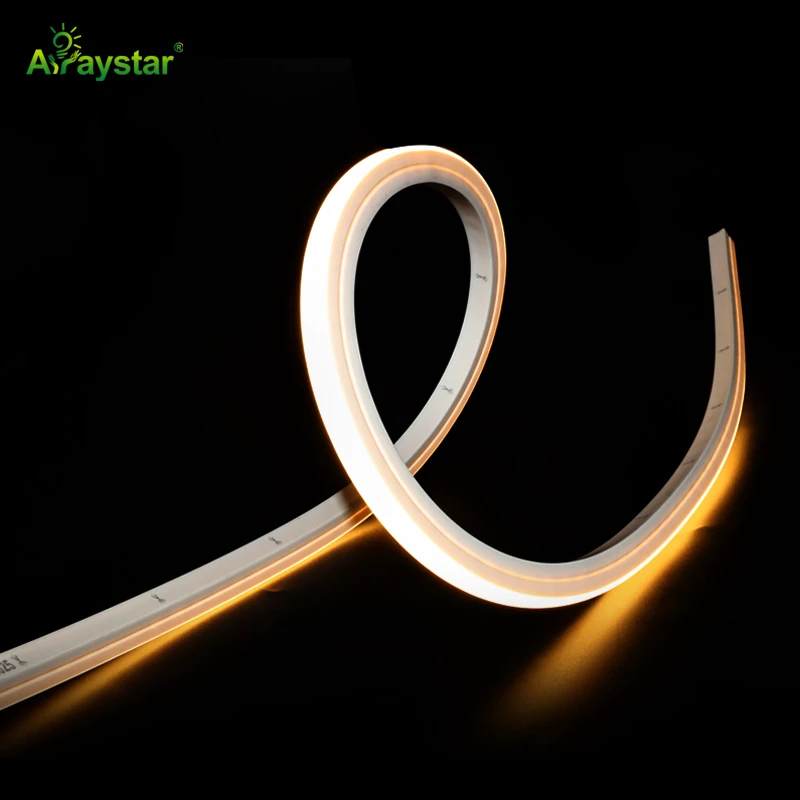
What I tell the client up front
I set expectations before the order: a long sign uses multiple reels, we will match them from one lot, and a near-invisible join sits at a corner. If the client later adds a reel from a different batch, I warn them it may not match and I keep a spare of the original lot on the shelf. That pre-warning saves the awkward conversation when a five-year-old sign finally needs a patch. I also tell them the join will be at a letter break, not in the middle of a stroke, so they are not surprised on switch-on night.
One habit that avoids most step problems entirely is ordering 10–15% extra reel for every long sign and holding it as a matched-lot spare. A 10 m sign ordered as 11 m of one lot leaves a spare metre in the van; if a segment is damaged in year two, the patch comes from that same lot and reads invisible. Buying the exact length with no spare is the false economy that forces a mismatched repair later. I also photograph the bench comparison at install, so if anyone asks why two reels were chosen, there is a record of the matched batch.
Recommended Products
Frequently Asked Questions
What is LED bin spread in neon flex?
It is the allowed variation in colour temperature and brightness between production batches, typically 100–200K and a few percent. Two reels from different lots can look slightly off next to each other.
How do I order neon flex so reels match?
Order all reels for one sign from the same lot, and ask the supplier to confirm the lot numbers on the packing list. Keep the labels for future replacement.
Where should I join two reels on a sign?
At a corner, bend or gap between letters. A join placed in the middle of a long straight stroke shows a visible step; the same join at a letter break barely registers.
Why does the far end of my sign look dimmer?
Voltage drop along the feed. Budget 0.3–0.5V per metre, keep the flex end at 23.5–24.5V, and centre-feed or add an injection point on long runs.
Should I compare reels before installing?
Yes. Lay them side by side on a neutral bench at the same 24V drive, run them 10–15 minutes until warm, and compare. Reject a reel that steps out before it goes up on the wall.
Need help with your LED project?
Get factory-direct pricing, free samples and engineering support within 24 hours.
Email: info@arraystarled.com | Phone: +86-0755-2103-6746 | WhatsApp: 0086 1581 8514 077
Need to size your power supply? Use our LED Strip Power Calculator to find the right driver in seconds.