Neon Flex on Hot Rooftop Soffits: UV and Heat Survival
- 2026-10-28 10:02
- /
- Arraystar LED
A dark rooftop soffit can hold a surface temperature near 70°C under midday sun, and that is exactly where cheap PVC neon jacket goes soft, chalky and brittle within a single summer. After a couple of blown soffit runs, I now specify silicone-jacketed neon flex for any sun-baked horizontal fascia, and I derate the driver before I size the wire.
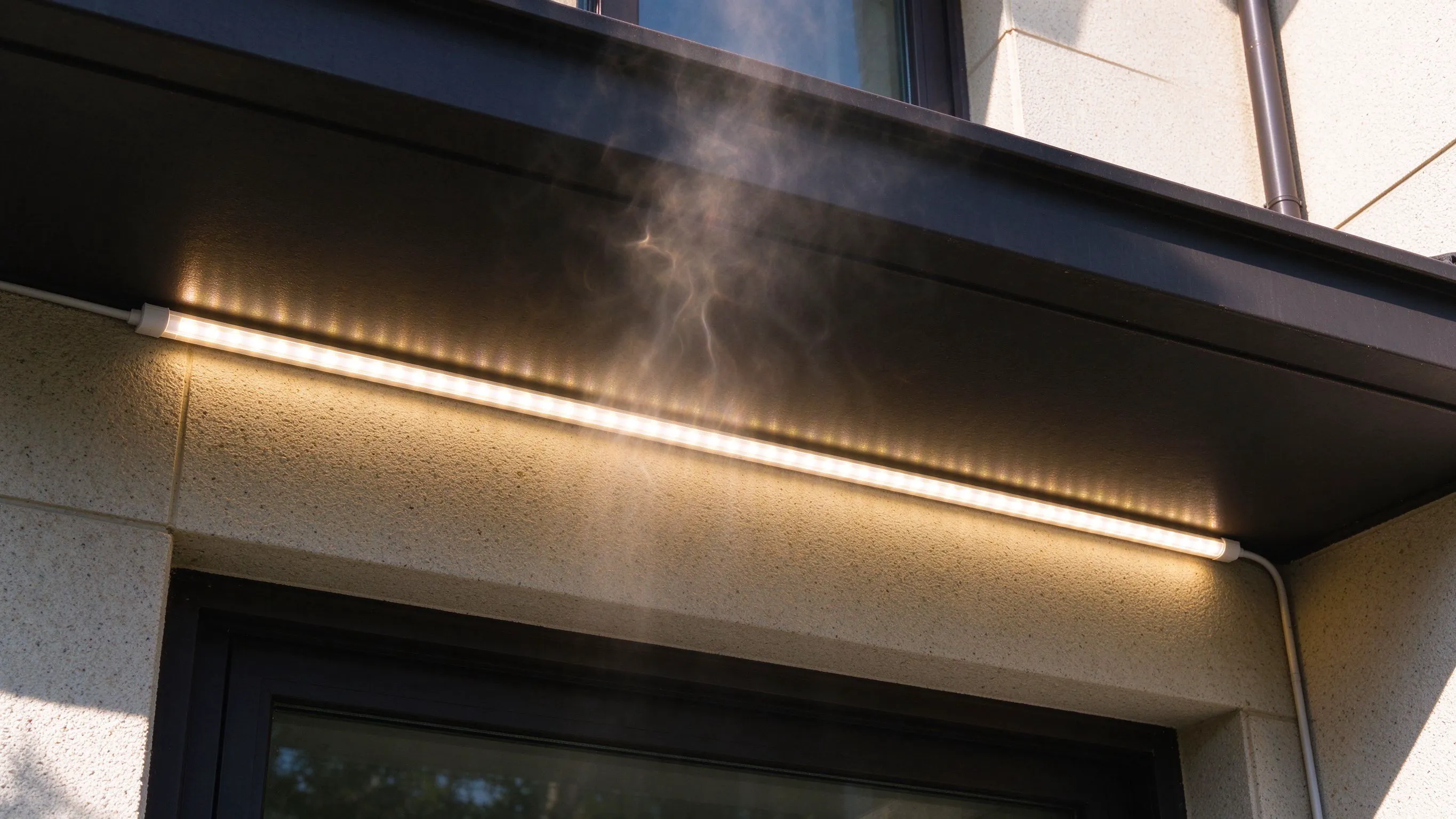
What a hot soffit actually does to neon flex
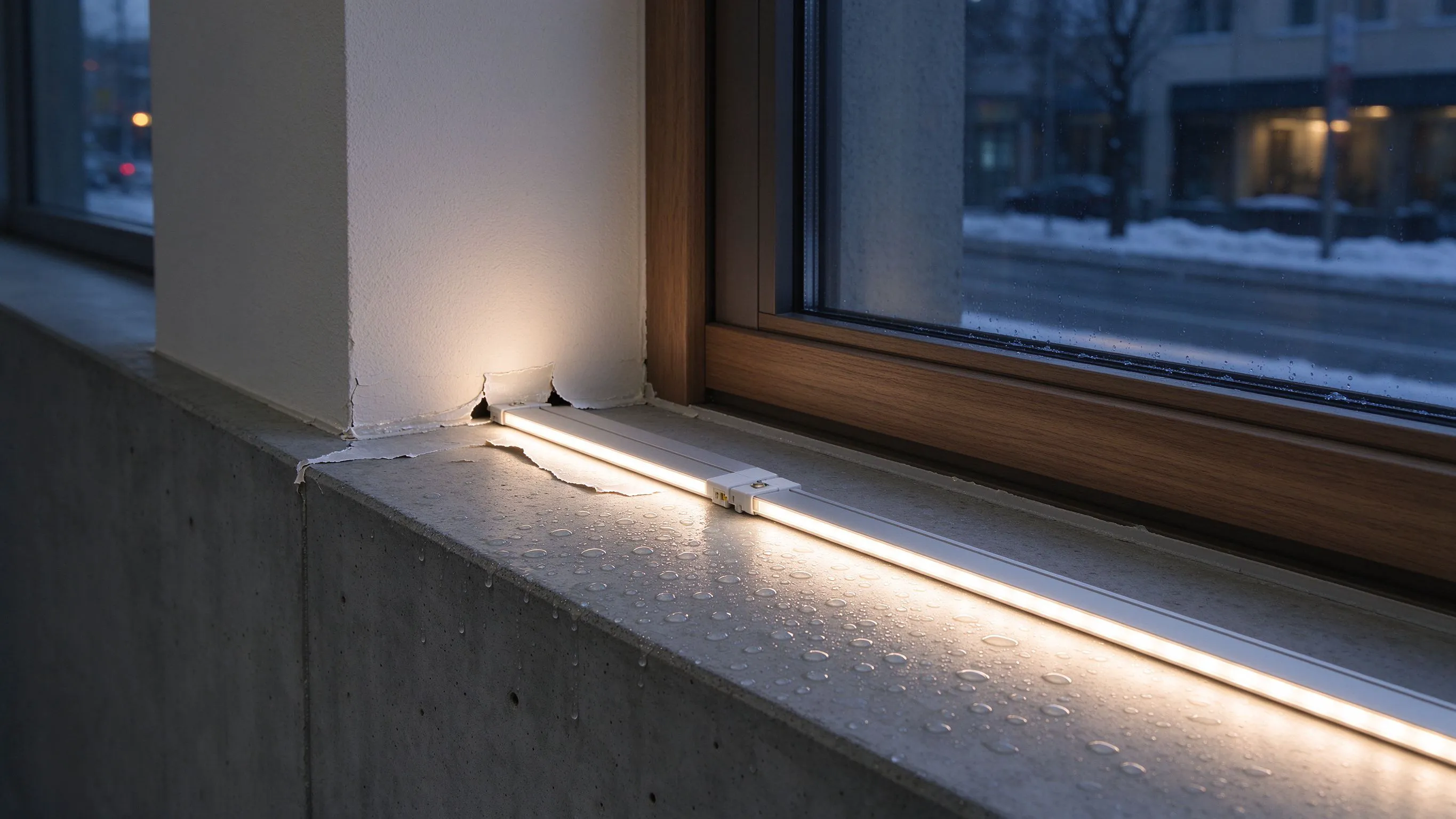
A black or dark-grey soffit board absorbs solar radiation and holds the heat because barely any air moves under the overhang. I have measured surface readings between 65°C and 75°C on a flat-roof soffit in July, and the neon jacket sitting directly on that board runs only a few degrees cooler. I check the surface with a cheap infrared gun at about 2 pm, because the air temperature on the ladder means nothing next to the board itself; on a black PVC soffit I have seen 72°C while the air read 31°C. PVC outer jacket begins to soften around 60°C, and UV ageing chalks the surface, which lets moisture crack into the conductors over the following winter. The result is a run that looks perfectly fine in spring and starts dropping segments by August, usually first at the far end where voltage is lowest.
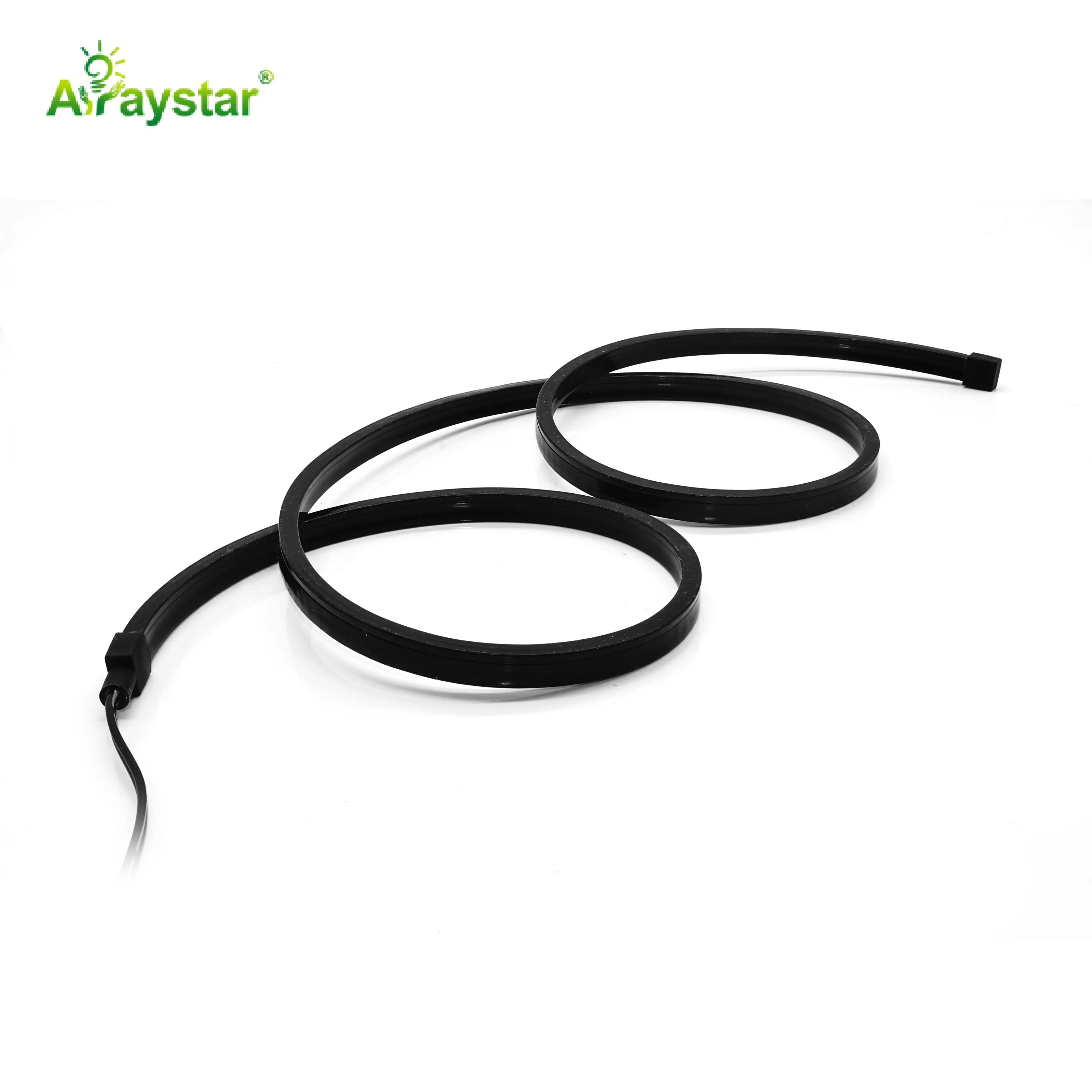
Silicone versus PVC jacket — what fails first
The two materials on a roof
Silicone handles the soffit heat; PVC is fine once the run is under cover.
| Trait | Silicone jacket | PVC jacket |
|---|---|---|
| Continuous heat limit | 120–150°C class | 50–65°C then softens |
| UV ageing outdoors | Years; stays flexible | Chalks in 1–2 seasons |
| Typical sealing | IP65–IP68 moulded | IP65–IP67 sealed |
| Hand feel | Smooth, slightly tacky | Firm, shiny |
| Relative cost | Higher | Lower |
I do not argue that silicone is always the right call indoors, but on a sun-baked soffit it earns the premium. PVC neon still sells well for cove lighting that never sees direct sun, and it ages acceptably there. The classic mistake is buying the cheap PVC roll for the rooftop fascia and expecting it to behave like the cove product. The jacket is the wear part on a soffit; the LEDs inside usually survive, but a cracked outer layer lets water in and that is the end of the run. I have pulled out failed runs where the inner LEDs still lit, but the jacket was powdery to the touch — that is UV ageing doing its slow work.
Routing the run so it can breathe
- Leave a 5–10 mm air gap behind the flex rather than gluing it flat to the board.
- Use a shallow aluminium extrusion or stand-off clips so the jacket does not sit hot against the soffit.
- Avoid fully enclosed channels that trap heat; a routed shadow line with an open back runs cooler.
- Keep end caps and solder points out of the wettest runoff path, or angle the drip away from them.
Heat kills two ways on a soffit: it softens the jacket, and it cooks the driver. I route the flex so it never touches a hot dark surface for its full length, and I keep the driver in a ventilated, shaded position rather than wedged into the soffit cavity. If the architect insists on a totally recessed slot, I ask for drainage weep holes at the low end so summer condensation and winter rain do not pool around the electronics. I also leave a 10 mm gap at the lowest point of the slot, because a channel that traps water bakes it into the jacket all summer.
Driver, voltage and cable sizing
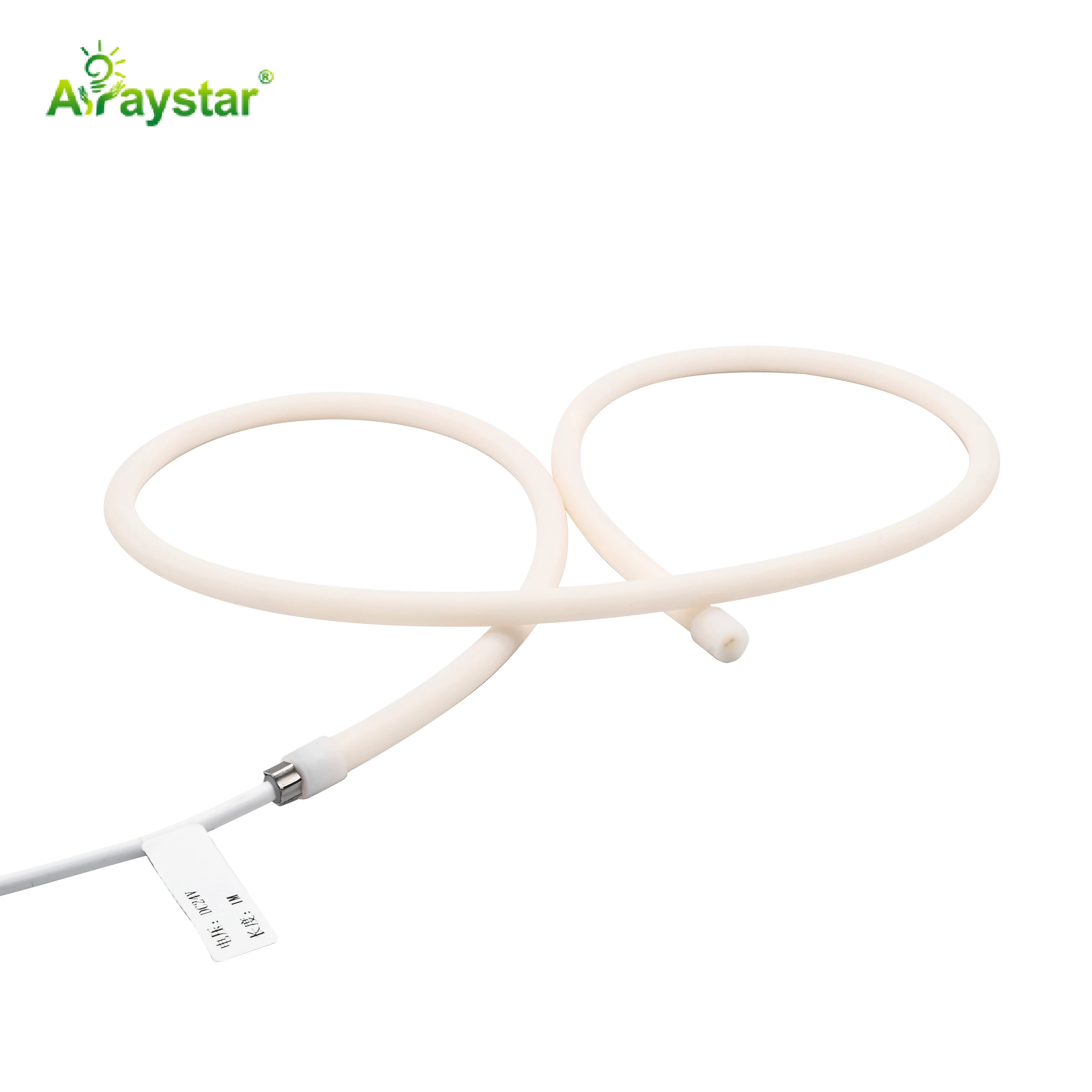
A 24V system is the safer choice for a long soffit drop. I expect roughly 0.3–0.5 V of drop per metre on the feed, so I size the conductor at 18–20 AWG and keep the longest end-to-end segment within the manufacturer's stated run length. For a driver sitting in a 50–60°C ambient, I derate it by about 20–25% rather than loading it to nameplate. Worked example: on a 12 m fascia I split the run into two 6 m segments fed from the centre. With 18 AWG feed cable that is roughly 0.4 V of drop per segment, so the far end sits near 23.6 V — comfortably in range. If I ran the whole 12 m from one end, the far end would dip under 23 V and the last metre would look warm and dim. A driver running hot dies fast, and swapping it through a tiny rooftop access panel is a miserable afternoon.
Inspection and keeping a spare
I ask the maintenance crew to walk the soffit once a year and look for three things: yellowing or chalk on the jacket, weeping at the end caps, and any dimming segment that signals a tired solder joint. On a long fascia it pays to keep one spare reel of the same lot, because a single replaced metre from a different batch can show a visible brightness step against the ageing original. I label the spare with the lot number the day it arrives, so a future me does not guess. I store that reel indoors, loosely on a shelf, never rolled tight in a black bin bag in the sun — a reel baked in a shed over summer has already aged before it goes out.
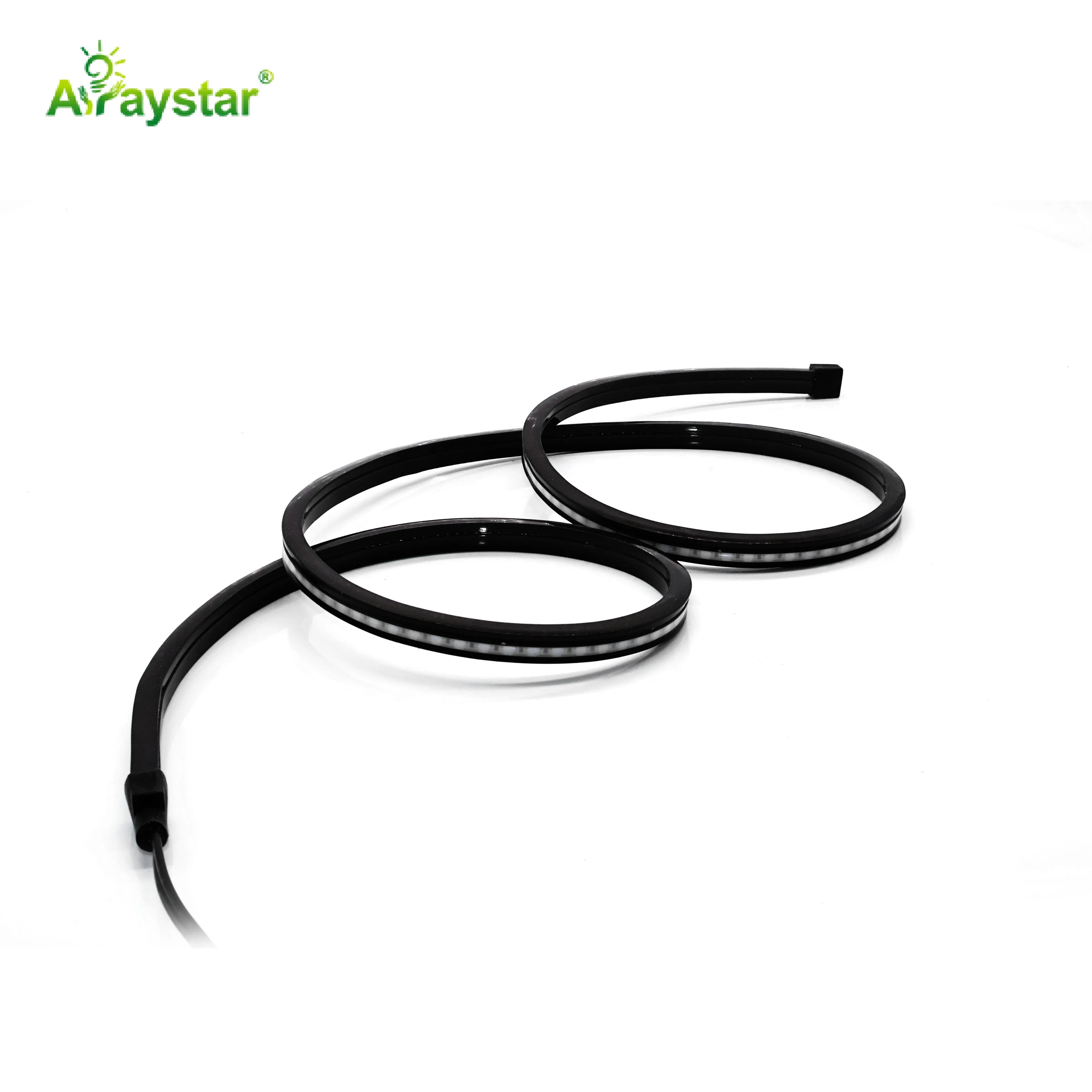
Recommended Products
Frequently Asked Questions
Does black neon run hotter than white on a soffit?
The black jacket absorbs more solar radiation and does run a few degrees warmer, but the bigger factor is the surface it is stuck to. A black neon on a white soffit still sees the board's 65–70°C.
Can I use PVC neon on a north-facing soffit that never sees sun?
Yes. If the soffit is shaded all day and the jacket never climbs above 45–50°C, a good PVC neon will age slowly and cost less. The problem only appears when direct sun hits a dark horizontal surface.
What ambient temperature should I derate the driver for?
Treat the soffit cavity as a 50–60°C ambient in summer and derate the driver by 20–25%. A 100W driver then reliably drives about 75–80W of connected load before it starts shortening its own life.
How far can I run 24V neon on one feed?
Start from the manufacturer's per-reel run length, then budget 0.3–0.5V drop per metre on the feed cable. If the drop would push the far end under 23V, feed the run from the centre or add a second injection point rather than over-sizing the wire.
How often should I check rooftop neon?
Once a year at minimum, ideally after the hottest summer. Look for chalky jacket, weeping end caps and dimming segments, and fix them before winter moisture works into the cracks.
Need help with your LED project?
Get factory-direct pricing, free samples and engineering support within 24 hours.
Email: info@arraystarled.com | Phone: +86-0755-2103-6746 | WhatsApp: 0086 1581 8514 077
Need to size your power supply? Use our LED Strip Power Calculator to find the right driver in seconds.