Mounting Neon Flex on a Rough Timber Sign Without Clips
- 2026-11-02 15:54
- /
- Arraystar LED
Adhesive on sawn pine or rough-sawn oak barely grips at all, and double-sided tape on a grainy face falls off the first summer. I stopped trusting glue alone on timber signs and now prime the grain, space clips on a measured rhythm, and bed the flex in silicone as a belt-and-braces layer.

Why the tape falls off a timber face
The peel strength of VHB tape on a smooth melamine panel is close to the rated number. On a sawn pine board with open grain, the contact area is maybe 30 percent of the advertised value, because half the tape is hanging over wood fibres and pores rather than stuck to solid surface. Add sun, rain, and summer expansion of the timber, and the tape releases by August.
Timber also breathes. It moves 2 to 3 percent across the grain between a wet winter and a dry summer, which means the sign face is constantly moving under a fixed neon run. A purely adhesive mount has no give, so either the tape peels or the flex pulls off its own solder joint.
What the grain does to your bond
Open-grain timbers like oak, cedar, and larch are the worst. The pores act like tiny suction cups that trap moisture, and the adhesive sits on the ridges rather than the flats. Closed-grain pine and poplar hold a bond better, but they also move more across the width. I prime every timber face the same way a painter would, before any tape or clip goes on.
Surface prep I now insist on
- Sand the face with 80 grit, then 120 grit, and blow out all sawdust with compressed air.
- Seal the grain with one coat of wood primer or a thin epoxy wash; let it cure 24 hours.
- Wipe the surface with isopropyl alcohol right before you lay the tape or bed the flex.
- Never mount neon flex on freshly oiled or waxed timber; the oil migrates under the adhesive.
Clip spacing that survives outdoor timber
Clips are the real fixing on timber, not the adhesive. I space them on a measured rhythm rather than eyeballing, and I always add a clip within 50 mm of every bend and every end cap. On a heavy 12 by 12 mm flex I go tighter than the datasheet clip spacing, because timber flexes and you want no wave between fixes.
- For a 5 by 8 mm mini flex, space clips every 200 to 250 mm on a straight run.
- For a 10 by 10 or 12 by 12 mm flex, drop to 150 to 200 mm spacing.
- Put a clip within 50 mm of each end cap and within 30 mm of every bend apex.
- Use stainless screws, 30 mm long, into a pilot hole; never nail or staple.
Glue, clips, or a routed channel
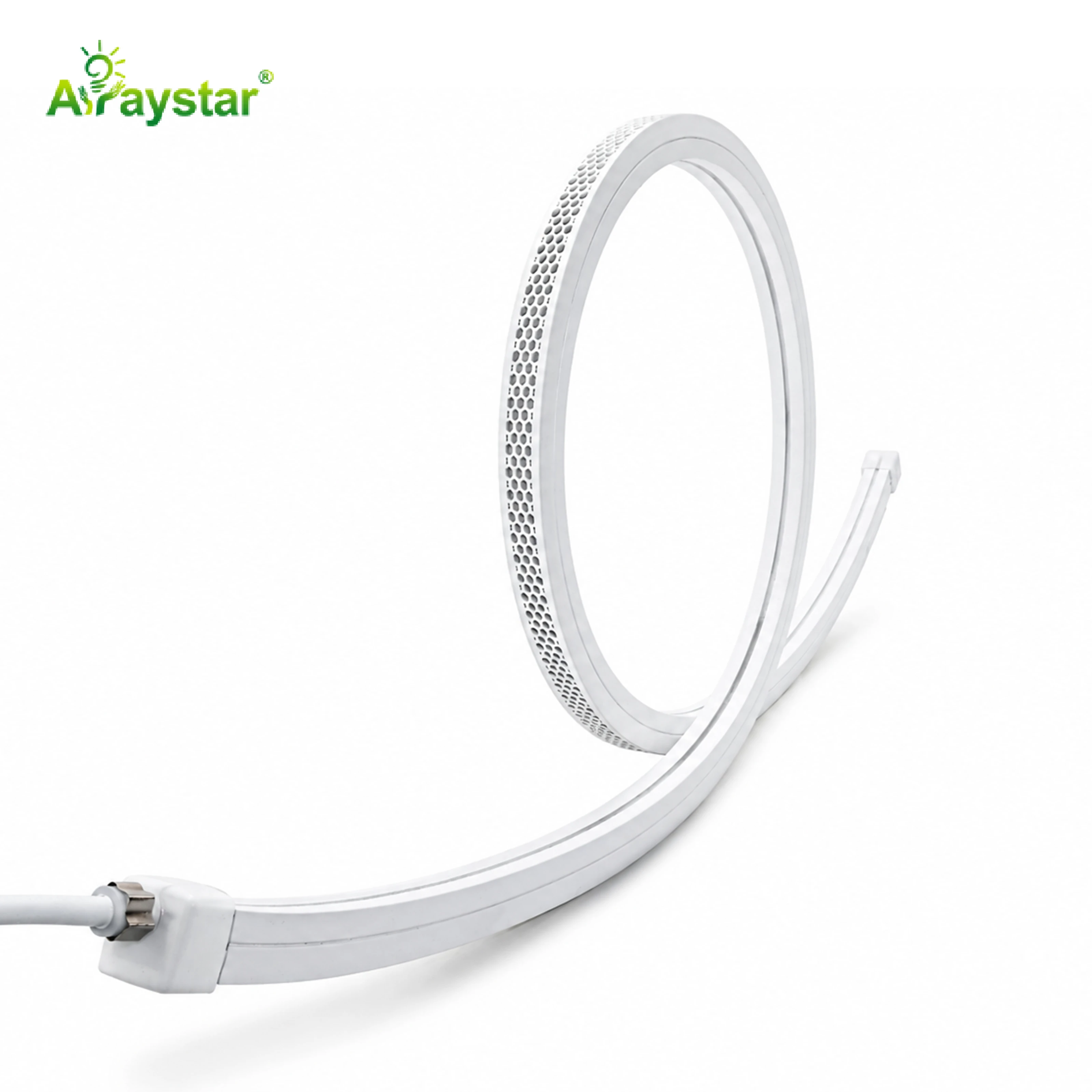
There are three realistic ways to mount neon flex on a timber sign, and I pick based on how the sign is used. Pure adhesive is for interior, temperature-stable builds only. Clips are the workhorse for exterior and shopfront signs. A routed channel in the timber is the cleanest look but it removes material from the board, so I only route on boards thicker than 18 mm.
Clips plus a thin silicone bed beats tape alone on every exterior job.
| Method | Holding power | Best for | Weakness |
|---|---|---|---|
| VHB tape only | Low on rough grain | Interior, flat MDF | Fails outdoors |
| Stainless clips | High | Exterior timber signs | Visible clip heads |
| Routed channel | Very high | High-end shopfronts | Needs 18 mm+ board |
| Clips plus silicone bed | Highest | Coastal / exposed | Harder to service |
Preventing the next timber failure
After a sign goes up, the first summer tells you if the prep was right. I ask clients to check the sign at three months and again at six months. A tiny lift at the end cap or a visible wave between clips is fixable with one extra clip; a full peel means the surface was not primed.
- Leave a 50 mm service loop at the cable exit; timber movement will tug the cap otherwise.
- Use stainless or brass fixings, never galvanised, which stains the timber over time.
- Bed every clip screw with a dab of silicone so rain does not track into the pilot hole.
- Re-oil or re-paint the board every two years; the finish protects both the timber and the bond.

Recommended Products
Frequently Asked Questions
Can I just use construction adhesive on a rough sawn beam?
No, construction adhesive is a gap-filler, not a permanent bond on a moving surface. It stays rubbery and the flex will creep under its own weight within a season. Use it as a bed under clips, not as the only fixing. Prime the timber first so the adhesive keys into a sealed surface rather than open pores.
How far apart should clips be on a 12 by 12 mm flex on wood?
150 to 200 mm on a straight horizontal run. Tighten to 150 mm if the sign is vertical or in a windy location, because gravity and sway both load the gaps. Always add a clip within 50 mm of each end cap and within 30 mm of any bend. Spacing wider than 250 mm gives visible sag on heavy flex.
Does painted or varnished timber change the bond?
Yes, and mostly for the better. A coat of primer and two topcoats seals the grain and gives the tape and silicone a non-porous surface to grip. Let the paint cure a full seven days before mounting; fresh paint off-gasses and weakens the adhesive. Avoid high-sheen polyurethane, which is too slippery for VHB tape.
Can I route a channel in a 12 mm plywood sign?
Not for a 12 by 12 or 16 by 16 mm flex. You would remove most of the material and the channel will split. Use routed channels on timber 18 mm or thicker, and only route 70 percent of the board depth. On thinner boards, surface-mount with clips and let the flex sit proud of the face; it still looks clean from two metres away.
What screws hold neon clips into soft pine?
Stainless 304 pan-head screws, 3.5 mm by 25 mm, into a 2.5 mm pilot hole. Do not use nails, which split the grain, and do not screw straight into pine without a pilot, which cracks the board. On end grain, which holds poorly, add a plastic wall plug or move the clip to face grain. Bed the screw head with a dab of silicone.
Need help with your LED project?
Get factory-direct pricing, free samples and engineering support within 24 hours.
Email: info@arraystarled.com | Phone: +86-0755-2103-6746 | WhatsApp: 0086 1581 8514 077
Need to size your power supply? Use our LED Strip Power Calculator to find the right driver in seconds.