Tight Inner Curves Go Dark on My Neon Flex Letter - What Happened?
- 2026-11-02 15:54
- /
- Arraystar LED
You are not imagining it: that dark section on the inside of a tight letter is a kink, not a dead LED. I have cut neon flex open after exactly this failure and the copper trace was cracked where the jacket pinched. Bend to the datasheet radius next time, and cut back the kinked length on the bench.

The dark section sits exactly on the inside of the bend
The first thing installers tell me is that a letter lights up fine on the straight runs, then goes dark for three to five centimetres right where the stroke turns a sharp corner. On a channel letter or a logo, that dark patch lands on the inside of the inner bend, and it almost never moves. Half a metre further along, the glow comes back as if nothing happened.
I used to swap the whole run under warranty until I opened one up under a bench microscope. The copper tape inside the silicone jacket was cracked at the kink, and the solder pad on the nearest LED had lifted off the flex PCB. The LEDs themselves were fine. The jacket had folded in half radius the moment somebody bent the tube tighter than the datasheet allowed.
Why the inside of the bend dies first
Neon flex is a flat LED strip embedded in a round or rectangular silicone extrusion. When you bend the tube, the outside skin stretches and the inside skin compresses. The copper trace and the LED pads sit on one plane of that flat strip. Bend it too tight and the inside radius crushes the trace while the outside pulls the pads off the board.
What actually fails at a kink
- The copper trace on the inner layer work-hardens and cracks through the copper tape.
- The solder pad under the nearest LED lifts from the flex PCB track.
- The silicone jacket folds over itself, pinching the strip and closing the light output
How to rescue the run you already bent
Do not try to straighten the kinked section and re-bend it. The copper is already work-hardened and will crack again within days. The honest fix is to cut the run back to the last centimetre of healthy glow and restart the bend from there.
- Power the run up in a dark room and mark the exact last lit pad on the jacket with a pencil.
- Cut 20 mm beyond that mark on the nearest cut line; you want clean trace, not the kinked zone.
- Strip 5 mm of silicone off the cut end and inspect the copper under a magnifier for hairline cracks.
- Solder a new lead pair or rejoin with a connector only if the trace looks intact for 30 mm past the cut.
Bend radius versus flex cross-section
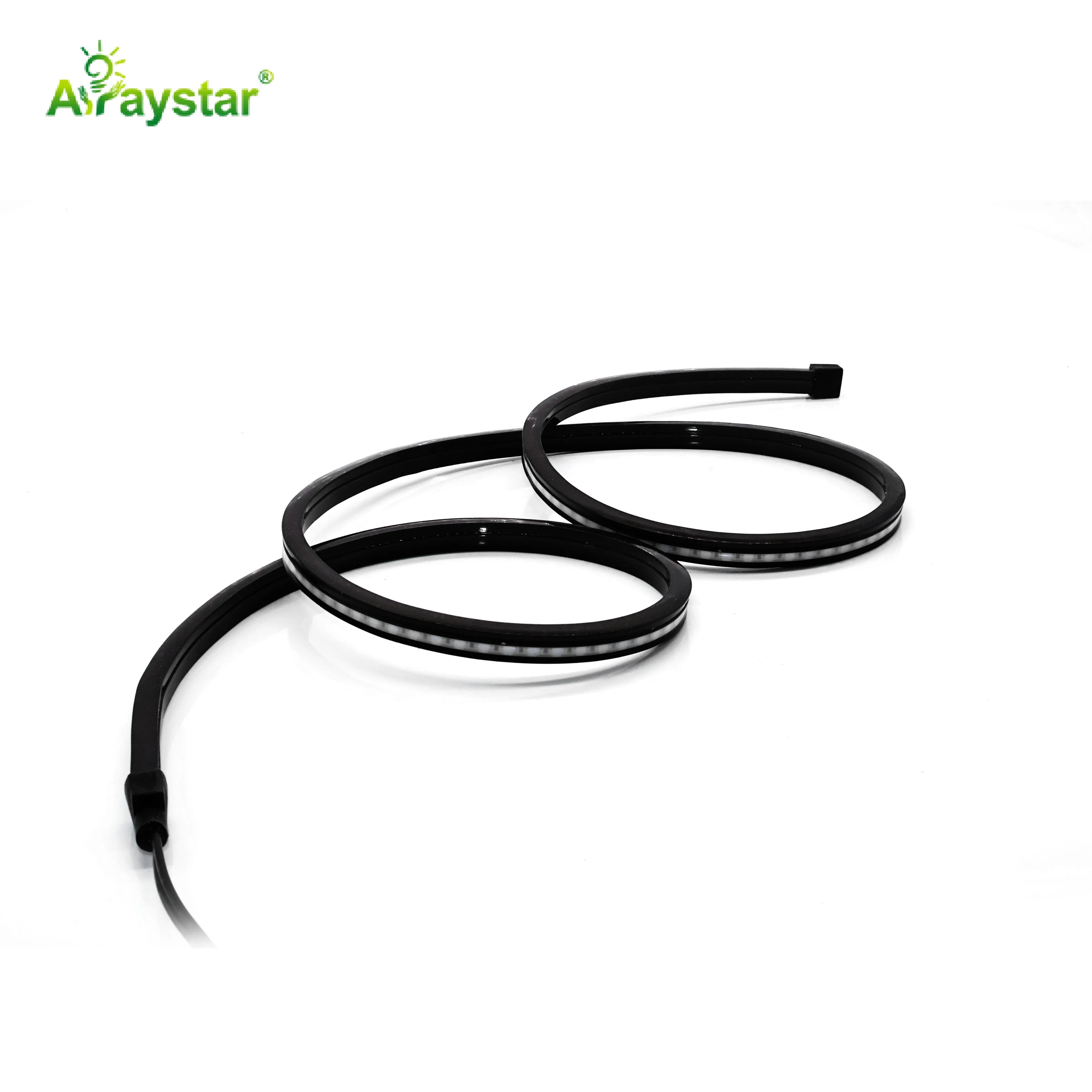
The datasheet minimum bend radius is not a suggestion. It is the radius at which the inner copper trace starts to be permanently deformed. Smaller cross-section flex bends tighter because the strip inside sits closer to the neutral axis. Bigger rectangular tubes need more room, and most of them are rated for side-bend only, not top-bend.
If your letter radius is smaller than the second column, pick a smaller flex.
| Flex size | Min bend radius (side-bend) | Min radius (top-bend) | Tight letter stroke? |
|---|---|---|---|
| 5 x 8 mm mini | 25 mm | Not rated | Tight cursive letters OK |
| 8 mm round 360 | 35 mm | 35 mm all directions | Rounded logo strokes OK |
| 10 x 10 mm square | 50 mm | 40 mm | Block letters only |
| 12 x 12 mm | 60 mm | 45 mm | Block letters only |
How to form letters without kinking next time
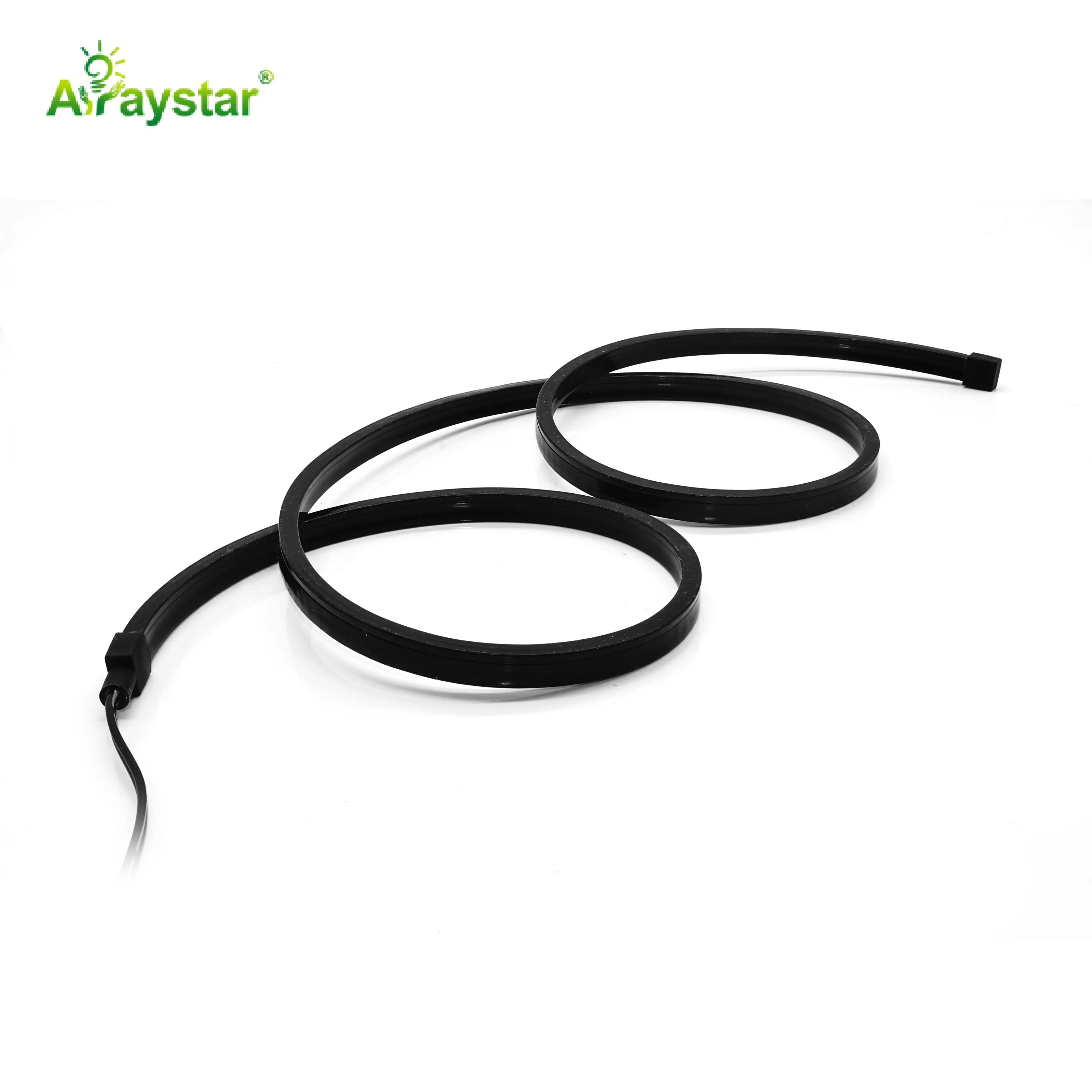
I build a bend jig out of MDF for every job with tight letters. I cut the letter stroke shape at full scale, screw the jig to a workbench, and warm the flex to about 30 C with a low heat gun before I press it into the curve. Cold silicone is stiffer and folds instead of bending smoothly.
- Warm the tube to 25 to 30 C for ten minutes before forming; do not heat above 50 C.
- Press the flex into the jig with a soft roller, not your thumb, so pressure spreads evenly.
- Hold the curve for two minutes until the silicone takes the set, then release.
- Always feed the bend from the spool; never pull a tight curve straight off the reel in a hurry.
Recommended Products
Frequently Asked Questions
Can I just heat the kinked section and straighten it out?
No. The copper trace inside is already work-hardened and cracked, and reheating the silicone will not repair the copper. You will get a few more hours of light and then the whole section goes dark again. Cut back to healthy trace and rejoin.
How tight can I actually bend 5 by 8 mm neon flex?
Plan on a 25 mm radius for side-bend on a 5 by 8 mm tube. That is roughly the radius of a US quarter. If your letter stroke needs anything tighter, either pick a smaller 0408 or 0306 profile, or split the letter into two straight runs joined at the corner.
Why does the dark patch only appear after a few days, not on test day?
The crack is usually micro and hidden under the silicone. At bench test the trace still barely conducts. Heat from the LEDs and a few days of thermal cycling open the crack, resistance rises, and the current drops until the section goes dark. That is why a bench check is not enough.
Should I pick a round tube or a square tube for tight lettering?
Round 360 degree tubes bend in every direction and are friendliest for cursive script, but they read as a round light dot on a wall. Square anti-glare tubes give a flat even face but most are rated side-bend only. Choose by the bend direction your lettering actually needs.
Can I cut and rejoin a kinked section instead of replacing the whole letter?
Yes, as long as you cut 20 mm past the last lit pad on both sides of the kink and rejoin with a proper solder joint under heat-shrink, not a cheap push connector. Push connectors on neon flex corrode and add resistance, which makes the join the next dark spot. Re-test lit for an hour before reinstalling.
Need help with your LED project?
Get factory-direct pricing, free samples and engineering support within 24 hours.
Email: info@arraystarled.com | Phone: +86-0755-2103-6746 | WhatsApp: 0086 1581 8514 077
Need to size your power supply? Use our LED Strip Power Calculator to find the right driver in seconds.