Neon Lighting in Hazardous and Flammable Locations: What Is Actually Permitted
- 2026-10-28 10:02
- /
- Arraystar LED
A neon sign above a fuel dispenser is not a lighting spec; it is a code conversation. I have lost quotes because I refused to treat a hazardous area like a shop window, and I have kept clients because I told them exactly where a standard tube is and is not allowed.
What a hazardous location actually means
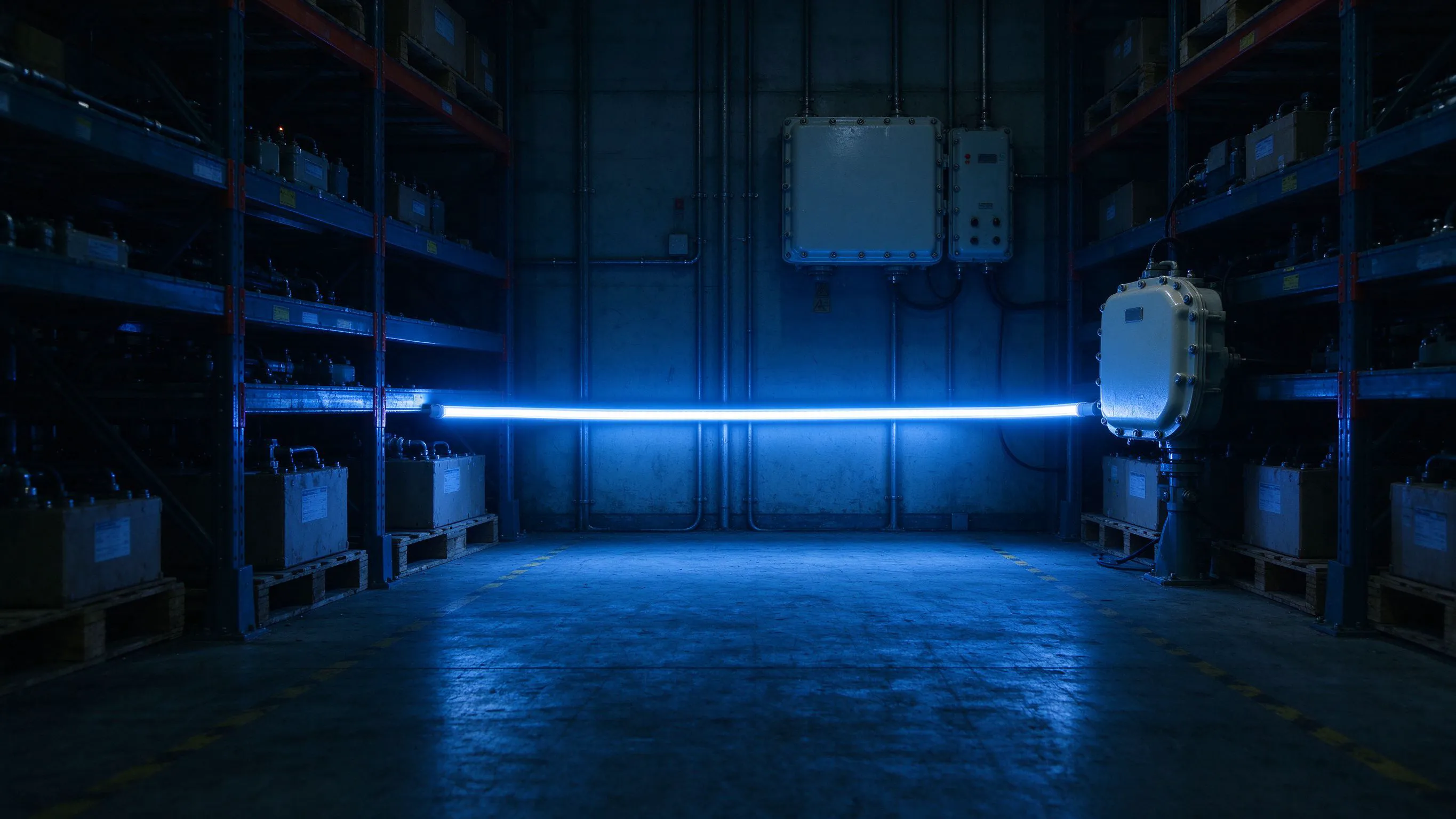
In electrical terms, a hazardous location is anywhere flammable gas, vapour, dust or fibre is present in quantities that could ignite. That covers fuel forecourts, paint shops, grain silos, battery rooms and some pharmaceutical bays. A normal silicone neon tube is not certified for those zones. It is IP-rated against water and dust, but IP is not the same as Ex. An IP65 tube can still arc at a connector and ignite a petrol vapour cloud, which is exactly what the code is trying to prevent.
On a forecourt job I walked away from a sign request above the diesel pump. The client wanted the same warm white tube we had used in his shop. I explained that the pump island is a Zone 1 or Zone 2 area depending on the local code, and a standard sign is not permitted within that envelope. He pushed back until I showed him the code reference, and then he was glad I had refused.
The zone map I keep on my phone
- Zone 0: gas present continuously; almost no lighting allowed inside.
- Zone 1: gas present during normal operation; only Ex-certified equipment.
- Zone 2: gas present only under fault; Ex or rigorously assessed non-sparking gear.

Where a standard neon sign is actually allowed
The code is not as absolute as it sounds. On a forecourt, the hazardous envelope extends roughly four to five metres horizontally from the dispenser and up to four metres above ground, depending on local rules. Beyond that envelope, on the canopy edge above five metres, on the price pylon across the forecourt or on the kiosk entrance, a standard IP65 tube is usually acceptable because the vapour cannot reach it in normal operation. I draw the envelope on the site plan before I quote.
Draw the vapour envelope on the plan; do not guess from memory.
| Location on forecourt | Zone | Standard neon allowed? |
|---|---|---|
| Pump island, under 4 m | Zone 1/2 | No, Ex-rated only. |
| Canopy fascia, over 5 m | Outside envelope | Usually yes, IP65+. |
| Price pylon across apron | Outside envelope | Yes, with weatherproof glands. |
| Shop kiosk interior | Non-hazardous | Yes, standard interior spec. |
Inside a workshop with a spray booth, the same logic applies: the booth itself is Ex-rated territory, while the aisle fifty metres away is ordinary lighting territory. I never extend a sign into the booth without a written Ex assessment.
What an Ex-rated installation actually requires
If the sign really must sit inside a hazardous envelope, the whole chain has to be rated: the tube, the driver, every connector, every gland and every cable. A single non-rated connector in the run defeats the certification. Drivers must be mounted outside the zone, in a certified box, with the cable passing through an Ex-rated gland. On a project like this, the electrician of record signs the paperwork, and I supply only the components they specify.
- Match the protection type to the group: gas group IIA, IIB or IIC.
- Check the temperature rating T-code against the vapour ignition temperature.
- Mount drivers outside the zone; never inside, even in a box.

Common code mistakes I see on site
The most common mistake is treating IP65 as if it were Ex. A weatherproof tube is not an explosion-proof tube, and no amount of silicone glanding changes that. The second mistake is putting the driver inside the washdown zone because it was convenient. The third is running a standard low-voltage cable through a wall without a certified seal, which gives the vapour a path into the non-hazardous side. I point all three out politely in my quote and let the client take it to their sparky.
How to talk to the client without scaring them off
I do not say no. I say: here is the envelope, here is where a standard sign is permitted, and here is where you need an Ex-rated build at roughly three times the cost. Most clients, once they see the options, move the sign to the canopy edge or the pylon and save the budget. A few insist on the in-zone build, and then I make sure a properly certified electrician owns the paperwork, not me.
- Draw the vapour envelope on the site plan in red before quoting.
- Offer two prices: outside-envelope standard, and in-zone Ex-rated.
- Get the electrician of record to sign the zone assessment, not the sign maker.
Recommended Products
Frequently Asked Questions
Can I install a normal neon tube above a petrol pump?
No. The pump island is a Zone 1 or Zone 2 hazardous envelope, and a standard IP65 tube is not certified for it. IP protection is not the same as Ex certification. A sign above the pump requires an Ex-rated chain: rated tube, rated driver outside the zone, rated glands and cable. Anything less is a code violation.
Where on a forecourt can I use a standard neon sign?
Outside the vapour envelope. Typically that means the canopy fascia above five metres, the price pylon across the apron, the kiosk entrance and the boundary fence. Draw the four- to five-metre envelope around each pump on the plan, and place the sign entirely outside it. Confirm with the local electrician because the exact radius varies by code.
Is IP65 the same as explosion-proof?
No. IP65 means the enclosure resists dust and water jets. Explosion-proof, or Ex, means the enclosure can contain an internal ignition and prevent it reaching the outside vapour. They are different standards. A weatherproof neon tube can still arc at a connector and ignite a flammable atmosphere, which is why Ex is required in the zone.
Can I put the driver inside the hazardous zone in a sealed box?
No. The driver itself is a potential ignition source, and a sealed non-Ex box does not make it safe. Mount the driver outside the zone, in a certified enclosure appropriate to the non-hazardous side, and pass the low-voltage cable through an Ex-rated gland where it crosses the boundary. The whole chain must be rated, not just the visible tube.
Who signs off a neon sign in a hazardous area?
A qualified electrician of record, not the sign maker. I supply the components the sparky specifies, but the zone classification, the Ex chain and the commissioning paperwork belong to them. If a client pushes me to self-certify, I walk away; the liability is not worth the margin. Get the electrician involved before the drawing stage, not after.
Need help with your LED project?
Get factory-direct pricing, free samples and engineering support within 24 hours.
Email: info@arraystarled.com | Phone: +86-0755-2103-6746 | WhatsApp: 0086 1581 8514 077
Need to size your power supply? Use our LED Strip Power Calculator to find the right driver in seconds.