Does a Neon Sign Need an Earth Ground? What Electricians Actually Check
- 2026-11-02 15:54
- /
- Arraystar LED
Neon flex runs on 24 V, so it is not the high-voltage beast vintage glass neon was. That said, the driver plugs into mains and its metal case can go live, so an earth bond is still required. I walk through the earthing and isolation checks an electrician should sign off before switch-on.
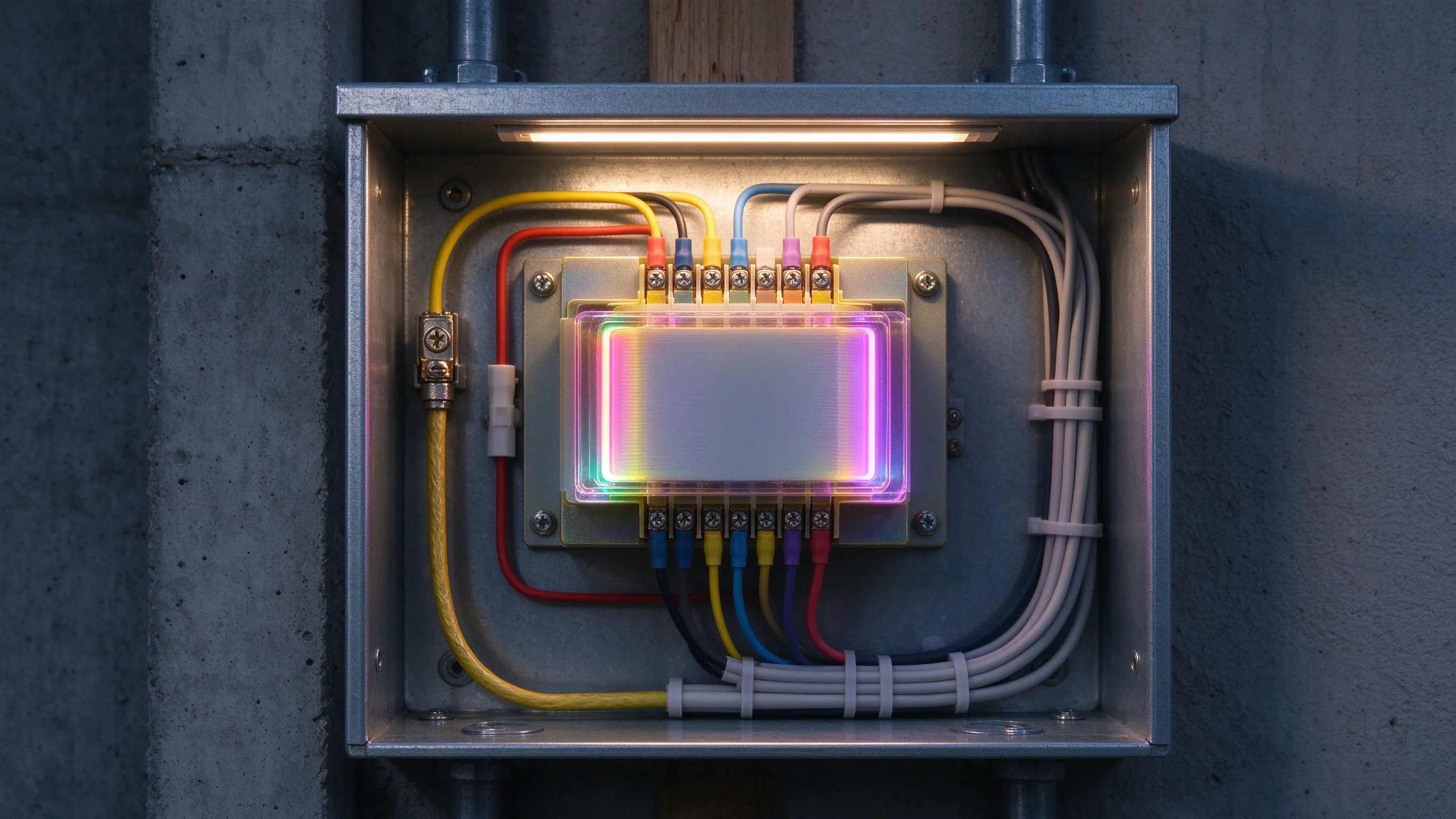
Do modern LED neon signs even need an earth?
Short answer: yes, the driver does. The silicone flex itself runs on 24 V SELV extra-low voltage and cannot give you a shock, but the driver that plugs into the wall is a mains device with a metal case. If the primary winding fails and touches that case, the earth bond is what trips the breaker instead of turning the whole sign into a live conductor.
I have seen cheap neon kits with a two-pin plug and no earth, and they rely on double insulation. That is fine for a Class II unit with the right symbol on the label. The moment you bolt the driver into a metal sign frame, you need an earth bond from the driver case to the frame and to the building earth.

What the electrician actually tests
Before I hand a commercial sign over, an electrician signs off three things: the earth continuity, the insulation resistance between primary and secondary, and the RCD protection on the circuit. None of these are optional on a shopfront that members of the public will touch every day.
- Earth continuity under 0.1 ohm from driver case to the building earth point.
- Insulation resistance over 1 megohm between mains and the 24 V side.
- RCD protection on the circuit, typically 30 mA trip.
These are the tests a sign-off certificate covers.
| Test | Pass value | Why it matters |
|---|---|---|
| Earth continuity | Under 0.1 ohm | Case fault trips the breaker fast |
| Insulation resistance | Over 1 megohm | No leakage from mains to LV side |
| RCD trip | Under 30 ms at 30 mA | Cuts power before a person is hurt |
Where the earth bond goes
The earth wire runs from the building earth terminal to the driver case earth lug, and a separate bond wire runs from the driver case to the metal sign frame if the frame is exposed. I never rely on the mounting screws to make the earth connection, because paint and anodised coatings insulate them. A dedicated green-yellow wire under a star lug is the only honest bond.
On non-metal frames, acrylic backboards and timber, the frame itself is not conductive, so the bond ends at the driver case. The earth is still required on the driver, but there is no frame to bond out to.

Common mistakes that fail the inspection
Three things come up on sign-off more than anything else. First, a driver with no earth lug being mounted in a metal frame. Second, an earth wire terminated under a paint-covered screw. Third, the low-voltage 24 V cable running parallel to the mains cable for more than a metre, which couples noise. All three are quick to fix before the inspector arrives.
Paint is an insulator; never trust a painted fixing for earth.
| Mistake | Why it fails | Fix |
|---|---|---|
| No earth on driver case | Case fault goes live | Bond to earth lug |
| Earth under a painted screw | No continuity | Scrape paint, use star lug |
| LV and mains cable parallel | Hum and noise coupling | Cross at 90 degrees |
I also check that the driver is Class II where it is double-insulated. If the label shows the square-in-square symbol, no earth is required on the driver itself, but the metal frame still needs bonding to the building earth if it is exposed.
What I hand over after install
On any commercial sign I hand over a one-page electrical sheet: driver make and model, rated wattage, cable sizes, earth test results, and the date of the RCD test. The landlord and the insurer both ask for this, and it saves a frantic scramble when the next electrician wants to trace the circuit in five years.
- Driver model, wattage and serial number recorded.
- Earth continuity reading signed by the electrician.
- RCD test date and next due date noted.

Recommended Products
Frequently Asked Questions
Does a 24 V LED neon sign need an earth ground?
The flex runs on 24 V SELV and cannot shock you, but the mains driver does. If the driver has a metal case and is mounted in a metal sign frame, the case must be bonded to earth so an internal fault trips the breaker. A fully double-insulated Class II driver in an acrylic frame can run without an earth on the driver itself.
What is the earth continuity test on a neon sign?
The electrician measures resistance from the driver metal case to the building earth point. It must read under 0.1 ohm. A higher reading means the earth wire is loose, terminated under paint, or corroded. If the sign frame is metal, the test also runs from the frame to earth, because the frame is what a member of the public could touch.
Does a neon sign need an RCD?
Yes, on any circuit in a commercial or public location. The RCD trips within 30 ms at 30 mA of leakage, which is fast enough to prevent a serious shock if the driver develops a fault. A domestic sign over a bed or in a bathroom should also be on RCD. Without it, a case fault could sit live until someone touches the sign.
Can I mount a neon driver in a metal box without earth?
No. A metal box around the driver becomes part of the fault path, so the box and the driver case both bond to earth. If you want a sealed metal junction box, run a green-yellow earth wire from the box to the building earth terminal. A plastic box is the exception: it is non-conductive and needs no earth bond, but it still needs cable glands rated for the location.
What paperwork should I keep for a neon sign installation?
Keep the driver make, model and serial number, the rated wattage, cable sizes used, the earth continuity reading, the RCD test date and the next due date. The landlord, insurer and any electrician who services the sign later will ask. A single dated sheet in the driver box saves a lot of guessing.
Need help with your LED project?
Get factory-direct pricing, free samples and engineering support within 24 hours.
Email: info@arraystarled.com | Phone: +86-0755-2103-6746 | WhatsApp: 0086 1581 8514 077
Need to size your power supply? Use our LED Strip Power Calculator to find the right driver in seconds.