Fixing a Cold Spot in Neon Tubing: Tube Fault or Transformer?
- 2026-10-28 10:02
- /
- Arraystar LED
A dark section on a neon sign sends people up the ladder with a new tube before they have checked anything. Nine times out of ten the tube is fine and the fault is a loose high-voltage lead or a weak transformer. I diagnose in a fixed order, and I never swap parts until the last suspect.
The three suspects, in order
When a section goes dark on a neon installation, there are only three places the fault lives: the tube itself, the high-voltage leads and connections, or the transformer feeding the run. I check them in that order from cheapest to most expensive, because replacing a good tube on a guess is how a service call turns into an unnecessary three-hour job. Start with the electrical connections before you touch the glass or silicone.
The first thing I do on site is watch the sign as it warms up. A section that glows weakly then brightens is a cold-start issue on a tired transformer. A section that is completely dead is a broken circuit. A section that flickers and hums is a loose connection arcing. The behaviour at switch-on narrows the field before I open a single casing.
My diagnostic order on site
- Watch the sign at switch-on for warm-up, flicker or total deadness.
- Check the high-voltage leads and terminal connections for looseness or arc marks.
- Test the transformer output voltage before condemning the tube.
How to tell a bad tube from a bad transformer
A tube fault usually looks local: one length dark while the rest of the sign glows normally. A transformer fault usually takes out a whole run fed by that same unit, because the transformer feeds several sections in series. If one short segment is dark but everything around it is bright, suspect the tube or its immediate lead. If half the sign is out and it traces back to one power unit, suspect the transformer.
Scope the fault by how much of the sign is dark before swapping parts.
| Symptom | Likely cause | First check | Fix |
|---|---|---|---|
| One short segment dark | Tube or lead fault | Leads and terminals | Reseat or swap tube |
| Whole run dark | Transformer fault | Output voltage | Replace transformer |
| Flickering, humming | Loose HV connection | Terminal tightness | Re-terminate |
I measure the transformer output with a high-voltage meter rated for neon circuits. A healthy unit holds its rated voltage under load. A tired one reads fine with nothing connected and collapses the moment the tube is attached. That loaded-reading test catches weak transformers that look normal on an open circuit.
The connection fault everyone misses
High-voltage connections creep loose over years of thermal cycling, and a loose lead arches, which blackens the terminal and increases resistance. I undo the end cap, look for carbon marks or a faint burning smell, and re-terminate the lead with fresh dielectric grease. Often the sign springs back to life with a ten-minute re-crimp, and I have left many roofs thankful I did not bring a new tube.
When the tube really is the fault
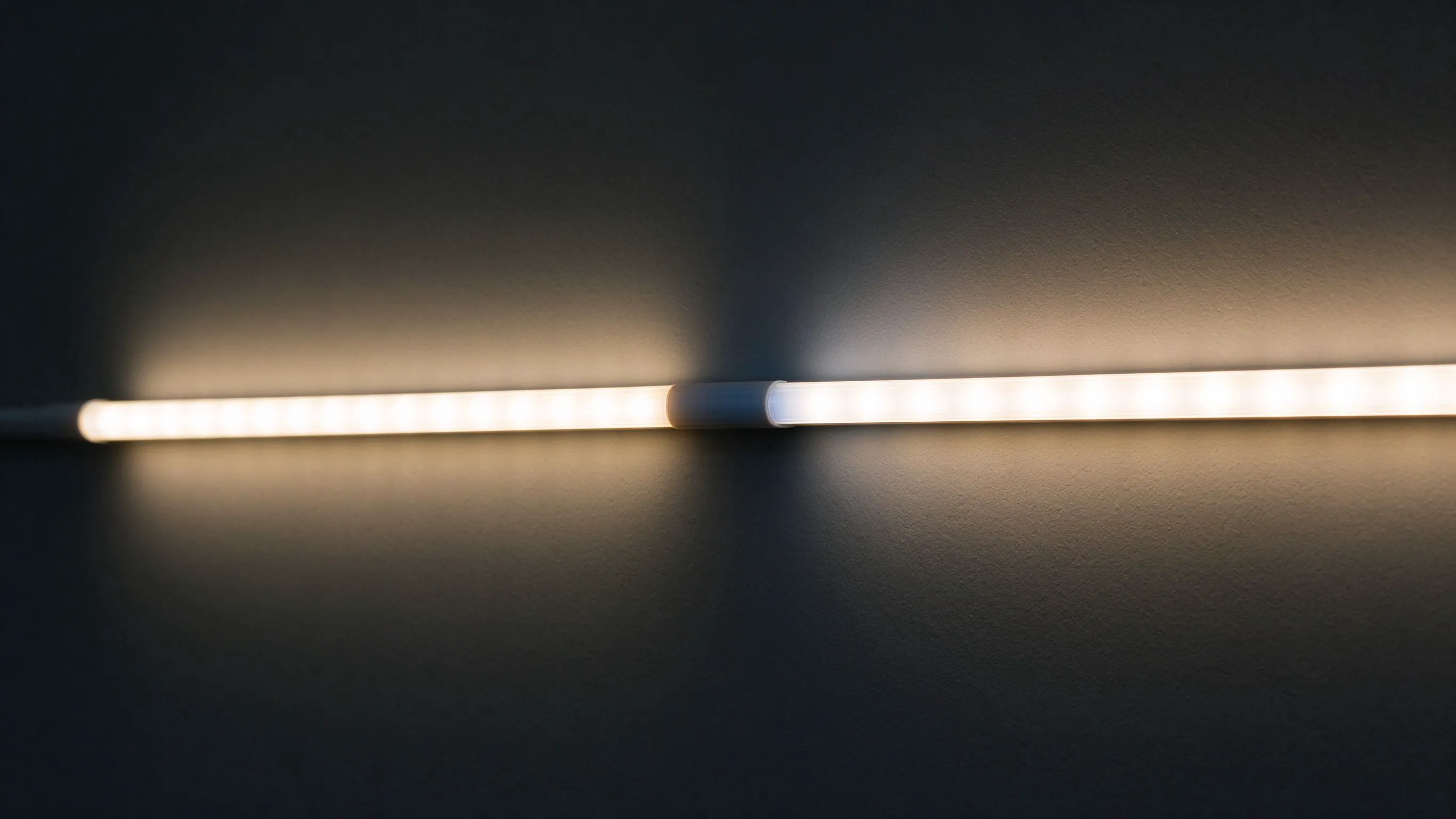
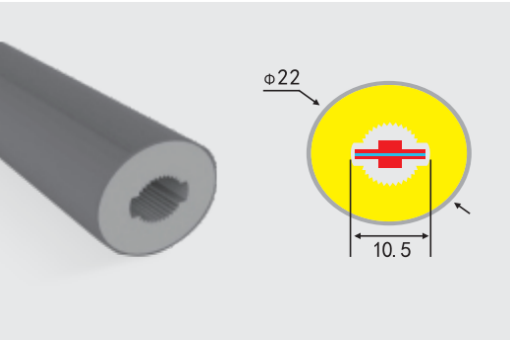
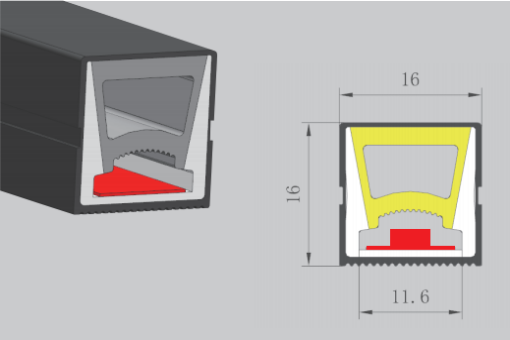
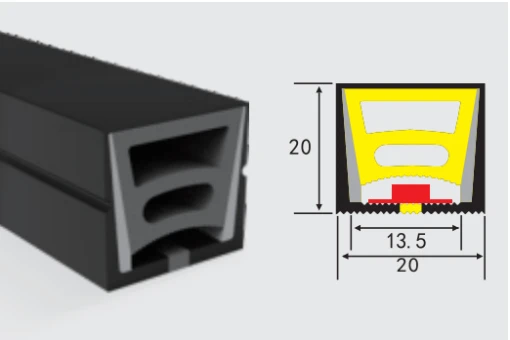
After the leads and the transformer test clean, then I accept the tube itself has failed. On a glass tube this shows as a dark band, a gas leak, or a blackened electrode at the end. On a silicone flex it is a dead segment between working LEDs, which points to a broken trace inside the diffuser. At that point a section swap is the honest fix, and I measure the offcut to order the exact replacement length.
- Blackened electrode or gas leak in a glass tube means the tube has failed.
- A dead segment between working LEDs in a flex means an internal broken trace.
- Re-terminate and retest before ordering a replacement tube.
The on-site diagnostic checklist
I keep a short sequence in my head so I do not leap to a part swap: observe, isolate by circuit, test the transformer under load, inspect the high-voltage leads, then condemn the tube. It takes twenty minutes and it has saved me from replacing dozens of tubes that were never the problem. The expensive habit to break is reaching for a new part before the cheap checks are done.
Recommended Products
Frequently Asked Questions
Why is one section of my neon sign dark but the rest works?
Start with that segment and its immediate high-voltage lead. One short dark section usually means a loose connection or a failed tube, not the main transformer, which would take out a whole run. Open the end cap, check the terminal for carbon marks, and re-terminate the lead before you order a replacement tube.
How do I tell a bad neon transformer from a bad tube?
By how much of the sign is dark. A tube fault darkens one local segment; a transformer fault takes out the whole run fed by that unit. Then measure the transformer under load: if it reads fine on open circuit but collapses when connected, it is weak. Replace the transformer only after the leads test clean.
My neon flickers and hums, what is wrong?
A flickering, humming sign points to a loose high-voltage connection that is arcing. Thermal cycling loosens terminals over the years, and the arc blackens the fitting and adds resistance. Open the end cap, look for carbon marks or a burning smell, and re-terminate the lead with fresh dielectric grease. It is a ten-minute fix.
A neon section glows weak then brightens when warm, why?
That is a tired transformer struggling to strike the tube when cold. The output is marginal at start-up, so the section glows dim and then brightens as the tube warms and the gas ionises. Measure the unit under load; if the voltage sags, plan a transformer replacement before it fails completely on a cold winter night.
When should I just replace the neon tube?
After the leads and the transformer both test clean. On a glass tube, a blackened electrode, a gas leak or a permanent dark band means the tube has failed. On a silicone flex, a dead segment between working LEDs means a broken internal trace. At that point a measured section swap is the honest fix.
Need help with your LED project?
Get factory-direct pricing, free samples and engineering support within 24 hours.
Email: info@arraystarled.com | Phone: +86-0755-2103-6746 | WhatsApp: 0086 1581 8514 077
Need to size your power supply? Use our LED Strip Power Calculator to find the right driver in seconds.