Neon Tubing in Steam Rooms and Bathrooms: When the IP Rating Is Not Enough
- 2026-10-28 10:02
- /
- Arraystar LED
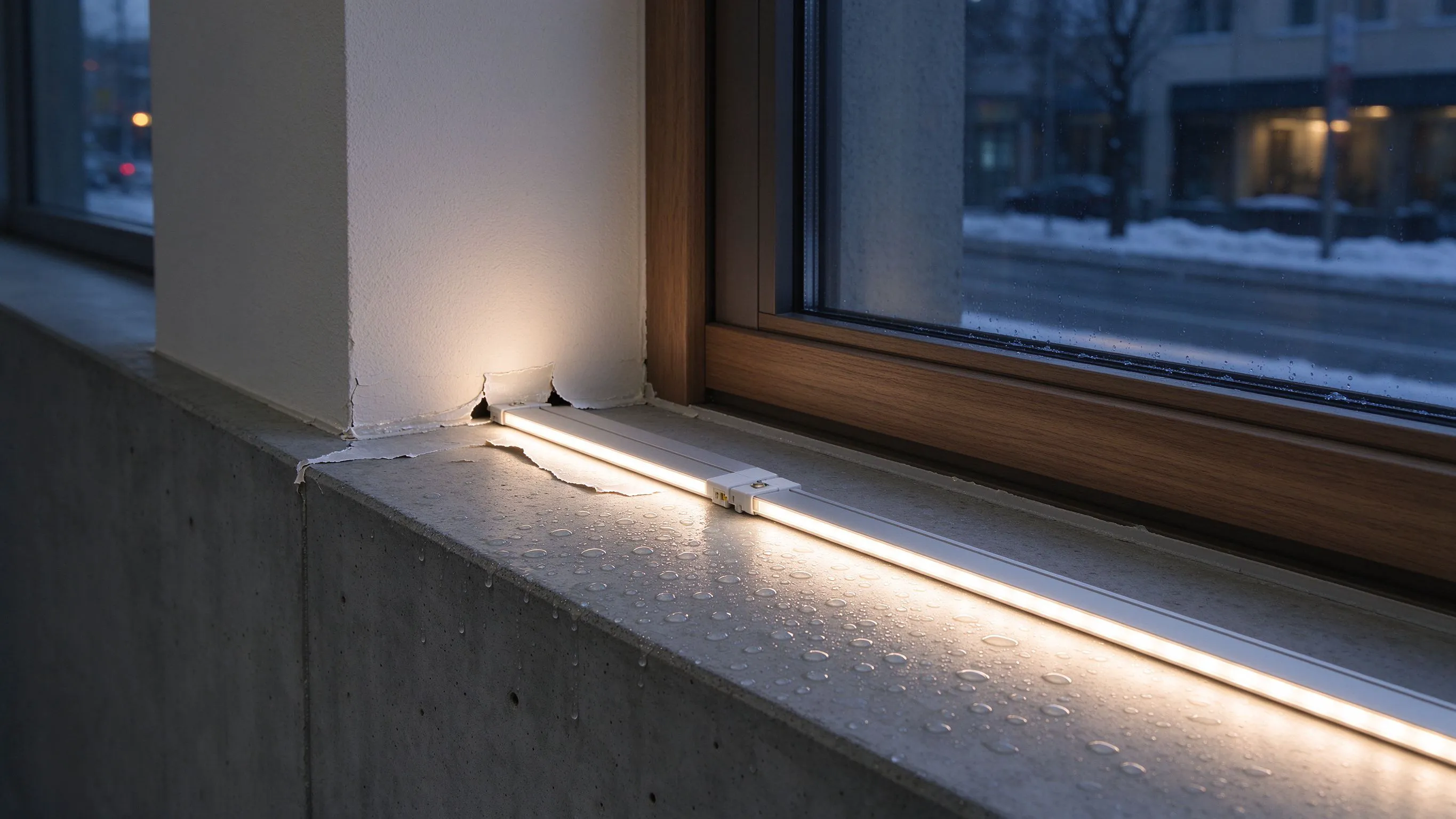
An IP65 sticker on a tube tells you water cannot spray into it from outside. It tells you nothing about steam turning to condensation inside the diffuser at six in the morning, which is exactly what kills bathroom and spa neon. Wet-area neon is a ventilation problem, not a rating problem.
Why the IP rating lies in a steam room
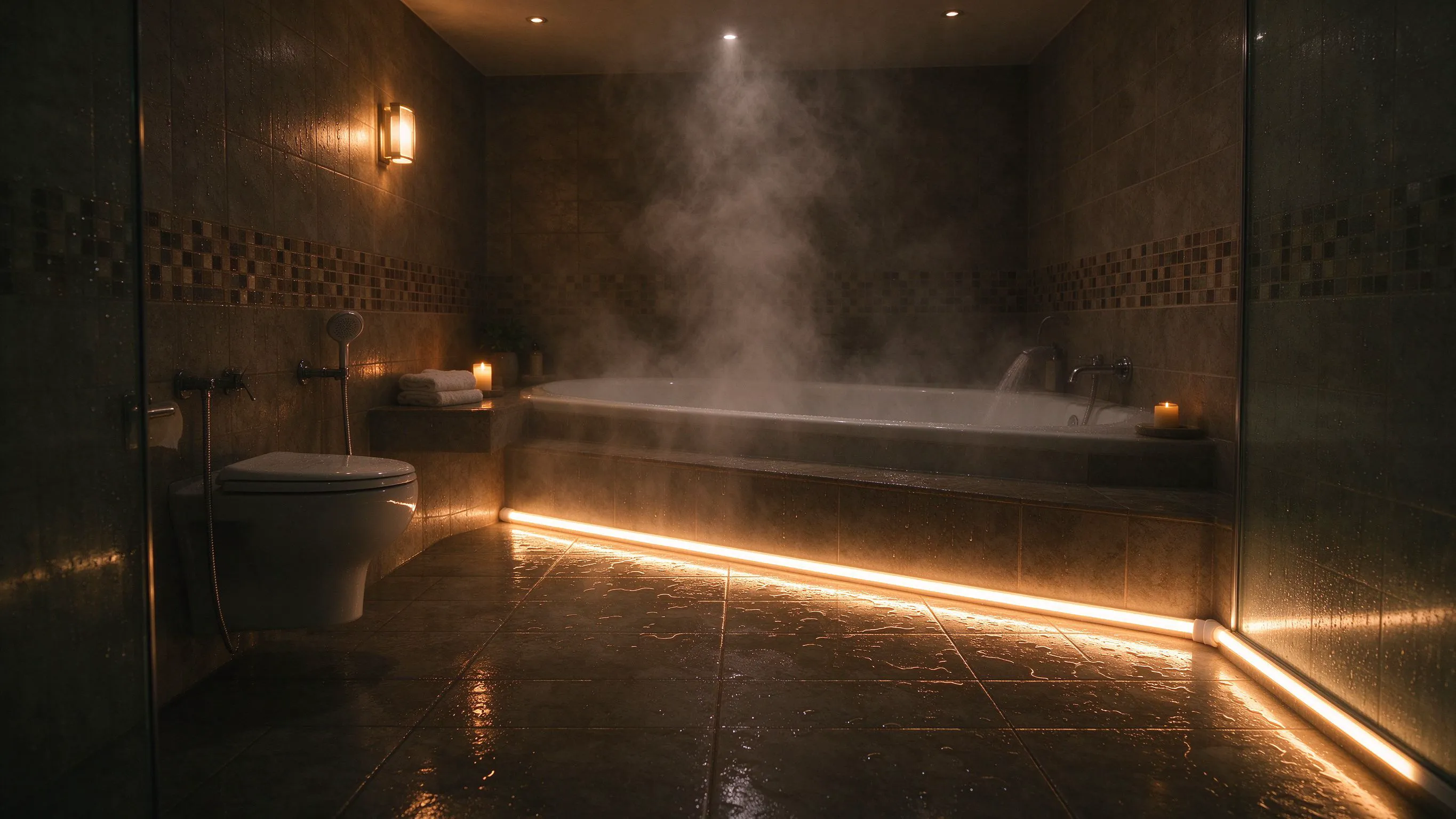
IP65 means the tube withstands jets of water from any direction. It is an ingress number, not a breathing number. In a steam room the air inside the tube warms, holds moisture, and then hits a cool diffuser surface when the room cools, and that moisture condenses on the inside wall of the silicone. You cannot see it through the diffuser, but it pools at the lowest end cap, bridges the live conductors, and eventually trips the driver or corrodes the copper traces.
I have opened dead tubes from a hammam that looked pristine on the outside and were full of droplets inside. The IP rating was never the issue; the tube was sealed so well that it could not dry out. In hot, humid spaces, a fully sealed flex is a dehumidification trap.
The failure path in wet areas
- Warm moist air enters through gland clearance as the room heats and cools.
- Condensation forms on the cool inner diffuser wall overnight.
- Water pools at the low end cap and corrodes the copper traces.

Vented ends and a dry driver
The fix is counter-intuitive: you want the tube to breathe, not to be perfectly hermetic. I fit a small breather vent at the upper end cap and leave the lower end with a tiny drain clearance, so condensation can run out instead of sitting in the diffuser. The driver itself never lives in the wet zone. I mount it outside the room, in a dry cupboard or above the ceiling line, and run the low-voltage feed through a gland into the space. A driver in a steam room lasts one winter at best.
The wetter the room, the more the tube must breathe and the driver must hide.
| Location | Tube treatment | Driver location | Expected life |
|---|---|---|---|
| Dry bathroom | Standard IP65, sealed | Outside wet zone | 5+ years |
| Shower splash zone | IP67, vented end | Outside room | 3-5 years |
| Steam room / hammam | Vented and drained | Remote, dry cupboard | 2-4 years |
I never put a driver inside a sauna, steam room or shower enclosure. The IP67 box behind the mirror is a trap; it condenses inside its own sealed casing. The driver wants dry, and the tube wants to vent.
Materials that survive steam
Standard silicone handles steam fine, but the fixings and glands do not. I use 316 stainless brackets, not zinc-plated steel, which blooms white corrosion within a season. Glands get EPDM seals, not neoprene, which goes soft in constant heat. The diffuser itself should be food-grade or medical-grade silicone in a spa context, partly for the chemistry and partly because clients in wellness spaces ask for it anyway.

Mounting geometry that sheds water
Run the tube so its lowest point is not an end cap sitting in a corner. A horizontal tube with both ends level will always drain toward one end, so I tilt the run by a few degrees or put the drain at the lower cap deliberately. Never drill a horizontal run flat and assume the IP rating has it covered; gravity does not care about ratings.
- Tilt the run slightly so condensation has a direction to drain.
- Put the breather vent at the high end and the drain at the low end.
- Keep end caps out of corner pools and off the wet shower floor line.
The wet-area handover note
I tell the client the truth on day one: a neon tube in a steam room will need its end caps checked every spring, and the drain vent cleared once a year. That thirty-minute service is the difference between a tube that dies in year two and one that runs five. Most spa owners accept it once they understand why, and it stops the angry call when the droplets appear in the diffuser by February.
Recommended Products
Frequently Asked Questions
Can I put IP65 neon tubing in a shower room?
Yes, but not as a sealed run. IP65 keeps spray out, yet steam condenses inside the diffuser. Vented the upper end cap, put a small drain at the lower end, and keep the driver outside the wet zone. A fully sealed IP65 tube in a shower area will fill with droplets and corrode the traces within a couple of winters.
Where should the neon driver go in a bathroom?
Outside the wet zone, always. Mount it in a dry cupboard, above the ceiling line, or in the adjacent room, and run the low-voltage feed through a proper gland into the bathroom. A driver inside a steam room or shower enclosure condenses inside its own sealed box and dies in one winter, however high its IP rating.
Why is my bathroom neon foggy inside the diffuser?
That is condensation, not a dirty cover. Warm moist air has entered the sealed tube and cooled on the inner diffuser wall. Fit a breather vent at the high end and a drain at the low end so the moisture can escape, and tilt the run a few degrees. No amount of external cleaning will clear a fog that is sitting on the inside.
Do I need 316 stainless fixings in a spa?
Yes. Zinc-plated steel brackets bloom white corrosion within a single humid season and leave rust streaks down the wall. Use 316 stainless standoffs and EPDM-sealed glands, not neoprene, which goes soft in constant heat. The silicone tube itself is fine; it is the metal hardware that fails first in steam.
How often should I service neon in a steam room?
Once a year. Open the end caps, clear the drain vent of dust and limescale, check the glands are still tight, and look for droplets pooled at the low end. That thirty-minute service is what takes a steam-room tube from a two-year life to a five-year one. Skipping it means a driver and trace replacement by spring.
Need help with your LED project?
Get factory-direct pricing, free samples and engineering support within 24 hours.
Email: info@arraystarled.com | Phone: +86-0755-2103-6746 | WhatsApp: 0086 1581 8514 077
Need to size your power supply? Use our LED Strip Power Calculator to find the right driver in seconds.