
Outdoor LED Strip Ideas for Patios, Decks & Gardens: IP Ratings, Step Lights & Landscape Wash
- 2026-09-29 12:07
- /
- Arraystar LED
Outdoor strip lighting fails from one root cause: using indoor-rated tape where water and UV reach it. Match the IP rating to the actual exposure, seal every wire entry, and put the light where it guides and flatters - deck edges, steps, pergolas and planted walls - rather than flooding the yard. IP68 neon and COB do the wet work; wall-wash does the atmosphere.
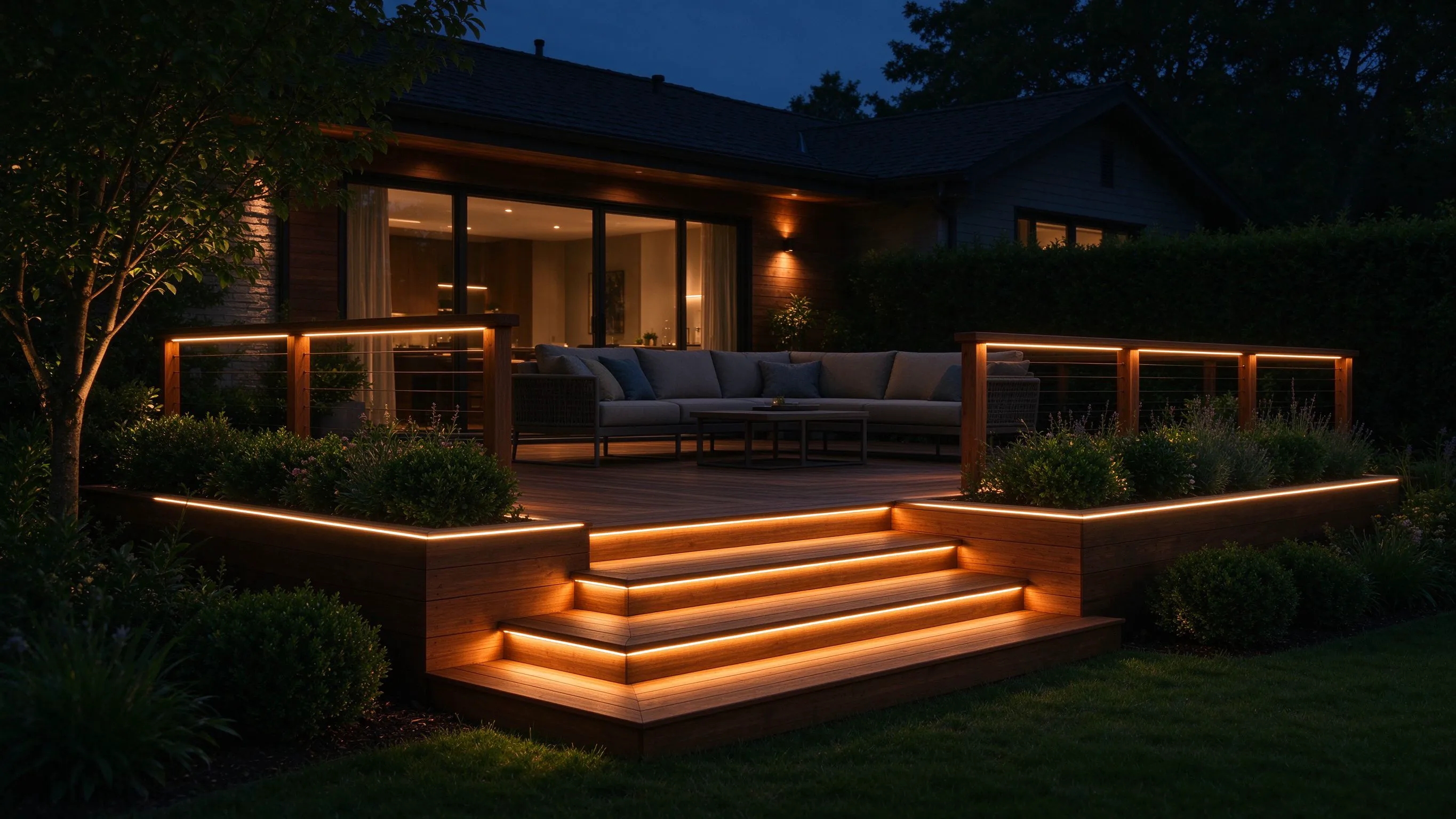
IP Ratings: What Each Part of the Yard Actually Demands
IP65 keeps out jets of water, IP67 survives temporary immersion, IP68 is rated for continuous submersion. Most patio and deck work only truly needs IP67, but anything in a water feature, a planter that floods, a trough, or a step that pools rain should be IP68. The number people miss isn't the strip's rating though - it's the connections, which are almost always where water gets in.
Matching IP rating to real outdoor exposure.
| Location | Exposure | Minimum rating |
|---|---|---|
| Under pergola / soffit (sheltered) | Rain-blown damp | IP65 |
| Deck edge / railing / fascia | Direct rain, some pooling | IP67 |
| Stair risers / step nosing | Rain, puddles, feet | IP67 |
| Planter beds, troughs, ground burial | Wet soil, flooding | IP68 |
| Pond / fountain / water feature | Continuous immersion | IP68 (submersible) |
| Connections & junctions outdoors | The real failure point | IP67/IP68 + sealed |
Deck Edges, Steps and Safety Lighting
The most useful outdoor strip work is low-level guidance that makes a deck safe after dark without turning it into a runway. Run IP67/IP68 neon or solid-COB along the deck fascia, under railings, and under each stair nosing aimed down at the tread. The light should graze the walking surface, not shine outward into eyes or across the garden.
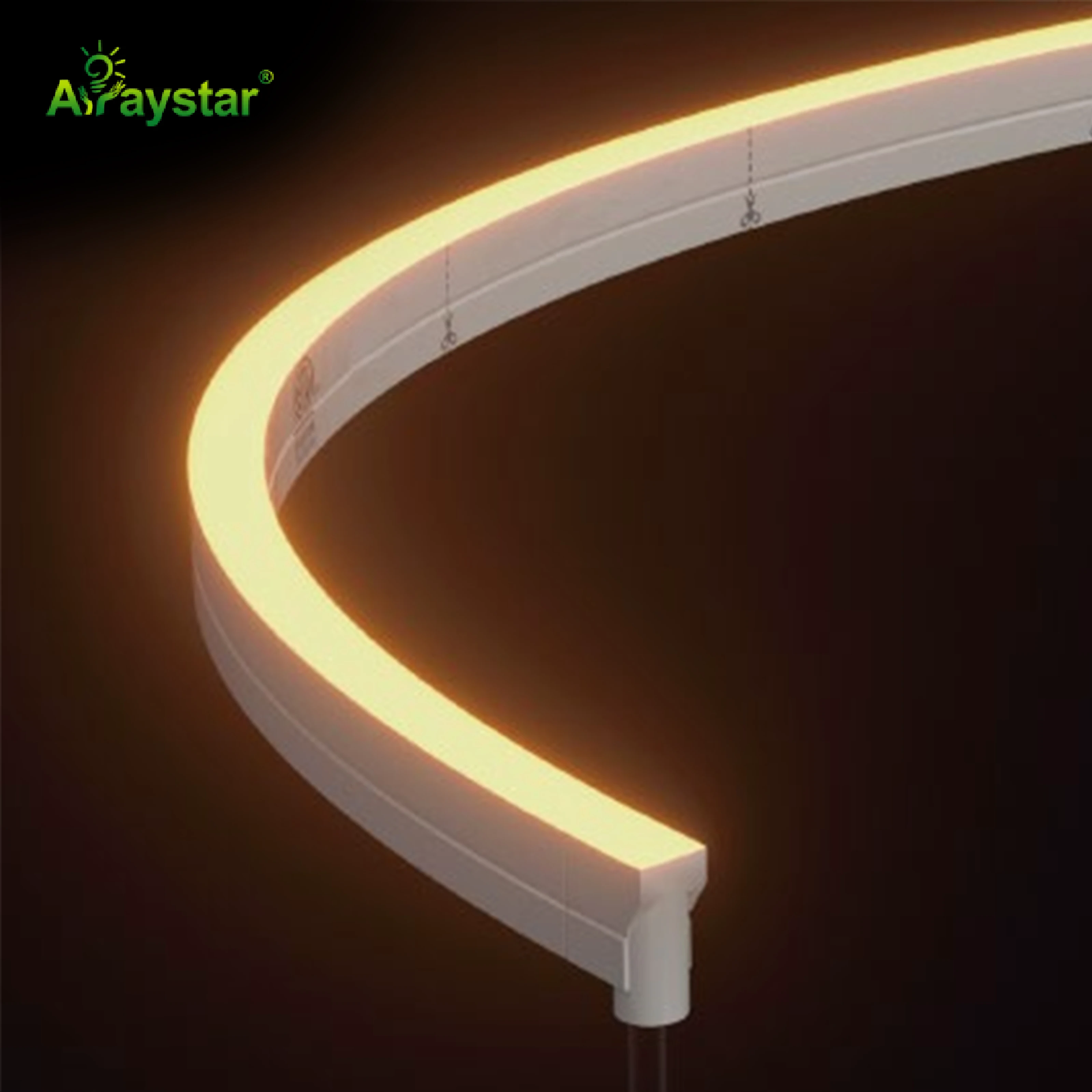
- Aim step light down at treads; shield it from standing and seated eye height.
- Mark every change in level - a single unlit step is where guests trip.
- Warm 2200-2700K feels natural outdoors; cool white looks like a car park.
- Dim it - landscape lighting is atmosphere, not sports-field illumination.
Pergolas, Gazebos and Overhead Structures
Overhead structures are where strip shines outdoors. Tuck IP67 free-cut COB under pergola beams and rafters to wash the seating below with warm light, or trace the roofline with neon for a defined 'room' in the garden. Free-cut product is genuinely useful here because pergola bays are rarely exact meter multiples - you cut to the actual bay length on site.
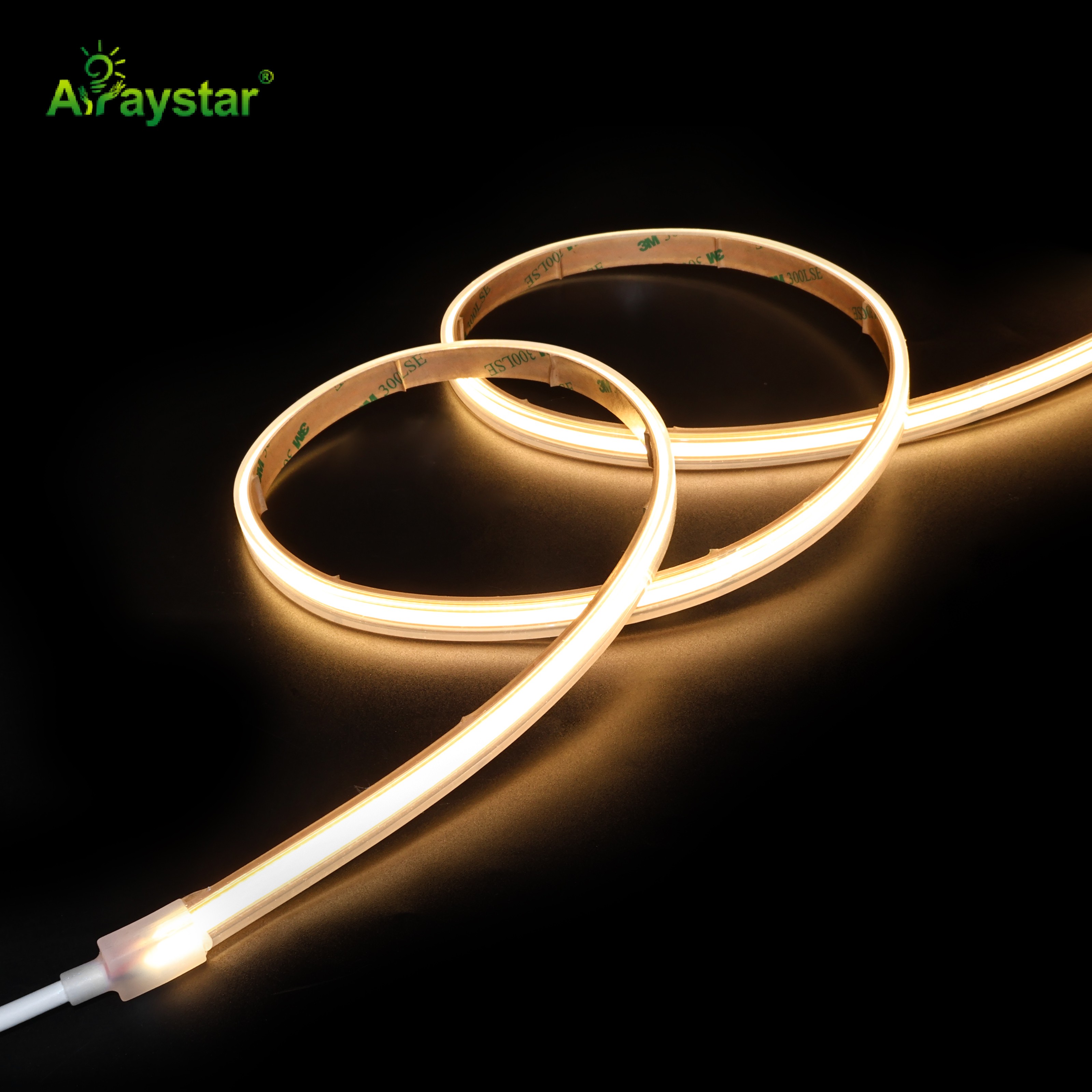
Mount the strip in an aluminum channel even outdoors - it protects against UV and mechanical knocks, acts as a heatsink, and hides the dots. Use UV-stable channels and stainless clips; plastic and standard steel become brittle or rust within a couple of seasons.
Washing Walls, Fences and Planting
A flex wall-washer aimed up a stone wall, a timber screen, a hedge or a specimen tree turns a flat dark boundary into a textured backdrop. Mount it low and close for dramatic grazing of rough surfaces, or further back for a smooth wash. Uplighting mature trees from the base creates canopy light that makes the garden feel larger at night.

- Graze rough stone and brick from close range to exaggerate texture.
- Wash fences and smooth walls from further away for even coverage.
- Uplight a few key trees rather than lighting every plant - restraint looks designed.
- Keep fixtures and glow out of neighbor-facing sightlines and bedroom windows.
Water Features and Planters: Go Full IP68
Ponds, fountains, infinity edges and sunken planters that hold water call for genuinely submersible IP68 product with sealed cable glands - not IP65 tape 'kept mostly dry'. Solid TPU or silicone neon is the practical choice: it's flexible, fully encapsulated, and safe to run along a waterline or under a fountain lip. Any connection in or near water must be in a rated junction box or use molded, sealed leads.
For low-voltage safety in gardens, 12V/24V strip is preferred near water and where children play, with the driver indoors or in a weatherproof enclosure. High-voltage outdoor product needs professional installation and residual-current protection.
Connections, Power and the Job That Lives or Dies at the Junctions
I'll say it twice because it's the whole game outdoors: the strip itself is usually sealed fine; the failures are at cuts, joins and cable entries where water wicks in. Use the manufacturer's sealed connectors, glue-lined heat-shrink, and IP-rated junction boxes. Route cable so water drains away from joints rather than into them, and never leave a cut end exposed even 'temporarily'.
- Seal every cut end and re-seal any field-made connection to IP67 or better.
- Drip loops in cable so water runs off before reaching a connector.
- Weatherproof drivers in a ventilated IP-rated box, not buried in soil.
- Use RCD/GFCI protection and, near water, low-voltage 12/24V.
- Bring outdoor lighting onto a timer or dusk/dawn + dimmer schedule.
Recommended Products
Frequently Asked Questions
What IP rating do I need for outdoor deck LED strips?
IP67 is the practical minimum for deck edges, railings and stair risers exposed to rain and puddles; use IP68 for planters, ground burial, troughs that flood, and any pond or fountain with continuous immersion. Equally important, seal every connection and cut end to the same standard - junctions are where water actually gets in.
Can LED strip lights be submerged in a pond or fountain?
Only genuinely IP68 submersible-rated product such as solid TPU/silicone neon, with molded sealed cable leads and rated junction boxes. Standard IP65 or even IP67 tape is not meant for continuous immersion and will fail - and near water use low 12/24V with RCD/GFCI protection.
How do I stop outdoor LED strips from failing?
Nearly all failures happen at cuts and connectors, not the sealed strip. Use the manufacturer's sealed connectors and glue-lined heat-shrink, IP-rated junction boxes, drip loops so water drains away from joints, UV-stable aluminum channels with stainless clips, and weatherproof drivers in ventilated enclosures.
What color temperature is best for garden and patio lighting?
Warm 2200-2700K looks natural and flattering outdoors, mimicking lantern and firelight; cool white makes a garden feel like a parking lot and is harsher on neighbors' eyes. Keep levels dim and use the light to guide paths and highlight a few key features rather than flooding the whole yard.
Should outdoor landscape LED strips be 12V or 240V?
Favor 12V/24V low-voltage strip near water, on decks and where children play, with the driver in a weatherproof location - it's safer and easier to install. High-voltage outdoor linear lights suit very long architectural runs but need professional installation, weatherproofing and residual-current protection.
Need help with your LED project?
Get factory-direct pricing, free samples and engineering support within 24 hours.
Email: info@arraystarled.com | Phone: +86-0755-2103-6746 | WhatsApp: 0086 1581 8514 077
Need to size your power supply? Use our LED Strip Power Calculator to find the right driver in seconds.







