A Dark Gap Where Two Profile Channels Meet at a Room Corner
- 2026-11-02 15:55
- /
- Arraystar LED
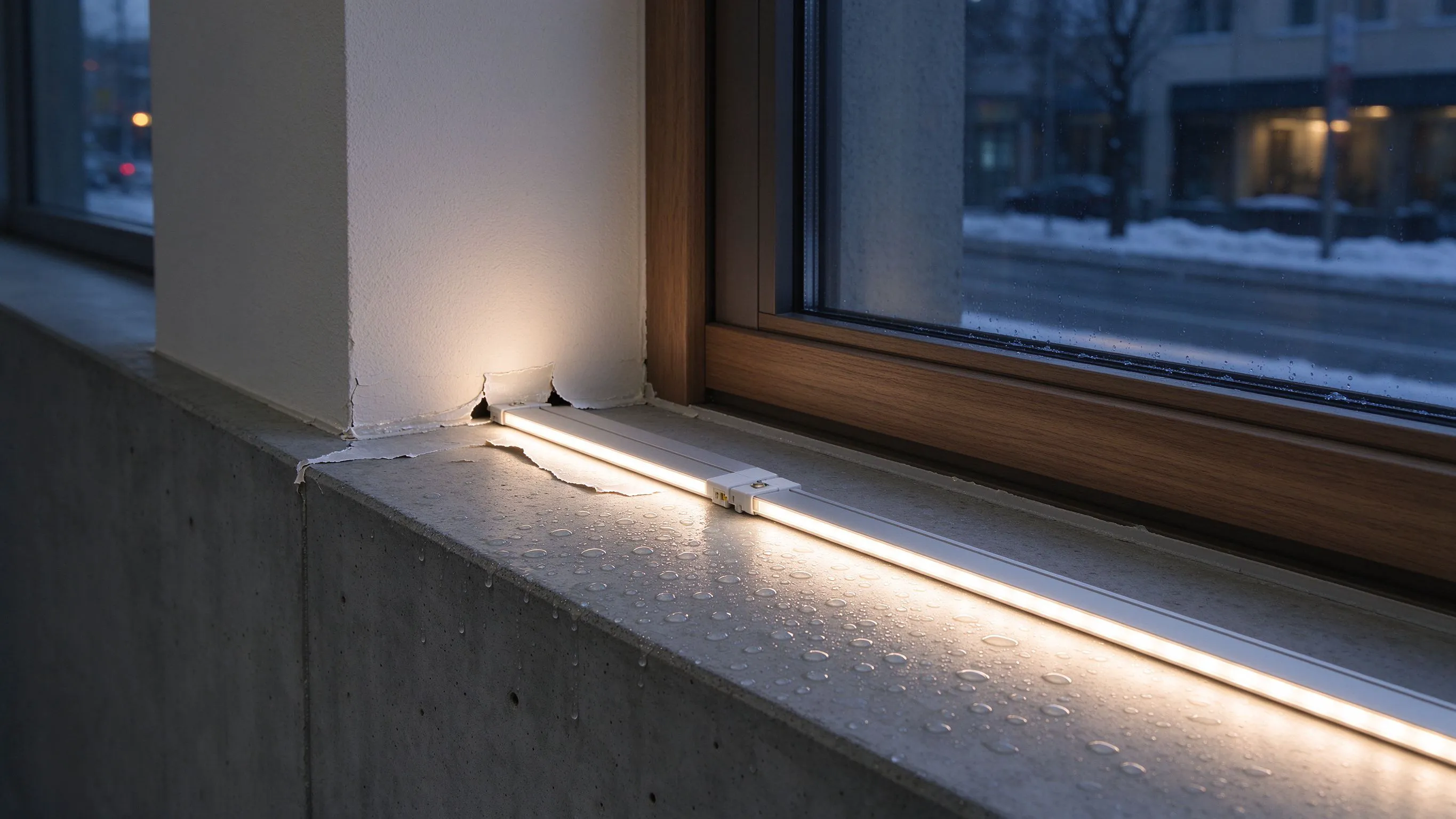
The dark V in the corner is not a channel defect. It is where two aluminium profiles butt up against each other and the strip inside each one stops 20 mm short of the joint. I bridge the corner with a dedicated connector and over-run the strip past the joint.
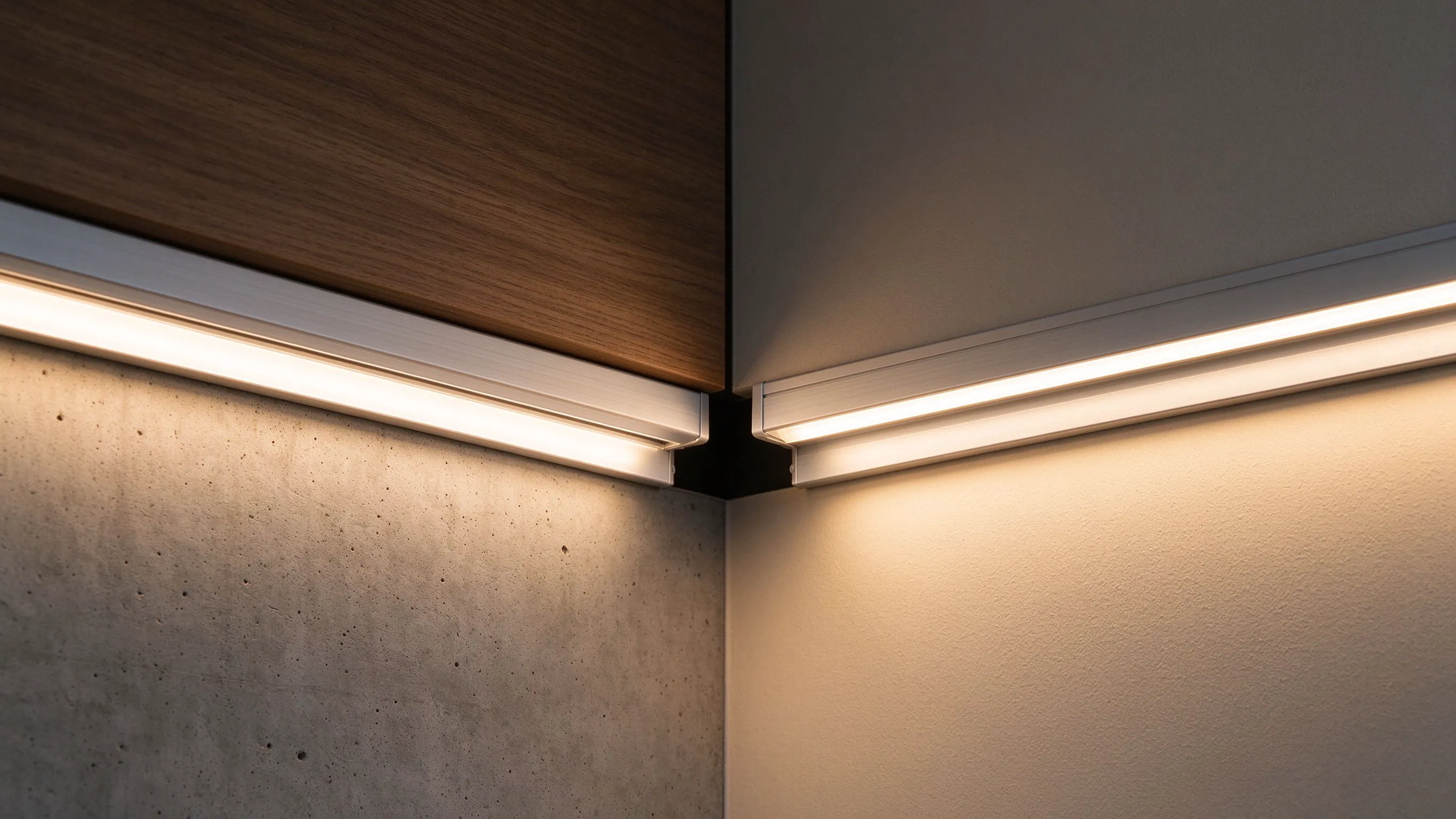
The dark V at the internal corner
A cove run goes along one wall, turns a 90-degree corner, and continues along the next wall. From the ceiling below it looks perfect, except at the corner there is a 15 to 25 mm wedge of dark shadow exactly where the two channels meet. The diffuser is continuous, the aluminium is mitered, but no light comes through that wedge. People assume the strip has been cut too short and pull the whole cove apart to fix it.
The strip has been cut too short, but by design, not by accident. LED strips have a cut line every 50 or 100 mm, and installers cut at the nearest line to the corner. That leaves a gap between the end of one strip and the start of the next, right at the point where the eye is most likely to look.
Why the gap reads so badly
A 20 mm dark gap in the middle of a wall run is barely noticeable, because the eye travels along the line and skips over it. At a corner, the gap sits exactly where the line bends, which is the visual anchor of the whole installation. It also reads worse because the two strips on either side are pointing at each other through the diffuser, so the dark wedge is bordered by bright edges on both sides.
The gap is not where the aluminium ends; it is where the strip ends.
| Corner type | Typical gap | Fix |
|---|---|---|
| Two channels butt-mitered | 15-25 mm dark wedge | Corner connector or strip over-run |
| Single channel bent around corner | Smaller, but stress on bend | Use a bendable profile |
| Two channels with gap filler | Medium, slight shadow | Over-run strip 30 mm past joint |
| Flexible neon tube around corner | None | No corner gap at all |
Bridging the corner with a connector
The clean fix
- Order a 90-degree corner connector for the exact channel model, not a generic one.
- Butt the two channels into the connector so the aluminium is continuous.
- Run the strip 30 to 50 mm past the joint, across the corner connector, before cutting.
- Solder or latch the two strip ends inside the connector if the corner is tight.
The corner connector is a small aluminium or plastic elbow that joins two channels at 90 degrees with a clean internal path. The strip runs through it, lit all the way. This is the factory solution, and it is why a professionally coved corner does not show the dark wedge. You have to order the connector at the same time as the channels, because they are profile-specific.

Over-running the strip on an installed run
If the cove is already installed and you cannot get the matching connector, the field fix is to pull the diffuser out, lift the strip, and over-run it. Cut the two strip ends so they extend 30 mm past the joint on each side, then bridge the two ends with a short flexible wire soldered across. The strip now lights through the corner itself, and the dark wedge disappears.
This works on monochrome strips easily. On addressable strips it is trickier because you have to bridge both power and data across the corner, but a 30 mm jumper on both wires is fine. Make sure the solder joint is insulated with heat shrink so it does not short against the aluminium channel.

Planning the corner before you install
The best fix is to avoid the gap in the first place. When I measure a cove, I add up the exact run lengths and I order the corner connector at the same time. I also spec a channel that is available in a bendable version for internal corners, so a single continuous piece wraps the corner with no joint at all. On an external corner the mitered join is fine; on an internal cove corner, the gap is always visible.
Recommended Products
Frequently Asked Questions
Why is there a dark gap where two LED channels meet at a corner?
Because the strip inside each channel stops at the nearest cut line, usually 15 to 25 mm short of the joint. The aluminium channel and the diffuser meet cleanly, but there is no LED under that wedge. The eye picks it up because the corner is the visual anchor of the whole run.
How do I fix a dark corner gap in an LED cove?
Either fit a 90-degree corner connector made for that exact channel, or over-run the strip 30 mm past the joint on each side and bridge the ends with a short soldered jumper. The goal is to have LEDs lit under the corner itself, not 20 mm away on either side.
Can I bend a straight LED channel around a corner?
Some profiles are designed to be bent, usually with score lines on the back that let you form a clean 90-degree internal corner. Standard extruded channels will kink and crack if you try to bend them. If you want a single continuous run around a corner, order the bendable version of the profile, not a straight one.
How long should I over-run the strip past a corner joint?
30 to 50 mm past the joint on each side. That puts at least two or three LEDs under the corner itself, which is enough to eliminate the dark wedge. Cut at the next cut line past that, so the solder or latch lands on a clean pad, not halfway between pads.
Does the corner connector work for addressable RGB strips?
Yes, but you have to bridge data as well as power across the corner. A corner connector usually carries only the 12 V and ground rails. You add a short wire for data from the DO of the last pixel before the corner to the DI of the first pixel after. Keep the data jump under 50 mm and it will work fine.
Need help with your LED project?
Get factory-direct pricing, free samples and engineering support within 24 hours.
Email: info@arraystarled.com | Phone: +86-0755-2103-6746 | WhatsApp: 0086 1581 8514 077
Need to size your power supply? Use our LED Strip Power Calculator to find the right driver in seconds.