
Rechargeable Wireless PIR Sensors for Retrofitted Cabinets
- 2026-10-09 18:41
- /
- Arraystar LED
Retrofitting motion-activated light into an existing cabinet or room usually fails on wiring: there is no route for a sensor cable and no power at the shelf. A rechargeable wireless PIR sensor solves both, running on a built-in rechargeable battery and communicating wirelessly, so existing cabinets gain presence-activated light with no wiring at all, ideal for pantries, hallways and rental properties.
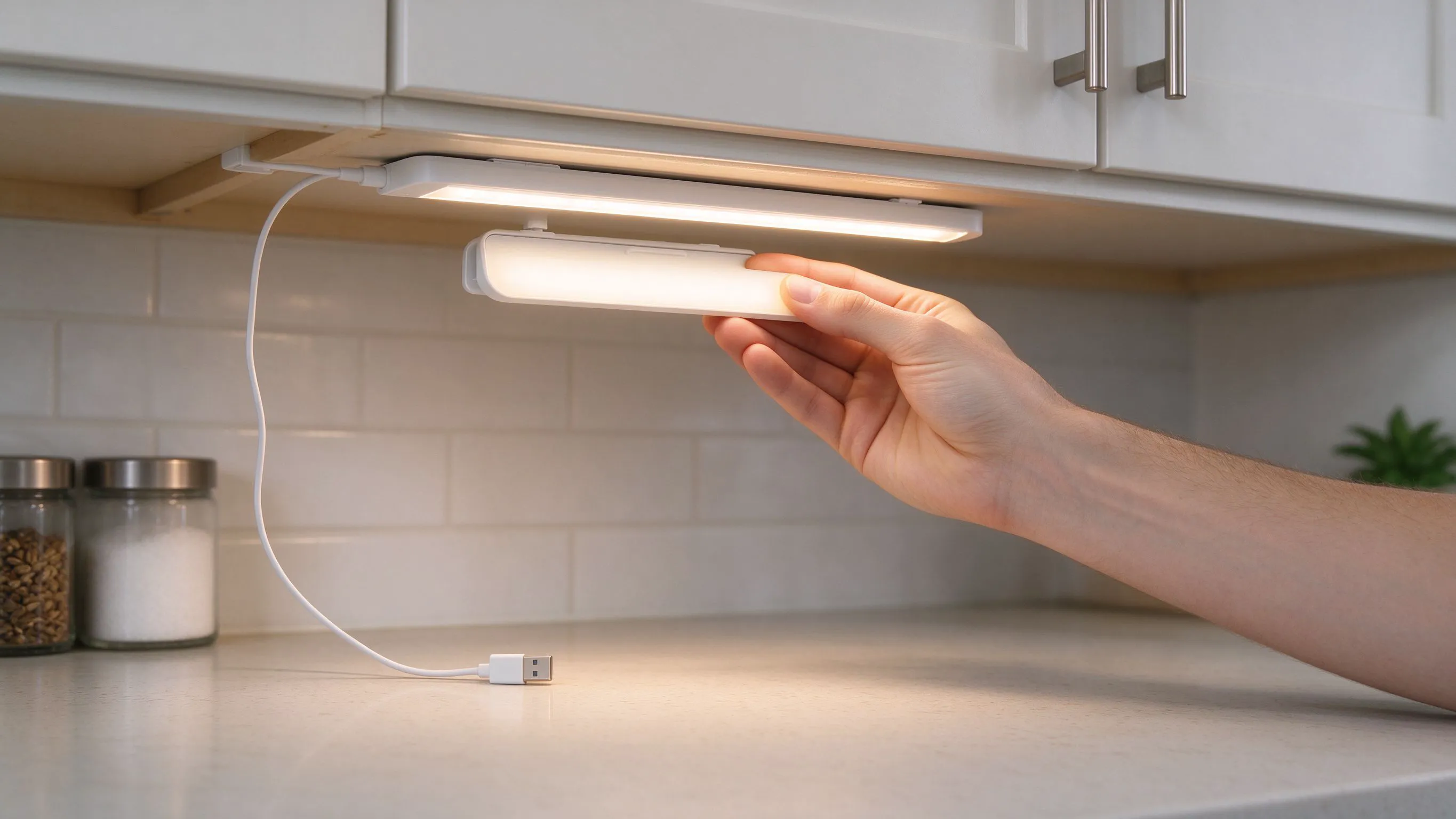
The Retrofitting Barrier: No Wires Available
Motion-activated cabinet light is easy to specify in a new build where cables can be planned in. It is far harder in an existing home: the pantry has no sensor wire, the hallway cupboard has no nearby power, and a rental property cannot have channels chased into the walls. Wired PIR systems simply cannot be added without disruptive and often prohibited electrical work.
A rechargeable wireless PIR removes both barriers at once. The sensor is battery-powered and communicates wirelessly, so it can be added to finished furniture with no wiring whatsoever.
What a Rechargeable Wireless PIR Offers
- Presence detection by passive infrared, switching light as you approach.
- Built-in rechargeable battery, no disposable cells or sensor wiring.
- Wireless control link to the LED receiver.
- Completely retrofit-friendly for existing cabinets and rooms.
- Auto on/off with adjustable time-out.
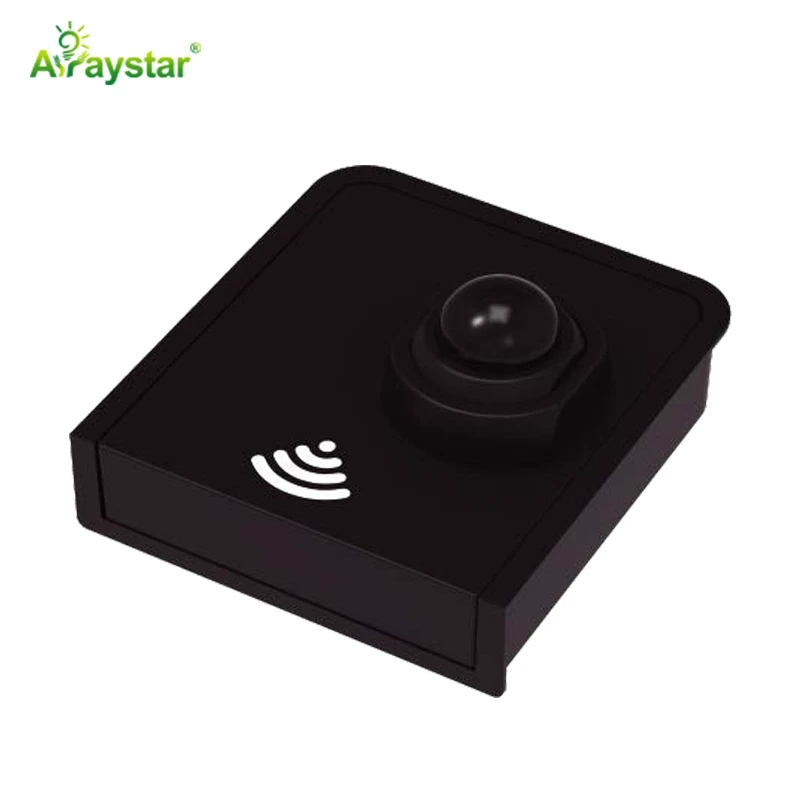
For wiring-free retrofits I use the rechargeable wireless PIR sensor. It adds presence control to finished cabinetry without touching the electrics.
PIR vs Door vs Hand-Wave for Retrofits
The rechargeable wireless PIR is the most general no-wiring retrofit option.
| Sensor | Wiring needed | Retrofit suitability |
|---|---|---|
| Rechargeable wireless PIR | None | Excellent for open shelves and rooms |
| Wireless door sensor | None (battery) | Best for hinged doors |
| Wireless hand-wave | None (battery) | Best for deliberate task control |
| Wired PIR | Sensor cable + power | New builds only |
Where It Is Specified
- Existing pantries, larders and open kitchen shelves.
- Hallway cupboards, under-stairs storage and utility rooms.
- Rental properties where wiring modifications are prohibited.
- Wardrobes and walk-in storage without existing power.
- Temporary or seasonal installations that must be removable.
Understanding PIR Detection and Placement
PIR detects moving heat, so placement decides performance. I mount the sensor with a clear field of view across the approach zone, away from direct airflow from vents, heat sources and windows that can cause false triggers, and at a height that catches a person entering rather than a pet passing. In a cabinet I angle it toward the opening so reaching in activates the light, and I set the detection range to cover the shelf without spilling into constantly occupied walkways that would keep the light on permanently.
- Give the sensor a clear view of the entry or approach.
- Keep it away from vents, heaters and direct sunlight.
- Set range to cover the storage, not adjacent occupied space.
- Angle cabinet sensors toward the opening and reach-in zone.
Time-Out, Daylight and Battery Management
I set the auto-off time-out to match how long the space is used, short for a quick pantry visit and longer for a walk-in wardrobe, and where the sensor offers a daylight setting I enable it so the light does not trigger in bright daytime conditions. The rechargeable battery's run-time depends on trigger frequency, so I position the USB charging point to be reachable and advise clients that high-traffic zones need more frequent top-ups; a sensor that begins dropping off early is usually prompting for a charge rather than failing.
What Wireless PIR Cannot Do
I am clear about the limits: PIR needs line of sight and responds to movement, so it is not ideal for a stationary reader hidden behind a shelf, and it is less precise than a door contact for a hinged cabinet. It is also part of a system where the LED side still needs its own power unless the whole fitting is battery-operated. For a hinged wardrobe I prefer a door sensor, and for deliberate wet-hand control a hand-wave sensor; the rechargeable PIR is chosen specifically for general approach activation where no wires exist.
Specifying a No-Wiring Retrofit
Send the cabinet or room type, approach geometry, how the space is used, available charging points and the LED load. I will confirm the rechargeable wireless PIR, receiver and power arrangement, sensor placement, range and time-out. We supply the rechargeable PIR and recommend walking-testing detection and false-trigger behaviour in the real space before fixing the sensor permanently.
Adding Motion Light to a Rental Pantry in an Afternoon
A tenant in a rented flat wanted light inside a deep pantry that was pitch black beyond the first shelf, but the lease prohibited any fixed wiring and the landlord would not allow switches or chased cables. A wired PIR was impossible, a door sensor was awkward because the pantry used a curtain rather than a hinged door, and a hand-wave sensor still required the tenant to remember to gesture while carrying jars and tins.
The rechargeable wireless PIR was the only sensor that matched the situation. We mounted one self-contained motion head inside the pantry roof aimed at the opening, paired it to a small receiver driving battery-and-USB powered strip along the shelf edges, and fixed everything with adhesive clips rather than screws so the installation was fully removable. There were no wires to a switch, no mains work and no holes beyond tiny clip mounts that peel away at the end of the tenancy. Opening the curtain and reaching in now triggers the light automatically, and the time-out was set long enough to read labels at the back of the deep shelf but short enough to switch off after the tenant left. Because the pantry is curtained and close to the kitchen, we angled the PIR and reduced its range so ordinary kitchen movement did not keep the light on all evening, a false-trigger issue we only caught by walking the real daily route rather than testing standing still. The sensor charges from a USB point on an adjacent worktop every few weeks, which the tenant found acceptable. Total install time was an afternoon, the deposit was protected, and the same hardware can move to the next flat. I use this case whenever a client assumes automatic cabinet light necessarily means an electrician and wall chases; for existing, rented or temporary spaces, a rechargeable wireless PIR turns motion lighting into an afternoon, removable, zero-wiring job, which is precisely the problem wired sensors cannot solve.
Recommended Products
Frequently Asked Questions
How does a rechargeable wireless PIR sensor work?
It detects moving body heat using passive infrared and, on a built-in rechargeable battery with no sensor wiring, sends a wireless signal to a receiver that switches the LED light on when someone approaches, then off after an adjustable time-out. It can be added to existing cabinets and rooms with no electrical wiring.
Is a rechargeable wireless PIR good for rental properties?
Yes, it is ideal for rentals and retrofits because it needs no sensor cable, no mains work and no permanent modification; the sensor is battery-powered and wireless, and can be removed without damage. Note the LED fitting itself still needs its own power unless the entire light is battery-operated.
Where should I position a PIR sensor to avoid false triggers?
Give it a clear view of the approach at a height that catches a person entering, and keep it away from heating vents, heaters, direct sunlight and windows, since moving heat and airflow cause false activation. In a cabinet angle it toward the opening, and set the range so it covers the storage without spilling into constantly occupied walkways.
How long does the rechargeable battery last?
Run-time depends on how often the sensor triggers, so high-traffic zones need more frequent USB charging than occasional-use cabinets. Plan a reachable charging point, enable any daylight setting to reduce daytime triggers, and choose a sensible auto-off time-out; a sensor that starts dropping out early usually needs a charge rather than replacement.
When is PIR the wrong choice for cabinet lighting?
PIR needs line of sight and reacts to movement, so it suits approach activation but not a stationary person hidden behind a shelf, and a door contact is more precise for a hinged wardrobe while a hand-wave sensor suits deliberate wet-hand control. Choose the rechargeable PIR specifically for general presence activation in spaces where no wiring is available.
Need help with your LED project?
Get factory-direct pricing, free samples and engineering support within 24 hours.
Email: info@arraystarled.com | Phone: +86-0755-2103-6746 | WhatsApp: 0086 1581 8514 077
Need to size your power supply? Use our LED Strip Power Calculator to find the right driver in seconds.







