
Wireless Door Sensors for Wardrobe and Cabinet Auto-Light
- 2026-10-09 18:41
- /
- Arraystar LED
A wardrobe or hinged cabinet should light the moment the door opens and switch off when closed, with no thought from the user. A wireless double-door sensor uses a contact trigger on the doors and a wireless sender, so the light activates automatically and no fragile control wire has to flex across the hinge where it eventually fails.
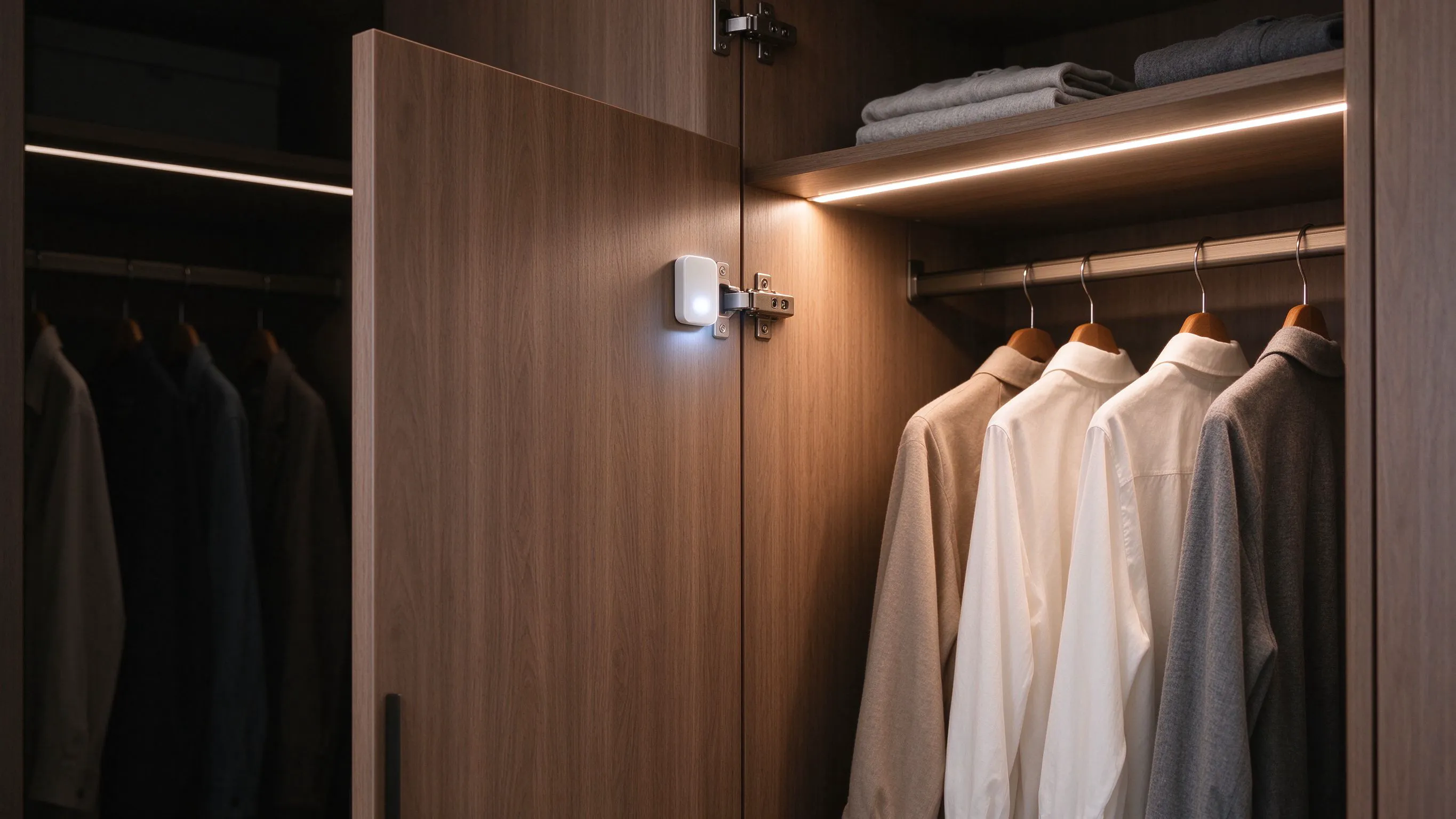
The Problem With Wired Door-Triggered Lights
Automatic wardrobe lighting is not new, but running a control wire from a door switch to the light creates a weak point: the wire must flex every time the hinge opens and closes, and over years of use it fatigues, loosens or breaks inside the cabinet where it is difficult to repair. Installation also means routing a thin wire through furniture that was not designed for it.
A wireless door sensor removes that moving wire entirely. The trigger sits on the door and frame and communicates wirelessly, so the hinge carries nothing but the door.
What a Wireless Double-Door Sensor Does
- Turns the light on when a door opens and off when closed.
- Double-door sensing for wardrobes with two hinged leaves.
- Wireless sender, no control wire flexing across the hinge.
- Fully automatic, no switch to remember.
- Simple magnetic/contact trigger with long battery life.
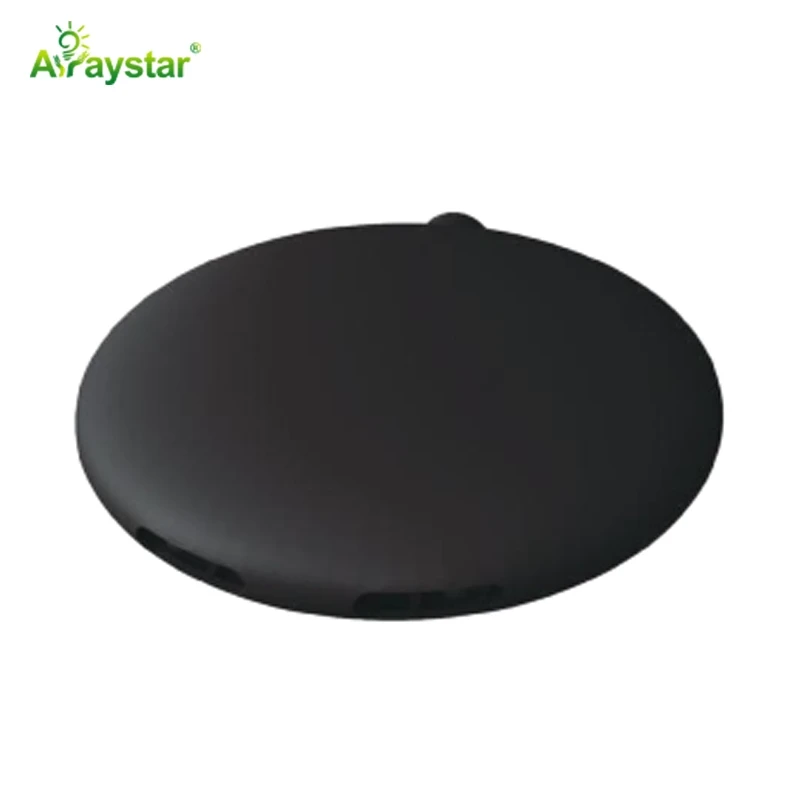
For hinged wardrobes and cabinets I use the wireless double-door sensor. It automates the light without the fragile moving wire that wired door switches depend on.
Door Sensor vs Hand-Wave vs PIR
For a hinged door, the contact trigger is the most direct and reliable.
| Sensor | Trigger | Best fit |
|---|---|---|
| Door contact | Door opening/closing | Hinged wardrobes, cabinets |
| Hand-wave | Deliberate gesture | Open shelving, wet kitchens |
| PIR motion | Person in range | Walk-in rooms, approach zones |
Where Wireless Door Sensors Win
- Bedroom wardrobes with single or double hinged doors.
- Kitchen wall cabinets and larders with hinged doors.
- Display cabinets that should illuminate when opened.
- Under-stair and built-in storage retrofits with no existing wiring.
- Furniture where a wire across the hinge would be unreliable.
Fitting the Contact and Magnet
The sensor relies on a contact pair, one part on the door and one on the frame, that separate when the door opens. I align the pair precisely so they meet cleanly when shut, mount them where the hinge movement separates them reliably rather than sliding past each other, and position them out of sight near the hinge or top edge. Misalignment is the main cause of a light that fails to switch or stays on, so I check operation through a full open-and-close cycle on both leaves of a double-door unit.
- Align contact and magnet to meet flush when the door is shut.
- Mount so opening separates the pair cleanly.
- Check both doors independently on a double-door wardrobe.
- Hide the pair near the hinge or top edge for a clean look.
Timing, Delay and Shut-Off Behaviour
Some controllers hold the light on for a short delay after the door closes, which prevents the light snapping off while someone is still choosing clothes with the door ajar, and others switch immediately. I set the behaviour to suit the storage: near-instant for kitchen cabinets, a short delay for wardrobes where doors are opened and held while browsing. For double doors I confirm the light stays on while either leaf is open and only switches off when both are closed.
Battery, Range and Retrofit Benefits
Because the trigger is wireless and battery-powered with a contact that draws almost no power until the door moves, battery life is long and the sensor is ideal for retrofitting existing wardrobes: no control wire, no chasing circuits through finished furniture, just the contact pair, a receiver at the light and a driver. I keep the receiver within reliable wireless range and clear of metal-heavy wardrobe hardware, and I verify operation after the wardrobe is fully loaded and closed.
Specifying Wardrobe Auto-Light
Send the number of doors per cabinet, the LED load, furniture materials, whether the wardrobe is a retrofit or new build, and preferred shut-off timing. I will confirm the double-door sensor, receiver and driver, contact placement and delay settings. We supply the wireless double-door sensor and recommend testing both doors through full open/close cycles after installation, since alignment is the detail that decides reliable switching.
Retrofitting a Walk-In Wardrobe Without Re-Wiring
A client wanted automatic light in an existing walk-in wardrobe that had been fitted years earlier with a single ceiling light and a pull switch. The wardrobe had double hinged doors at the entrance and internal drawers, and there was no practical route for new control wiring through the finished timber. A wired door switch would have meant lifting panels and threading a flexing cable through the entrance hinges, which the client wanted to avoid in a room that was already decorated.
The wireless double-door sensor solved it without touching the existing fabric. We fitted the contact pair to the two entrance doors and their frame, hid the receiver at the LED driver in the top of the wardrobe, and ran low-voltage strip along the hanging rails and above the shelving on its own small supply. Because the trigger was wireless, nothing had to cross the hinges at all. We set a short shut-off delay so the light stayed on while the client browsed with a door held ajar, and confirmed on the double-door logic that opening either leaf triggered the light and only closing both switched it off, which is the behaviour people actually expect when they are half-in, half-out of a wardrobe choosing an outfit. We also added a small manual override for when the doors were deliberately left open while dressing. The whole retrofit took an afternoon, required no chasing or panel removal, and the battery-powered contact sender meant there were no new wires anywhere. The client's only adjustment request after a week was to lengthen the delay slightly, a setting change rather than an installation change. It is a clean illustration of where the wireless door sensor earns its place: not in a new build where wires are cheap to plan, but in finished, decorated furniture where avoiding a single flexing hinge cable is the difference between a one-day retrofit and a destructive rebuild.
Recommended Products
Frequently Asked Questions
How does a wireless door sensor turn on cabinet light?
A contact pair, one part on the door and one on the frame, separates when the door opens; the wireless sender then signals a receiver at the LED supply to switch the light on, and closing the door reunites the pair and turns the light off. A double-door version handles two hinged leaves, keeping the light on while either is open.
Why is wireless better than a wired door switch in a wardrobe?
A wired switch needs a control wire that flexes across the hinge on every opening and closing, which fatigues and eventually breaks inside the furniture and is hard to route and repair. A wireless sender carries no moving wire across the hinge, making installation simpler and the system more durable, especially for retrofits.
Why does my wardrobe light stay on or fail to switch?
Usually the contact and magnet are misaligned so they do not meet cleanly when the door shuts, or they slide past rather than separate on opening. Refit the pair flush near the hinge, check each door on a double-door unit through a full open-and-close cycle, and confirm the receiver is within wireless range and not shielded by metal.
Should the light turn off immediately when I close the door?
That depends on the storage. Kitchen cabinets suit near-instant shut-off, while wardrobes benefit from a short delay so the light stays on while you browse with the door ajar. On a double-door wardrobe the light should remain on while either leaf is open and switch off only once both are closed; most controllers allow this timing to be set.
Can a wireless door sensor be added to an existing wardrobe?
Yes, it is well suited to retrofits because no control wire has to be run through finished furniture. Fit the contact pair to the door and frame, place a receiver at the LED supply within wireless range and clear of metal hardware, add the driver and strip, then verify operation after the wardrobe is fully loaded and closed. The contact sender's battery lasts a long time because it draws almost no power at rest.
Need help with your LED project?
Get factory-direct pricing, free samples and engineering support within 24 hours.
Email: info@arraystarled.com | Phone: +86-0755-2103-6746 | WhatsApp: 0086 1581 8514 077
Need to size your power supply? Use our LED Strip Power Calculator to find the right driver in seconds.







