
Lighting a Restaurant, Bar or Brewery Taproom With LED Strip: Layers That Make People Stay
- 2026-10-08 17:37
- /
- Arraystar LED
People stay longer and spend more where the light makes them and the food look good, so hospitality lighting is about layering and dimming, not raw brightness. The formula I use on restaurants, bars and brewery taprooms is consistent: warm, high-CRI, glare-shielded ambient and cove light over the dining room; a brighter, accurate layer at tables and the pass; a flexible colour/accent layer for the bar front, bottle shelves and feature walls; and sealed, washable product in service and prep areas. Then put it all on scenes that shift through the evening - bright and welcoming for early service, dim and atmospheric late. Get the CCT, CRI and control layers right and the room does half the atmosphere work for you.
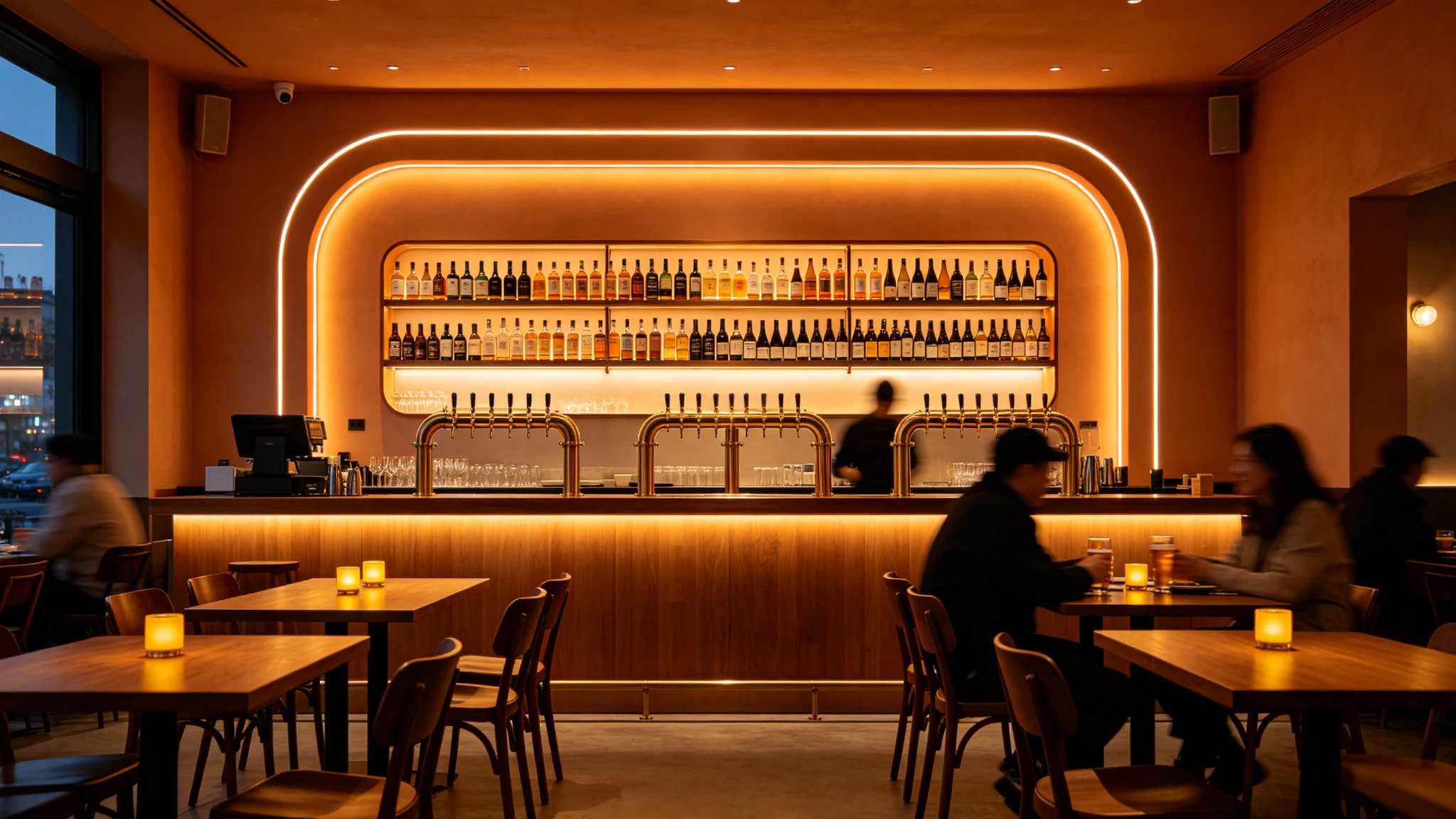
Start With Three Light Layers, Not One Bright Ceiling
A common mistake is flooding a dining room with even downlight brightness, which makes the space feel like an office and flattens everything. Good hospitality lighting separates into layers: ambient (the general glow, often from cove and wall-wash), task (light where staff and customers actually need to see - tables, the pass, the bar top, tills) and accent (art, bottles, architecture, branding). Strip excels at the ambient and accent layers and can handle task in shelving and behind bars.
- Ambient: warm indirect cove and wall-wash for mood and perceived comfort.
- Task: brighter, higher-CRI light at tables, bar top, pass and POS.
- Accent: bottle shelves, art, brick walls, signage and the bar front.
- All layers dimmable, mixed to scenes rather than switched on/off as one.
CCT and CRI - Make the Food and the People Look Right
For dining areas I anchor around 2700-3000K warm white - it flatters skin tones, makes food look appetising and feels relaxing. I avoid cool 4000K+ in the dining room unless the concept is deliberately clinical. Just as important is color rendering: CRI 90+ with a strong R9 keeps food, wood, brass, drinks and faces rich; cheap low-CRI strip makes a beautiful plate look grey and a craft beer look dull. Specify high-CRI bins everywhere a customer judges color.
Cooler light belongs in working zones, not where customers linger.
| Zone | CCT | CRI / notes |
|---|---|---|
| Dining room / seating | 2700-3000K | CRI 90+, dimmable, warm and flattering |
| Bar top / bottle display | 2700K white + optional RGB | Make glass and labels glow |
| Feature brick/timber wall | 2700-3000K wash | Grazing reveals texture |
| Pass / prep / till | 3500-4000K | Brighter, accurate for staff and safety |
| Restrooms / corridors | 2700-3000K | Dim, warm, on sensors where suitable |
Wall-Washing Brick, Timber and Feature Walls
Craft breweries and converted industrial venues usually have great raw texture - exposed brick, timber, tile, concrete - that flat lighting wastes. A grazing wall-washer mounted close to the top or bottom of the wall throws light across the surface, raking every joint and imperfection into relief and adding depth with almost no glare in customers' eyes. The 3D free-bend flex wall washer is ideal here because it follows irregular walls and wraps columns and arches that rigid bars cannot.
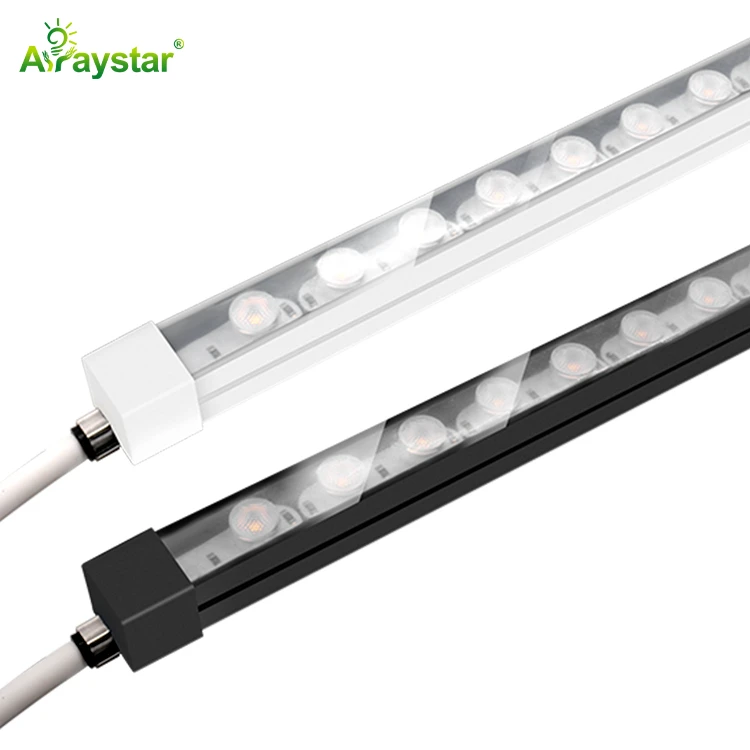
Keep the grazing line continuous and hide the source behind a small baffle or beam so diners see the lit texture, not the LEDs. A dimmed warm wall-wash behind banquette seating is one of the highest-impact, lowest-cost atmosphere moves in the whole fit-out.
The Bar Front and Bottle Shelves - Where Colour Earns Its Place
The bar is the visual centrepiece and the one place I happily use dynamic colour. A smooth magic-color RGB neon line along the bar front and up the bottle shelving gives the venue a signature glow that can sit at warm white during dinner service and shift to saturated colour for late-night trade. Continuous neon avoids the dotty cheap look that individual LED modules give on a bar face.
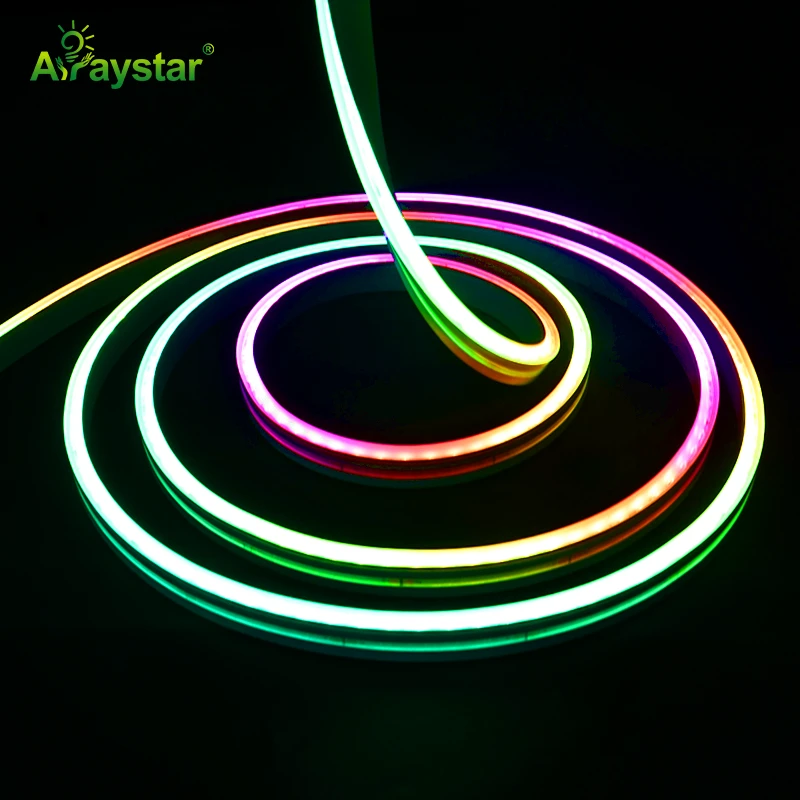
Back-bar shelving wants two things at once: accent that makes bottles glow and enough honest light to read labels and pour accurately. I run RGB or tunable neon for the signature look and add a warm high-CRI white strip under each shelf tier for task, with the white and colour on separate dimmers so the bartender is not pouring under purple light.
Service Areas - Sealed, Washable and Accurate
Behind the bar and in prep zones the priorities flip: spills, sanitiser spray, steam and nightly pressure-wiping mean the strip must be sealed (IP65 minimum, IP67 near sinks and glass washers), and the light should be cooler and brighter so staff can see stock, garnishes and cleanliness. IP65 silicone-tube COB under the bar rail, along speed rails and inside under-bar fridges and shelves gives continuous, washable task light that survives service.
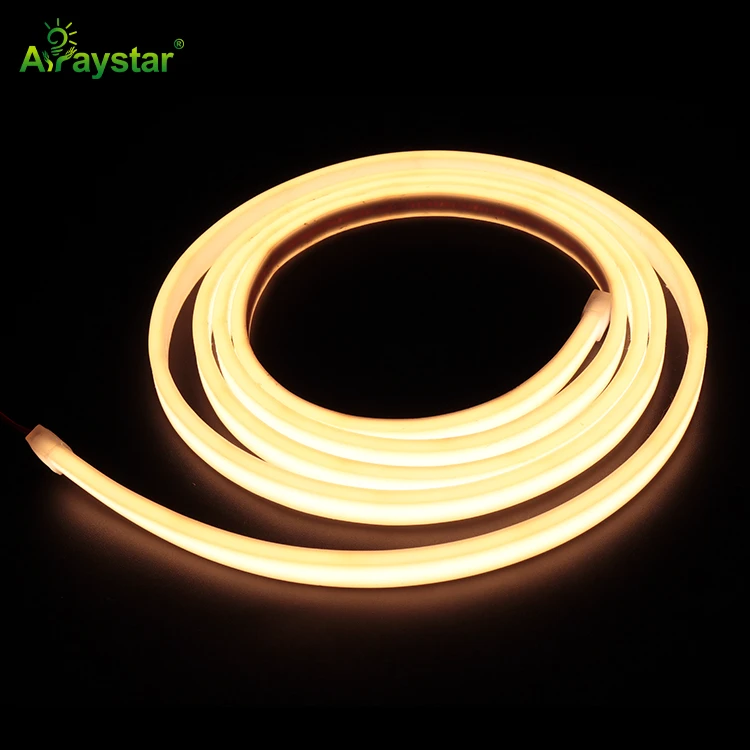
- Rate everything within splash range IP65/IP67 and run it in wipe-clean profiles.
- Use 3500-4000K high-CRI at the pass and prep so plate quality and garnish read true.
- Keep drivers above the floor and away from glass-washer steam and liquid.
- Put emergency and cleaning routes on a separate always-available circuit.
Scenes That Follow the Evening
The final layer is control. I program three or four timed or one-button scenes rather than handing staff a pile of remotes: a bright 'open/lunch' scene, a warm 'dinner' scene, a dim colourful 'late' scene, and a low 'cleaning/close' scene. Smooth, flicker-free dimming is essential because restaurants are content factories - customers film plates and pour shots, and any strobe ruins them. Use dimmable high-CRI drivers and matched controllers, and favour simple wall panels staff cannot get wrong over apps nobody opens during a busy service.
Walk the room at night with the client and set levels by eye at table height, not from a ladder at the fixture. The goal is that guests feel good without noticing the fixtures - and that is the mark of hospitality lighting done right.
Where to Spend the Budget First
If the budget is tight, spend it in this order: high-CRI dimmable drivers and warm high-CRI strip in the dining room, because color quality and smooth dimming are what guests actually feel; then the bar front and bottle shelving that get photographed for social media; and only then dynamic colour and extra zones. A cheap driver that buzzes or flickers undermines an otherwise beautiful fit-out, whereas a slightly simpler accent layout running on good drivers still looks expensive.
- Prioritise CRI 90+ and flicker-free dimming in seating areas over chasing maximum lumens.
- Hide every source behind lips and baffles - visible hot LEDs cheapen a room faster than anything.
- Spend on sealed, serviceable product behind the bar to avoid rework in a wet environment.
- Keep drivers accessible and label every scene so staff can run the lighting without a lesson.
Recommended Products
Frequently Asked Questions
What color temperature is best for a restaurant or bar?
Use warm 2700-3000K with CRI 90+ in dining and drinking areas - it flatters skin tones, makes food and drink look appetising and feels relaxing. Keep cooler 3500-4000K light for working zones like the pass, prep and till areas where staff need bright, accurate light. The bar front and bottle shelves can add tunable or RGB colour for late-night atmosphere, but keep a warm white layer for actual task and label reading.
How do you light a bar front and back-bar shelves?
Run continuous RGB or tunable neon along the bar front for a signature glow, and add warm high-CRI white strip under each back-bar shelf tier so bottles are highlighted and labels stay readable for pouring. Put the colour and white on separate dimmers - colour for atmosphere late, white for service. Use IP65/IP67 sealed product behind the bar to survive spills and nightly wash-down, and hide the LEDs behind a small lip to avoid glare.
What LED strip works behind bars where drinks get spilled?
Specify sealed IP65 silicone-tube COB as a minimum and IP67 solid-silicone strip close to sinks, glass washers and ice wells, mounted in wipeable aluminium profiles. It survives sanitiser spray, steam and nightly cleaning far better than bare IP20 tape. Keep drivers up off the floor and away from moisture. Continuous COB gives smooth task light under the bar rail, on speed rails and inside shelves without visible dots.
How do I make a brewery taproom or restaurant feel cozy with LED strip?
Build it from warm indirect layers rather than bright overheads: a dimmed 2700-3000K cove around the perimeter, wall-washers grazing exposed brick or timber for depth, and low accent light on the bar and art, all on dimmable high-CRI drivers. Keep glare out of guests' eyes by hiding sources behind baffles and lips, then program scenes that are bright for lunch and progressively warmer and dimmer as the evening goes on.
Do restaurant LED lights need to be flicker-free?
Yes. Restaurants and bars are constantly filmed by customers and used for the venue's own social content, and visible PWM flicker shows as rolling bands on camera and can cause eye strain over a long evening. Specify flicker-free dimmable drivers with high PWM frequency, matched controllers and high-CRI strip, and test every dimming scene with a phone camera before opening. Flicker at full brightness usually points to an overloaded or cheap high-ripple driver rather than the strip.
Need help with your LED project?
Get factory-direct pricing, free samples and engineering support within 24 hours.
Email: info@arraystarled.com | Phone: +86-0755-2103-6746 | WhatsApp: 0086 1581 8514 077
Need to size your power supply? Use our LED Strip Power Calculator to find the right driver in seconds.







