
LED Strip in a Swimming Pool: IP68, Low Voltage and Potting That Actually Stays Dry
- 2026-10-08 17:37
- /
- Arraystar LED
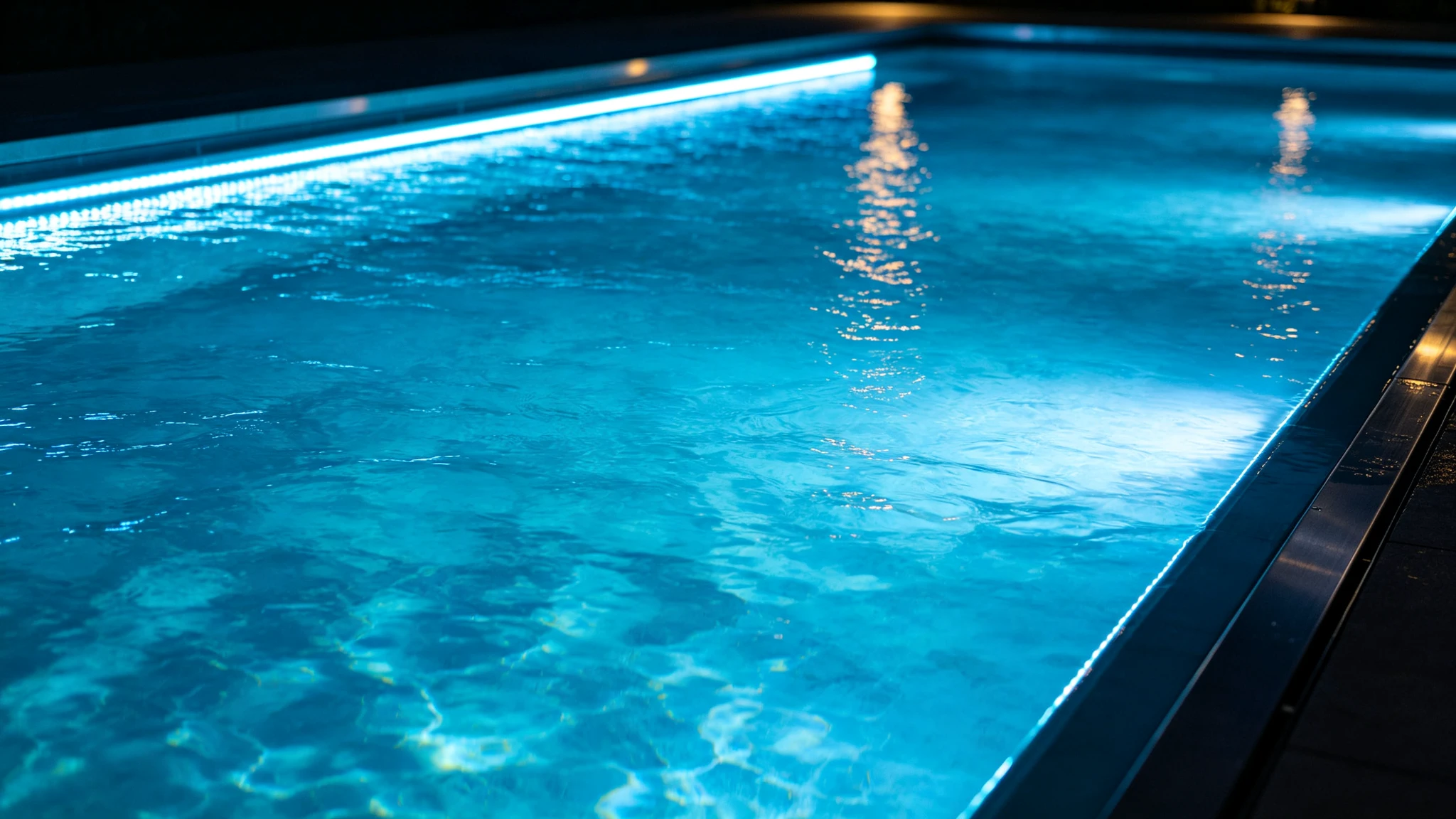
Lighting a pool or fountain is first an electrical-safety project and only secondarily a lighting one. Water and electricity leave no margin: the product must be genuinely IP68 and purpose-rated for permanent submersion (not just 'waterproof' outdoor tape), it must run on safety extra-low voltage through an isolating transformer, every cut and joint must be potted and tested, and the metalwork must be bonded. The good news is that when you use solid TPU IP68 neon with factory or fully potted heads, the right slim or bold profile for the location, and stainless mounting channels, the install is robust and serviceable. Cut corners on sealing or voltage and you do not just risk a dead light - you create a shock hazard, so this is one area where I never improvise.
Safety Before Aesthetics: SELV, Isolation and Bonding
Permanently submerged lighting must run on safety extra-low voltage (typically 12V or 24V SELV) fed through an isolating transformer rated for pool/wet use, never mains voltage in the water. The driver/transformer lives well outside the pool zone in a dry, ventilated location, and every submerged connection is IP68 with no accessible mains. Local wiring codes define strict zones around a pool and may require additional protection and a qualified electrician - follow them, they exist because water lowers the body's resistance dramatically.
- Use only SELV 12V/24V underwater product with an isolating transformer outside the pool zone.
- Bond all metal channels, ladders and fittings to the equipotential grid per local code.
- Use an RCD/GFCI with the required trip rating on the circuit.
- Never put a mains driver, splice or un-rated connector where it can be submerged or splashed.
- Have the electrical work inspected before the pool is filled or energised.
IP68 Product Anatomy - and Why 'Waterproof' Is Not Enough
IP68 means the sealed assembly is rated for continuous immersion under the manufacturer's specified pressure and time. For strip this means solid TPU or silicone extrusion with the LEDs fully encapsulated and, critically, factory-moulded or fully potted end caps and cable entries. A sleeved IP65 or even IP67 tape with hollow tubing and glued caps is not an underwater product - water will eventually find the glue line and flood the cavity. I use three form factors depending on the detail being lit.
For narrow waterline and coping detail where a bulky tube would look heavy, the slim TP1010 IP68 TPU strip tucks into a tight channel and disappears when off. It is my choice for modern pools where the light source should be a subtle line rather than a visible fixture.
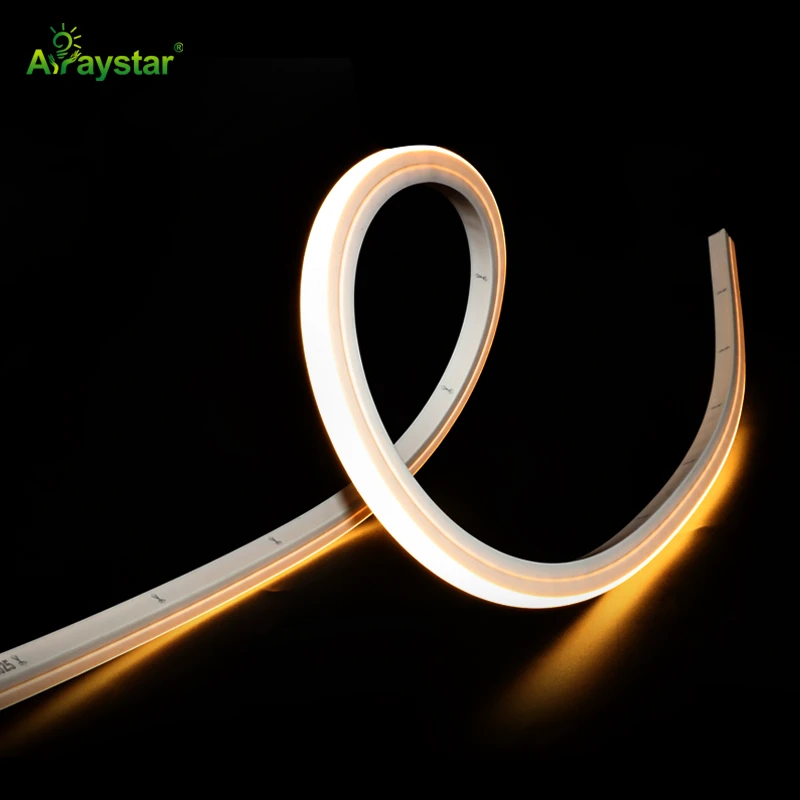
For general underwater runs, fountain shelves and feature walls I use TPU-extruded IP68 neon with fully potted heads - the solid extrusion and moulded terminations are what make it safe to leave submerged year-round, and the round or square neon cross-section throws a smooth even line with no visible dots.
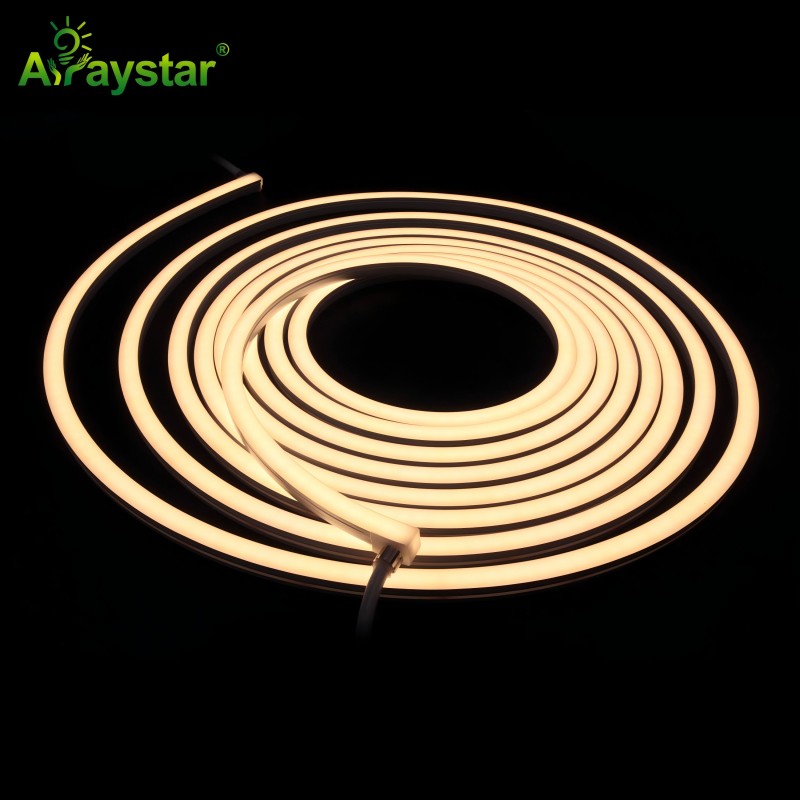
For bold perimeter outlines, spill edges and steps that need to read clearly from across the garden at night, the larger NS1616 IP68 neon gives a substantial, uniform glow and stands up to the mechanical knocks that pool edges and water features take. Match the profile size to the distance it is viewed from - small profiles vanish at range.

Where the Light Goes: Zones and Effects
Submerged and merely exterior lighting need different products - do not mix them up.
| Location | Profile I reach for | Effect / note |
|---|---|---|
| Waterline / coping | Slim TP1010 in channel | Subtle glow, hides when off |
| Fountain shelf / feature wall | Mid TPU neon, potted heads | Smooth wash, fully submerged |
| Perimeter / spill edge | Larger NS1616 neon | Bold outline visible at distance |
| Steps and ledges | Slim strip, recessed | Safety marker, avoid glare in eyes |
| Around the pool deck (dry side) | IP67 strip, not submerged | Uplight/wash, easier spec |
Aim light across or along surfaces rather than up into bathers' eyes, and recess the strip into a channel or under a lip wherever it marks steps. Glare from a bare underwater line at eye level when you are in the water is uncomfortable and defeats the premium look you are paying for.
Mounting, Potting and the Soak Test
Mount submerged neon in 316 stainless or plastic channels and clips - ordinary steel and even 304 stainless can corrode in chlorinated or saltwater pools. The channel protects the extrusion from being pried off, hides the cable, and holds the bend radius. Route cables in conduit where they enter the pool wall, with a drip loop and sealed gland on the dry side.
- Use factory-moulded fly-leads wherever possible; minimise field terminations underwater.
- Where a field joint is unavoidable, pot it fully in the matched resin and use a mechanical IP68 connector - never tape.
- After assembly, soak every sealed length in a bucket for 24-48 hours unpowered and inspect for internal fogging before installation.
- Bring all cable exits above water level to a dry junction box; do not join cables underwater.
- Pressure-test if the manufacturer offers it for deeper features; IP68 depth ratings differ.
Chemistry, Maintenance and Long-Term Reliability
Chlorine and salt attack cheap metals and degrade some plastics over years, so specify corrosion-resistant hardware and UV-stable TPU intended for pool use. Tell the client that balanced water chemistry protects both the pool and the lighting - severe chemical imbalance can cloud even good extrusion over time. Make terminations and drivers accessible on the dry side so a driver swap never requires draining the pool.
At service time, inspect the potted heads and cable glands once a year for chalky sealant or tiny bubbles inside the jacket, and replace any suspect length immediately rather than waiting for water to migrate. A correctly installed IP68 neon system is genuinely low-maintenance, but the sealing is the whole product - inspect it like the safety component it is.
Color and Brightness Once the Light Is Underwater
Water filters light - reds and warm tones are absorbed first as depth increases, which is why underwater photography shifts blue. In a shallow pool or fountain this barely matters and warm 2700-3000K white looks inviting against stone and timber; in deeper features a neutral or slightly cooler white travels further and reads crisper. RGB adds drama for parties, but I always provide a clean white default, because coloured light on skin and swimwear is a novelty rather than the look most hotel and residential clients want every night.
Specify brightness for the submerged distance and the surface finish: pale tiling reflects a modest output beautifully, while dark pebble and deep-blue mosaics absorb light and need a bolder profile or closer spacing. Test a short length in the actually filled pool if you can - reflection and refraction change the effect completely compared with a dry sample lying on the workbench.
Recommended Products
Frequently Asked Questions
Can normal LED strip be used underwater in a pool?
No. Ordinary or even IP65/IP67 sleeved strip is not rated for permanent submersion; water will eventually pass the glued end caps and enter the hollow tube. You need solid TPU/silicone-extruded IP68 neon with factory-moulded or fully potted terminations, running on SELV 12V/24V via an isolating transformer, with bonded metalwork and GFCI protection. Anything less is both a reliability and a shock-safety risk.
What voltage should underwater pool LED strip be?
Safety extra-low voltage - typically 12V or 24V SELV - supplied through an isolating transformer located outside the pool zones, with the circuit on an RCD/GFCI. Mains voltage must never be present at or in the water. The lower voltage also suits the relatively short runs around a pool. Always follow local pool-wiring zones and have a qualified electrician sign off the installation before filling.
How do I seal LED strip ends for permanent submersion?
Prefer factory-moulded fly-leads and potted heads and avoid field terminations underwater. Where a cut is unavoidable, fit the matched IP68 end cap and cable gland, pot it fully with the manufacturer's resin or matched PU adhesive, add glue-lined heat-shrink and strain relief, allow full cure, then soak the assembled length unpowered for 24-48 hours and check for internal fogging before installing. Tape and hot glue are never acceptable underwater seals.
IP67 vs IP68 for a swimming pool - which do I need?
For anything permanently under water - waterline, fountain shelves, submerged steps - you need IP68 product rated for continuous immersion at the relevant depth. IP67 covers temporary immersion and is appropriate for the dry pool deck, splash zones and exterior wash-down areas, not the submerged parts. Use IP68 solid neon in the water and IP67 strip for surrounding landscape lighting, and never substitute one for the other.
How do you mount LED neon inside a pool so it lasts?
Use 316 stainless or UV-stable plastic channels and clips (304 steel and ordinary steel can corrode in chlorine or salt water), recess the neon under lips to avoid glare, and route cables in conduit through the wall with sealed glands and drip loops to a dry junction box above water level. Keep drivers and terminations accessible on the dry side so service never requires draining the pool, and inspect the potted heads annually.
Need help with your LED project?
Get factory-direct pricing, free samples and engineering support within 24 hours.
Email: info@arraystarled.com | Phone: +86-0755-2103-6746 | WhatsApp: 0086 1581 8514 077
Need to size your power supply? Use our LED Strip Power Calculator to find the right driver in seconds.







