
RGBW Pixel Neon Flex for Chasing Storefront Animations
- 2026-10-09 18:40
- /
- Arraystar LED
RGB pixel neon can chase and change colour, but pure RGB makes a muddy white and pastel tints. An RGBW pixel neon adds a dedicated white LED, so the same run delivers saturated chasing effects and a genuinely clean white for normal trading hours. For a storefront that animates to attract attention and then settles to crisp white branding, RGBW is the version worth specifying.
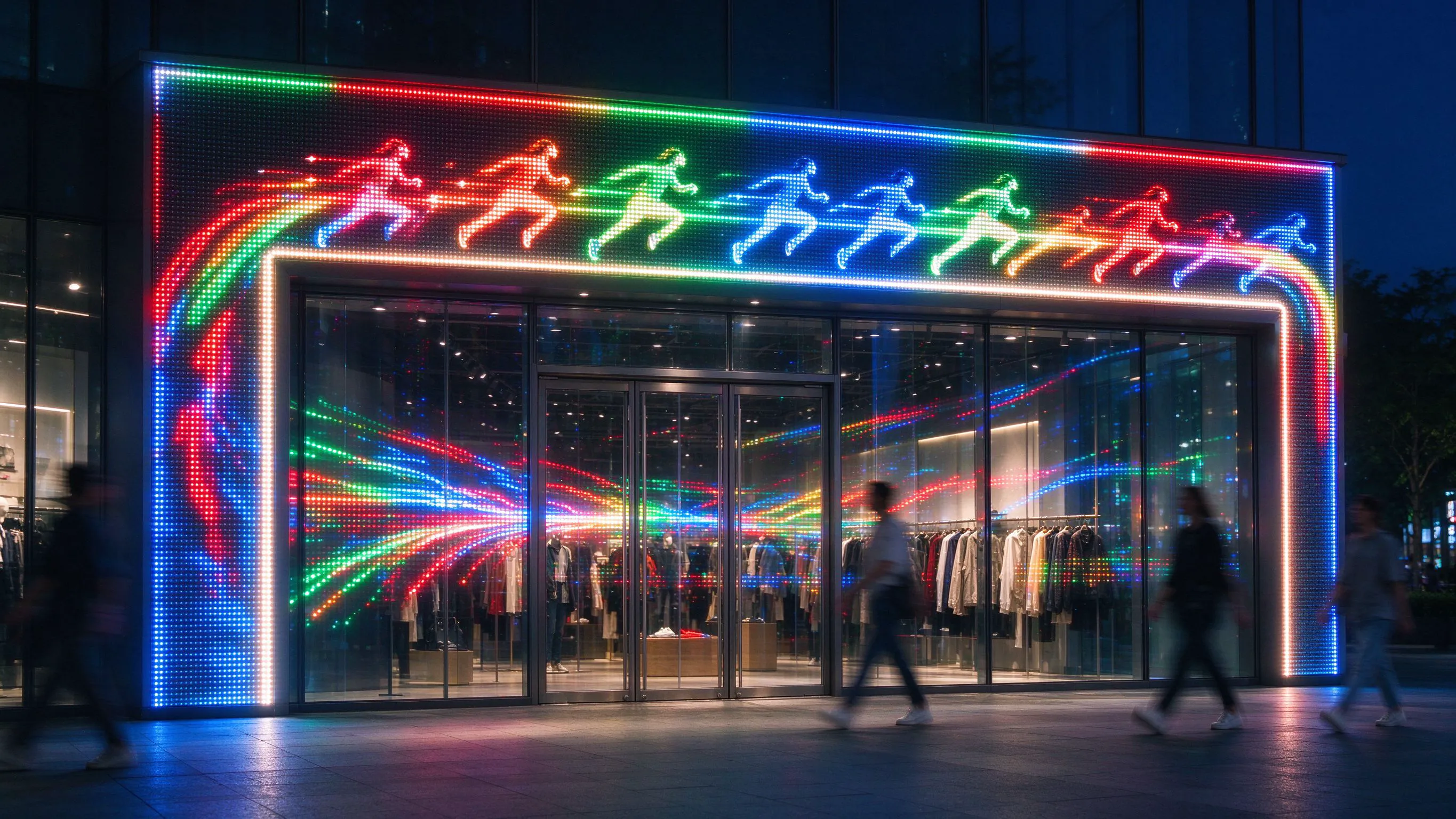
The Problem With Pure RGB for Storefronts
Addressable RGB neon is brilliant at attention-grabbing effects: colour sweeps, chases, seasonal palettes and animated outlines. But an RGB chip has no true white emitter; it fakes white by lighting red, green and blue together, which produces a slightly grey, pink or lavender wash rather than the clean neutral white a brand logo usually wants.
A storefront generally needs both modes: animated colour to pull eyes during a promotion, and clean white for the rest of the time. Pure RGB forces a compromise on that everyday white; RGBW removes it.
What the Extra White Channel Adds
- A true white emitter for neutral, warm or cool whites without the RGB colour cast.
- Clean pastel tints that mix colour chips with white instead of greying out.
- Brighter, more efficient white than faking white from three colour chips.
- Independent control so designers can run pure colour, pure white or blended tones.
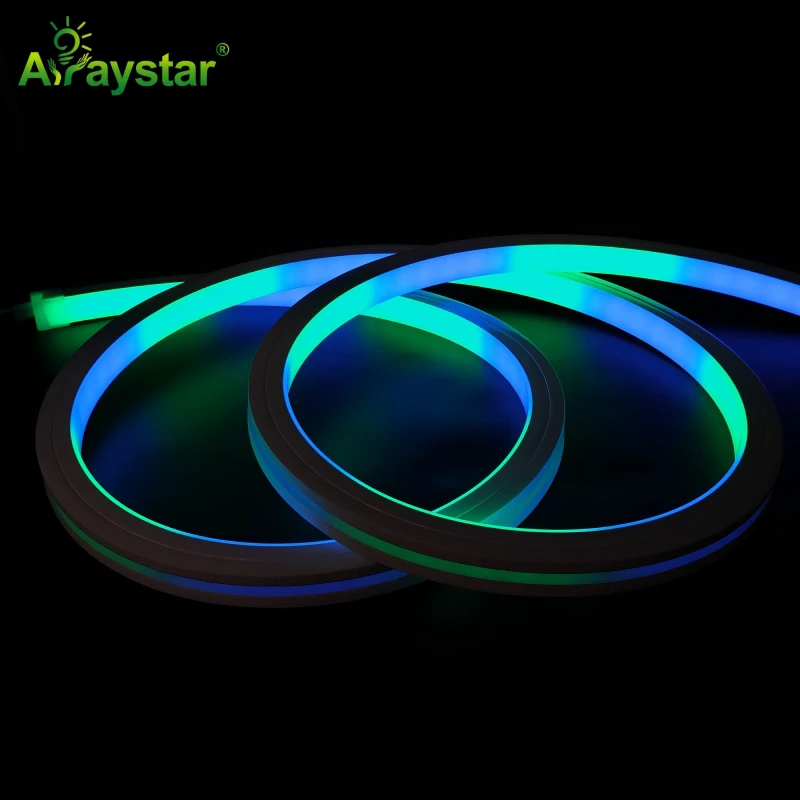
The RGBW pixel neon ART-NS1616 is the version I specify for storefronts that refuse to choose between animation and brand-correct white. It keeps the addressable effects while giving the sign a credible neutral state for everyday trading.
How Addressable (Pixel) Neon Works
Unlike a single-colour strip where the whole run changes together, pixel neon contains individually addressable segments controlled by an IC and a data signal. A controller sends instructions along the strip, so segment 10 can be red while segment 11 is blue and segment 12 is off. That per-segment control is what creates chases, flowing gradients, text-like sequencing and effects that appear to move along the sign.
Pixel control adds effect capability and a little more planning.
| Feature | Non-addressable RGB/RGBW | Addressable RGBW pixel |
|---|---|---|
| Whole-run colour changes | Yes | Yes |
| Chasing / flowing effects | No | Yes |
| Per-segment control | No | Yes |
| Controller complexity | Simple | Requires pixel controller |
| Data wiring sensitivity | Low | Higher; signal must be managed |
Matching the Controller and Protocol
Pixel effects live or die on the controller. I match the neon's IC type and pixel count to a controller that supports the four-channel RGBW data order, because an RGB-only controller will not drive the white chip correctly and can leave the extra channel dead or miscoloured. Before ordering I confirm the IC, the channel order (RGBW vs WRGB etc.), the pixels per metre and the desired control method, whether app, Wi-Fi, Art-Net/DMX or a standalone program.
- Confirm the IC model and that the controller explicitly supports RGBW (four channels).
- Match data colour order or set it in the controller to avoid swapped colours.
- Check maximum pixel count per controller output for the run length.
- Plan for power injection on long pixel runs, which draw heavy current in full-white.
Power Realities of Full-White RGBW
A pixel run looks modest in a single colour but its current spikes when every chip, including white, is driven at once. I calculate power for the worst-case full-white state, size drivers for that peak, and inject power at intervals on long storefront outlines. Under-powering a chasing sign causes exactly the symptoms that look like a controller fault: colour shifts at the far end, glitches and effects that break partway along the run.
Designing Effects That Help, Not Annoy
- Use motion to draw the eye to an entrance or offer, then settle; constant high-speed flashing cheapens a brand.
- Keep chases smooth and legible from across the street rather than frantic up close.
- Respect local signage rules and any limits on animated or flashing storefront lighting.
- Program a clean white default for trading hours and reserve colour for campaigns.
- Test effects at night from the customer's approach, not just at the sign.
Data Signal Reliability on the Outline
Pixel data is more sensitive than plain power. Long runs, tight bends and poor joins can corrupt the signal, producing frozen or wrong-colour sections. I route data cleanly, use the controller's recommended wiring, add signal amplification or split long runs where the pixel count demands it, and keep data and high-current power layouts coordinated. Testing the full effect after installation, not just a static colour, catches signal issues before the client sees them.
Specifying a Chasing Storefront
Tell me the outline length, pixels per metre, the IC type if known, how you want to control it (app, DMX/Art-Net or standalone), and whether clean white is a daily requirement. I will confirm an RGBW pixel product, a compatible four-channel controller and the power-injection layout. We supply the RGBW NS1616 pixel neon and suitable controllers, and can advise on effect programming so the sign attracts attention during promotions and still presents crisp white branding the rest of the time.
Building a Show Schedule That Actually Runs
The hardware is only half of a chasing storefront; the programming decides whether it looks premium or like a discount arcade. I build a simple weekly schedule rather than leaving the controller on a single demo loop, and I keep the motion tied to what the business is actually doing at each hour.
- Opening and closing: a short gentle sweep or fade to draw attention as the store opens and winds down.
- Daytime trading: settle to clean static white or a slow, subtle brand-colour breathing effect.
- Promotional periods: a scheduled chase or seasonal palette during the campaign, then back to calm.
- Late evening: dim or switch to a low static state to avoid glare and respect local night-time signage rules.
I avoid stacking every available effect into one loop; restraint reads as higher quality and is also more reliable, because complex fast sequences are where under-powered setups glitch. Before handover I watch a full scheduled cycle at the real brightness and from across the street, confirm the controller keeps its program after a power cycle, and make sure the staff know how to return to the safe static-white state if an effect misbehaves. A storefront that reliably animates on schedule and defaults to crisp white is far more effective than one that runs a frantic demo for a week and then gets switched off because nobody trusts it. Documenting the show file and keeping a backup also means a replacement controller can be restored in minutes rather than reprogrammed from scratch.
Recommended Products
Frequently Asked Questions
What is the difference between RGB and RGBW pixel neon?
RGB uses red, green and blue chips and fakes white by mixing them, which gives a slightly tinted or greyish white. RGBW adds a dedicated white chip, producing a clean neutral white and better pastels while keeping full colour and chasing effects. Storefronts that need both animation and brand-correct white should choose RGBW.
Can RGB pixel neon create chasing effects?
Yes, addressable pixel neon has individually controllable segments driven by a data signal, which creates chases, flowing gradients and colour sweeps that appear to move along the run. Non-addressable RGB can only change the whole run at once and cannot chase.
Do I need a special controller for RGBW pixel neon?
Yes. The controller must support four-channel RGBW and match the strip's IC type, pixel count and data colour order; an RGB-only controller will not drive the white chip correctly. Confirm the IC, pixels per metre and control method (app, DMX/Art-Net or standalone) before ordering.
Why do my chasing effects glitch at the far end?
Usually power or data. Full-white and full-colour states draw high current, so under-sized drivers or missing power injection cause colour shift and glitches at the far end, while long or poorly joined data runs can corrupt the pixel signal. Size power for the full-white peak and add signal amplification on long runs.
How fast or flashy should storefront animations be?
Use smooth motion to draw attention to an entrance or promotion and then settle to a calm state, ideally a clean white for normal trading. Constant high-speed flashing cheapens the brand, is hard to read from across the street and may breach local animated-signage rules, so test effects at night from the customer's approach.
Need help with your LED project?
Get factory-direct pricing, free samples and engineering support within 24 hours.
Email: info@arraystarled.com | Phone: +86-0755-2103-6746 | WhatsApp: 0086 1581 8514 077
Need to size your power supply? Use our LED Strip Power Calculator to find the right driver in seconds.







