SK6815 12V Addressable Strips for Long Pixel Runs
- 2026-10-09 18:40
- /
- Arraystar LED
Classic WS2812-style pixel strips run on a fragile single-line data chain where one damaged pixel can black out everything after it, and voltage drop limits run length. The SK6815 addressable IC adds a backup signal path so data continues past a failed pixel, and its higher-voltage variants tolerate longer runs, making it the reliable choice for large permanent pixel installations where service access is difficult.

The Weak Point of a Simple Pixel Chain
Popular addressable strips like the WS2812 family pass data in a daisy chain: each pixel reads its instruction and forwards the remainder to the next. It is elegant and cheap, but it creates a single point of failure. If one pixel's input is damaged by a bad solder joint, moisture, heat or physical impact, the signal can stop there, and every pixel downstream goes dark or freezes.
On a small desk project that is a minor annoyance. On a permanent architectural installation metres up a facade or inside a sealed feature, one dead pixel killing a whole section is a costly service call.
What SK6815 Adds: Signal Break-Point Continuation
- Backup signal line that bypasses a failed pixel.
- Data continues downstream even if one pixel is damaged.
- Higher-voltage variants (such as 12V-class) for longer runs.
- Grouped LEDs per IC on 12V versions, improving run stability.
- Standard SPI control familiar from WS2812-style workflows.
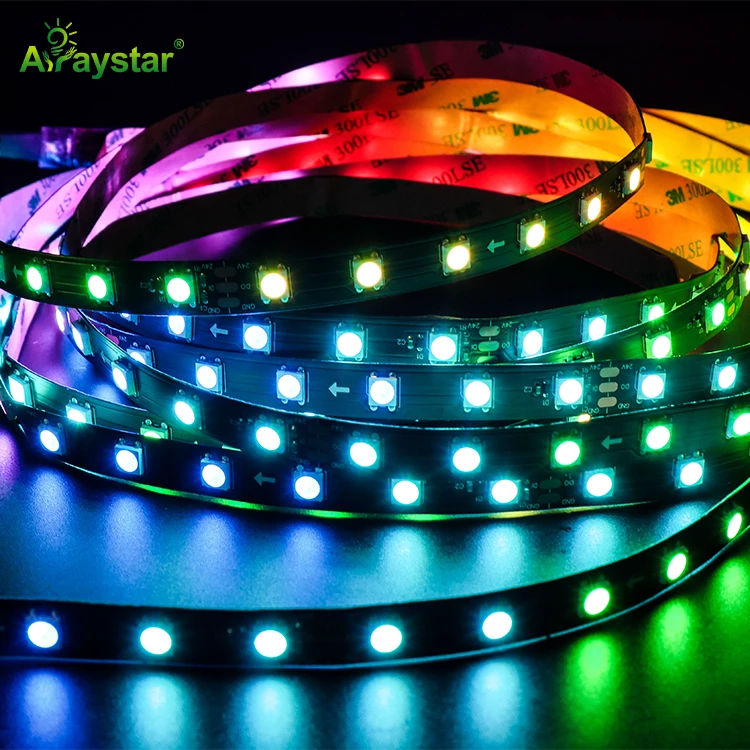
For large permanent pixel work I use the SK6815 SPI strip. The break-point continuation is the feature that turns a fragile demo technology into something you can install behind finished surfaces with confidence.
SK6815 vs WS2812-Style Pixels
SK6815 is built for reliability at scale.
| Factor | WS2812 / single-line | SK6815 |
|---|---|---|
| Signal path | Single daisy chain | Primary plus backup |
| One failed pixel | Can kill downstream run | Signal bypasses it |
| Typical voltage | Often 5V | 12V-class options available |
| Long-run voltage drop | Significant at 5V | Reduced at higher voltage |
| Suited to | Small projects | Large permanent installs |
Where the Reliability Matters Most
- Large feature walls and ceilings in commercial interiors.
- Facade and signage pixel grids that are difficult to access.
- Permanent bar, club and hotel installations sealed behind finishes.
- Long pixel runs where a single failure would be conspicuous.
- Rental and stage pieces that survive repeated transport and setup.
Understanding 12V Pixel Grouping
Higher-voltage addressable strips such as the 12V SK6815 typically group several LEDs per control IC rather than controlling every LED individually. The trade-off is between granularity and practicality: you lose a little per-LED resolution, which matters for ultra-fine graphic displays, but you gain much better voltage tolerance over distance and fewer control nodes. For ambient washes, chases and large-scale effects the grouping is invisible; for fine text or low-resolution video screens it is worth checking the pixel pitch against the content.
- 12V suits long architectural runs; 5V suits fine-pitch small displays.
- Confirm LEDs-per-IC to know the true controllable resolution.
- Ambient and chase effects hide grouping; fine graphics may not.
Powering Long Pixel Runs
Addressable strips must be treated as power-hungry at full white, and long runs need injection at regular intervals regardless of the backup signal. I size supplies for all-channels-white current, inject power every few metres according to the strip, keep wire gauges adequate, and avoid common-rail failures by distributing feeds. The backup data line protects against signal faults, not against under-powering, so a long SK6815 run still needs disciplined power injection to stay bright and even.
- Calculate current at full white, not at an average effect level.
- Inject power at the datasheet interval on long runs.
- Use adequate wire gauge and distributed supplies.
- Keep data and power wiring tidy to avoid signal interference.
Controllers, Signal Distance and Buffering
On very large installations I add receiver/buffer boards or split the design into powered data segments rather than pushing one endless chain, and I keep the controller's data line within reliable distance, using a booster where the run from the controller is long. Even with break-point continuation, good engineering practice is to divide a big feature into serviceable zones, each fed and buffered, so a problem is isolated and the show can often continue on the other zones while one is repaired.
Specifying a Large Pixel Installation
Send the feature dimensions, desired effect (ambient wash, chase, graphics or video), viewing distance, run lengths and access for maintenance. I will confirm whether SK6815 and its voltage/pitch suit the content, the power-injection layout, data buffering and zoning for service. We supply the SK6815 SPI strip and recommend prototyping the longest single run and a simulated pixel failure before full installation, so the break-point continuation and brightness uniformity are proven rather than assumed.
A Nightclub Ceiling Built to Survive a Failed Pixel
A nightclub ceiling design called for hundreds of metres of addressable pixel strip woven into an overhead canopy, running animated colour washes and chases every night until late. The strip would be sealed behind translucent panels several metres above the dance floor, where reaching a single failed section meant scaffolding the room and losing trading nights. The client had previously used an inexpensive single-chain pixel product in another venue and twice lost a metre-long section of ceiling when one pixel failed after a power surge, with the black patch visible over the busiest part of the dance floor for weeks until maintenance could be scheduled.
We specified the SK6815 strip specifically for its break-point continuation and divided the canopy into serviceable zones, each with its own data buffer and distributed power injection sized for full-white current. During commissioning we deliberately disabled individual pixels on a test section and showed the client how the animation kept running through the fault, with only the single damaged point dark rather than the chain after it. Over the venue's first season the canopy suffered the inevitable few pixel failures that come with heat, vibration and long running hours, but none of them took down a section, and the affected points were small enough to batch into routine maintenance rather than forcing emergency closures. The 12V-class runs also held their brightness across the long canopy spans with far fewer injection points than a 5V equivalent would have needed. The total material cost was higher than the cheap single-chain product, but against even one unscheduled scaffolding closure and the visible black ceiling patches that had plagued the previous venue, the reliability upgrade paid for itself quickly. It is the clearest example I point to when a client questions why a permanent, inaccessible pixel feature should not be built from the cheapest addressable strip on the market.
Recommended Products
Frequently Asked Questions
What is the SK6815 addressable LED strip?
It is an SPI addressable pixel strip, similar in use to WS2812-style products but with a backup signal path. If one pixel is damaged, the data bypasses it and continues to the pixels downstream, instead of the whole section after the fault going dark. Higher-voltage 12V-class variants also tolerate longer runs.
What does signal break-point continuation do?
It means the strip carries a backup data line that routes the control signal around a failed pixel, so one damaged LED or solder joint does not black out everything after it as on a single-chain WS2812 strip. It greatly improves reliability for permanent, hard-to-access installations.
Should I use 5V or 12V addressable strip for a large install?
Use 12V-class SK6815 for long architectural runs because higher voltage reduces voltage drop and extends distance between power feeds; use 5V fine-pitch strip for small displays needing per-LED control. Note that 12V versions group several LEDs per IC, which is invisible for washes and chases but worth checking for fine graphics.
Does the backup signal remove the need for power injection?
No. Break-point continuation protects the data signal, not the power supply. Long addressable runs still draw heavy current at full white and need power injected at regular intervals with adequate wire gauge and distributed drivers, or the far end dims and colours shift regardless of the data redundancy.
How do I make a very large pixel feature reliable and serviceable?
Divide it into powered and buffered data zones rather than one endless chain, add receiver or buffer boards for long controller distances, inject power per zone, and prototype the longest run plus a simulated pixel failure before installation. Zoning isolates faults and often lets the rest of the show continue during repair.
Need help with your LED project?
Get factory-direct pricing, free samples and engineering support within 24 hours.
Email: info@arraystarled.com | Phone: +86-0755-2103-6746 | WhatsApp: 0086 1581 8514 077
Need to size your power supply? Use our LED Strip Power Calculator to find the right driver in seconds.