Backlighting a Headboard with SMD Strip: Wall Gap and Cable Routing
- 2026-10-28 10:03
- /
- Arraystar LED
A backlit headboard looks cheap if the wall gap is wrong and the cable shows. After one job where the light pool looked like a spotlight, I settled on a 30 mm gap, a hidden cable channel, and a dimmed 15 percent output. It looks like the wall is glowing, not the bed.
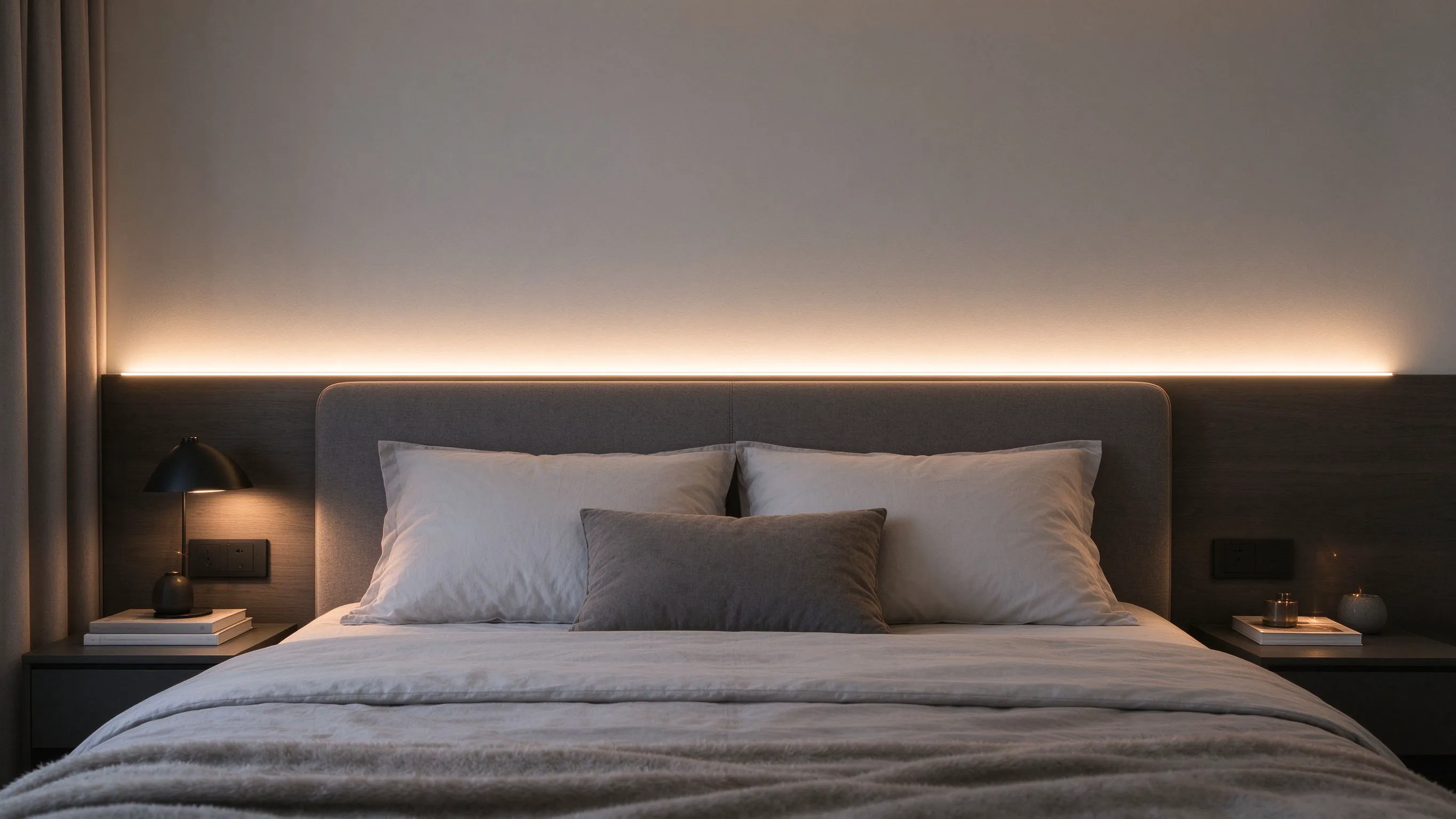
What a headboard backlight is for
The point of a headboard backlight is a soft halo on the wall behind the bed, not to light the bedroom. It gives the bed depth on a dark wall and makes the room feel larger. Done wrong, it is a bright outline that draws the eye and keeps people awake. I treat it as mood lighting, dimmed to 10 to 20 percent.
The halo works because the light falls on a flat wall. Textured wallpaper, timber cladding or a row of plugs breaks the glow, so I adjust expectations before starting on those surfaces. It also hides the join between a budget headboard and a plain wall, which is why clients on a tight budget ask for it after seeing the effect in a showroom.
- Target a halo 150 mm wide, fading outwards.
- Dim to 10-20 percent output.
- Use 2700K or a warm white, not pure daylight.

The wall gap that makes the halo
I hold the strip 30 mm off the wall. At 10 mm the halo is a hard bright outline exactly at the headboard edge. At 50 mm the pool spreads too wide and you see the strip itself from the side of the bed. Thirty millimetres, achieved by mounting the headboard on slim standoffs or running the strip in a small channel on the rear of the headboard, gives a soft fade.
30 mm off the wall gives the softest, most even halo.
| Gap to wall | Halo width | What you see |
|---|---|---|
| 10 mm | Hard outline | Bright line at edge |
| 30 mm | Soft fade | Glowing wall |
| 60 mm | Too wide | Strip visible from side |
On floating headboards already mounted 50 mm off the wall, I recess the strip into the back panel so it effectively sits 20 mm off the wall.
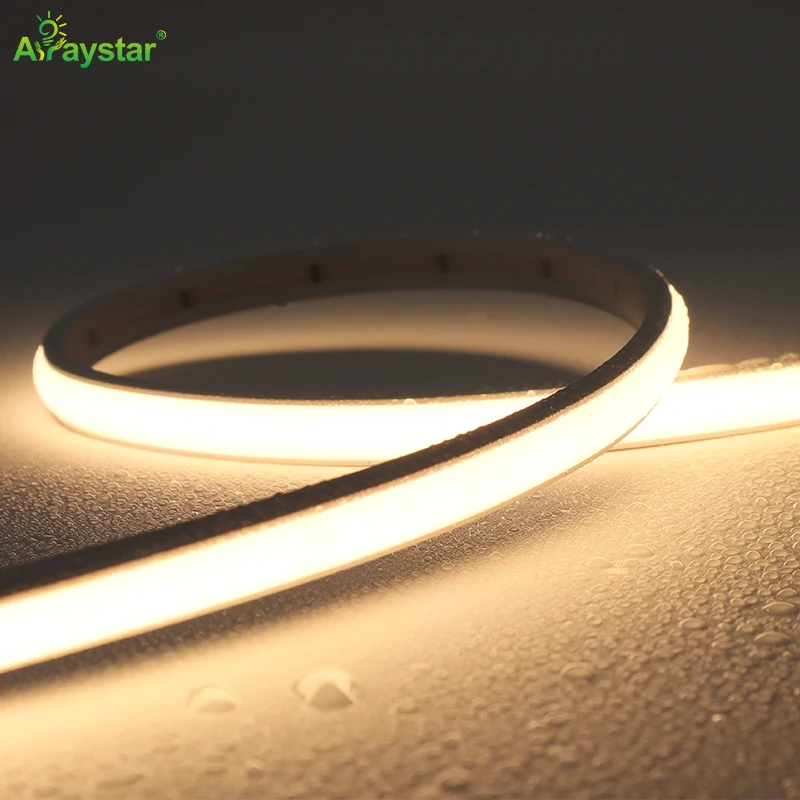
Hiding the cable
The second tell-tale of a cheap backlight is a black wire hanging down the wall. I route the cable through a 12 mm hole drilled behind the headboard, into the wall cavity, and down to a driver in the bedside cupboard. On a rented flat where you cannot drill the wall, I use a white paintable trunking clipped behind the headboard and painted the same colour as the wall.
- Drill a cable hole directly behind the headboard.
- Run the wire in the wall cavity to the skirting.
- Conceal any exposed run in painted trunking.
Never let the cable hang below the headboard line. It is the first thing a visitor eye catches, no matter how good the halo looks. On a divan where the headboard is just a leaning panel, I run the cable up behind the panel itself and fix it with a small clip, so nothing ever reaches the wall.
Dimming and colour control
A backlight at full brightness is a night light. I run it on a wireless dimmer paired with the bedside switch, and I set the ceiling output to 20 percent. For clients who want colour, an SPI RGB strip lets the halo shift to a warm amber in the evening and a soft blue for movie nights, but I always default back to warm white.
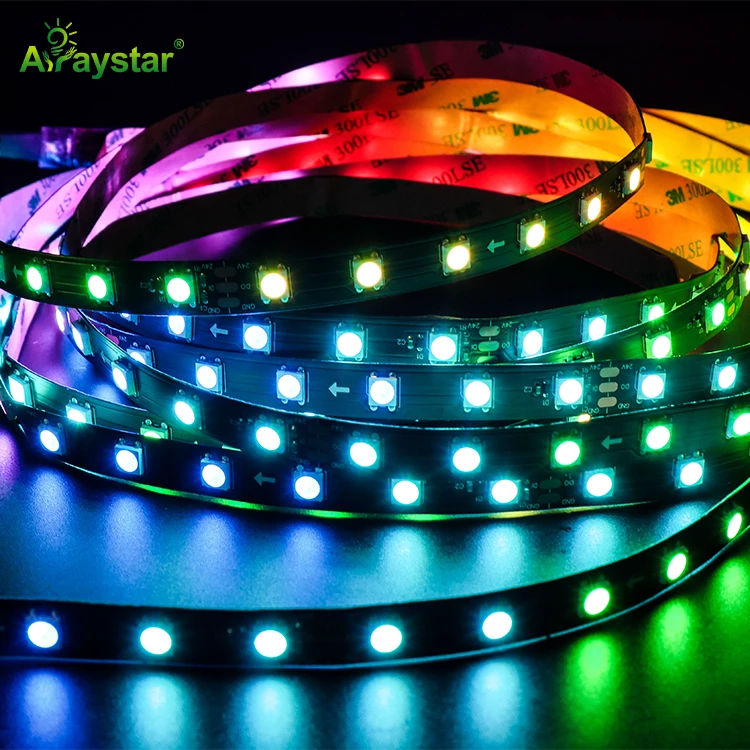
Keep the driver and controller in the bedside drawer. A voice-activated controller is overkill for a strip you only adjust twice a year.
The bedroom test
I stand at the foot of the bed, kill the main light, and look at the wall. The halo should look like the wall is lit, not like a strip behind the bed.
- Check the strip is invisible from the side angle.
- Sit up in bed; the halo should not hit your eyes.
- Test the dimmer from the bedside switch.
Recommended Products
Frequently Asked Questions
How far off the wall should a headboard strip sit?
Around 30 millimetres. At 10 mm you get a hard bright outline exactly at the headboard edge; at 50 mm the pool spreads too wide and you can see the strip from the side of the bed. Thirty millimetres, achieved with slim standoffs or a channel on the rear panel, gives a soft fade that looks like the wall itself is glowing.
How bright should a headboard backlight be?
Dimmer than you think, around 10 to 20 percent of full output. A backlit headboard at 100 percent is a night light that keeps people awake. The goal is a soft halo you notice peripherally while reading or winding down, not a feature you look at. Set it low and let the wall do the work.
What colour temperature works best behind a headboard?
2700K warm white is the safe default. A warm amber tone from an RGB strip at 1800K is even nicer in the evening, but avoid anything above 3000K because it suppresses melatonin and you will lie awake. If the client wants colour, use an SPI strip that defaults back to warm white every night.
How do I hide the cable behind a headboard?
Drill a 12 mm hole directly behind the headboard, route the cable through the wall cavity down to the skirting, and run it to a driver in the bedside cupboard. If you cannot drill the wall in a rented flat, clip white paintable trunking behind the headboard and paint it the same colour as the wall. Never let the cable hang below the headboard line.
Can I use a regular RGB strip behind a headboard?
You can, but a basic analogue RGB strip gives you flat colour with no fade effects. An SPI addressable strip lets the halo do a slow warm-to-amber transition in the evening, which is what sells the effect. Whichever you choose, dim it down and default back to warm white, because bright saturated purple behind a bed is a novelty, not a bedroom light.
Need help with your LED project?
Get factory-direct pricing, free samples and engineering support within 24 hours.
Email: info@arraystarled.com | Phone: +86-0755-2103-6746 | WhatsApp: 0086 1581 8514 077
Need to size your power supply? Use our LED Strip Power Calculator to find the right driver in seconds.