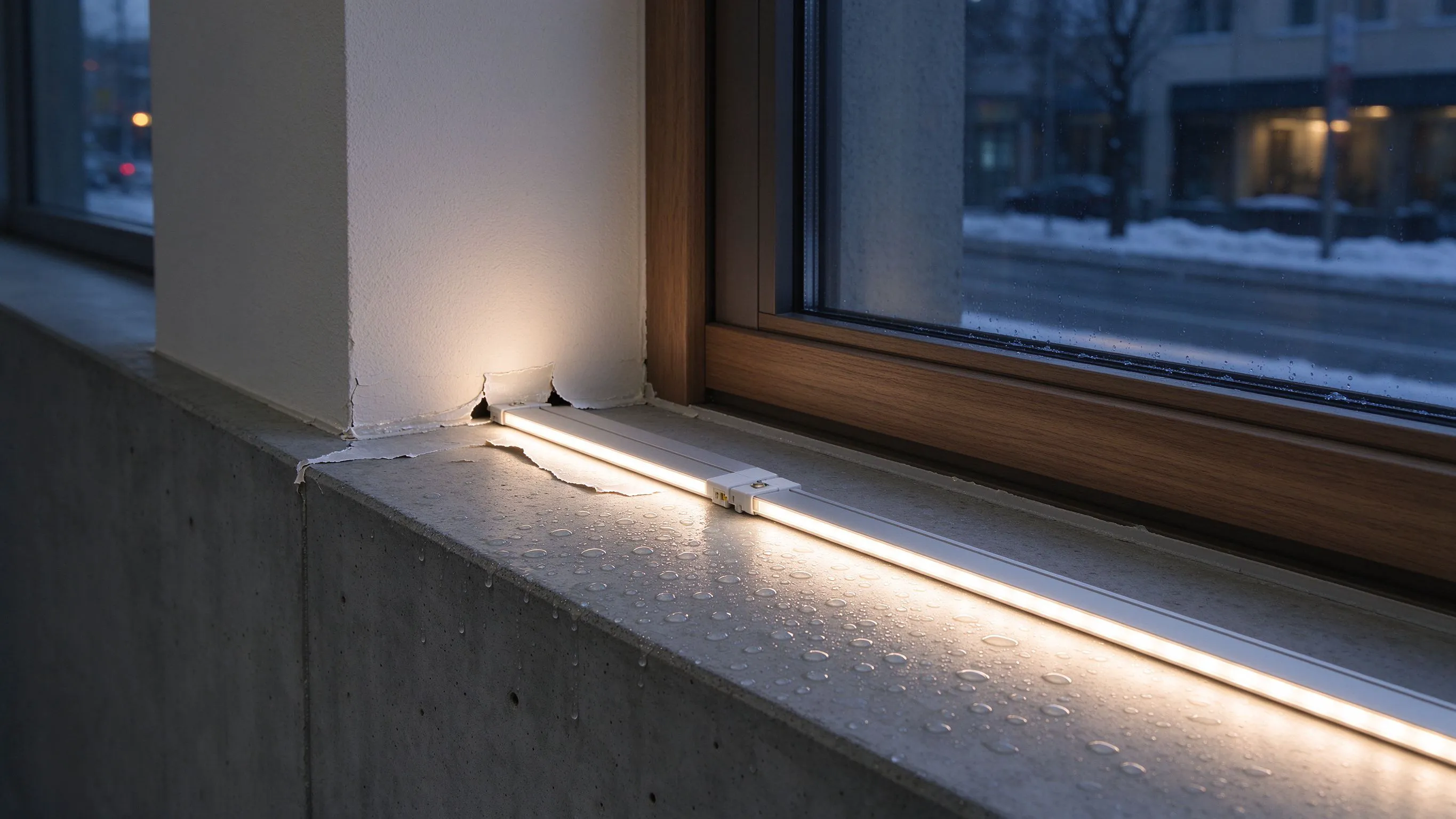
Toe-Kick Lighting in the Kitchen: SMD Strip Layout and Sensor Options
- 2026-10-28 10:03
- /
- Arraystar LED
Toe-kick light is the cheapest mood upgrade in a kitchen, but I have seen three callbacks where the strip was mounted too high and lit the drawer bottoms instead of the floor. The recess height is everything, and it is 70 mm up, not at the plinth bottom.
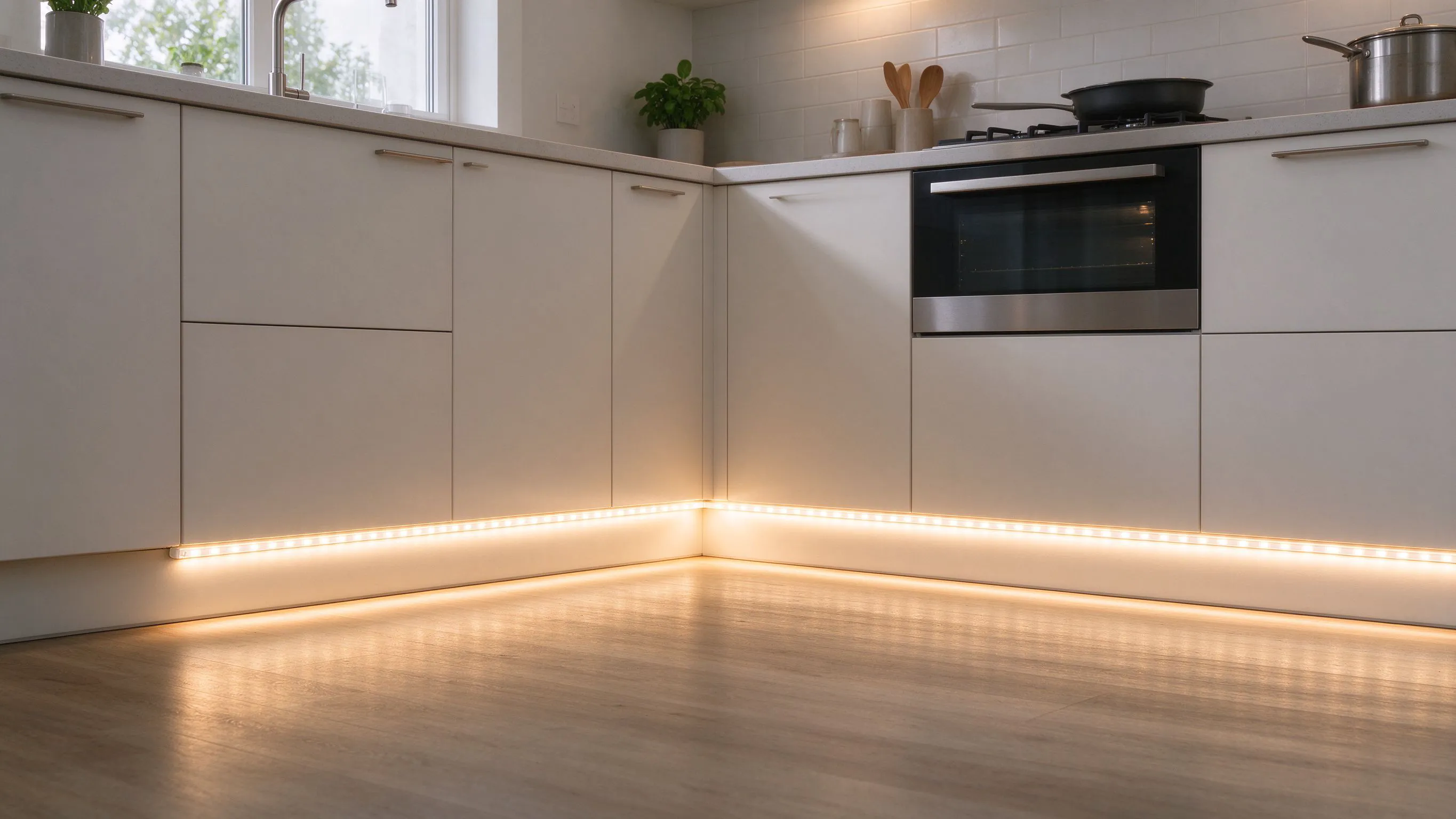
What toe-kick light actually does
Toe-kick lighting makes the cabinets look like they float above the floor. At night it is also a safety path light: you walk into the kitchen for water and your feet find the worktop without turning on the main lights. Done badly, it is a bright bar under the cabinets that shows every crumb on the floor and glares up at the drawers.
The target output is low. This is ambient night light, not task light. Anything over 300 lumens per metre is too much and you will see the strip from across the room. I have seen a client strip out a cheap install after a year because the glow hit the drawer bottoms and showed every spill in the pantry. Low and angled outward is the only way.
- Mount 70 mm up from the floor, not at the base.
- Aim the light down and outward, into the floor.
- Use 2700K, never cool white.
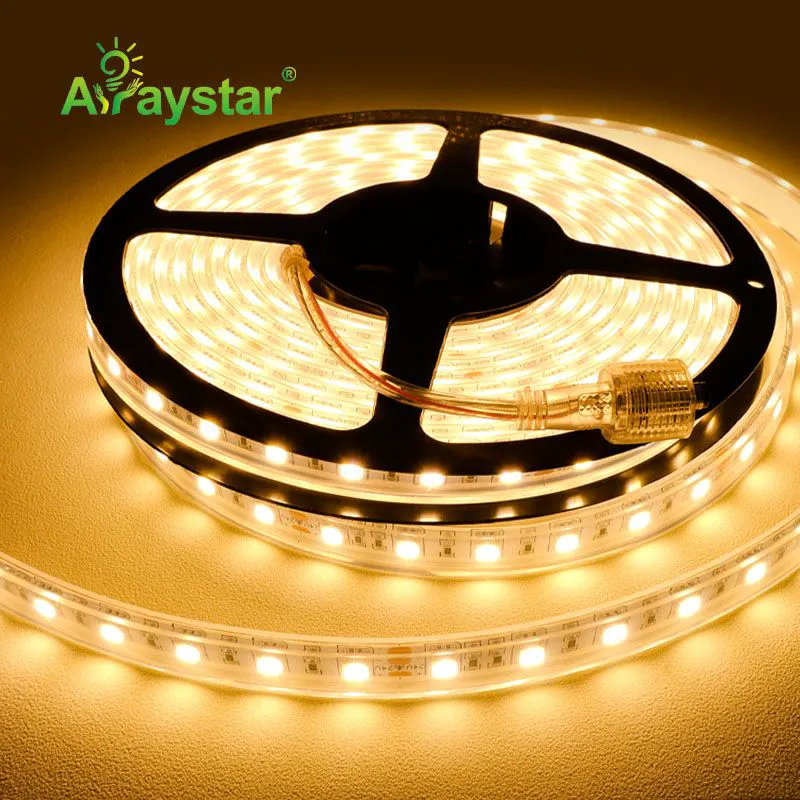
The recess height that matters
I cut a rebate in the plinth or stick an aluminium channel at 70 mm above the finished floor. Below 50 mm you light the skirting board and see a hard shadow line. Above 100 mm you are lighting the drawer fronts and the light hits your shins when you stand at the sink. Seventy millimetres puts the pool of light on the floor just outside the cabinets, exactly where your feet land.
70 mm is the sweet spot for a soft floor pool.
| Recess height | Pool on floor | Shadow line |
|---|---|---|
| 30 mm | Too narrow | Hard, at the plinth |
| 70 mm | Wide, soft | Soft, 300 mm out |
| 120 mm | Hits drawers | On your shins |
On tiled floors with a polished surface, angle the strip a few degrees less outward; tile reflects and you get a bright line rather than a wash. On vinyl or wood-effect plank, the reflection is softer than tile, so I can run the strip slightly brighter; on polished porcelain I dim it back to avoid a mirror line.
Sensor options for night use
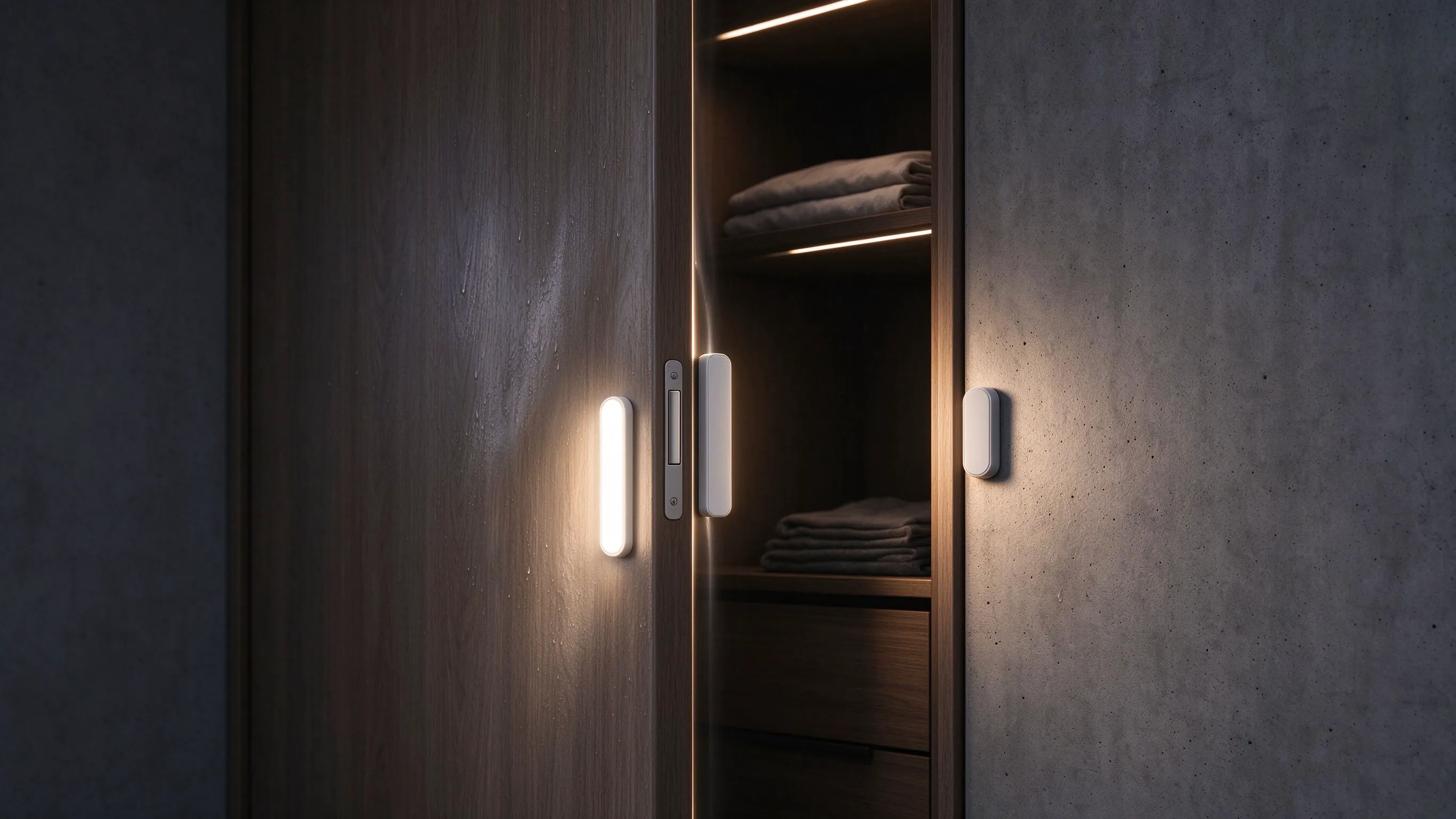
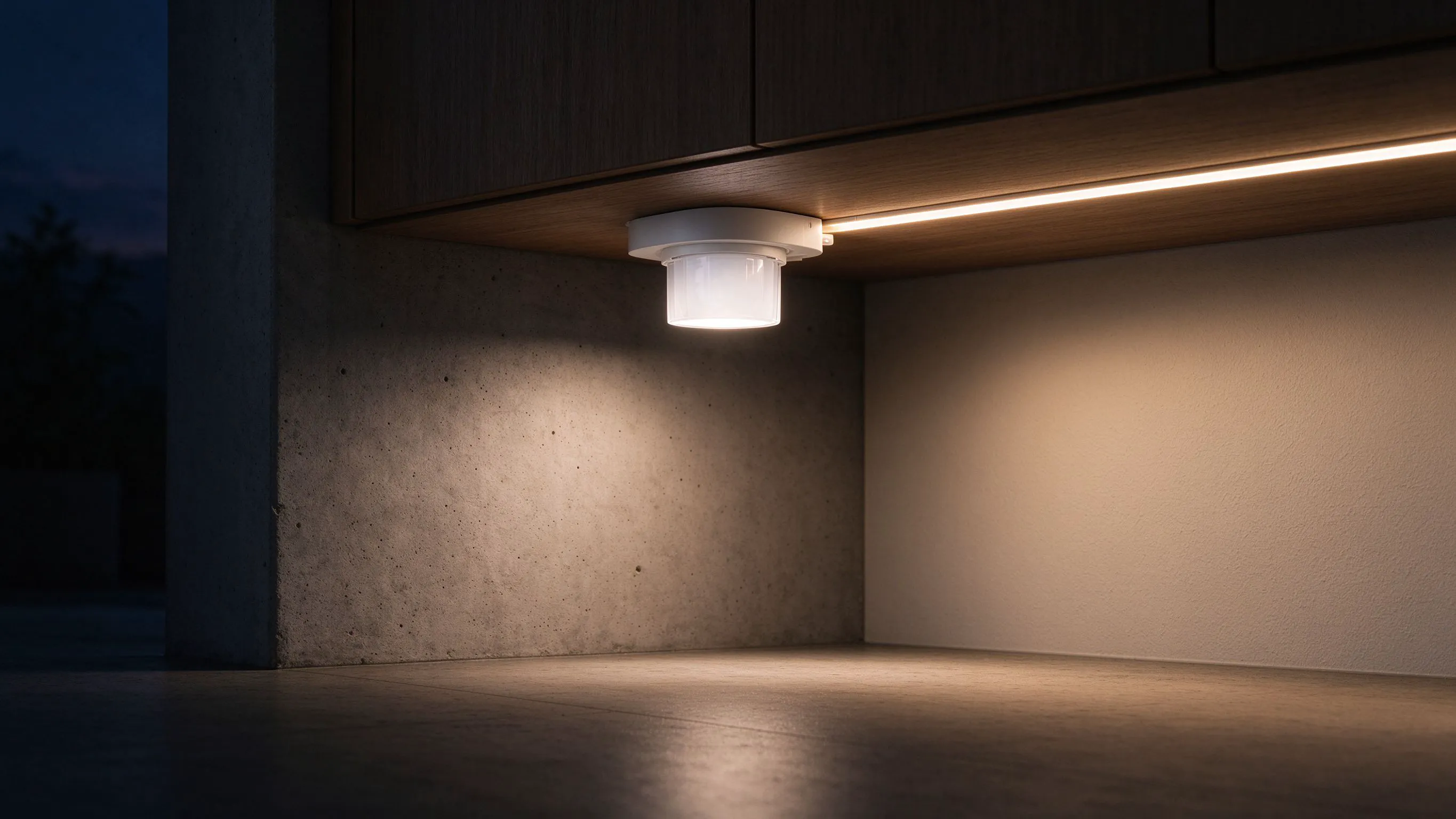
A toe-kick strip lives on a sensor. I use either a microwave sensor under the sink unit or, on a long run, a small foot-tap switch near the entrance. PIR under a cabinet triggers every time you walk past the fridge at midday, which nobody wants. A daylight sensor overrides everything when the main kitchen lights are on.
- Microwave sensor set to 30 seconds off.
- Daylight override so it stays off with main lights on.
- Foot switch near the door for manual control.
On open-plan kitchens I zone the run: island on one sensor, perimeter on another, so making tea at the sink does not light up the whole open plan.
Run layout and power
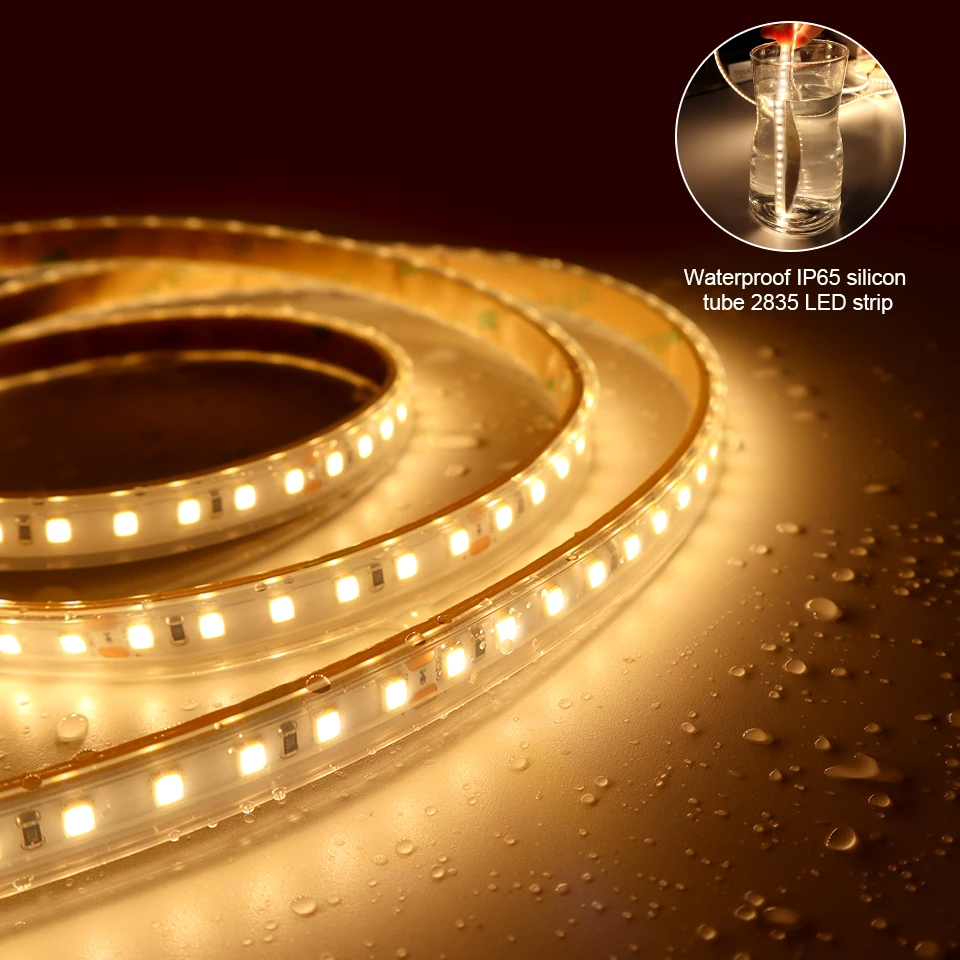
A typical kitchen perimeter is 6 to 8 metres. A 12V strip over three metres browns off at the far end, so I run 24V and feed at the midpoint of each straight run. On a long L-shaped kitchen, feed the two arms separately from the same driver. Use a waterproof silicone extrusion because the plinth area sees spills and mopping.

Tuck the driver inside a corner unit with a plug, not hardwired, so you can pull it out under warranty without opening the floor.
The night walk test
After the install, I turn off all the kitchen lights, walk in from the hallway, and watch the strip come on. I check that the pool reaches the fridge and the kettle without lighting the whole room.
- Check no strip is visible at standing eye height.
- Walk the path to the fridge and back.
- Confirm the main lights override the strip.
Recommended Products
Frequently Asked Questions
How high should the LED strip be in a kitchen toe kick?
Seventy millimetres above the finished floor, in a small rebate or aluminium channel. Below 50 mm you light the skirting board and see a hard shadow line; above 100 mm the light hits the drawer fronts and your shins. At 70 mm the pool falls softly on the floor just outside the cabinets, exactly where your feet land.
What brightness is right for toe-kick lighting?
Low, around 200 to 300 lumens per metre. This is ambient night light for walking to the kettle, not a task strip. If you can see the strip clearly from across the room in a dark kitchen, it is too bright. The goal is a soft floor glow that you notice with your peripheral vision, not a feature you look at.
Which sensor works best under kitchen cabinets?
A microwave sensor, not a PIR. PIR units trigger every time you walk past the fridge at midday, and they see heat from the oven as movement. Microwave sensors can be tuned to trigger only when you enter the kitchen zone, and they pair with a daylight override so the strip stays off when the main lights are on.
Should I run toe-kick light around the whole kitchen?
Around the perimeter and the island, yes, but split into zones. One sensor for the perimeter run and another for the island means making tea at the sink does not light up the whole open-plan room. Feed each straight run from its midpoint on 24V, and use a waterproof silicone extrusion because the plinth sees spills and mopping.
Can toe-kick lighting stay on all night?
Not as a rule. Set it on a dusk-to-dawn sensor with a motion trigger, so it only comes on when someone actually walks into the kitchen. Leaving a 6 metre run on all night costs surprisingly little, but it bleeds light into the hallway and wakes light sleepers. Motion-triggered for ten seconds is the right behaviour.
Need help with your LED project?
Get factory-direct pricing, free samples and engineering support within 24 hours.
Email: info@arraystarled.com | Phone: +86-0755-2103-6746 | WhatsApp: 0086 1581 8514 077
Need to size your power supply? Use our LED Strip Power Calculator to find the right driver in seconds.