Wrapping Trees and Poles with SMD Strip (Not Rope Light)
- 2026-10-28 10:03
- /
- Arraystar LED
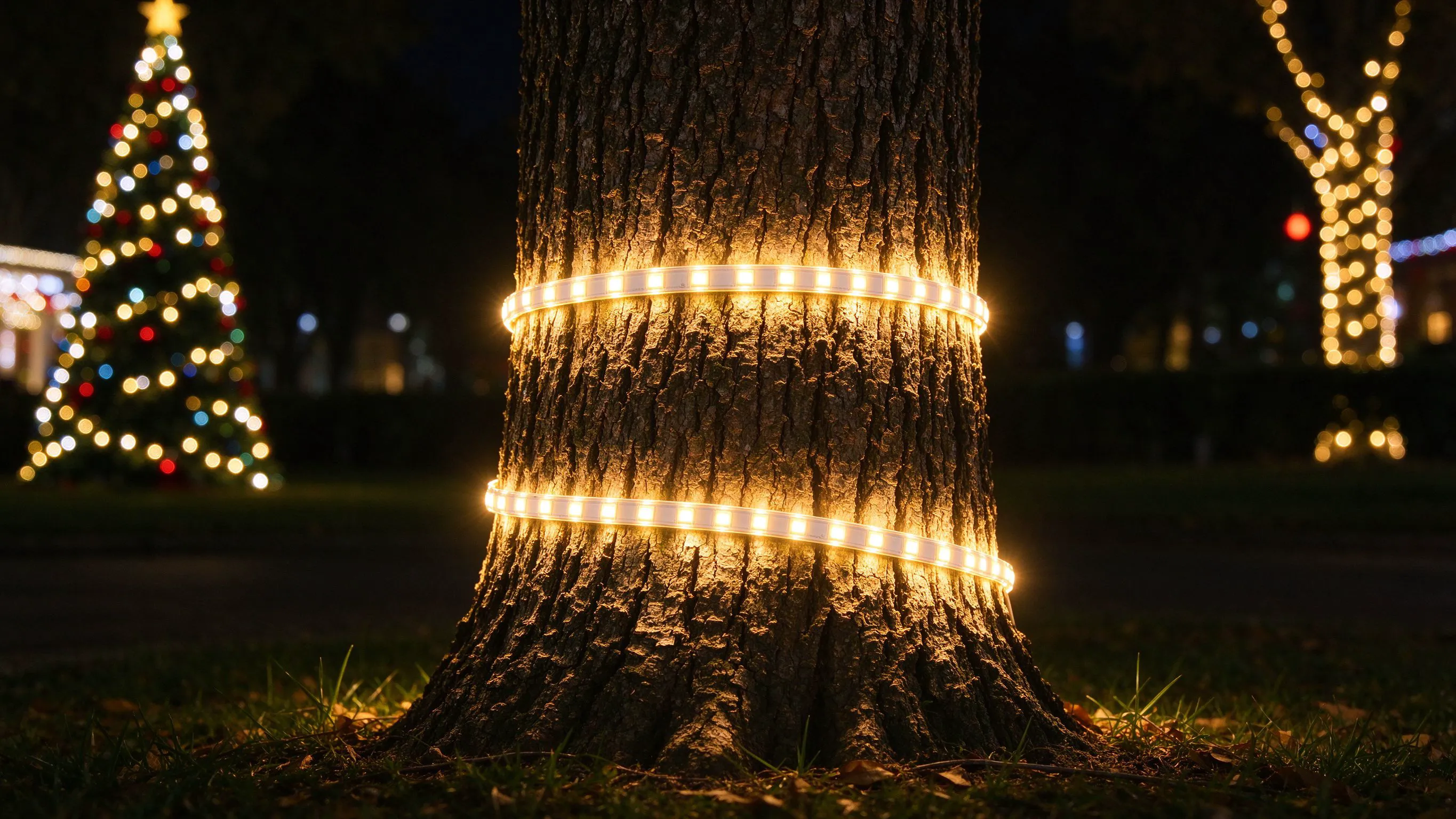
Rope light wrapped around a tree looks like a hose pipe. After one winter where three runs split at the clips, I swapped to silicone SMD strip wound around the trunk on soft ties, and the difference in light quality and survival rate was night and day.
Why rope light is the wrong tool
Rope light is rigid, round and clumsy. Wrap it around a tapering trunk and you either leave gaps or crush the outer jacket at each clip. It also throws light in all directions, so half the lumens go into the bark and half into the sky. A flat SMD strip in a silicone tube follows the contour and throws light outward in a controlled band.
The other failure is mechanical. Rope light clips bite into the jacket and after a freeze-thaw cycle water gets in and the whole run dies. Soft nylon tree ties at wide spacing solve that. The flat profile also bands light into a 120-degree fan, which means you light the walkway and the trunk without wasting lumens up into the canopy.
- Use a flat silicone SMD strip, not round rope light.
- Tie at 400 mm spacing with soft nylon, never metal wire.
- Angle the strip outward, not tight into the bark.
Spacing the spiral around the trunk
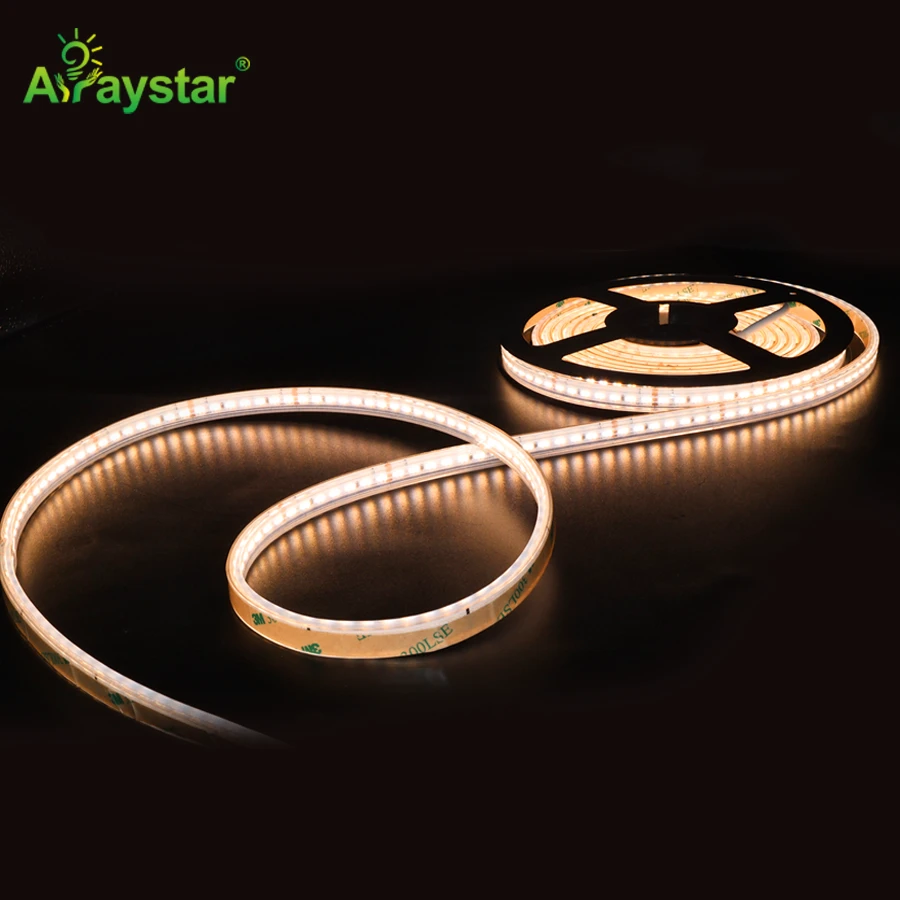
I hold the spiral at roughly 100 mm pitch on a trunk up to 150 mm diameter. Closer than 80 mm and the bands merge into one bright collar; wider than 150 mm and you see dark gaps between wraps. On a thicker trunk, 200 to 250 mm pitch works because the surface area per wrap is larger.
Wider trunks tolerate a looser spiral because each wrap covers more bark.
| Trunk diameter | Spiral pitch | Tie spacing |
|---|---|---|
| 50-100 mm | 80-100 mm | 400 mm |
| 100-200 mm | 120-150 mm | 400-500 mm |
| 200-400 mm | 200-250 mm | 500 mm |
Start the spiral 300 mm up from the ground so the strip never sits in soil moisture, and finish it 300 mm below the first branch so you do not blind people walking past. On a conifer with dense lower branches, I run the spiral only up to the first open trunk and leave the foliage lit by spill; wrapping through needles tangles the strip and pulls ties loose.
Fixings that do not hurt the tree
Never screw or nail anything into living bark. I use soft-coated nylon plant ties, loose enough to slide a finger under, and I leave 10 mm of slack so the trunk can thicken over the season. On wooden pergolas and lamp posts, where the surface does not grow, I use small aluminium standoffs so the strip sits 10 mm off the wood and air circulates behind it.
- Loosen ties every spring as the trunk thickens.
- Use stainless wire on metal poles, not on bark.
- Leave a service loop at the base for the cable feed.
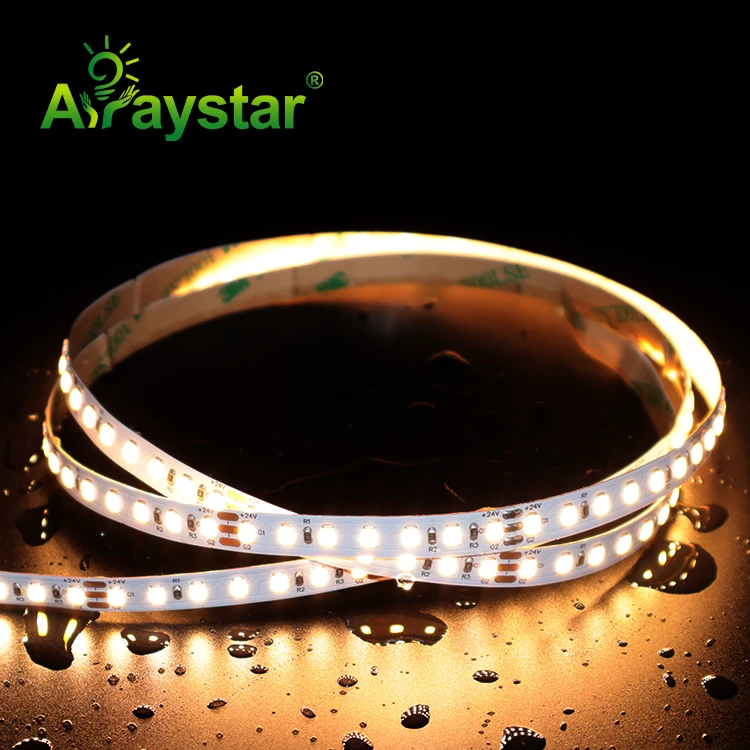
A strip pulled tight against wet bark spends half the year in moisture, and even IP67 silicone fails if water can sit on the join. The 10 mm air gap is cheap insurance.
Power, weatherproofing and run length
Outdoor runs need IP67 silicone tube, not the bare PCB. For a typical tree at 4 to 6 metres of spiral, a 24V 2835 strip fed from the base starts to dim at the top. I use either a 24V feed up the trunk in two directions or the thicker 5050 silicone tube on a longer 24V run with a mid-feed. All joints go in an IP67 junction box at the base, never taped.

Set the driver on a photocell or a timer. Nobody wants the tree light on at 2pm, and a dusk-to-dawn sensor halves the running cost.
The seasonal take-down
I pull the wraps off in March, inspect the tube for cracks, re-coil the cable loosely, and store it in the garage rather than leaving it wound year-round. UV degrades silicone faster than frost.
- Inspect every joint after the first winter.
- Clean the tube with mild soap, not solvent.
- Store loosely coiled, never kinked.
Recommended Products
Frequently Asked Questions
How far apart should the spiral wraps be on a tree?
Around 100 mm pitch on trunks up to 150 mm diameter. Closer than 80 mm and the bands merge into one bright collar; wider than 150 mm and you see dark gaps. On thicker trunks of 200 to 400 mm, move out to 200 or 250 mm pitch, because each wrap already covers more bark surface.
Can I use rope light instead of SMD strip for wrapping trees?
You can, but it looks like a hose pipe and fails more often. Rope light clips bite into the jacket and water enters after a freeze, killing the run. A flat silicone SMD strip follows the trunk better, throws light outward rather than into the bark, and survives winter on soft nylon ties without crushing the outer jacket.
How do I fix the strip to the tree without damaging it?
Use soft-coated nylon plant ties at 400 mm spacing, loose enough to slide a finger under. Never screw, nail or use bare metal wire into living bark. Leave a small air gap so the strip does not sit in moisture, and loosen the ties every spring as the trunk thickens. On wooden posts, small aluminium standoffs work instead.
What IP rating do I need for outdoor tree lighting?
IP67 in a sealed silicone tube, not the bare PCB. A strip rated IP65 on the face but open on the back collects water inside the channel after rain. Put every joint in an IP67 junction box at the base of the tree, bed the cable entry with a gland, and never rely on electrical tape to keep the weather out.
How long a run can I power up a tree trunk?
On 24V, keep a single feed to under 5 metres or the top of the spiral dims visibly. For a taller tree, feed from the middle and run both directions, or use a 48V long-run strip. Always feed from the ground through a waterproof gland, and keep the driver and controller in a sealed box at the base, not on the trunk.
Need help with your LED project?
Get factory-direct pricing, free samples and engineering support within 24 hours.
Email: info@arraystarled.com | Phone: +86-0755-2103-6746 | WhatsApp: 0086 1581 8514 077
Need to size your power supply? Use our LED Strip Power Calculator to find the right driver in seconds.