SOB Strips: The Thinner, Smoother Step After COB
- 2026-10-09 18:40
- /
- Arraystar LED
SOB (silicon-on-board) is the step beyond COB for projects that need an even thinner, more flexible, perfectly smooth light source. Instead of a phosphor layer over chips, SOB encapsulates the LEDs in a smooth silicone body directly on the board, producing a flush emitting surface in a tiny cross-section. It suits ultra-slim profiles and tight curves where even COB is too bulky, with the trade-offs of a specialist, often indoor-focused product.
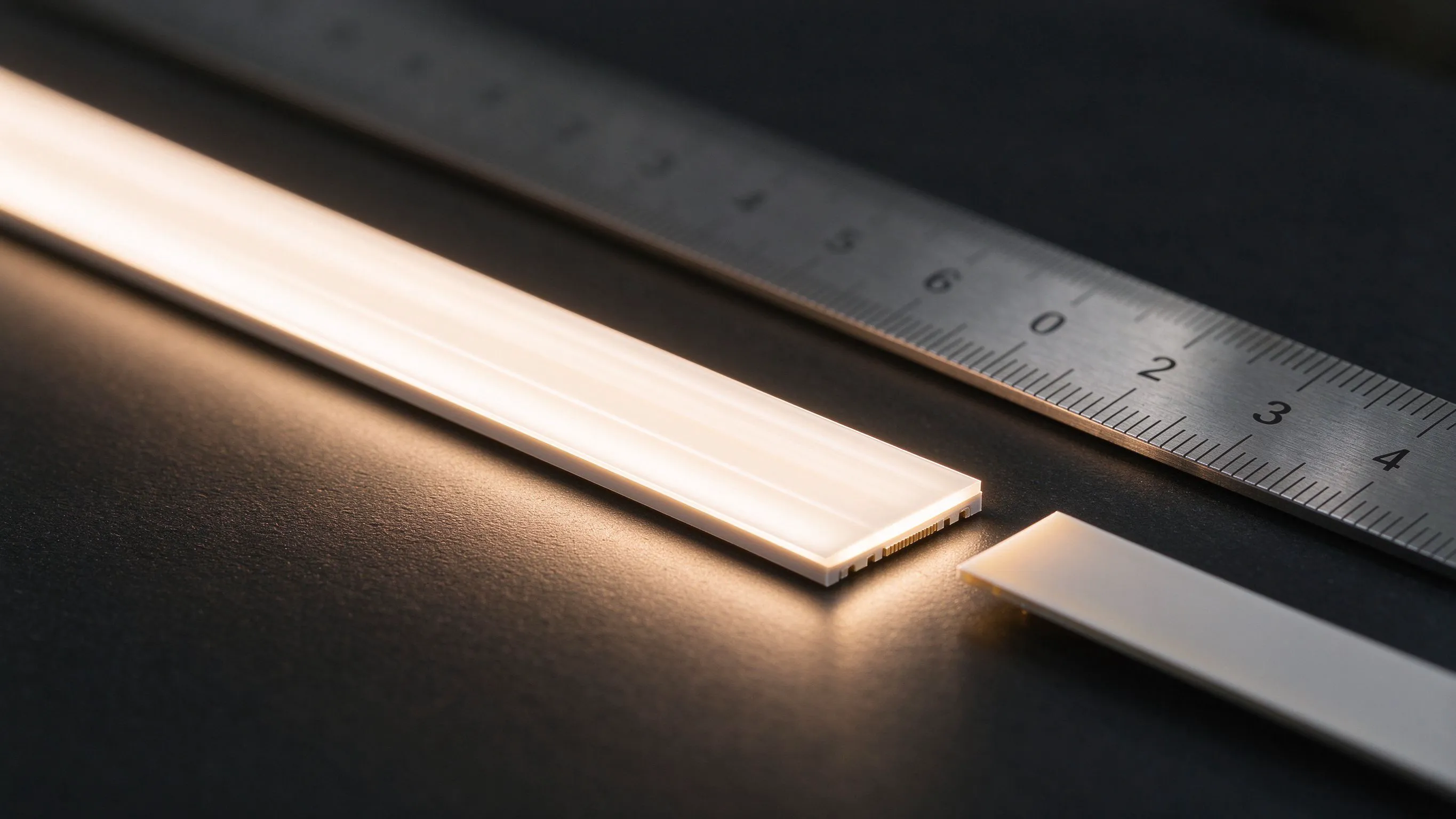
Where COB Still Feels Too Thick
COB removed the visible dots of traditional strip and became the default for smooth linear light, but designers keep pushing profiles thinner. In ultra-slim furniture, miniature channels, bendable light designs and shallow architectural details, even the modest height of a COB board and its coating can be more than the industrial design allows.
That demand for a genuinely flush, hairline-thin smooth source is what SOB, silicon-on-board, was developed to meet.
What SOB (Silicon-on-Board) Is
- LEDs encapsulated in smooth silicone directly on the board.
- A flush, perfectly even emitting surface with no raised phosphor layer.
- Very small cross-section (the 8x4mm class) for ultra-slim channels.
- High flexibility for tight curves and delicate forms.
- Smooth, dot-free light taken a step further than standard COB.
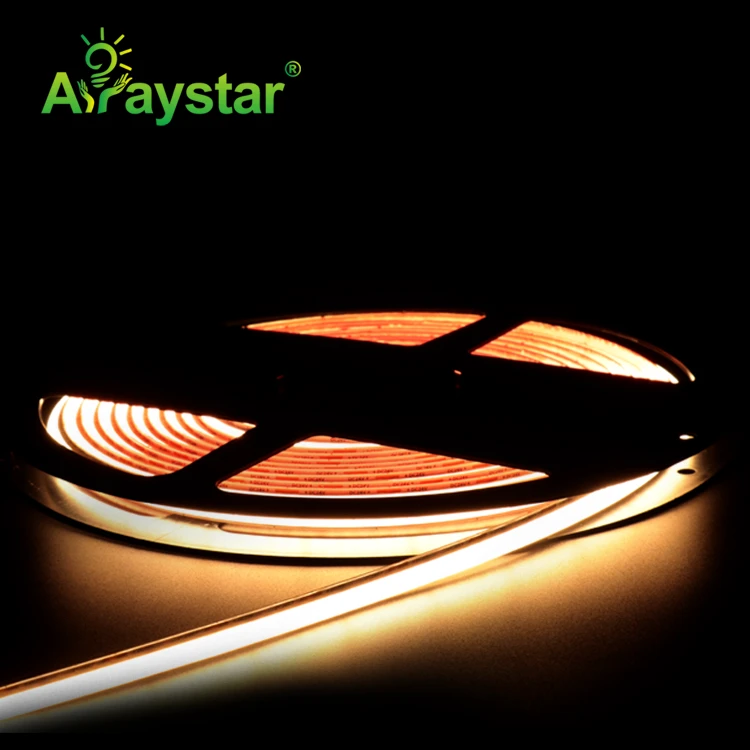
For the thinnest, smoothest linear details I use the 8x4mm SOB strip. It is the product I reach for when COB is still just a little too tall or too structured for the design.
SOB vs COB vs Conventional SMD
SOB pushes thinness and surface smoothness past COB.
| Factor | SMD strip | COB | SOB |
|---|---|---|---|
| Emitting surface | Discrete LEDs | Continuous phosphor line | Flush smooth silicone |
| Visible dots | Yes | No | No |
| Cross-section / height | Standard | Slim | Very slim (8x4mm) |
| Flexibility | Moderate | Good | Very high |
| Surface finish | Raised packages | Coated line | Perfectly flush |
Where the SOB Form Factor Wins
- Ultra-slim furniture and joinery profiles with minimal recess depth.
- Tight-radius curved and free-form light designs needing maximum flexibility.
- Miniature signage strokes and delicate logo outlines.
- High-end product and display design where the source must be hairline-thin.
- Applications where a perfectly flush surface matters for touch or aesthetics.
Understanding the Trade-offs
As with the 3mm ultra-narrow board, the SOB's small size is both its advantage and its limit. A tiny 8x4mm body has limited room for copper and thermal mass, so output per metre is modest and aimed at detail and accent lighting rather than high-lumen illumination, and feed intervals need respect on longer runs. The reference SOB product is also IP20 non-waterproof, which positions it for dry interiors; wet and outdoor work still belongs to encapsulated COB or silicone-extruded product.
- Treat SOB as a precision interior accent, not a high-output or outdoor source.
- Observe short feed intervals given the limited copper.
- Use it in dry locations unless an appropriately rated version is specified.
- Handle the thin, flexible body with care during assembly.
Designing With a Flush, Flexible Source
The flush surface changes how the strip integrates. Where COB often sits in a channel behind a diffuser, SOB can present a clean even face directly in slim designs, and its flexibility lets it follow curves that would stress a stiffer board. I seat it into precisely routed grooves, bring feeds out at hidden ends, and on curved work I bend it progressively onto a defined former rather than forcing tight freehand turns, because even a highly flexible strip has a minimum radius.
When COB Is Still the Better Choice
I avoid over-specifying SOB. For general coves, signage and anything needing meaningful lumens, longer runs, waterproofing or lower cost, standard and wide COB boards are the better-engineered choice with more copper, more output and a mature range of profiles and accessories. SOB earns its place specifically when the design cannot be achieved without its extra thinness and flush surface; outside that constraint it adds cost and limitations for little visible gain.
Specifying an Ultra-Slim SOB Detail
Send the channel or profile dimensions, the tightest bend radius, run length, required brightness and whether the location is dry or damp. I will confirm whether SOB fits and meets the effect, or whether a slim COB is the more robust choice, along with feed and mounting guidance. We supply the 8x4mm SOB strip and recommend testing a bent, powered sample in the actual slim profile before production, because at these dimensions the fit and the flush surface finish are best judged on a real section rather than a drawing.
A Curved Retail Display Built Around SOB
A cosmetics counter designer wanted a glowing eyebrow line that swept in a continuous tight curve across a series of rounded display plinths, with the visible light source reduced to an almost paper-thin flush seam. The industrial design left a recess just over 4 mm deep, and the plinth faces curved at a radius that made a standard COB board look stiff and slightly proud of the surface. Both the height and the bend were outside what the usual slim COB could do cleanly.
The 8x4mm SOB strip followed the plinth curves without a backing channel and presented the perfectly flush silicone face the designer was after, so the glow read as light emerging from the seam itself rather than from a visible fixture. Because the application was a dry interior retail counter, the SOB's IP20 rating was no limitation, and the modest output was actually desirable; the line defined the curve and framed the products without competing with the brighter task lighting that made the merchandise readable. We built a simple curved former for each plinth shape, pressed the SOB into the routed seam progressively, and brought feeds down through the plinth ends where they vanished into the counter structure. The only adjustment was adding a very shallow translucent fill on the most sharply curved section to keep the flush line consistent where the bend was tightest. The job illustrates the correct way to deploy SOB: not as a general replacement for COB, but as the enabling component for a specific industrial-design constraint, a sub-4mm recess and a tight free curve, that no standard product could meet without compromising the look the entire counter was designed around.
Recommended Products
Frequently Asked Questions
What is SOB (silicon-on-board) LED strip?
SOB encapsulates the LEDs in smooth silicone directly on the board to create a flush, perfectly even emitting surface in a very small, highly flexible cross-section such as 8x4mm. It goes a step beyond COB in thinness and surface smoothness for ultra-slim profiles and tight curves while staying dot-free.
What is the difference between SOB and COB strip?
COB uses a continuous phosphor coating over densely packed chips on a slim board; SOB encapsulates the chips in a smooth flush silicone body directly on the board, giving a smaller cross-section, greater flexibility and a perfectly flush surface. SOB is thinner and smoother, while COB generally offers more output, range and waterproof options.
Where is SOB strip used?
In ultra-slim furniture and joinery, tight-radius curved and free-form designs, miniature signage strokes, delicate logo outlines and high-end product design where the light source must be hairline-thin and perfectly flush. It is a precision interior accent rather than a high-output source.
Is SOB strip bright and waterproof?
Its tiny body has limited copper and thermal mass, so output is modest and suited to accents rather than room lighting, with feed intervals needed on longer runs. The reference 8x4mm SOB is IP20 for dry interiors; for wet or outdoor locations use encapsulated or solid silicone-extruded COB instead.
When should I just use COB instead of SOB?
For general coves and signage, higher lumens, longer runs, waterproofing or lower cost, use COB, which offers more copper, output and a full range of profiles and IP ratings. Specify SOB only when the design genuinely cannot be achieved without its extra thinness, flexibility and flush surface.
Need help with your LED project?
Get factory-direct pricing, free samples and engineering support within 24 hours.
Email: info@arraystarled.com | Phone: +86-0755-2103-6746 | WhatsApp: 0086 1581 8514 077
Need to size your power supply? Use our LED Strip Power Calculator to find the right driver in seconds.