
Through-Panel Hidden Touch Sensors for Seamless Furniture
- 2026-10-09 18:41
- /
- Arraystar LED
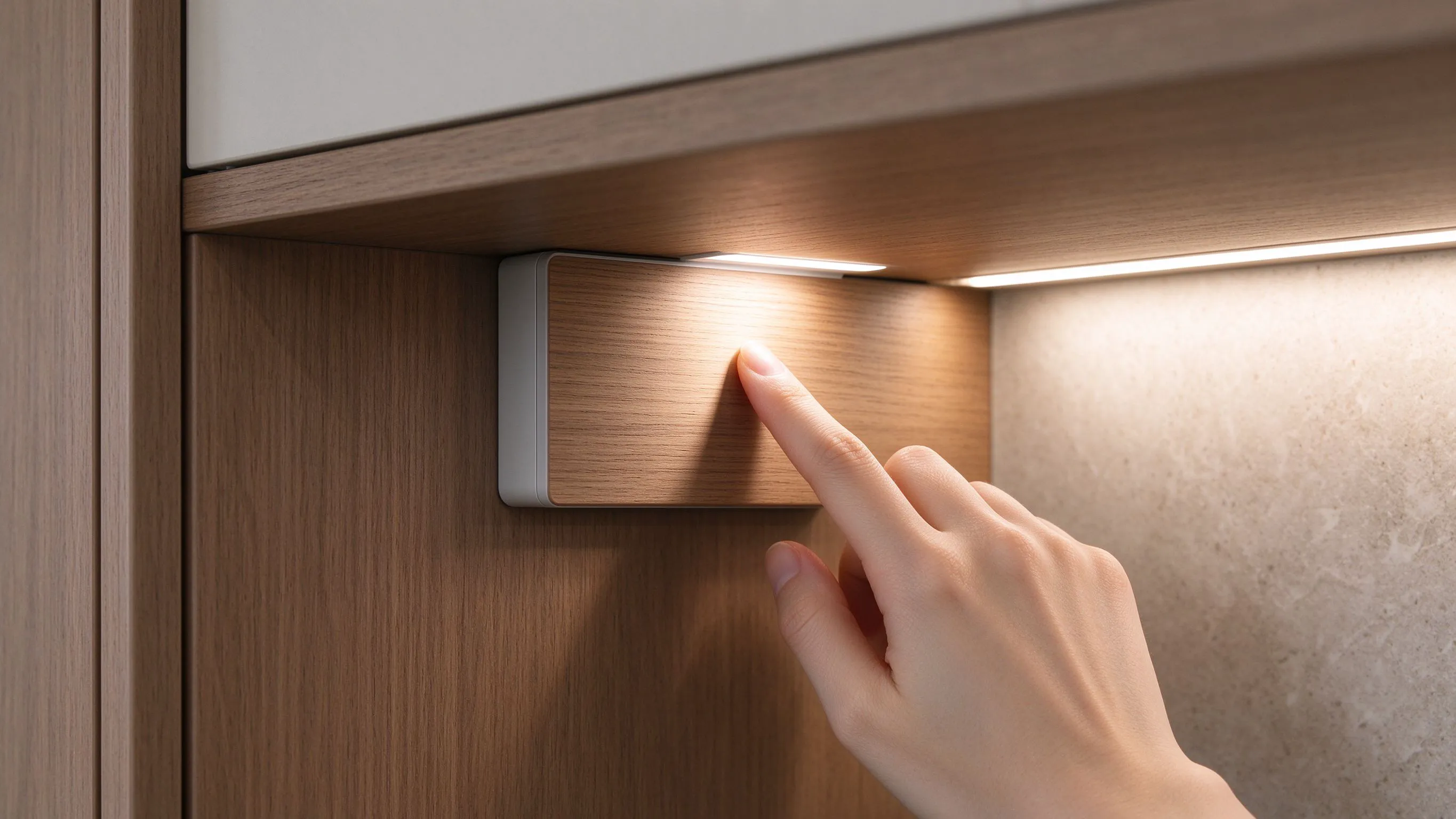
High-end furniture and stone or glass splashbacks should not be broken up by a visible switch. A non-contact through-panel touch sensor works through wood, glass or stone, detecting a touch on the finished surface from behind the panel, so the control point is completely invisible while the exterior remains a single seamless, cleanable face.
Why a Visible Switch Spoils Premium Furniture
In bespoke joinery, a glass splashback, a stone vanity or a seamless wardrobe, the design depends on uninterrupted surfaces. A conventional switch requires a hole, a bezel and a visible plastic point that breaks the line, collects grime in a kitchen and undermines the minimal aesthetic the customer paid for.
Designers increasingly want the control to disappear entirely, and a through-panel (non-contact) capacitive touch sensor achieves this by sensing a finger on the outside of the panel while the electronics remain hidden behind it.
What a Through-Panel Touch Sensor Does
- Senses touch through wood, glass or stone panels.
- Completely invisible switch point on the finished face.
- No hole, bezel or visible plastic in the surface.
- Seamless, easily cleaned exterior.
- Electronics hidden behind the panel, protected and tidy.
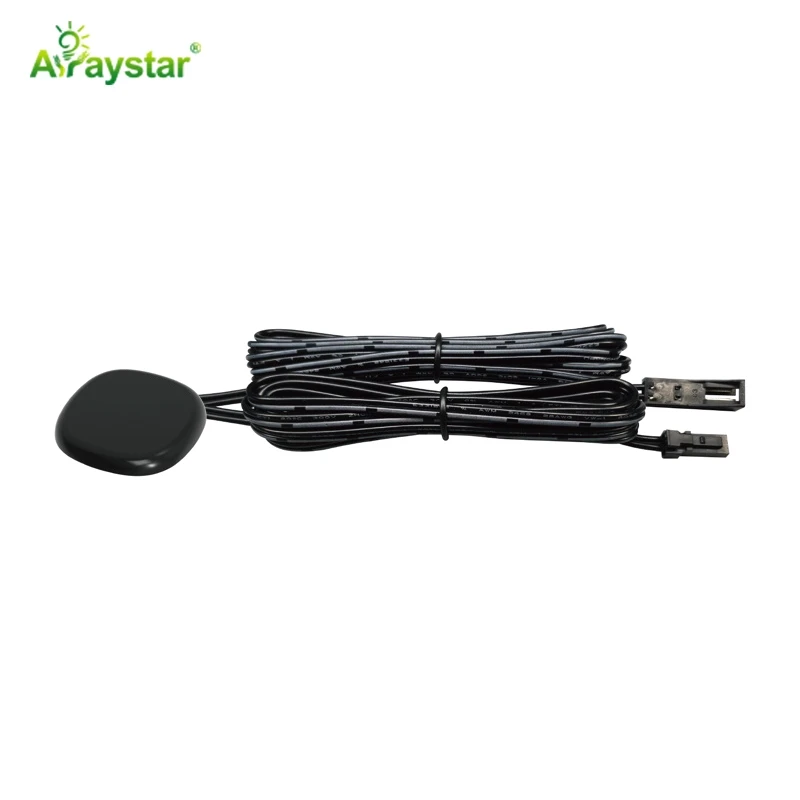
For seamless furniture and splashbacks I use the non-contact through-panel touch sensor. The surface stays whole and the control is entirely hidden.
Through-Panel vs Standard Touch vs Mechanical
Through-panel sensing is the choice when the surface must stay uninterrupted.
| Switch type | Surface impact | Aesthetic |
|---|---|---|
| Mechanical switch | Hole + bezel | Visible, collects grime |
| Standard capacitive touch | Touch pad on surface | Small visible point |
| Through-panel sensor | None, mounts behind | Invisible, seamless face |
Where Hidden Through-Panel Control Wins
- Glass and mirrored splashbacks and cabinet fronts.
- Stone, marble and quartz vanities and kitchen panels.
- Bespoke wooden joinery and handleless wardrobes.
- High-end bathroom furniture and shower-adjacent panels.
- Any design demanding a single unbroken cleanable surface.
Panel Thickness and Material Limits
Capacitive sensing works through non-conductive panels, but thickness and material set the limit. Glass, wood and many stone panels work within the sensor's rated thickness, while very thick stone or panels with metal foil or conductive backing can block the field. I confirm the panel material and thickness against the sensor's specification early, and I always bench-test the exact panel material rather than assuming, because sensitivity that works through thin glass may fail through thick marble.
- Confirm panel material and thickness against the sensor rating.
- Avoid metal foil or conductive backing directly over the sensor.
- Bench-test on the actual panel before final assembly.
- Position the electronics flush against the panel rear.
Positioning the Hidden Touch Point
Because the switch is invisible, the user needs a discoverable location. I place the touch zone at a consistent, intuitive spot, often a lower corner or edge where hands naturally reach, and where the design allows a subtle etched marker or logo if the client wants a hint. The sensor must mount directly against the panel rear with no air gap or moving parts between, and I avoid locations where water streams over the point or where metal framing interferes with the field.
Sensitivity, Water and Reliability
In kitchens and bathrooms I tune sensitivity so a deliberate touch operates the light but running water or a wet cloth wiping past does not trigger it, which is the main risk on splashbacks. A non-contact sensor has no moving parts to wear and sits protected behind the panel, giving long reliable service, but it must be calibrated to the specific panel and environment. I test with both dry touch and wet wiping during commissioning to confirm the threshold behaves in real use.
Specifying Invisible Furniture Control
Send the panel material and exact thickness, the desired touch location, whether dimming is needed, the LED load and any wet-environment exposure. I will confirm whether the through-panel sensor works through your material, sensitivity and positioning, and compatible control. We supply the through-panel touch sensor and strongly recommend validating it on a sample of the actual panel, including wet testing for splashbacks, before production assembly.
Commissioning a Seamless Stone Vanity Control
A bathroom joinery client designed a floating stone vanity with a single unbroken quartz front and wanted the interior shelf and mirror light to operate from a touch on the stone itself, with absolutely no visible switch to break the slab. The panel was thicker than the glass splashbacks the sensor was commonly used on, and the bathroom environment added running water and steamy conditions, so the project could not be specified from the datasheet alone.
Before committing, we obtained an offcut of the exact quartz and bench-tested the through-panel sensor mounted flush to its rear. Thin glass had worked on previous jobs, but the thicker stone needed the sensitivity raised and the sensor positioned with no air gap, and we confirmed the quartz had no conductive backing that would shield the field. Once the offcut proved reliable we fixed the sensor behind a marked lower corner of the vanity front, a location the client could find by habit and reach with soapy hands, and we ran the wiring entirely inside the vanity body. The bathroom context forced careful wet calibration: we tuned the threshold so a deliberate finger touch switched and held-to-dimmed the light, but water running down the basin and a damp cloth wiping the front did not trigger it, and we deliberately steamed the room to confirm condensation did not cause phantom switching. We added a tiny etched dot at the touch point so the control was discoverable without being visually intrusive. The finished vanity presents one flawless stone face with no bezel, hole or grime trap, yet the shelf and mirror light respond instantly from the exact spot a hand reaches. The project taught the lesson I now state up front on every hidden-touch job: the sensor is the easy part; the real commissioning is validating the actual panel material on an offcut and calibrating against the room's real water and steam, because a seamless surface that misfires every time someone wipes it would be worse than a visible switch.
Recommended Products
Frequently Asked Questions
What is a through-panel (non-contact) touch sensor?
It is a capacitive sensor mounted behind a finished panel that detects a finger touching the outside surface through non-conductive materials such as wood, glass or stone, so no hole, bezel or visible switch is needed. The control point is completely invisible and the exterior stays seamless and easy to clean.
What materials and thicknesses can it sense through?
It works through non-conductive panels such as glass, wood and many stone materials within the sensor's rated thickness, but very thick stone or panels with metal foil or conductive backing can block the capacitive field. Always confirm the material and thickness against the specification and bench-test the exact panel rather than assuming it will work.
How do users find an invisible switch?
Place the touch zone at a consistent, intuitive location such as a lower corner or edge where hands naturally reach, and optionally add a subtle etched marker. Mount the sensor flush against the panel rear with no air gap, keep it away from metal framing, and brief the user on the touch location during handover.
Will water on a splashback trigger the hidden touch sensor?
It can if sensitivity is too high, so calibrate the sensor to the specific panel so a deliberate touch operates the light while running water or a wet cloth wiping past does not. During commissioning test both dry touch and wet wiping, and avoid positioning the touch zone where water streams directly over it.
Is a through-panel sensor reliable for bathroom and kitchen panels?
Yes, because it has no moving parts to wear and the electronics are protected behind the panel away from moisture. The keys to reliability are confirming the material and thickness, mounting the sensor flush to the rear, avoiding conductive backing and metal interference, and tuning sensitivity against real wet and dry use before final assembly.
Need help with your LED project?
Get factory-direct pricing, free samples and engineering support within 24 hours.
Email: info@arraystarled.com | Phone: +86-0755-2103-6746 | WhatsApp: 0086 1581 8514 077
Need to size your power supply? Use our LED Strip Power Calculator to find the right driver in seconds.







