30mm Ultra-Wide COB Strips for High-Lumen Cove and Flood Lighting
- 2026-10-09 18:40
- /
- Arraystar LED
When a cove or indirect detail has to deliver real ambient light rather than a decorative glimmer, a narrow strip runs out of both lumens and thermal headroom. A 30mm ultra-wide COB strip packs far more emitters and copper onto a broad board for high-lumen, dot-free indirect and flood lighting, while running cooler and more uniformly than overdriving a small strip. It is specified when the cove is doing actual lighting work.
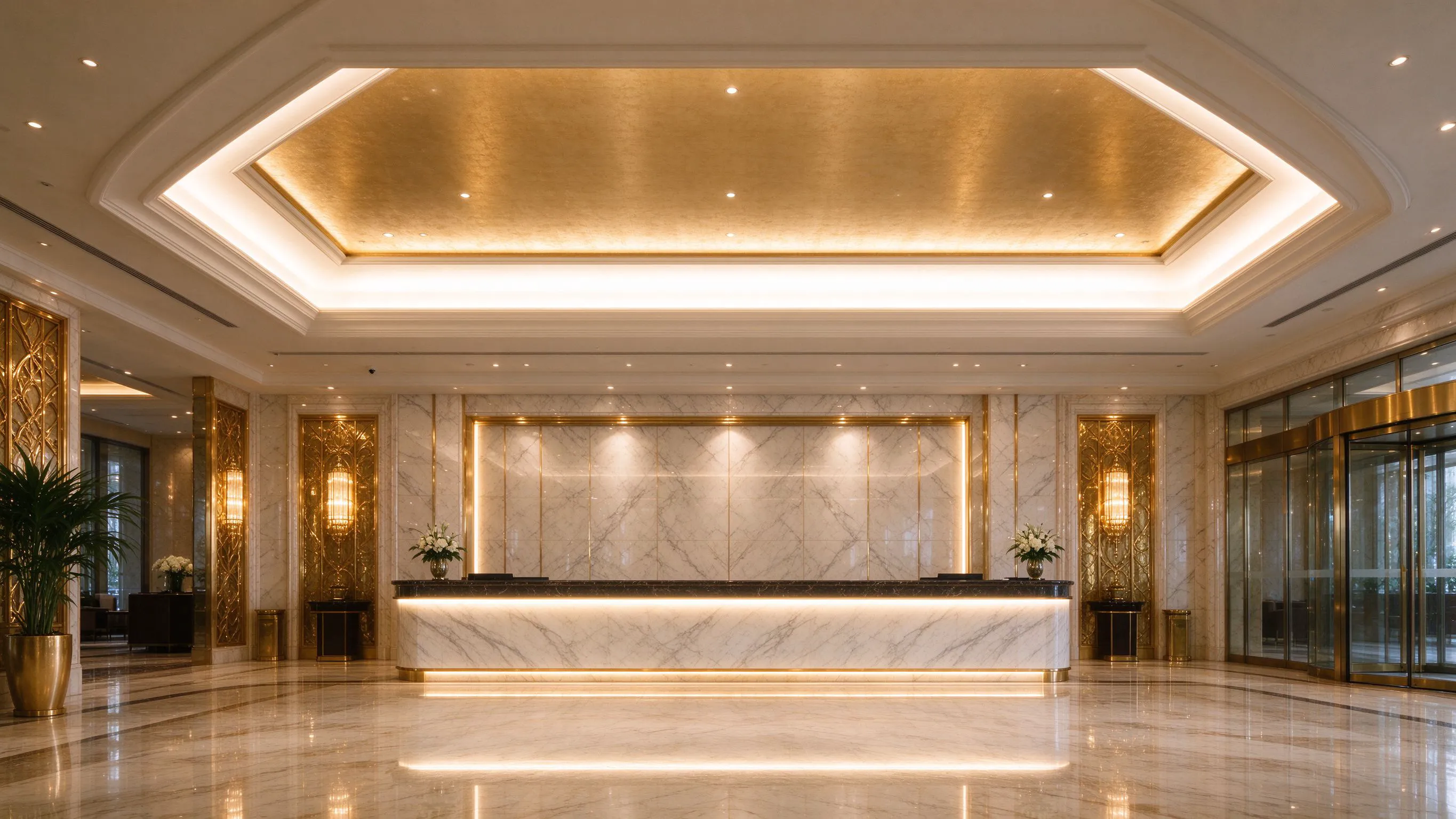
When the Cove Has to Do Real Work
A lot of cove lighting is purely decorative: a thin line of glow that defines a ceiling edge. But designers increasingly want the cove to be a genuine light source that illuminates the room, lights a task surface or floods a ceiling with reflected ambient light. Ask a narrow 10 or 12 mm strip to do that and two things happen: it cannot produce enough lumens, and pushing it harder to compensate overheats it.
High-lumen indirect lighting needs physical space for emitters and copper, which is exactly what an ultra-wide board provides.
What a 30mm Ultra-Wide COB Board Gives You
- Far more emitter area for very high lumen output per metre.
- Wide copper and board area that spreads current and dissipates heat.
- COB dot-free emission for a smooth glow even before a diffuser.
- Multiple emitter rows that blend into a broad, uniform light field.
- Stable colour and longer life from running powerful LEDs at sane currents.
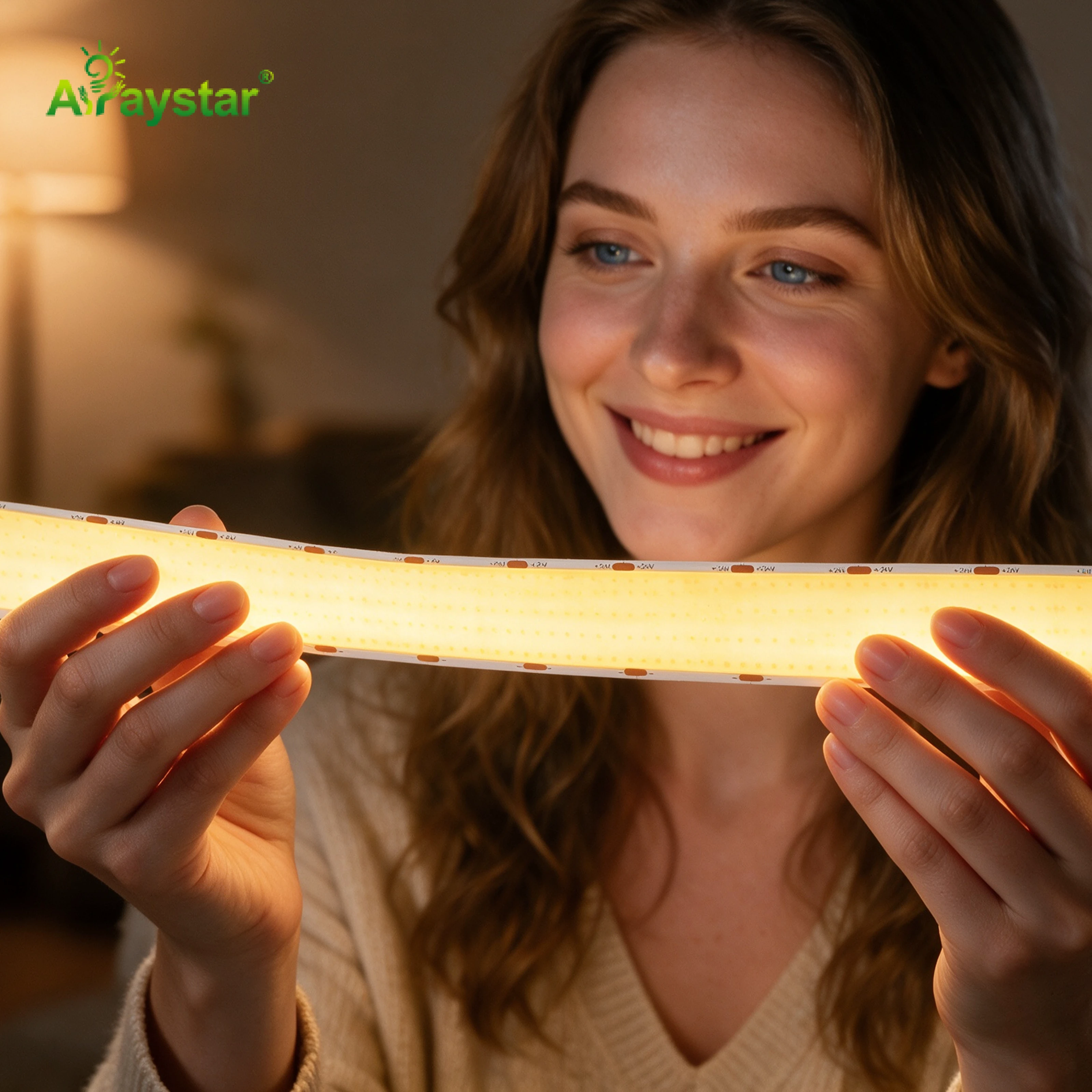
For high-lumen coves and indirect flood details I use the 30mm ultra-wide COB. It is the difference between a cove that accents a ceiling and one that genuinely lights the space.
Why COB Matters in a Wide High-Power Strip
Traditional high-density strip uses many discrete packages that, even at high count, can show as individual points close to a shallow diffuser. Chip-on-board (COB) construction mounts a continuous line of tiny emitters in a phosphor layer, producing a seamless glowing bar. On a wide board with multiple rows, COB delivers both the broad coverage and the dot-free quality that high-end indirect lighting demands, so the reflected ceiling light is smooth rather than striated.
The Thermal Advantage of Going Wide
Width buys both lumens and thermal headroom.
| Factor | Narrow overdriven strip | 30mm ultra-wide COB |
|---|---|---|
| Lumen ceiling | Limited by board area | Very high output per metre |
| Heat spreading | Concentrated on narrow copper | Spread across broad board/copper |
| Running temperature | Hot when pushed | Cooler at equivalent output |
| Light quality | Risk of dots/striation | Smooth multi-row COB field |
| Life and colour stability | Stressed when overdriven | More stable at rated current |
The common shortcut, overdriving a cheap narrow strip to reach a target lumen figure, is exactly how cove lights fail early and shift colour. A wide board achieves the same or higher output at healthier per-LED currents, which is the reliable way to run high lumens for tens of thousands of hours.
Designing the Cove Geometry
High-output indirect light needs somewhere to go. I size the cove depth and the reflective surface so the wide light field can blend before hitting the eye; a shallow cove with a powerful strip can reveal the source and create a bright band rather than a soft flood.
- Provide enough cove depth for the broad beam to blend before reflection.
- Use matte, high-reflectance white surfaces to maximise useful reflected light.
- Keep the strip hidden from direct view; the lit surface should be seen, not the board.
- Account for the 30mm board width in the extrusion or channel selection.
Powering High-Lumen Runs
High lumens mean high wattage, so I calculate drivers for the full loaded run with real headroom and plan feed intervals to prevent voltage drop across long coves. On wide boards the generous copper helps, but long perimeter coves still benefit from symmetric feeds. I also specify dimmable, flicker-free drivers because high-output indirect light is almost always scene-controlled and should dim smoothly rather than step or buzz.
Where Ultra-Wide COB Wins and Where It's Overkill
- Wins: large ceiling coves providing ambient light, indirect room lighting, high coffers, commercial spaces needing reflected brightness.
- Wins: deep profiles and light shelves that turn the cove into the main fixture.
- Overkill: thin decorative edge glow where a narrow standard strip is enough.
- Overkill: tiny joinery inlays that cannot physically house a 30mm board.
I match the board to the lighting duty. If the cove only needs to be seen as an accent, a narrow strip is cheaper and easier to hide. If the design relies on the cove to light the room, the wide COB is the tool that does it without overheating.
Specifying a High-Lumen Cove
Send the cove dimensions and depth, the target brightness or the room's lighting intent, the run length, the ceiling finish colour and the dimming plan. I will confirm whether the 30mm ultra-wide COB is justified, the extrusion that houses it, and the driver and feed layout. We supply the 30mm ultra-wide COB and recommend a mocked-up cove section so the reflected light level and smoothness can be judged before the full ceiling is built.
Estimating How Much Cove Light the Room Needs
When a cove is meant to light the room rather than just decorate it, I start from a rough lighting target instead of choosing the strip by eye. The honest method is to work with a lighting calculation for the specific space, but there is a practical way to frame the conversation with a designer before the full study exists.
- Define whether the cove is the primary ambient source, a supplement to downlights, or purely decorative.
- Estimate the room area and the target ambient illuminance for its use (lounges need far less than task spaces).
- Account for ceiling height and reflectance; high dark ceilings lose a lot of the reflected light.
- Convert the target to a required lumen output per metre of cove, which sizes the COB strip.
- Add dimming headroom so the system can run below maximum for evening scenes.
The reason this matters with a wide high-output board is that it is easy to over-light as well as under-light. A cove sized for task-level brightness that cannot be dimmed will feel like an office in a fine-dining room; a decorative strip pretending to be an ambient source will leave the space dim and force the client to add ugly surface-mounted fixtures later. I usually mock up one ceiling bay with the proposed 30mm COB on a dimmer, measure or at least photograph the reflected result at a few levels, and let the designer choose the ambient point before the whole ceiling is built. That single adjustable mock-up confirms both the lumen target and the smoothness of the reflected field, and it is far more reliable than promising a room brightness from a per-metre lumen number alone, because the ceiling colour, cove depth and room geometry all change how much of that light actually reaches the people in the space.
Recommended Products
Frequently Asked Questions
Why use a 30mm ultra-wide COB strip instead of a normal narrow strip?
A wide board carries far more emitters and copper, giving much higher lumen output per metre while spreading heat across a larger area, so it runs cooler and lasts longer than an overdriven narrow strip. COB construction also keeps the light dot-free. It is used when a cove provides real ambient light rather than a thin decorative glow.
Is COB better than regular strip for cove lighting?
For high-quality indirect light, yes: COB's continuous phosphor-mounted emitters produce a seamless dot-free bar, and on a wide multi-row board the reflected ceiling light is smooth rather than striated. Discrete high-density strip can still show individual points near a shallow diffuser.
Does a high-power cove strip overheat?
A narrow strip overdriven for high lumens will overheat, shift colour and fail early. A 30mm ultra-wide board spreads the same or greater output across broad copper and runs cooler at healthy currents, but it still needs correct mounting, rated-current operation and properly sized drivers.
How deep should a cove be for a high-output wide strip?
Deep enough for the broad light field to blend before reaching the eye, with a matte high-reflectance white surface to maximise reflected light and the strip hidden from direct view. A shallow cove with a powerful strip reveals the source and creates a bright band instead of a soft flood, so mock up a section first.
When is a 30mm wide COB strip overkill?
For thin decorative edge glow and tiny joinery inlays that only need an accent and cannot physically house a 30mm board, a narrow standard strip is cheaper and easier to hide. Specify the wide COB when the cove is genuinely lighting the room, such as large ceiling coves, coffers and indirect ambient systems.
Need help with your LED project?
Get factory-direct pricing, free samples and engineering support within 24 hours.
Email: info@arraystarled.com | Phone: +86-0755-2103-6746 | WhatsApp: 0086 1581 8514 077
Need to size your power supply? Use our LED Strip Power Calculator to find the right driver in seconds.