
Art-Net & sACN (E1.31) for LED Installations: Network Control Beyond DMX
- 2026-09-30 17:38
- /
- Arraystar LED
Once an LED installation grows past a few hundred pixels or needs to sync with a lighting console or other fixtures, simple standalone controllers run out of road and you enter networked control - ArtNet and sACN/E1.31 carrying DMX universes over Ethernet. It sounds intimidating but the logic is simple: universes hold 512 channels, your pixel count decides how many universes you need, and the controller converts network data into pixel signals. Get the universe math, network layout and controller tier right, and installations from facade shows to stage rigs become genuinely manageable and expandable.
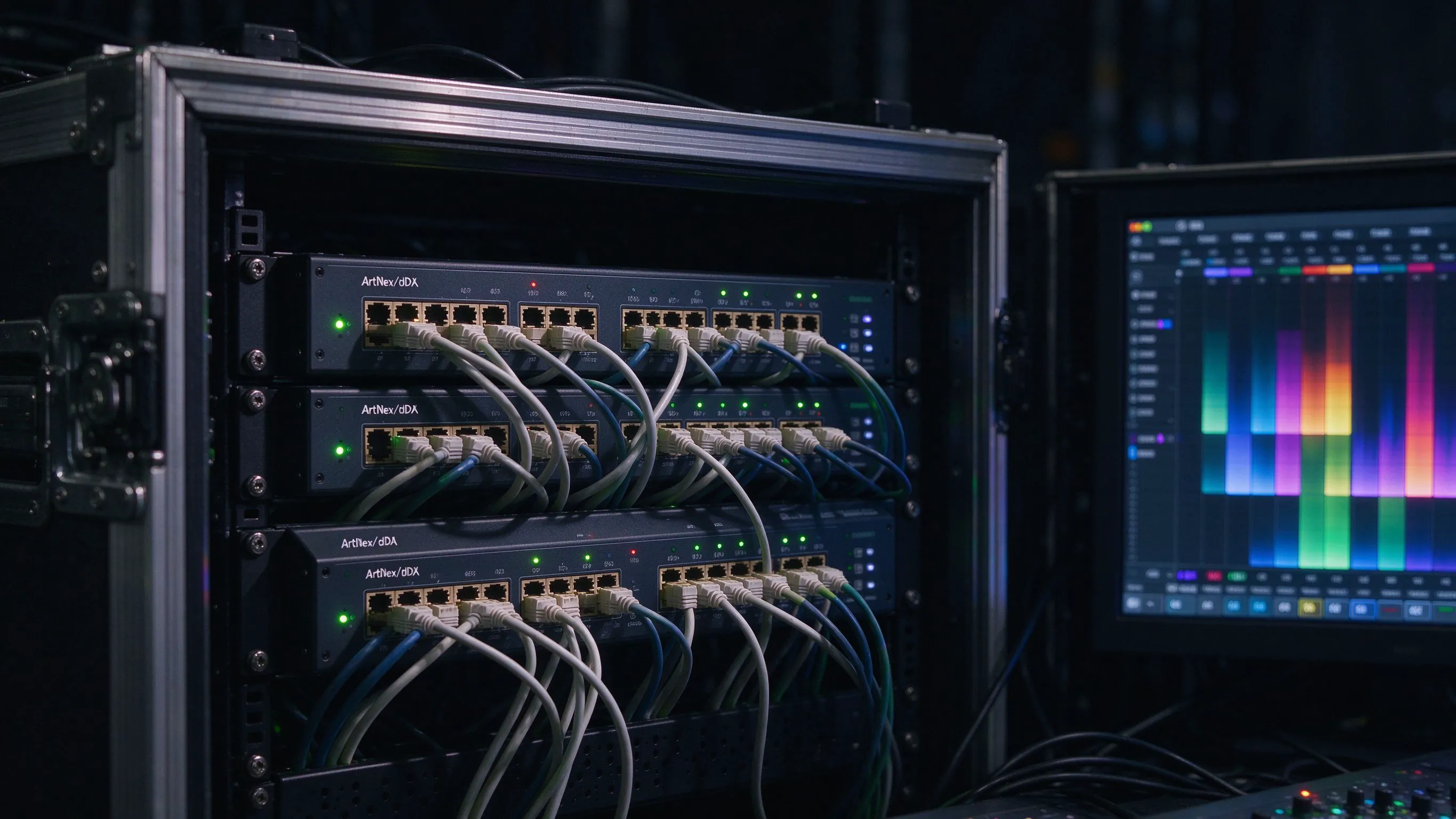
When Standalone Controllers Stop Being Enough
A phone-app controller is fine for a room or a single sign. But architectural facades, stage sets, large pixel installations and anything synchronized with professional lighting fixtures or a console need a standardized, networked protocol that can address thousands of channels deterministically and in sync. That's what ArtNet and sACN (streaming ACN, E1.31) are for.
Both protocols carry DMX512 data - the theater and architectural lighting standard - over standard Ethernet networks. A lighting console, software or media server outputs universes of DMX over the network, and LED controllers receive those universes and translate them into pixel output. You don't need to be a network engineer, but you do need to understand universes, addressing and basic topology.
Universes, Channels and the Pixel Math
DMX is organized into universes of 512 channels. Each pixel consumes channels depending on color type: an RGB pixel uses 3 channels, RGBW uses 4. So one universe drives roughly 170 RGB pixels (510/3) or 127 RGBW pixels (508/4). Count your pixels, multiply by channels per pixel, divide by 512 and round up - that's how many universes the show needs, and it dictates controller capacity.
Worked example: 2,000 RGB pixels need 6,000 channels = 12 universes; 2,000 RGBW pixels need 8,000 = 16. Underestimating universes is the classic planning error that leaves the far section of a facade dead. Always calculate from total pixel count and color type before choosing controllers, and leave headroom for expansion.
How many pixels fit in one DMX universe.
| Pixel type | Channels/pixel | Pixels per 512-channel universe |
|---|---|---|
| Single color / dimmer | 1 | 512 |
| CCT tunable white | 2 | 256 |
| RGB | 3 | ~170 |
| RGBW | 4 | ~127 |
Controller Tiers for Networked Pixel Work
Networked LED controllers range from compact Ethernet decoders to high-channel pixel processors. The EN-508 ArtNet/DMX512 controller is a compact entry point for bringing network universes into a run of DMX or pixel strip - a good fit for smaller architectural zones and stage pieces that need to sit on the same network as a console.
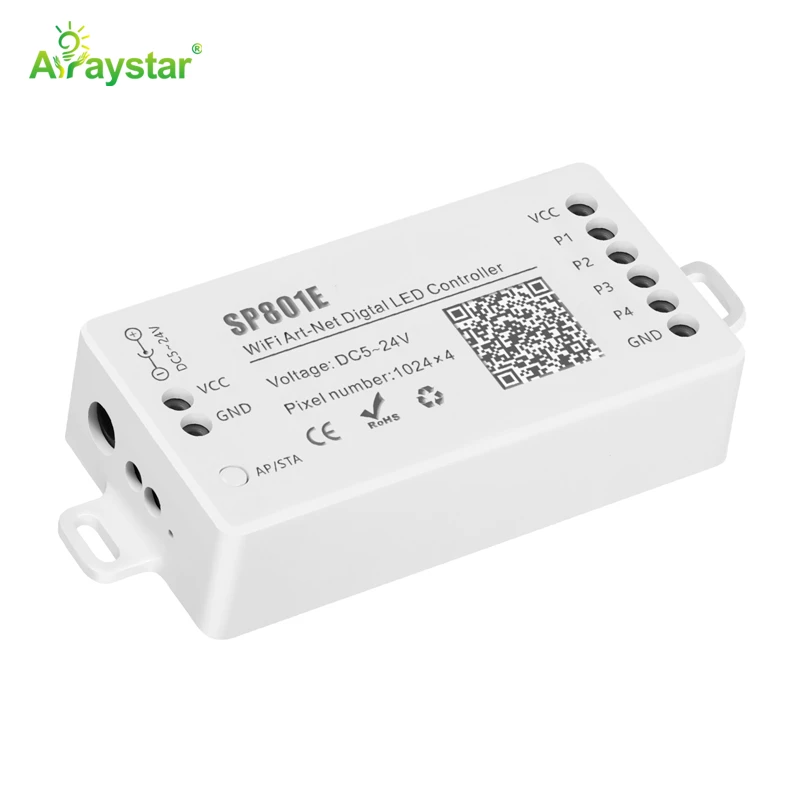
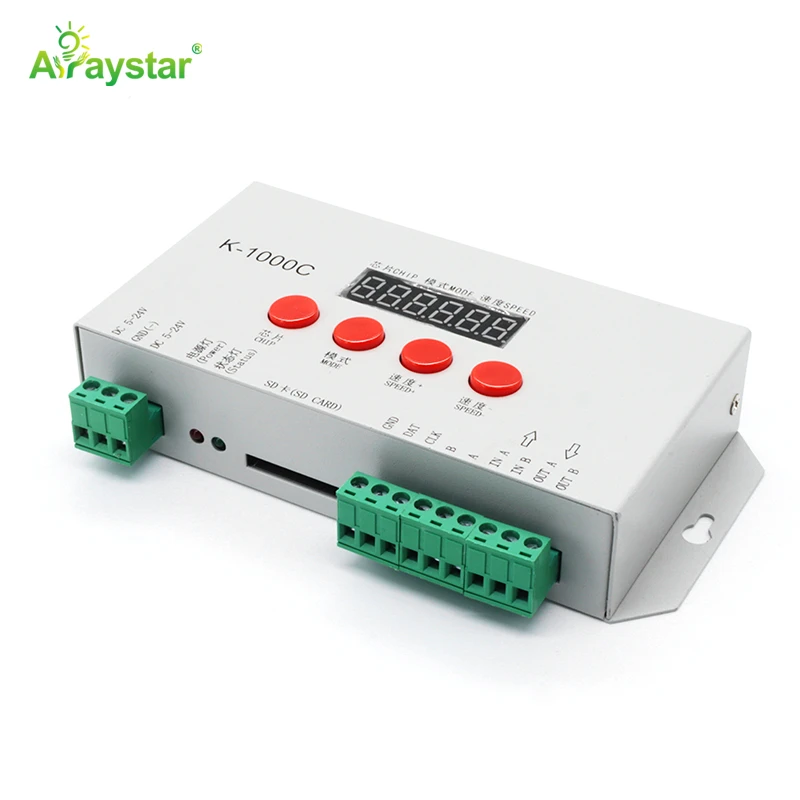
At the larger end, the K1000C DMX512 pixel controller handles substantial pixel counts across multiple universes for big facade and stage runs, while the SP801E is a WiFi ArtNet controller that brings networked control to more compact and cost-sensitive projects over WiFi rather than wired Ethernet. Choose by total universes, wired-vs-wireless reliability needs, and whether the show runs from a console or from software.
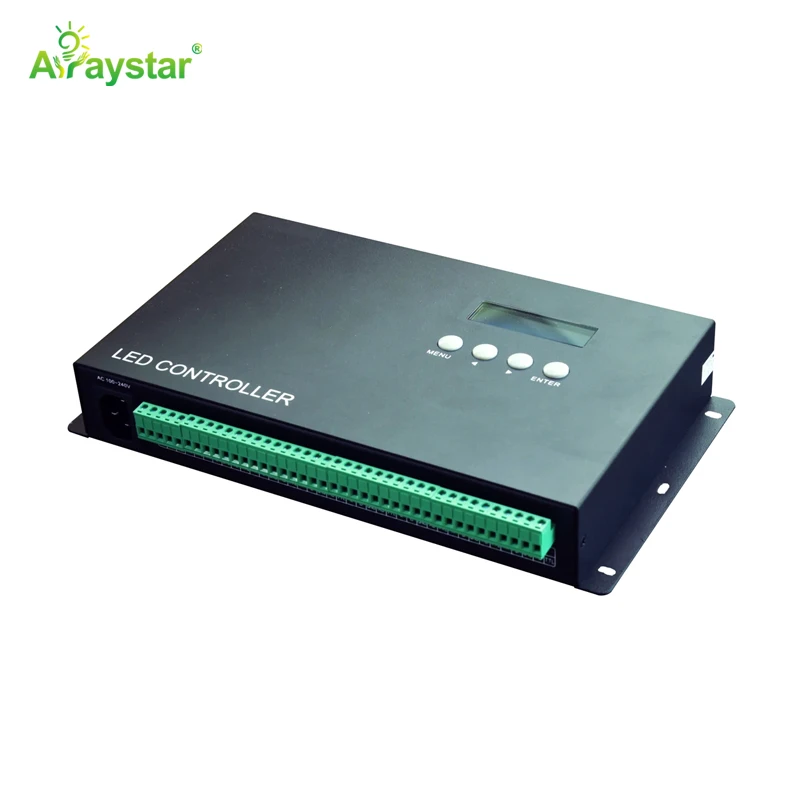
- Compact zones / console integration: wired ArtNet/DMX decoder (EN-508).
- Large facades/stage, many universes: high-channel pixel controller (K1000C).
- Cost-sensitive compact projects: WiFi ArtNet (SP801E), accept WiFi limits.
- Permanent/safety-critical shows should use wired Ethernet, not WiFi.
- Match controller protocol (ArtNet vs sACN) to what the console/software outputs.
Network Topology, Switching and Sync
ArtNet and sACN run over ordinary Ethernet, but a lighting network should be treated deliberately. Use a managed or dedicated network for large shows, set static IPs or a controlled DHCP range, keep lighting traffic off a crowded office network, and use switches and ArtNet/sACN-to-pixel controllers distributed physically near the runs to keep data cable runs short.
Synchronization is the advantage of the protocol - every controller on the network receives the same time-referenced universe data, so thousands of pixels across a building move in frame-accurate sync under one console. sACN multicasts universes efficiently to many receivers; ArtNet commonly uses directed broadcast/unicast. Follow the console/software's addressing scheme and test universe routing on the bench before rigging.
Power and Data at Scale
Networked control solves the data problem but not the power problem - large pixel shows still need distributed power injection and adequate supplies (covered in the wiring and inrush guides). Treat data and power as two parallel architectures: Ethernet/controllers distribute the signal in sections, power supplies feed the pixels in sections, and the two are planned together zone by zone.
- Calculate universes from total pixels x channels-per-pixel, then add headroom.
- Plan controllers physically near runs; keep data lines short and protected.
- Use wired Ethernet for permanent shows; reserve WiFi for compact/temporary work.
- Coordinate ArtNet/sACN universe numbering and IP addressing up front.
- Pair every data section with adequate power injection - control doesn't supply current.
Recommended Products
Frequently Asked Questions
What are ArtNet and sACN (E1.31) for LED control?
They're network protocols that carry DMX512 lighting data over Ethernet, letting a console, media server or software control large numbers of LED pixels in sync across a building or stage. Controllers receive DMX universes over the network and convert them to pixel signals. Use them once an install exceeds standalone controller capacity or must sync with professional fixtures.
How many DMX universes do I need for my LED pixels?
Each universe has 512 channels; divide total channels by 512 and round up. RGB pixels use 3 channels each (~170 pixels/universe), RGBW use 4 (~127). For example 2,000 RGB pixels = 6,000 channels = 12 universes. Always calculate from total pixel count and color type, and add headroom so the far end of an install isn't left dead.
Which ArtNet controller should I use?
A compact wired ArtNet/DMX decoder like the EN-508 for smaller zones that must join a console network; a high-channel pixel controller like the K1000C for large facades and stage runs spanning many universes; and a WiFi ArtNet controller like the SP801E for compact, cost-sensitive projects. Permanent shows should use wired Ethernet rather than WiFi.
Should I use ArtNet or sACN, wired or WiFi?
Use whichever protocol your console or software outputs (many support both) and coordinate universe/IP addressing. For permanent and safety-critical installations use wired Ethernet on a managed/dedicated network for reliability; WiFi ArtNet is acceptable for compact or temporary shows where running cable is impractical but is more vulnerable to interference.
Does a networked ArtNet controller also power the LEDs?
No - the controller only distributes data. Large pixel shows still need a separate power architecture: adequately sized supplies with regular power injection section by section, planned alongside the data network. Design the two in parallel - Ethernet/controllers for signal, distributed power supplies for current - or the show will dim and glitch despite perfect control.
Need help with your LED project?
Get factory-direct pricing, free samples and engineering support within 24 hours.
Email: info@arraystarled.com | Phone: +86-0755-2103-6746 | WhatsApp: 0086 1581 8514 077
Need to size your power supply? Use our LED Strip Power Calculator to find the right driver in seconds.







