Preventing Glare on Glass Display Cases with COB Strip Placement
- 2026-10-28 10:03
- /
- Arraystar LED
A COB strip mounted straight-on to a glass display case reflects in the pane and lights the glass instead of the object. Offset the strip, angle it at 30 to 45 degrees, and keep it above the glass line so the object is lit, not the viewer.
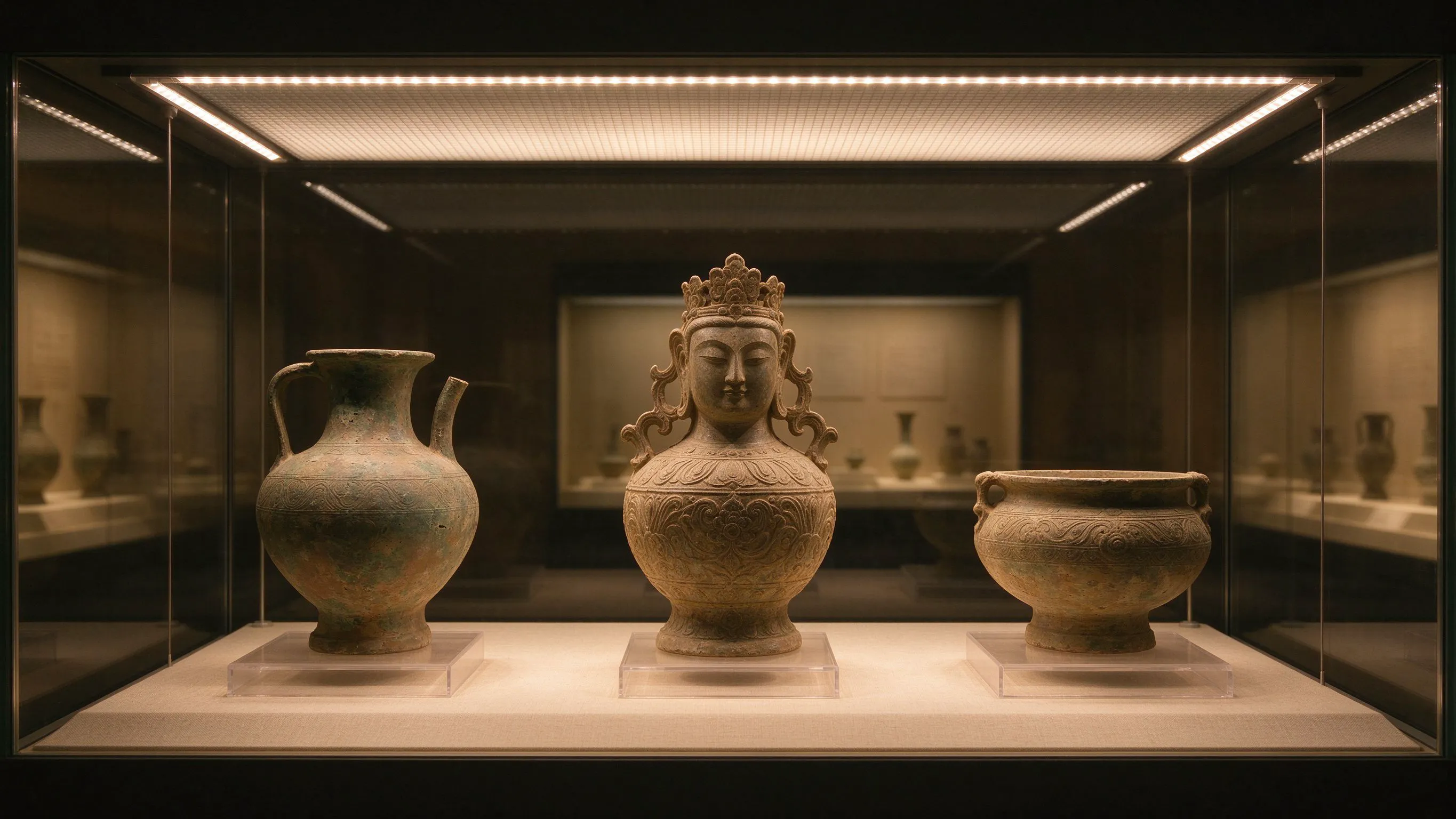
Why glass cases reflect the strip
Glass is a mirror at shallow angles. A COB strip mounted parallel to the front pane, at the same height as the object, throws a bright reflection straight back at the viewer. You end up looking at a glowing line in the glass, not at the vase or watch behind it. Museum designers call this veil reflection, and it is the number-one lighting failure in showcases.
The fix is geometry, not brightness. You cannot dim the reflection away; you have to move the light so it does not sit in the reflection angle. A strip that runs along the top inside edge, aimed down at 30 to 45 degrees onto the object, lights the piece and leaves the glass clear.
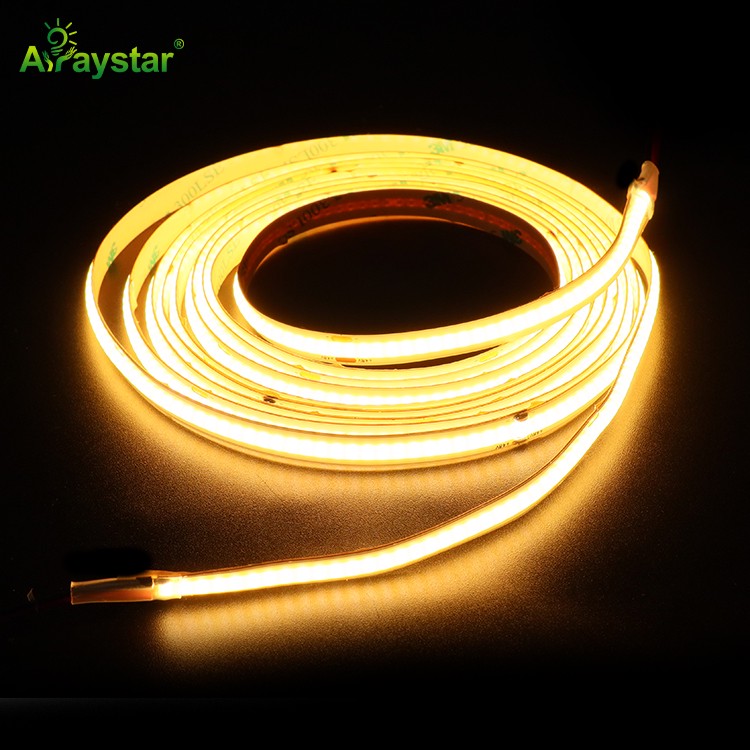
Set the offset and the angle
Mount the strip on a top shelf or a recessed ledge inside the case, set back 80 to 150 mm from the front glass. Aim it at the centre of the displayed object, not at the glass. A 30-degree downward angle works for objects on the middle shelf; 45 degrees works for objects low in the case. The point is that the strip itself is hidden from the viewer eye line.
If you cannot recess the strip inside the case, mount it on the outside top trim and aim it down through the glass. Keep it at least 150 mm above the top edge of the pane, so the reflection lands above the object rather than on it. On narrow cases under 300 mm deep, one top strip is enough; on deeper cases, add a second strip on the back wall aimed forward.
Starting layout by case size.
| Case depth | Strip position | Aim angle | Notes |
|---|---|---|---|
| Under 300 mm | Top inner edge | 35 degrees down | Single strip |
| 300 to 600 mm | Top plus back wall | Top 30, back 20 forward | Two strips, crossfire |
| Over 600 mm | Top plus both sides | 45 degrees down each side | Three strips |
| Tall jewellery case | Each shelf front lip | Down onto tray | Avoid eye-level strip |
Control brightness and colour temperature
Display objects need low brightness, not high. A COB strip at 480 to 640 LEDs per metre can overlight a small object and blow out reflections. Run the strip at 10 to 20 W per metre and dim to taste. The goal is 150 to 300 lux on the object, not 1000 lux. Over-lit glass cases wash out texture and colour.
Colour rendering matters. CRI 95+ is the museum standard. Colour temperature depends on the object: 2700 to 3000 K for warm materials like wood, leather and oil paintings; 3500 to 4000 K for silver, glass, minerals and modern design. Avoid RGB in a display case unless the object is meant to be colour-shifted; it ruins true colour.
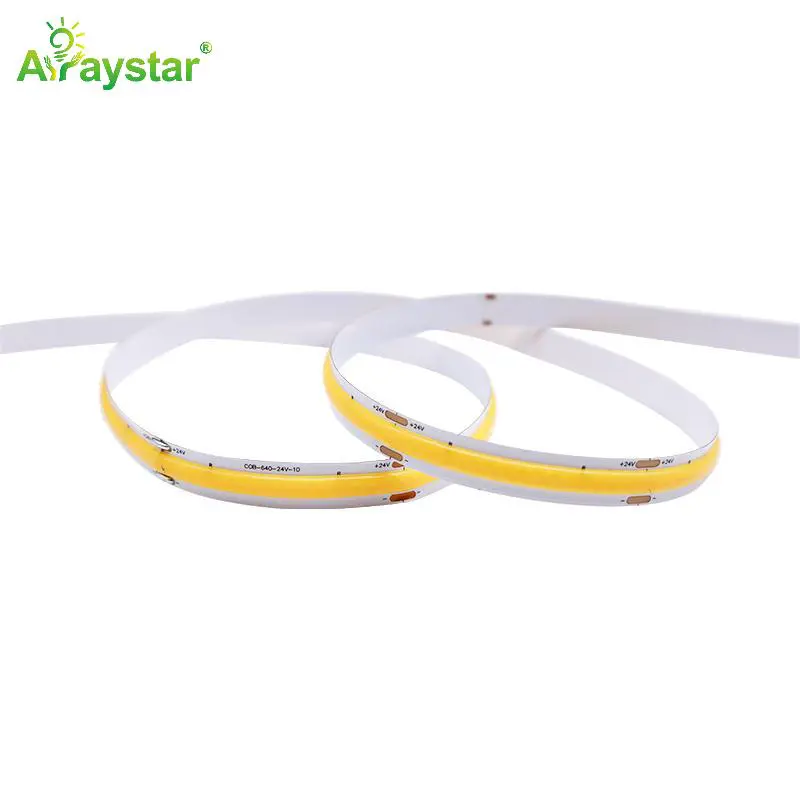
Add a diffuser lens or use a frosted extrusion cover. Bare COB shows as a line in the object glossy surface, which is almost as bad as a reflection in the glass. A 120-degree opal diffuser spreads the strip into a soft wash.
Heat, UV and object safety
Display cases are sealed boxes. COB strip heat builds up fast, and sensitive objects (textiles, photographs, watercolours) fade under even mild heat. Keep the strip away from the object itself, leave a 50 mm air gap, and run the case with a small vent at the bottom. Modern COB LEDs emit almost no UV, but pair the strip with a low-UV driver and avoid adding any halogen lamp in the same case.
Wattage per metre is the safety dial. At 8 W/m the strip barely warms the case; at 15 W/m it can raise case temperature by 5 to 8 C. For a wine display, an archive box or a paper exhibit, stay under 8 W/m and measure case air temperature with a thermometer after one hour on.
- Leave a 50 mm gap between strip and object to avoid local hot spots.
- Fit a small ventilation hole at the base of the case; a sealed case cooks the exhibit.
- Use a 24 V driver outside the case, not inside, so heat stays out.
- Add a diffuser cover; glossy objects reflect a bare strip line as badly as glass does.
Install and sign-off checks
Once the case is assembled, sit at the normal viewing height and look at the pane. You should not see the strip or a reflection of it. If you do, increase the setback by 30 mm or lower the strip. Walk the case from side to side; a reflection that hides at centre view may appear at 30 degrees off-axis.
Turn the room lights on and off. The strip has to work with ambient light, not only in a dark room. Check the object true colours under the case light alongside a small daylight reference tile. If the colours shift, drop the colour temperature or raise the CRI bin.
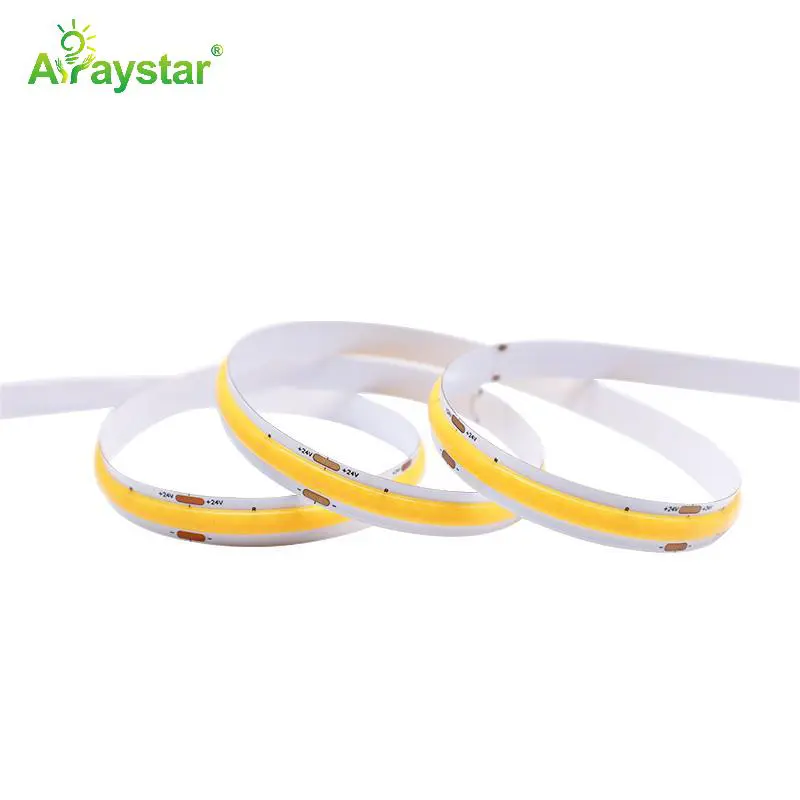
Sign off with the curator or the shop owner standing where their customers will stand. Lighting that looks right to the installer on a ladder is often wrong at eye level. Take a photo from the customer position; the photo will show reflections you missed with your eye.
Recommended Products
Frequently Asked Questions
Why do I see a bright line in my display case glass?
That is veil reflection. The strip is mounted parallel to the pane at the object height, so the glass mirrors it back at you. Move the strip above the glass line, set it back 80 to 150 mm, and angle it down at 30 to 45 degrees onto the object.
How many watts per metre should I use in a display case?
8 to 15 W/m, depending on object sensitivity. Sensitive items like paper or textiles stay under 8 W/m. Aim for 150 to 300 lux on the object, not more.
What CRI do I need for a display case?
CRI 95+ is the museum standard. CRI 90 is acceptable for retail, but below that colours on the object shift and customers notice without knowing why.
Can I use RGB strip to light products?
No, not for product colour accuracy. RGB shifts the colours of whatever you are lighting. Use RGB only for accent or feature lighting where colour wash is the effect. Use white COB at CRI 95+ for the actual product.
How do I stop the case from heating up?
Run the strip at the lower end of its wattage, keep the driver outside the case, leave a 50 mm gap between strip and object, and add a small vent at the base. Measure case air temperature after an hour on.
Need help with your LED project?
Get factory-direct pricing, free samples and engineering support within 24 hours.
Email: info@arraystarled.com | Phone: +86-0755-2103-6746 | WhatsApp: 0086 1581 8514 077
Need to size your power supply? Use our LED Strip Power Calculator to find the right driver in seconds.