Hotspots in a Backlit Acrylic Panel: Strip-to-Panel Stand-Off Distance
- 2026-11-02 15:54
- /
- Arraystar LED
Hotspots in a backlit acrylic sign are a stand-off problem, not a brightness problem. Too close and you see individual LED dots; too far and the halo dies. I work to a 20 to 40 mm stand-off range for most acrylic panels, and I double it if the panel is thin or clear.
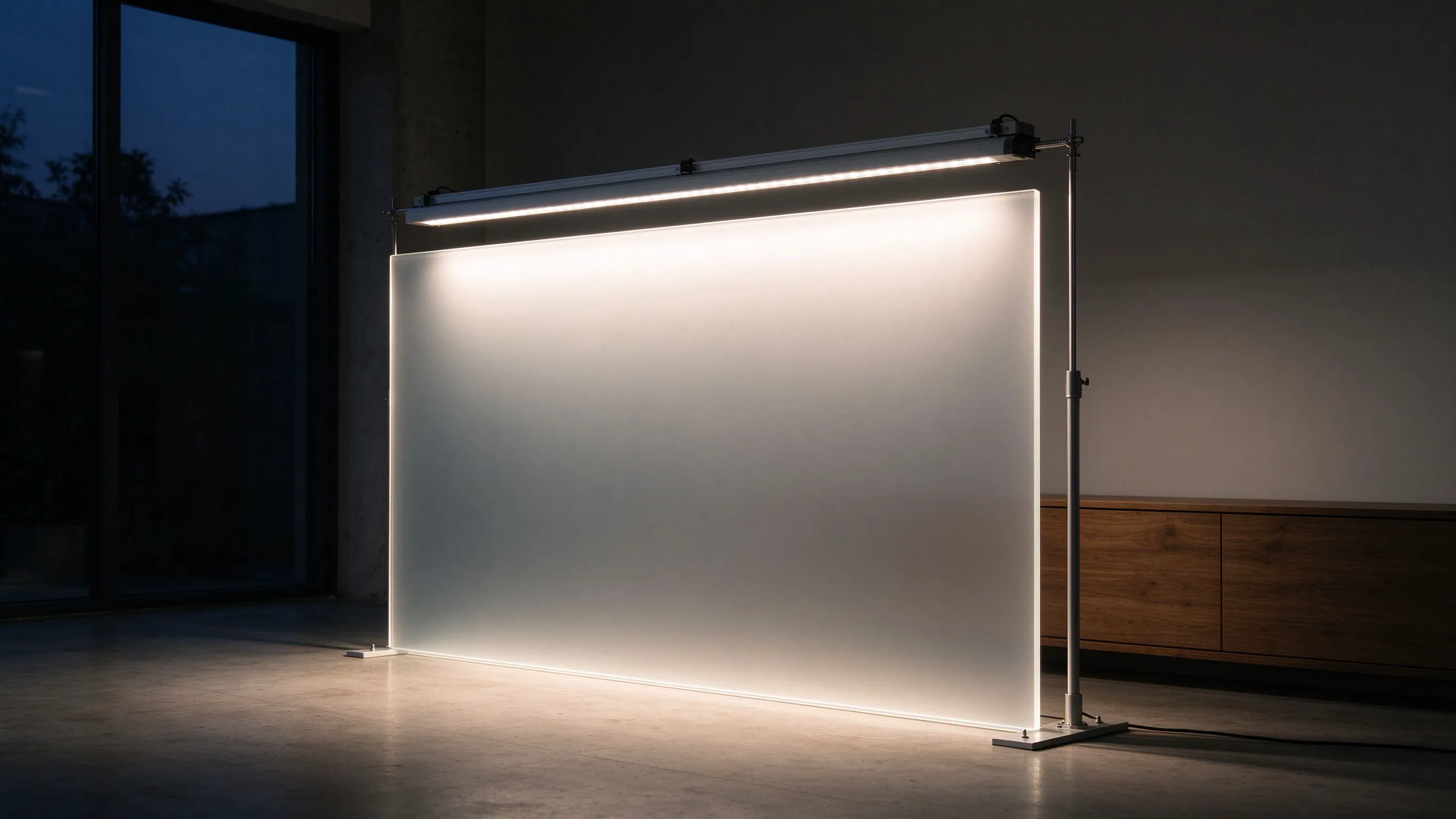
The dots you see when the sign lights up
A backlit acrylic panel on a reception wall should glow as one even rectangle. What you often get instead is a grid of bright dots where each LED on the COB strip lines up through the acrylic, with darker gaps between. On a clear or thin acrylic panel, the dots are sharp; on a frosted panel, they soften but still show as a faint grid at night.
This is not a faulty strip. A COB strip is already much more continuous than a 5050 strip, but it is still a linear light source behind a flat panel. The distance between strip and panel decides whether you see dots or one even wash.
How stand-off distance hides the dots
Physics does the work. Each LED on the strip emits light that spreads out as it travels toward the acrylic. At 10 mm away, the cone of light from one LED covers a small spot and the next LED has not overlapped. At 30 mm away, the cones have spread and overlapped enough that the eye sees one uniform glow. Double the distance again and the total brightness drops because the light spreads over a larger area.
The trade-off curve
- Under 15 mm stand-off: sharp dots, visible LED grid.
- 20 to 40 mm: dots merge into even glow, brightness still good.
- Over 50 mm: even but dim, edges fall off.
The stand-off range I use
I build the panel housing so the strip sits on a back plate 25 to 35 mm behind the acrylic. That range works for most 3 to 5 mm frosted acrylic panels with a 240 to 320 LED per metre COB strip. If the client wants a brighter, punchier halo, I drop to 20 mm and accept very faint dots at close viewing.
- Frosted acrylic 3 mm thick: 25 to 30 mm stand-off.
- Frosted acrylic 5 mm thick: 30 to 40 mm stand-off.
- Clear acrylic with separate diffuser film: 40 to 50 mm stand-off.
- Viewing distance under 1.5 m: lean to the wider end of the range.
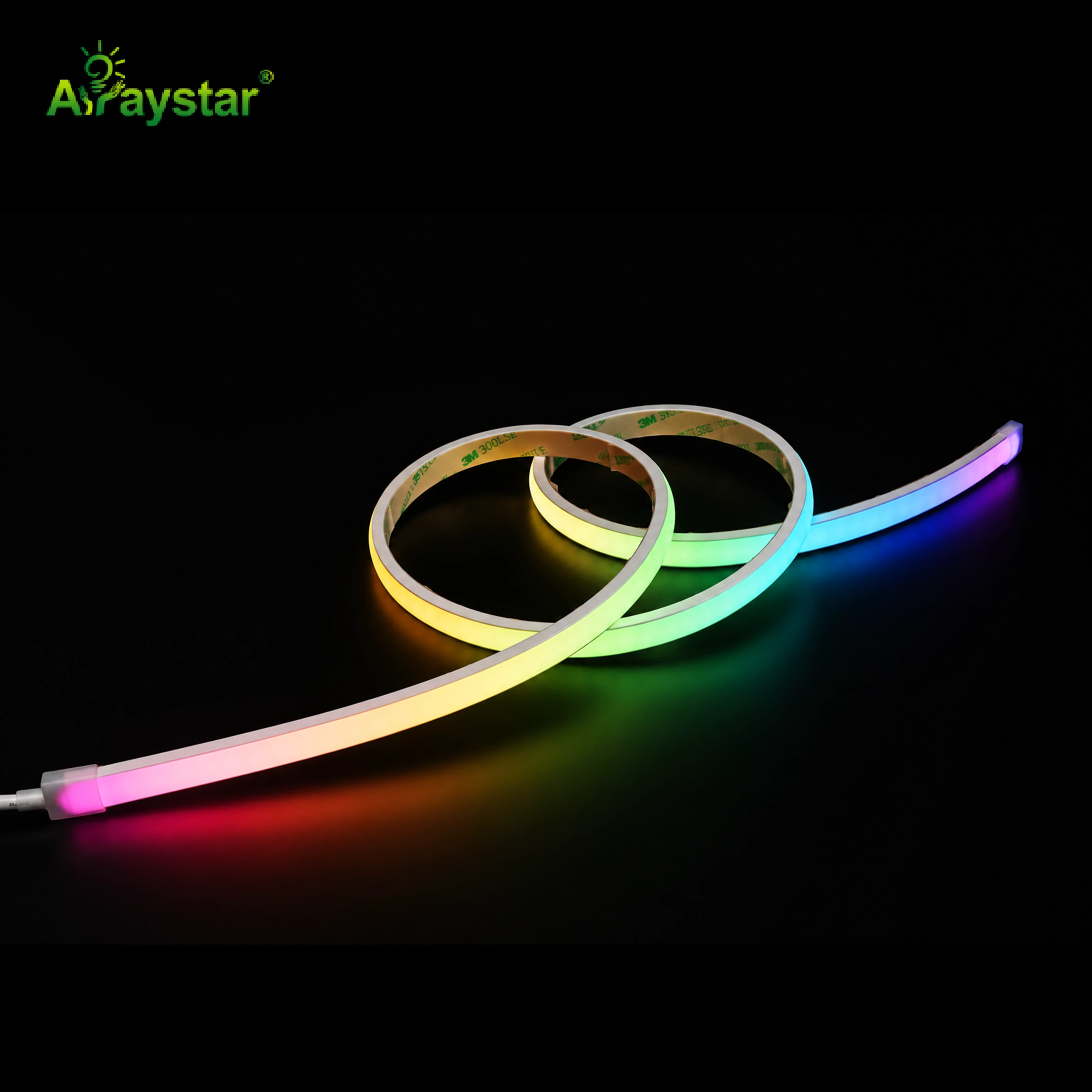
Diffusion materials that change the math
The acrylic itself is part of the diffusion stack. A 5 mm cast frosted acrylic diffuses light about as well as an extra 10 mm of air gap. A clear acrylic panel does almost no diffusion, so you either need a frosted film on the back or a much larger stand-off. Opal polycarbonate diffuses more than acrylic, which lets you run a tighter stand-off.
Thicker frosted panel lets you run the strip closer and brighter.
| Panel material | Thickness | Effective diffusion | Recommended stand-off |
|---|---|---|---|
| Clear acrylic | 3 mm | Minimal | 40-50 mm plus film |
| Frosted acrylic | 3 mm | Good | 25-30 mm |
| Frosted acrylic | 5 mm | Very good | 30-40 mm |
| Opal polycarbonate | 3 mm | Excellent | 20-25 mm |
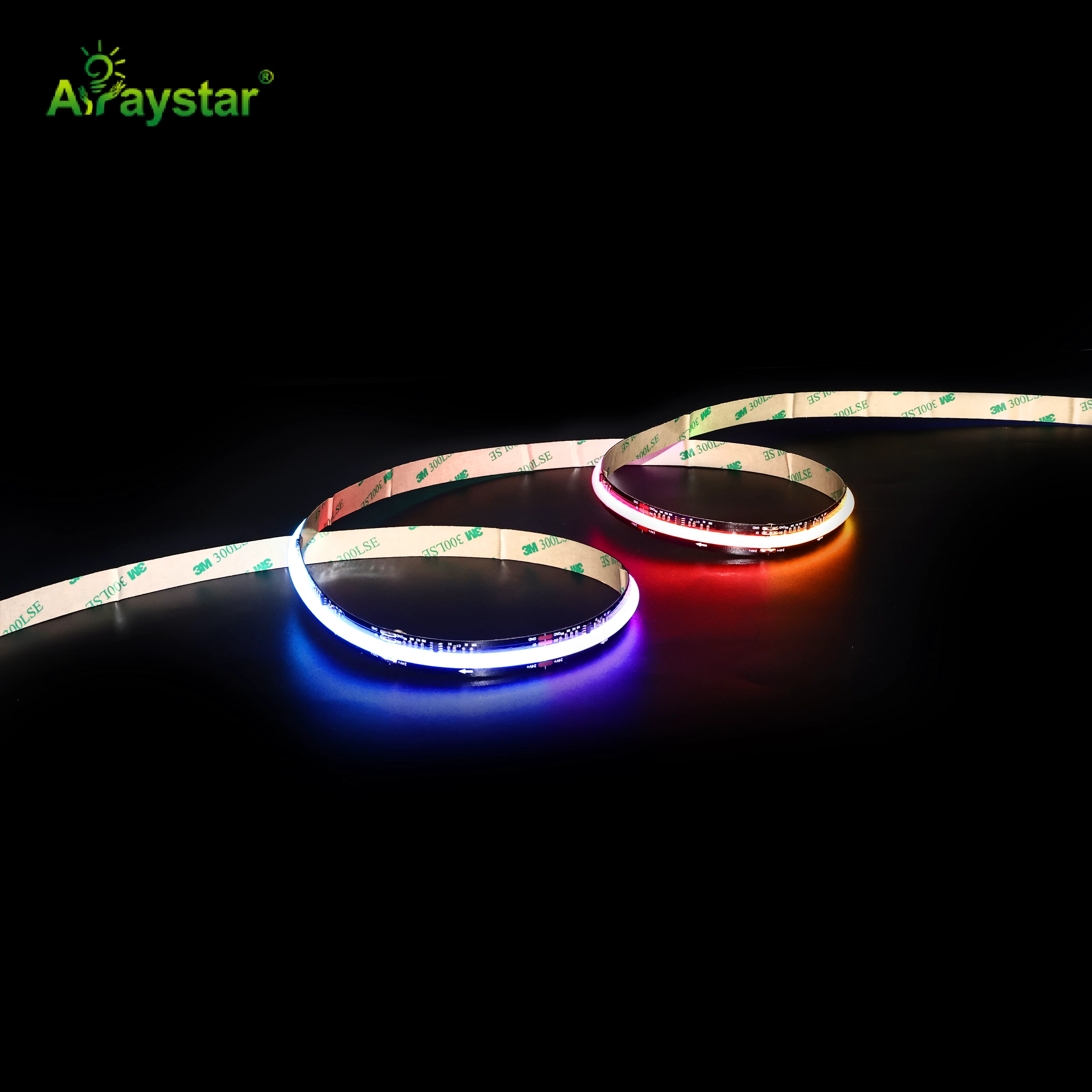
Edge glow and corner brightness
Even with a perfect stand-off, the edges of a backlit panel read brighter than the centre because the strip is usually mounted around the perimeter. That is normal. To even it out, I run the strip on the back plate around all four edges and set the panel size so the centre is not more than 150 mm from the nearest strip. Bigger panels need a second inner ring of strip.
- Run the strip around all four edges, not just top and bottom.
- Keep any point on the panel within 150 mm of a strip run.
- Add a centre strip on panels over 600 mm tall or wide.
- Use a centre-fed driver so voltage drop is symmetric left-right.
Recommended Products
Frequently Asked Questions
Why do I see LED dots through my acrylic sign?
The strip is too close to the panel. Each LED emits a cone of light that needs distance to spread and overlap. At under 15 mm stand-off you see individual dots. Move the strip back to 25 to 35 mm and the cones merge into one even glow.
Can I just run the strip brighter to hide the dots?
No. Brighter LEDs make the dots brighter, not more even. The contrast between lit and unlit gaps stays the same or gets worse. The fix is distance and diffusion, not current. Over-driving the strip also shortens life and adds heat.
What if my panel is clear acrylic and I want a halo?
Clear acrylic does not diffuse light, so you need either a frosted film on the back of the panel or a 40 to 50 mm stand-off. A 3 mm clear panel with no film will show the LED grid no matter how bright you run it. Stick a self-adhesive frosted film on the back face and you can drop back to 25 mm.
How big a panel can I backlight with one perimeter strip?
Keep the centre within 150 mm of a strip run. That means a single perimeter ring works for panels up to about 600 by 600 mm. Beyond that, add an inner ring or a centre strip. On a 1200 by 600 mm panel, I run the perimeter plus one horizontal strip down the middle.
Does a thicker acrylic panel help hide dots?
Yes, up to about 5 mm. A 5 mm frosted acrylic diffuses roughly like an extra 10 mm air gap, which lets you run the strip 10 mm closer for the same evenness. Beyond 5 mm the gains taper off and you just pay more for acrylic and lose brightness.
Need help with your LED project?
Get factory-direct pricing, free samples and engineering support within 24 hours.
Email: info@arraystarled.com | Phone: +86-0755-2103-6746 | WhatsApp: 0086 1581 8514 077
Need to size your power supply? Use our LED Strip Power Calculator to find the right driver in seconds.