Why My COB Cove Shows the Board Colour Through the Diffuser at Night
- 2026-11-02 15:54
- /
- Arraystar LED
A warm white cove that shows a greenish or amber band at night is almost never a dimmer fault. It is the colour of the PCB behind a thin diffuser, glowing through. I fix it by choosing the right board colour, adding diffusion, and setting the strip back from the lip.
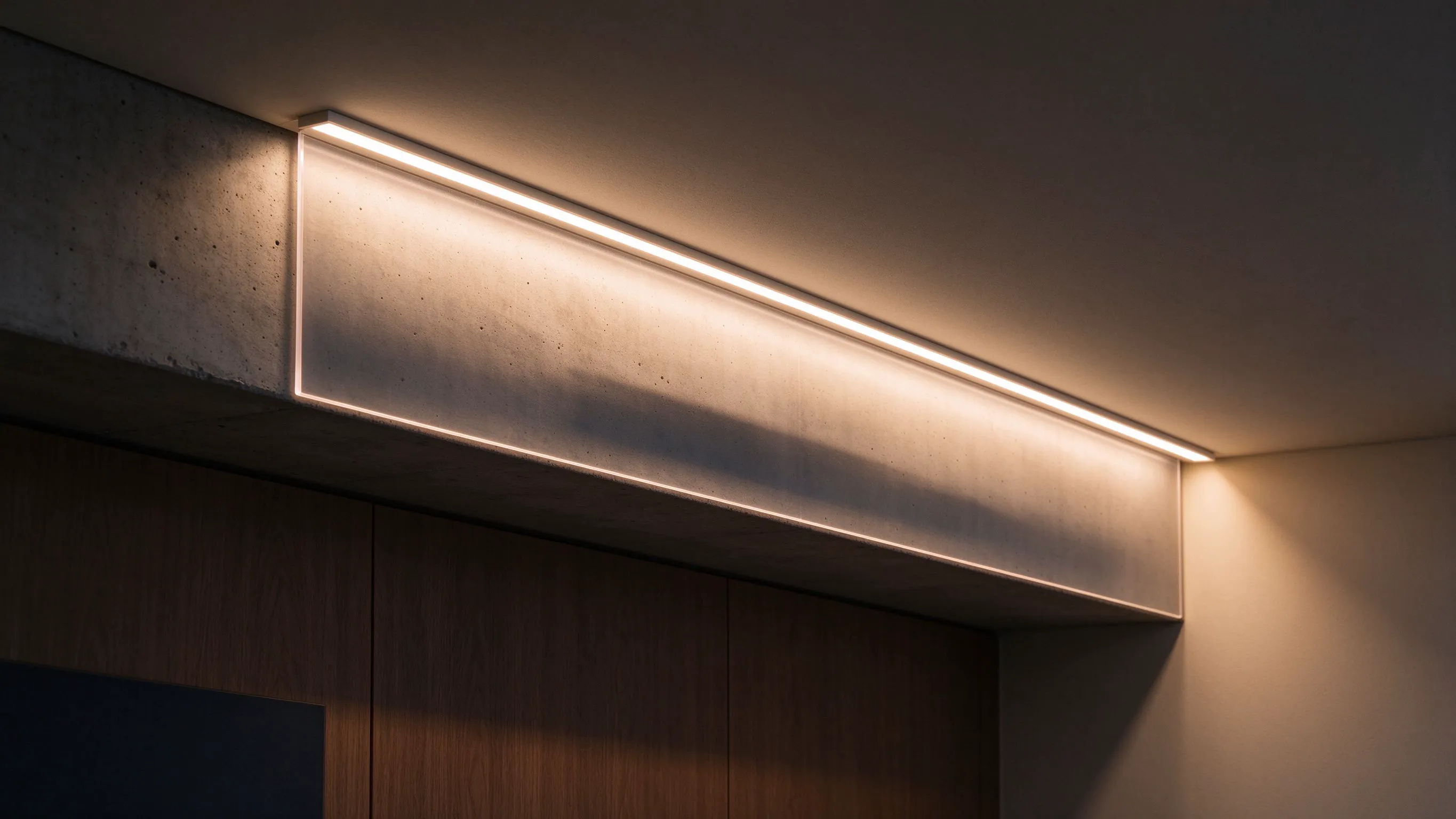
The coloured band in the cove at night
The symptom is specific: the cove wash on the ceiling reads as clean warm white during the day or when the room lights are on, but at night, with only the cove on, a faint greenish or amber band shows along the lip where the strip sits. The band is 30 to 50 mm wide, right at the shadow line, and it does not follow the beam angle.
I have seen this on oak coves, on white-painted plaster, and on black slot ceilings. It is consistently at the strip line, not in the washed light itself. That pattern tells me the colour is coming from the PCB, not from the LEDs.
Why the board shows through
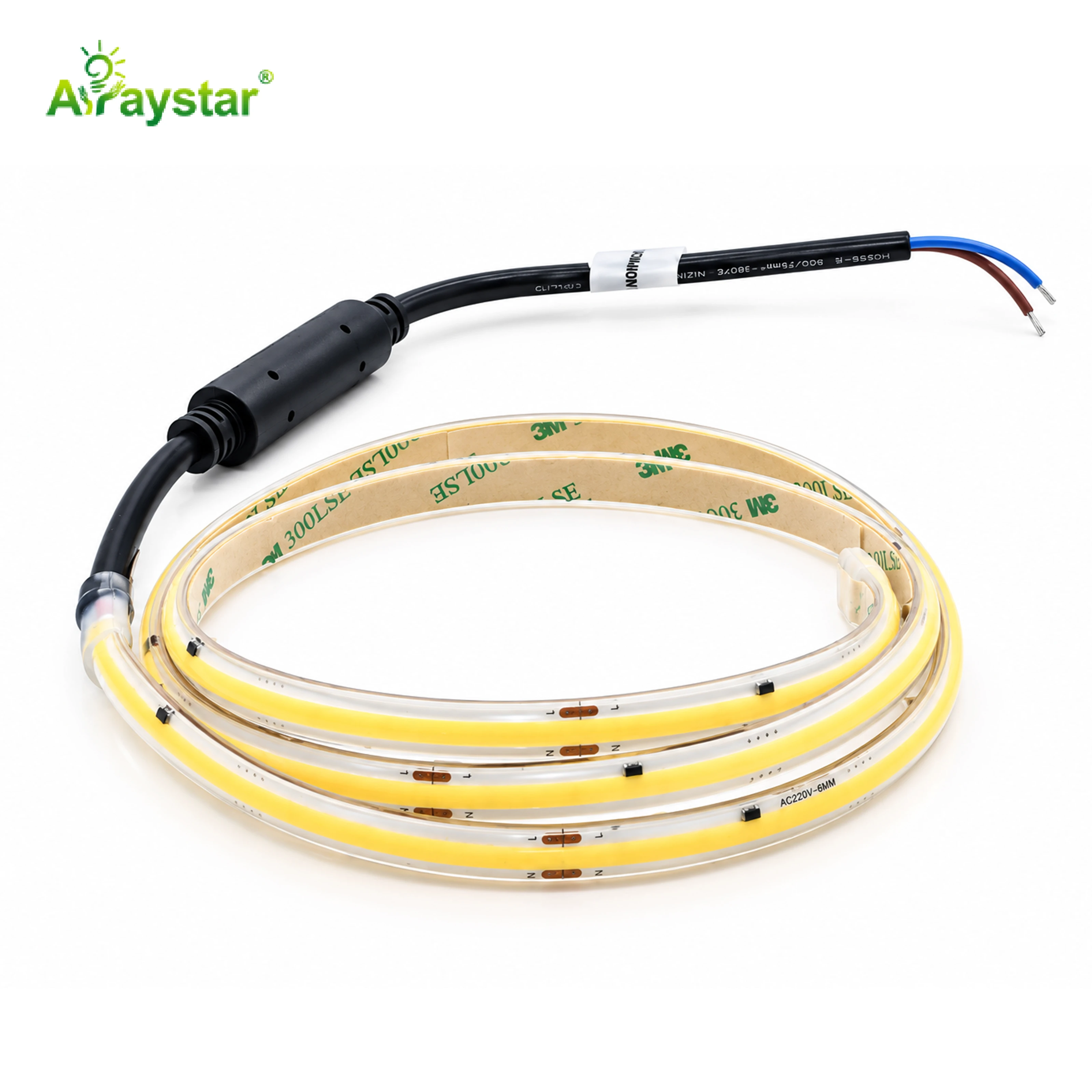
COB strips are built on a flex PCB that is usually either white, black, or a natural warm amber solder-mask colour. The LEDs themselves are on a continuous COB emitter, but between the emitters and around the edges of the strip, you see the board. In a cove, the strip is set back from the lip, and the diffuser effect of the cove geometry is usually enough to hide the board from the washed ceiling light. But if the strip is too close to the lip, or the cove is shallow, the board colour peeks through directly.
Three things that reveal the board
- Strip mounted too close to the cove lip, within 50 mm.
- Shallow cove depth under 80 mm, so the light does not mix before it hits the ceiling.
- Amber or black PCB chosen for a high-brightness reel without thinking about cove geometry.
Board colour, diffuser, and setback
There are three levers. The first is board colour: a white PCB cove strip reads as neutral warm white in the wash, while a black PCB or amber solder mask reads as a dark band. The second is diffuser: a silicone-extruded or frosted cover on the strip hides the board between emitters. The third is setback: mount the strip at least 100 mm back from the lip so the light mixes before it escapes.
- Choose a white PCB strip for cove washes where the lip is visible.
- Use a silicone-extruded or IP67 frosted cover if you must run a black PCB.
- Set the strip 100 to 150 mm back from the cove lip on shallow coves.
- Paint the cove interior flat white; a dark cove interior amplifies the band.
Comparing fixes for an existing cove
If the cove is already built and the band is showing, you have three options ranked by effort. The cheapest is painting the cove interior white, which costs almost nothing and removes the contrast. The next is adding a thin frosted acrylic diffuser strip over the existing LED channel. The most invasive is replacing the strip with a white-PCB version.
Try paint and diffuser before you pull out the existing strip.
| Fix | Cost | Effect on the band | Best when |
|---|---|---|---|
| Paint cove interior white | Very low | Reduces contrast | Band is faint |
| Add frosted diffuser lip | Low | Hides board directly | Band is moderate |
| Swap to white PCB strip | Medium | Removes source | Band is strong |
| Move strip 150 mm back | Medium | Mixes light | Cove is deep enough |

Picking the right strip at the spec stage
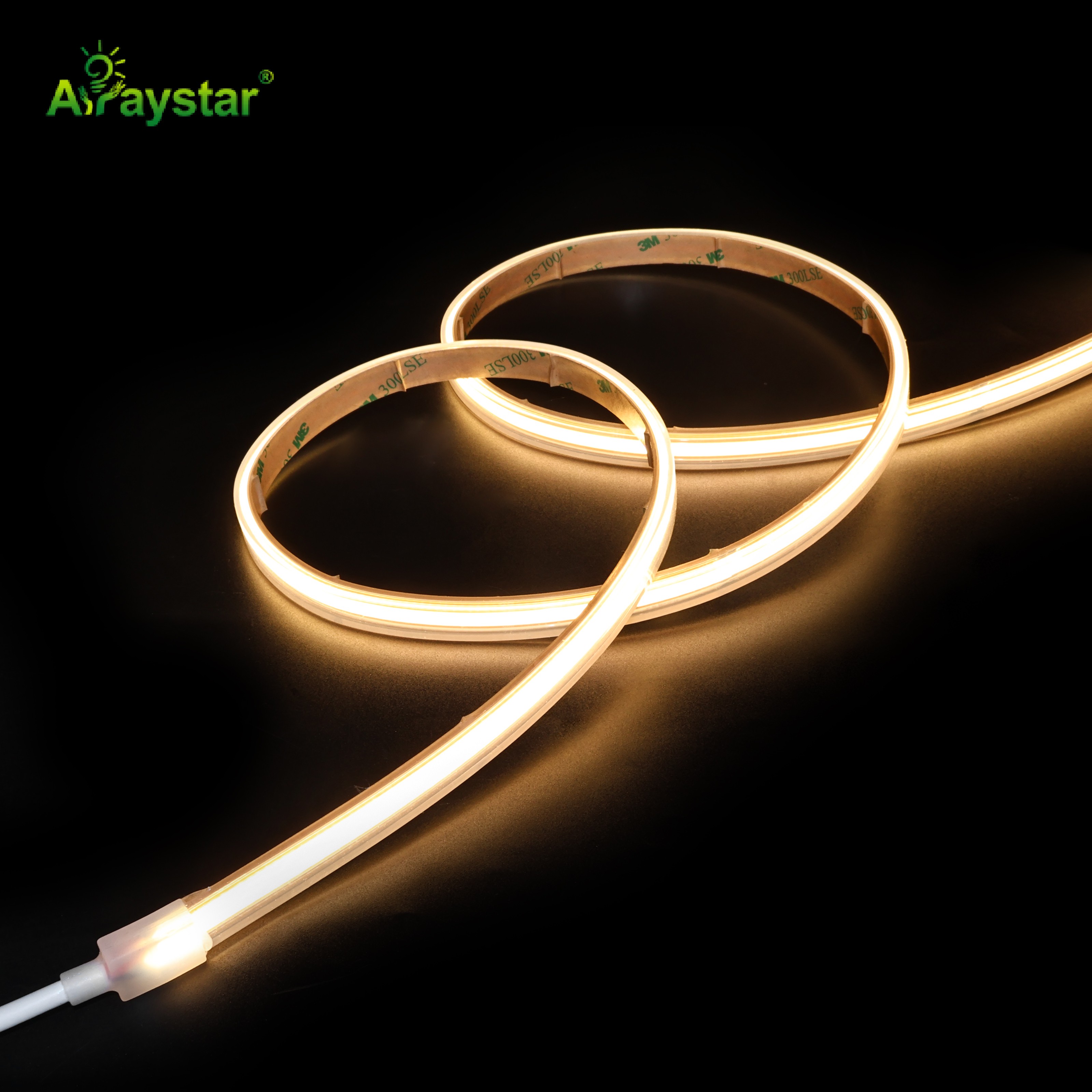
The cleanest fix is picking the right strip before install. For cove washes, I spec a white PCB COB strip with a 240 or 320 LED density per metre, and I ask for a free-cut version so I can trim the run exactly. For outdoor or wet areas, I take the IP67 silicone-extruded version, which already has a frosted cover built in.
- Spec white PCB for interior cove washes; reserve black PCB for visible-edge applications.
- Ask for a 240 to 320 LED per metre density; lower density shows individual emitters.
- Use free-cut strip so you can terminate at the exact cove length, not a fixed cut pitch.
- On 220 V high-voltage runs, check the voltage drop; long coves over 15 m need injection.
Recommended Products
Frequently Asked Questions
Why does my cove show a green band at night?
A green band usually means the PCB solder mask is a natural green or dark colour, and that green is showing through directly between the COB emitters. The LEDs are fine. The fix is a white PCB strip, a frosted diffuser over the channel, or painting the cove interior flat white to reduce contrast.
Does black PCB COB look worse in a cove?
It can. Black PCB is chosen for visible-edge applications where you want the strip to disappear against a black channel. In a cove wash, the black board reads as a dark line at the lip. Reserve black PCB for hidden edge strips and use white PCB for ceiling coves.
How far back should I set the strip from the cove lip?
100 to 150 mm is the sweet spot for a typical 100 to 150 mm deep cove. Any closer and the board colour shows; any further and the wash loses brightness on the ceiling. On shallow coves under 80 mm deep, add a frosted diffuser lip rather than pushing the strip back.
Will painting the cove white really fix the band?
It reduces it a lot, but it does not remove the source. A flat white cove interior reflects the LED light evenly and swamps the board-colour reflection. If the band is faint, white paint fixes it. If the band is strong, you still need a diffuser or a white-PCB strip. Two coats of flat white, not gloss.
Does high density COB hide the board better?
Yes, partly. A 320 LED per metre strip has more emitter area per millimetre, so the visible board area between emitters shrinks. But it does not hide the PCB edge itself. For a cove, density of 240 per metre is usually enough; the bigger win is white PCB plus a 100 mm setback.
Need help with your LED project?
Get factory-direct pricing, free samples and engineering support within 24 hours.
Email: info@arraystarled.com | Phone: +86-0755-2103-6746 | WhatsApp: 0086 1581 8514 077
Need to size your power supply? Use our LED Strip Power Calculator to find the right driver in seconds.