
Dock, Pier & Boardwalk LED Strip Lighting: Salt-Air, IP68 Wayfinding on the Water
- 2026-09-30 17:38
- /
- Arraystar LED
Marine environments are brutal - saltwater, constant wet, UV and people walking at night over gaps in the planks - so dock lighting has to be immersion-rated, glare-controlled and genuinely even along the walkway. Use IP68 full-silicone neon that can take splash and occasional submersion, anti-glare low-profile neon for the walking surface so it marks edges without blinding, and a properly sized waterproof supply at the shore end. The light should make the dock edge and cleats readable at foot level, not turn the pier into a runway.
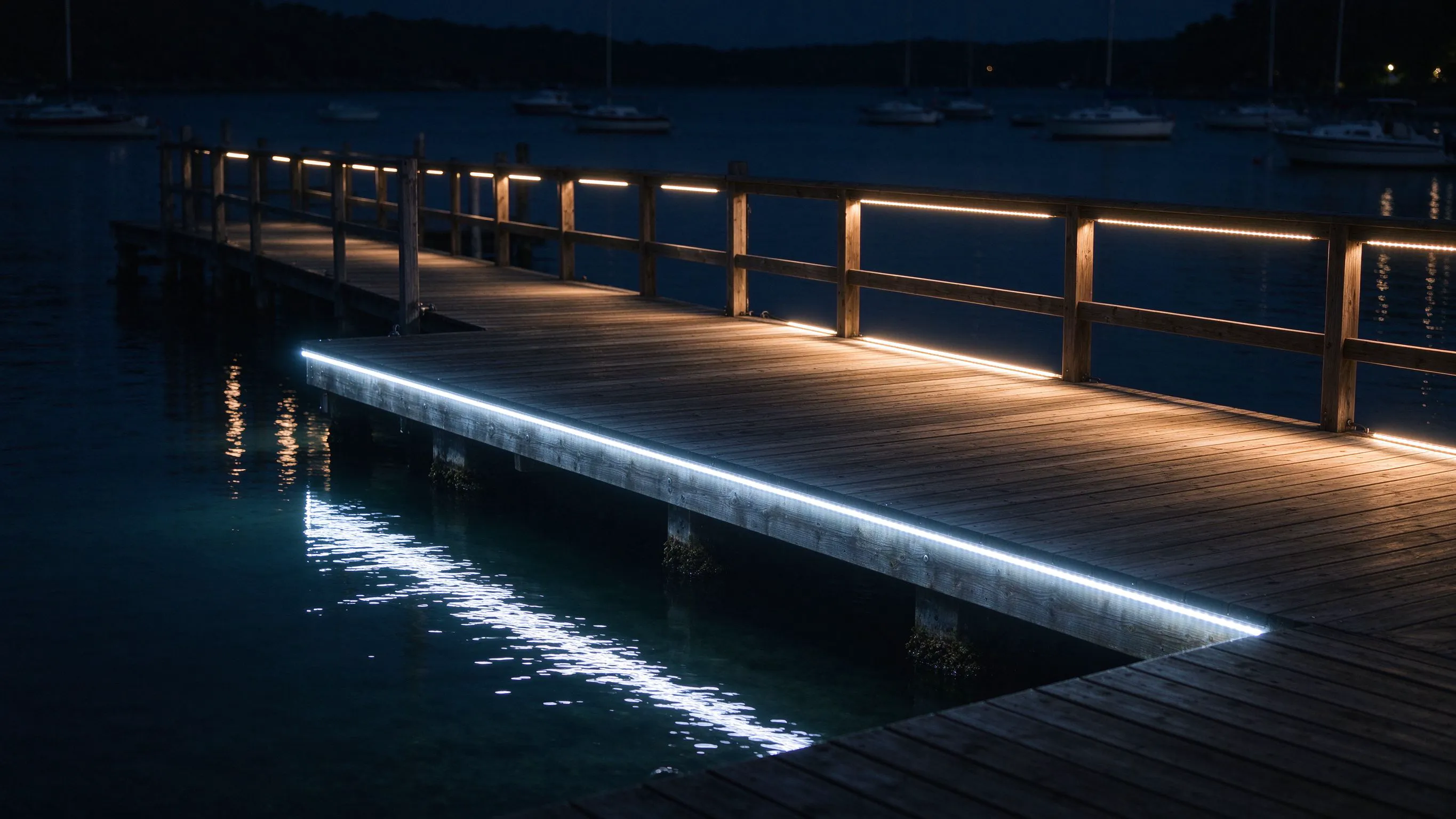
Dock Lighting Is Safety Lighting in a Corrosive Environment
A pier at night is a narrow walkway over water, with plank gaps, cleats, mooring lines and tripping hazards, often used by people carrying coolers or stepping off boats. The lighting job is wayfinding and edge-marking at foot level - and it has to survive saltwater, rain, UV and the occasional dunking that would kill exterior-grade-but-not-marine-rated hardware in a season.
That rules out ordinary outdoor strip. You want fully encapsulated, immersion-tolerant neon, low-glare optics on the walking surface, and the power and connection hardware kept at the dry shore end in rated enclosures. Evenness matters too - dark gaps between lights are exactly where someone missteps.
IP68 Full-Silicone Neon for the Pier Run
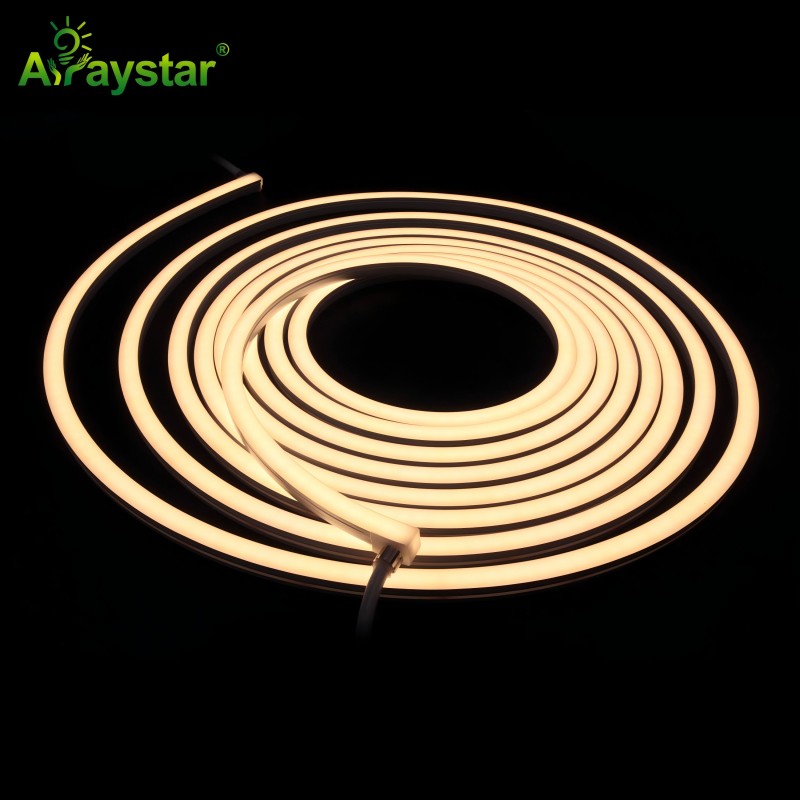
For the main walkway and edge runs, an IP68 full-silicone-extrusion neon strip is the right product - solid encapsulation means there's no hollow channel for saltwater to wick into, and the IP68 rating tolerates continuous wet, splash and temporary submersion that comes with waves, wash-down and high water.
Run it continuously along the dock edge or under a routed groove in the decking so it marks the full length of the pier with no dark sections. Continuous neon is far safer than spaced puck lights, which leave the gaps between them unlit, and the diffused body keeps the glow even and dot-free along a long run.
- Mark the dock edge continuously - dark gaps invite missteps into the water.
- Mount under a groove or lip to protect the strip from boots and gear.
- Use stainless or marine-grade clips; ordinary steel fasteners corrode fast.
- Keep runs low and aimed at the deck, not out over the water at eye level.
Anti-Glare Neon for the Walking Surface
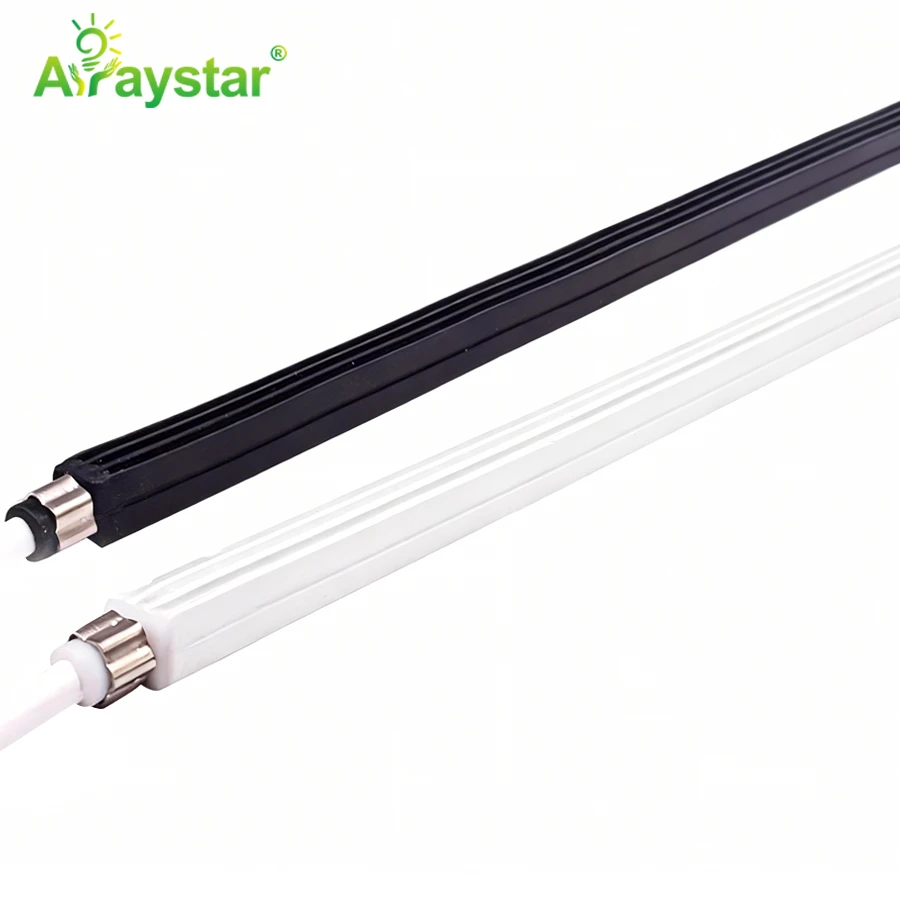
A bare bright strip on the deck surface shines straight up into the eyes of someone walking a dark pier, killing their night vision and reflecting off wet planks. For the parts of the dock people walk directly beside, anti-glare low-profile neon with a diffused or lensed top controls the output into a soft edge-marking glow rather than a bright line.
The anti-glare 10x10mm neon flex is compact enough to recess into deck grooves and its controlled optics mark the walkway edge and level changes without glare. Pair the edge marker with slightly brighter points at cleats, stairs and the dock-to-shore transition where extra visibility matters.
Power at the Shore End, Sized for the Run
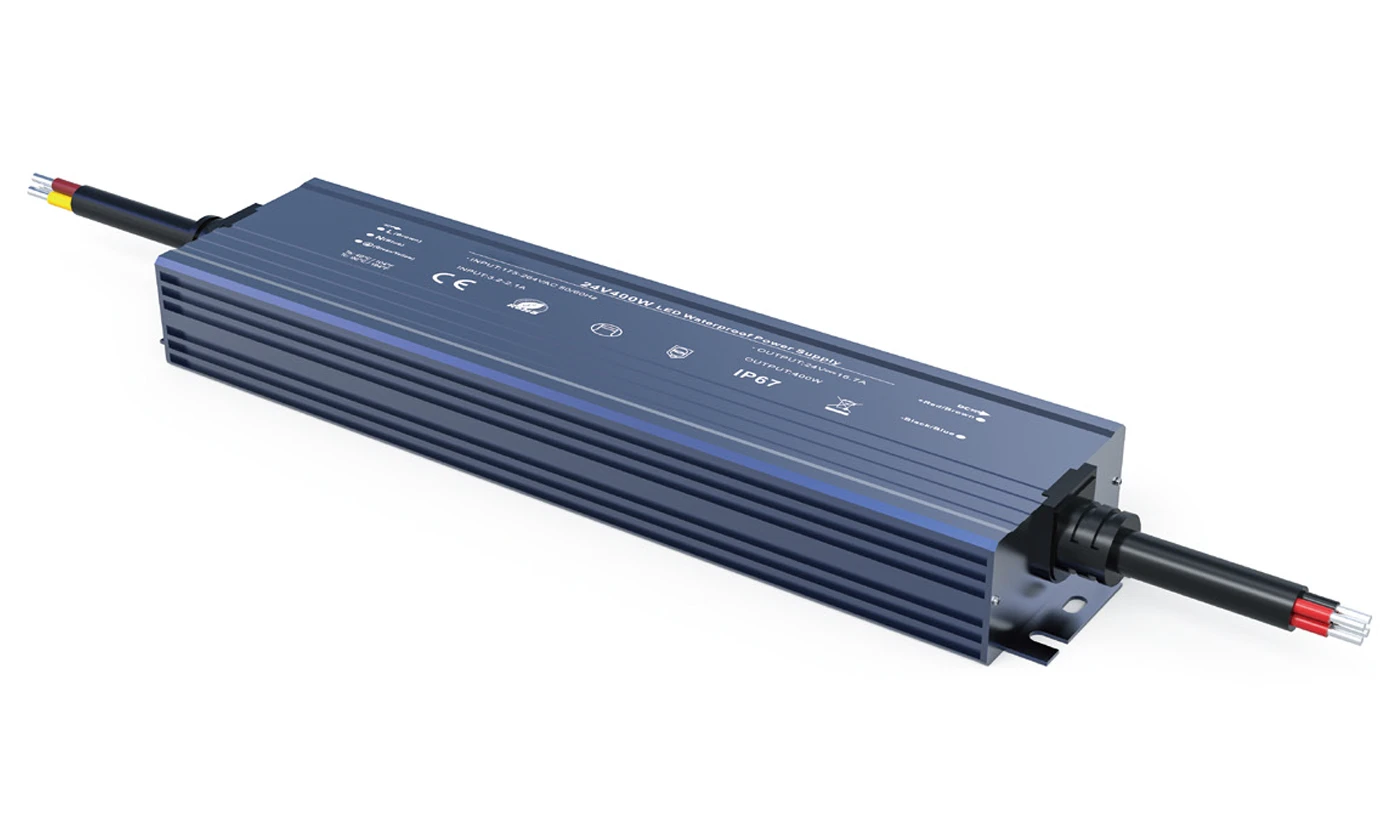
On a long pier you don't want power electronics scattered along the wet walkway. Locate a properly rated waterproof power supply at the dry shore end - in a weatherproof enclosure or dock house - and run low-voltage feed out along the pier, injecting power at intervals to keep the far end even.
A 400W waterproof power supply handles a substantial dock run from one protected shore location. Use marine-rated waterproof connectors and junction boxes at every join, drip loops so water doesn't run into connections, and keep all mains wiring ashore and professionally installed. Low-voltage on the wet pier is both safer and code-simpler.
Saltwater, Wildlife and the Practical Details
Marine dock lighting checklist.
| Element | Marine recommendation |
|---|---|
| Strip | IP68 solid-silicone neon, UV-resistant |
| Optics on deck | Anti-glare/low-profile, foot-level edge marking |
| Fasteners | Stainless steel or marine-grade clips only |
| Connections | Marine waterproof connectors, drip loops, sealed boxes |
| Power | Waterproof supply at dry shore end, power injection on long runs |
| Color | Warm/amber for reduced glare and wildlife impact; blue sparingly |
Where docks border sea-turtle nesting zones or sensitive waterways, warm/amber light aimed down at the deck (never out over the water) reduces ecological impact and glare - and it also preserves the night vision of anyone on the pier better than bright cool white.
Recommended Products
Frequently Asked Questions
What LED strip is best for a dock or pier?
IP68 full-silicone-extrusion neon that tolerates saltwater splash and temporary submersion, run continuously along the dock edge in a recessed groove with stainless/marine clips. Use anti-glare low-profile neon on the walking surface and put a waterproof power supply at the dry shore end with marine-rated connectors.
Are LED dock lights submersible or just waterproof?
For the walkway and edge you want IP68-rated solid-silicone neon, which handles continuous wet and temporary submersion from waves and high water, not merely splash-rated IP65. Even so, mount it protected under a deck lip or groove and keep the actual power supply and mains connections dry at the shore end.
How do I stop dock LED lights from glaring in people's eyes?
Use anti-glare low-profile neon recessed into deck grooves and aimed down at the walking surface to mark edges, rather than bare bright strip on the deck surface shining upward. Keep the light at foot level, add brighter points only at cleats and stairs, and avoid aiming anything out over the water at eye level.
How do I power LED lights along a long pier?
Put a waterproof power supply (around 400W for a substantial run) in a dry shore-end enclosure or dock house, run low-voltage cable along the pier with marine waterproof connectors and drip loops, and inject power at intervals so the far end stays even. Keep all mains wiring ashore and professionally installed.
What color light is best for docks near wildlife or the ocean?
Warm white or amber, aimed down at the deck rather than out over the water. It causes less glare, preserves night vision and reduces ecological impact - important near sea-turtle nesting areas and sensitive waterways - whereas bright cool/blue light spills onto the water, disrupts wildlife and creates glare.
Need help with your LED project?
Get factory-direct pricing, free samples and engineering support within 24 hours.
Email: info@arraystarled.com | Phone: +86-0755-2103-6746 | WhatsApp: 0086 1581 8514 077
Need to size your power supply? Use our LED Strip Power Calculator to find the right driver in seconds.







