
LED Strip for Electronics Benches, QC and Microscope Stations: Shadow-Free High-Lux Task Light
- 2026-10-08 17:37
- /
- Arraystar LED
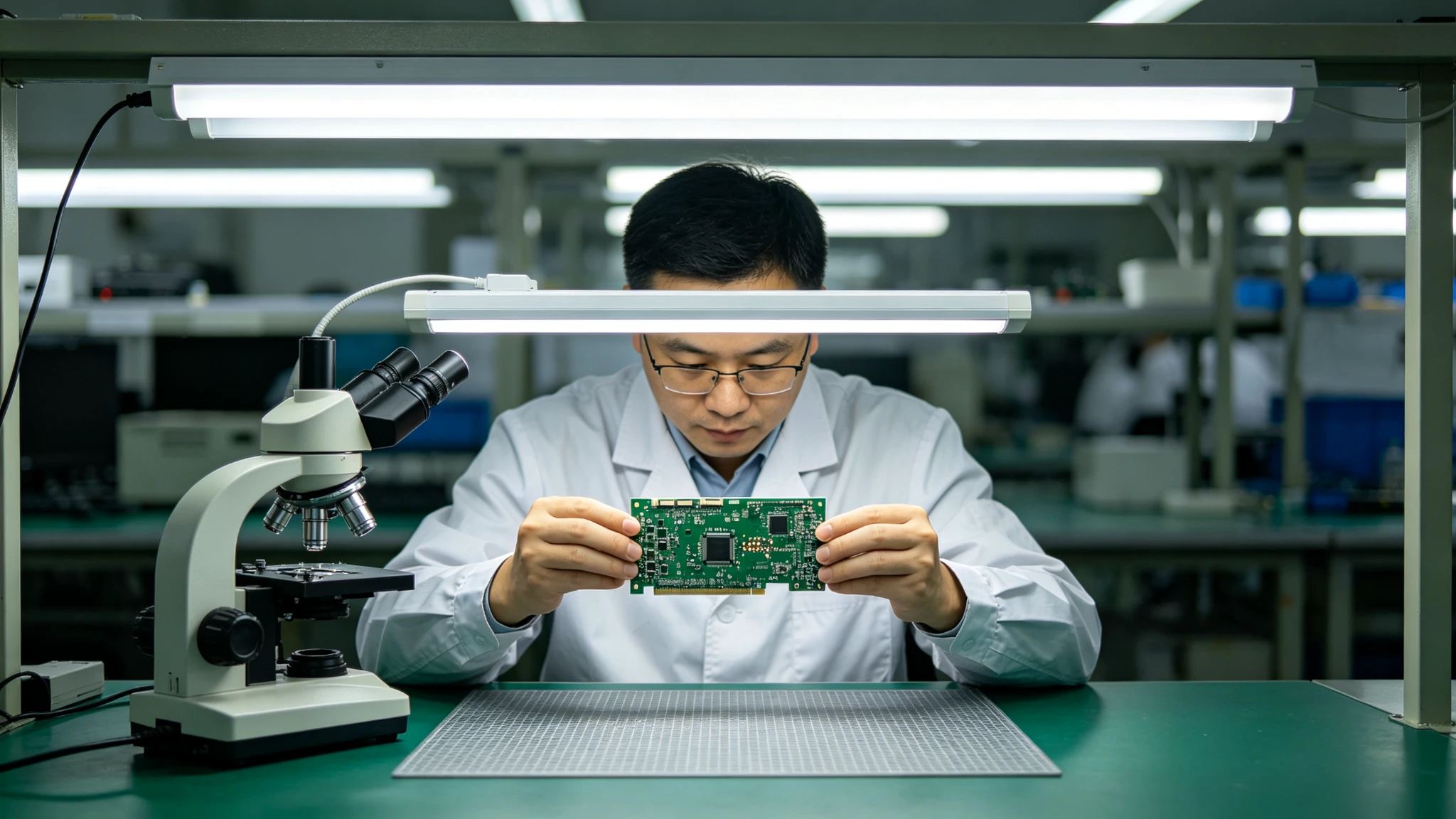
Assembly, rework and quality-control benches punish mediocre lighting because the work is tiny, contrast is low, and inspectors stare at it for hours. The goal is not raw brightness but a high-lux, completely shadow-free, flicker-free field with accurate colour and no glare in the eyes - the conditions under which cold solder joints, component polarity marks, scratches and flux residue actually become visible. I build inspection stations from diffuse-reflective and lensed linear bars positioned to eliminate the operator's hand shadow, use constant-current rigid bars for rock-steady brightness across rows of benches, and layer a bright local task source over a neutral ambient base. Get the geometry and stability right and defect detection - and inspector comfort - improve immediately.
What Inspection Work Demands From Light
On an electronics bench you are reading millimetre-scale features: solder fillets, pin-one dots, silkscreen, tiny scratches, conformal coating, flux residue. The defects are low-contrast and three-dimensional, so they reveal themselves through soft shadows and even reflection rather than brute brightness. A single bright overhead lamp creates glare on solder masks and the operator's own shadow falls across the board; uneven light makes the eyes fatigue and defects hide in the dark side of every component.
- High, even lux across the whole working area, not a single hot spot.
- Shadow-free fill from multiple directions so hand and body shadows do not cross the board.
- Flicker-free, stable output - subtle defects are missed when brightness shimmers.
- Neutral 4000-5000K, high-CRI light so colour-coded components and traces read true.
- Low glare on glossy solder masks and screens, with diffused rather than point sources.
Diffuse-Reflective Lens Bars for Shadow-Free Fields
The fastest improvement I make to an inspection area is replacing point downlights with linear diffuse-reflective lens bars mounted above and slightly around the bench. These use a reflective lens chamber to spread the LEDs into one broad, soft, near-shadowless field rather than a row of bright spots, which is exactly what light boxes and inspection hoods rely on. A board moved around under this light keeps a uniform reflection, so a cold joint or lifted lead shows as a consistent anomaly instead of appearing and disappearing as the inspector shifts position.
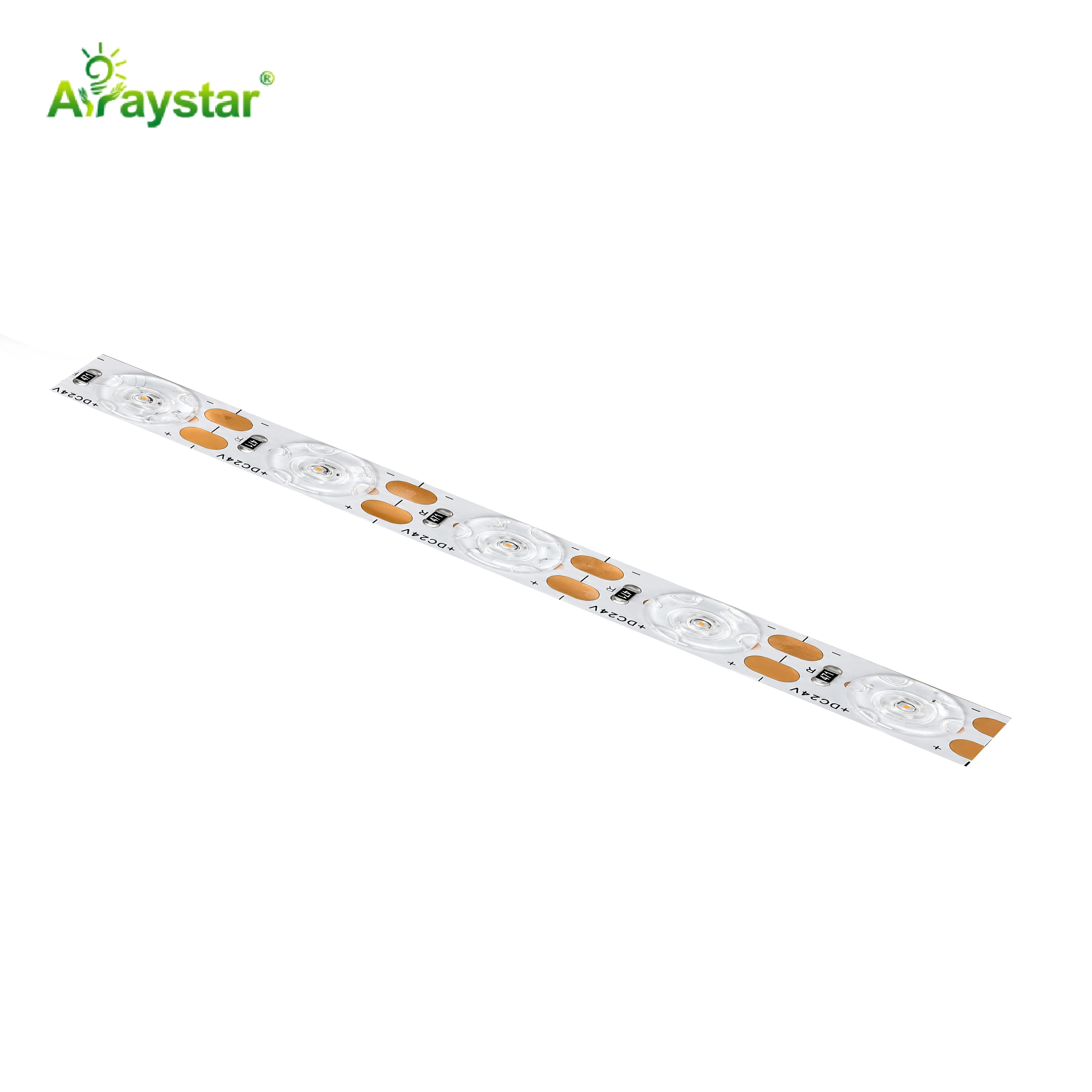
I position two bars diagonally ahead of and behind the operator (or a single wide bar plus a fill source) so the hands and soldering iron never cast a shadow onto the work. This cross-lighting is the same principle used in professional inspection booths and it costs very little compared with the rework it catches.
Lensed Profiles to Aim High Lux Exactly Where It's Needed
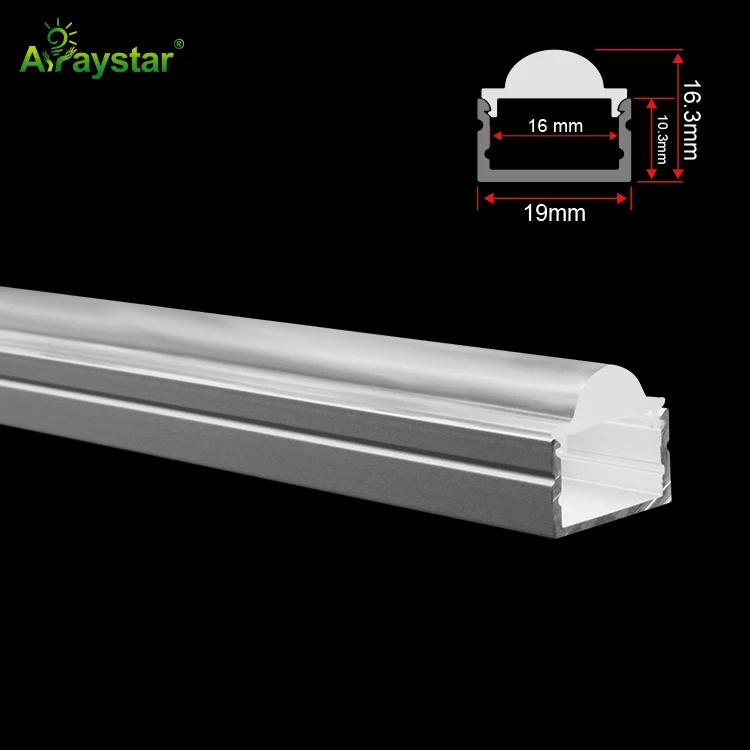
Where bench space is narrow or the ceiling is high, a diffused bar wastes too much light into the room. A linear profile with a controlled lens - a 30-degree optic, for example - concentrates high lux onto a defined work zone while keeping the source out of direct sightlines, reducing both glare and wasted spill. I use these over rework stations and microscope benches where the illuminated area is a defined rectangle rather than the whole room.
Microscope and magnifier stations
Microscope and camera inspection needs the surrounding ambient matched to the task so eyes are not constantly adapting between a bright eyepiece and a dark bench. Provide a dimmable lensed fill around the microscope rather than switching it off entirely, and keep it flicker-free - camera-based AOI (automated optical inspection) is especially sensitive to PWM ripple, which can show up as false defects or banding in captured images.
Constant-Current Rigid Bars for Stability Across Rows
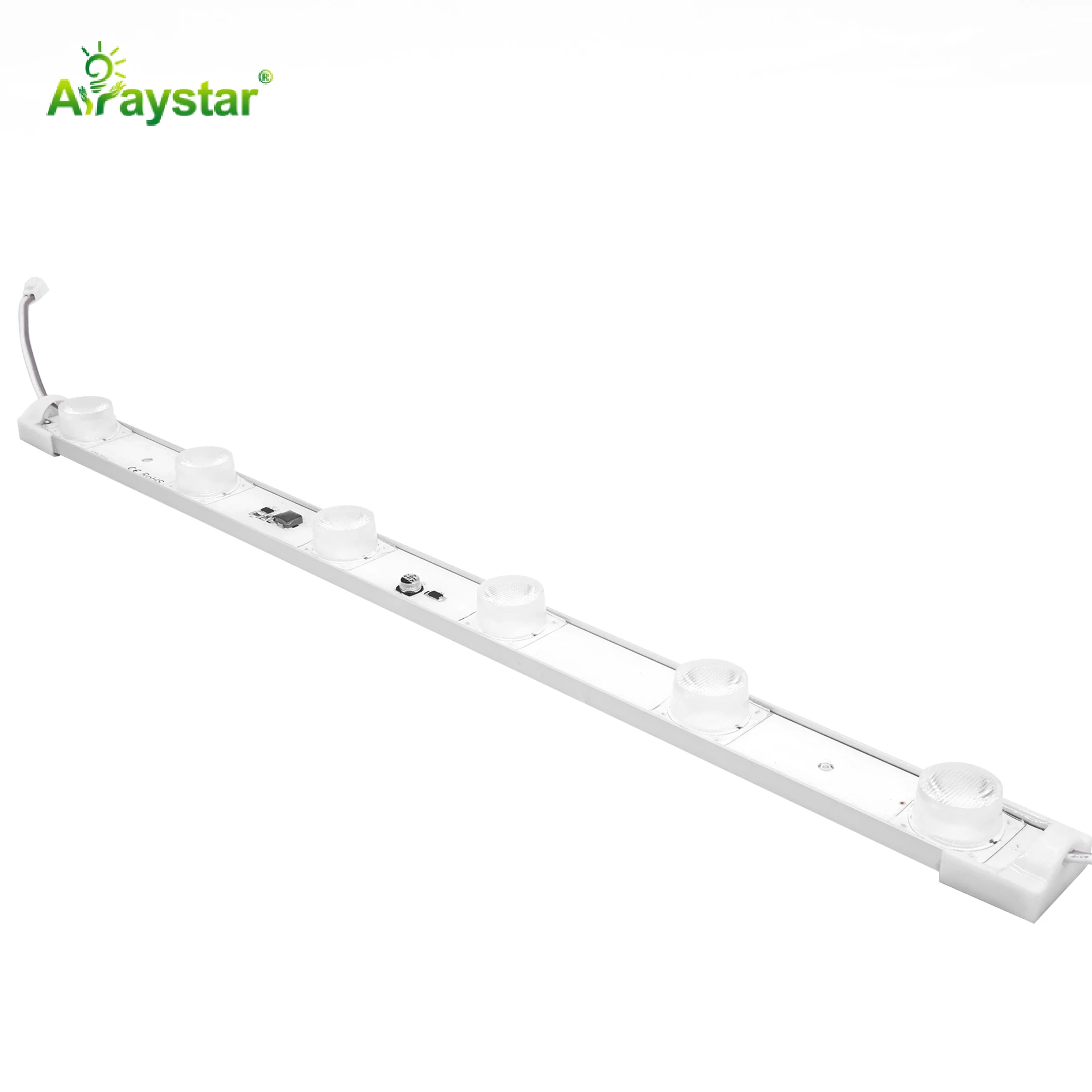
When a workshop has a long row of benches, consistency between stations matters - an inspector should not see different colour or brightness when they move one seat along. Constant-current rigid bars hold output rock-steady along their length and between fixtures, without the slight tail variation that long constant-voltage runs can develop, and their aluminium housings give the thermal mass that keeps brightness and colour stable through a full shift. The rigid 960mm constant-voltage/constant-current bars are the practical module for these long, high, out-of-the-way runs.
Match the optic and stability to the task rather than lighting the whole room the same way.
| Station | Lighting approach | Target |
|---|---|---|
| General assembly | Diffuse bars, cross-lit, 4000K | Even, shadow-free, ~750 lux |
| Rework / fine solder | Lensed 30deg profile + fill | High lux exactly on the board |
| QC / inspection hood | Diffuse-reflective bars, high CRI | Uniform reflection, no hot spots |
| Microscope / AOI | Dimmable flicker-free fill | Stable for eyes and cameras |
| Rework/solder fume area | Sealed easy-clean fittings | Survives flux and fumes |
Layout, Levels and the Habits That Protect Inspectors
Layer the light: a neutral ambient base across the room so there are no glaring contrast differences, then brighter dedicated task light at each station, individually dimmable so staff can set level for the job and their own eyes. Keep fixtures cleanable and away from fume extractors, because flux and dust film on diffusers quietly cuts lux over months. Verify flicker with a phone camera and, if you use AOI cameras, confirm the lighting ripple does not interfere with capture.
- Cross-light every bench from two directions to eliminate hand shadows.
- Use high-CRI neutral white and verify component colours read correctly under it.
- Specify flicker-free drivers everywhere, especially at camera inspection stations.
- Give per-station dimming and keep ambient matched to avoid eye adaptation fatigue.
- Clean diffusers on a schedule and re-measure lux; flux film steals output silently.
Most 'the inspectors are missing defects' problems I am asked to look at turn out to be a single bright overhead panel and tired eyes rather than a process failure. Fix the field geometry and stability first - the quality numbers usually follow.
A Real-World Result and What I Measure at Handover
On one contract assembly line the QC team was only catching cold joints at functional test, which meant expensive rework downstream instead of at the solder station. We replaced the single overhead panels with cross-lit diffuse bars at inspection and added lensed fills at the rework benches; within weeks the share of defects caught at source rather than final test rose sharply, purely because the fillets were finally visible to the operator. No process change, no new microscope - just the light geometry.
I verify these installs with a lux meter on a grid across each bench, chasing even corner readings rather than just a high number in the centre, a phone camera for flicker across the full dim range, and a colour-card check under every fixture. If the bench corners fall away sharply or the camera shows bands, the bars are repositioned or the drivers replaced before the station is signed off. Those three measurements take minutes and prevent months of inconsistent inspection.
Recommended Products
Frequently Asked Questions
What lux level do electronics assembly and inspection benches need?
General assembly typically works well around 500-750 lux, while fine rework, soldering and quality inspection benefit from 750-1500 lux of even light at the work surface, delivered as shadow-free cross-lighting rather than one bright lamp. AOI and microscope stations need flicker-free, dimmable fill matched to the eyepiece or camera. More important than a single lux number is uniformity across the whole bench and the absence of hand shadows and glare.
How do I stop shadows falling on the circuit board I'm working on?
Cross-light the bench from two or more diffused linear bars positioned diagonally ahead of and behind the operator, so when one source is blocked the other fills the shadow. Avoid a single overhead panel directly above the worker. Diffuse-reflective lens bars give the broad soft field that works best, and a small adjustable task fill can cover the immediate work zone. The aim is that moving the board or your hands barely changes the illumination.
Why does LED flicker matter for visual and camera inspection?
Inspectors rely on stable contrast for hours, and even imperceptible PWM flicker causes eye fatigue and makes subtle defects appear and disappear. Camera-based automated optical inspection is even more sensitive - PWM ripple can produce banding or false defects in captured images. Specify genuinely flicker-free drivers with high PWM frequency at every inspection and AOI station and verify the full dimming range with a phone camera or the inspection camera itself.
What color temperature and CRI are best for QC workbenches?
Use neutral 4000-5000K high-CRI (90+) light so colour-coded components, silkscreen, trace colours and solder-joint tones read accurately and consistently. Very warm light hides contrast and cool 6500K light can feel harsh over long shifts, so neutral is the practical centre. Keep colour temperature and brightness identical across a row of benches so inspectors do not adapt to different conditions as they move between stations.
Are rigid LED bars better than flexible strip for workshop lighting?
For high, long runs above rows of benches, yes - rigid aluminium LED bars give better thermal management, more stable and consistent brightness, controlled optics and mechanical protection compared with flexible strip, which is better suited to tight or irregular surfaces. Use rigid bars (constant-current for the steadiest output) for the main overhead task lighting, and reserve flexible or lensed strip for tight machine interiors, shelves and irregular surfaces.
Need help with your LED project?
Get factory-direct pricing, free samples and engineering support within 24 hours.
Email: info@arraystarled.com | Phone: +86-0755-2103-6746 | WhatsApp: 0086 1581 8514 077
Need to size your power supply? Use our LED Strip Power Calculator to find the right driver in seconds.







