
Permanent Roofline and Soffit LED Strip: Outline a House Without the Holiday Takedown
- 2026-10-08 17:37
- /
- Arraystar LED
Permanent roofline and soffit lighting gives a house a clean architectural outline every night of the year without the annual ritual of clips, ladders and half-dead Christmas strings - but only if you treat it as an exterior wiring project. The dominant practical decision is voltage: long eaves, fascia and soffit runs are exactly where 220V high-voltage strip earns its place, because a single run can cover the whole roof edge from one end with no visible power feeds, no voltage-drop tail and a fraction of the wiring of low-voltage systems. Match it with IP67 solid sealing for the weather, a dot-free product for a premium line, the right aluminium channel, and warm white with optional dimming, and you get a permanent outline that looks built-in rather than taped-on.
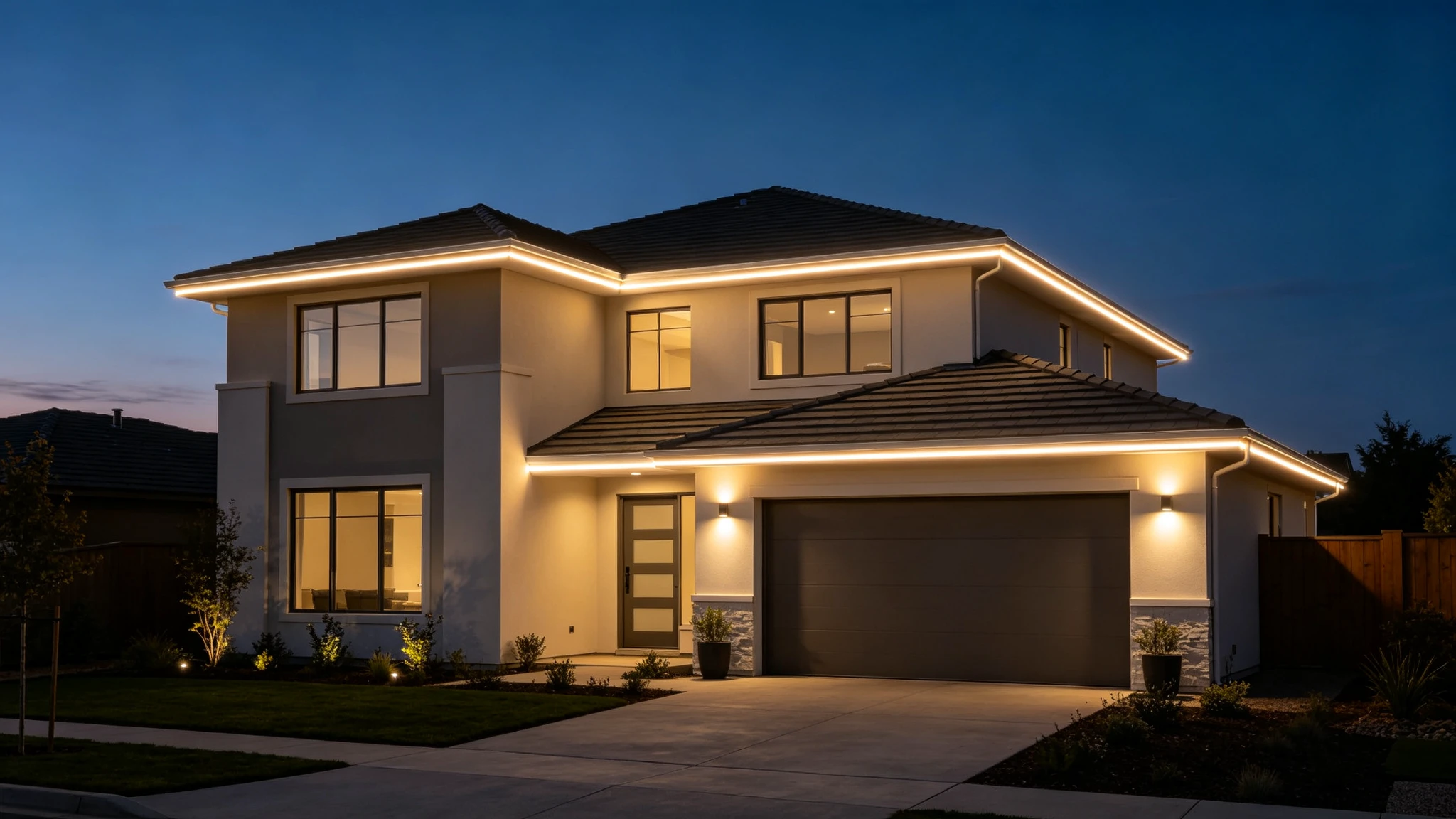
Permanent Outline vs Holiday Clips
Clip-on holiday strings are cheap but they are a temporary product: the UV-faded wire, drooping runs, failed bulbs and twice-yearly installation are all costs that repeat forever. Permanent roofline lighting is installed once into channels or clips along the fascia, soffit or eaves, sealed against weather, and left in place year-round - typically set warm white for normal nights and colour for the holidays if you choose a colour-capable version. The visual standard is a straight, consistent, dot-free line that reads as architecture rather than decoration.
- Installed once in aluminium channels or purpose clips - no seasonal ladder work.
- UV-stable, sealed exterior product rated for sun, rain, freeze-thaw and wind.
- Consistent spacing and beam direction so the line is pin-straight at night.
- Warm white default with optional colour for seasons, rather than permanent multicolour.
- Accessible drivers and serviceable sections for the inevitable years-ahead repair.
Why Long Eaves Favour 220V High-Voltage Strip
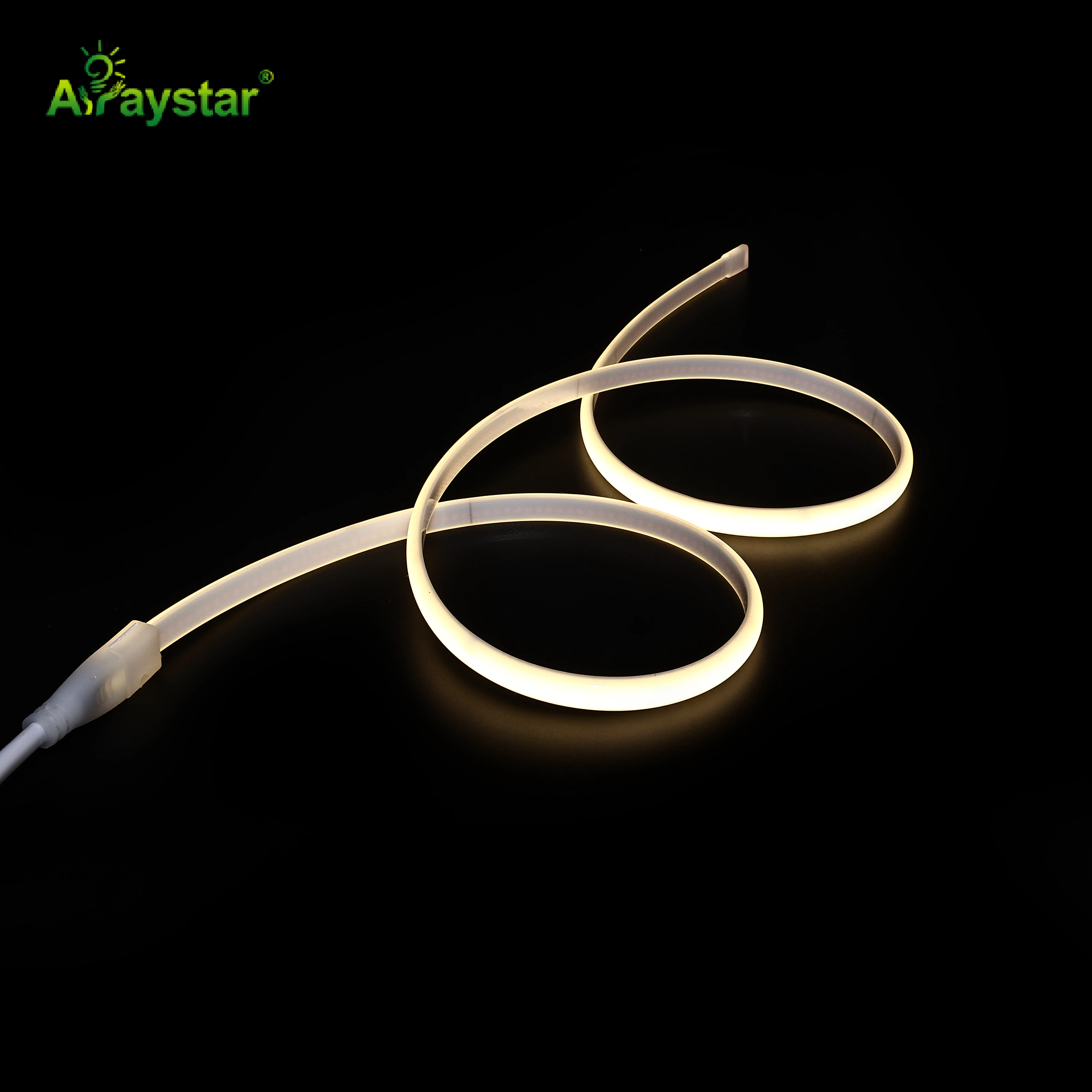
A roof edge is one of the longest, thinnest linear runs on a house, and it is usually a long way from where a low-voltage driver can live. A 24V system around an entire roofline needs multiple drivers, repeated power injection, and visible or buried feed cables every few metres - difficult across eaves and gutters. High-voltage 220V flexible COB solves this directly: because power equals voltage times current, 220V draws a fraction of the current, so a single run can extend tens of metres from one feed with essentially no voltage drop and no dimming tail.
The 220V high-voltage flexible COB is the product I reach for to trace a full eaves perimeter cleanly. Fewer feeds mean fewer penetrations through the facade and fewer points where water can get in - a serious advantage on an exterior envelope where every hole is a potential leak. The runs still need the manufacturer's rated feed spacing and proper termination, but the architecture of the wiring is dramatically simpler than low voltage.
Weather Sealing for Fascia, Soffit and Eaves
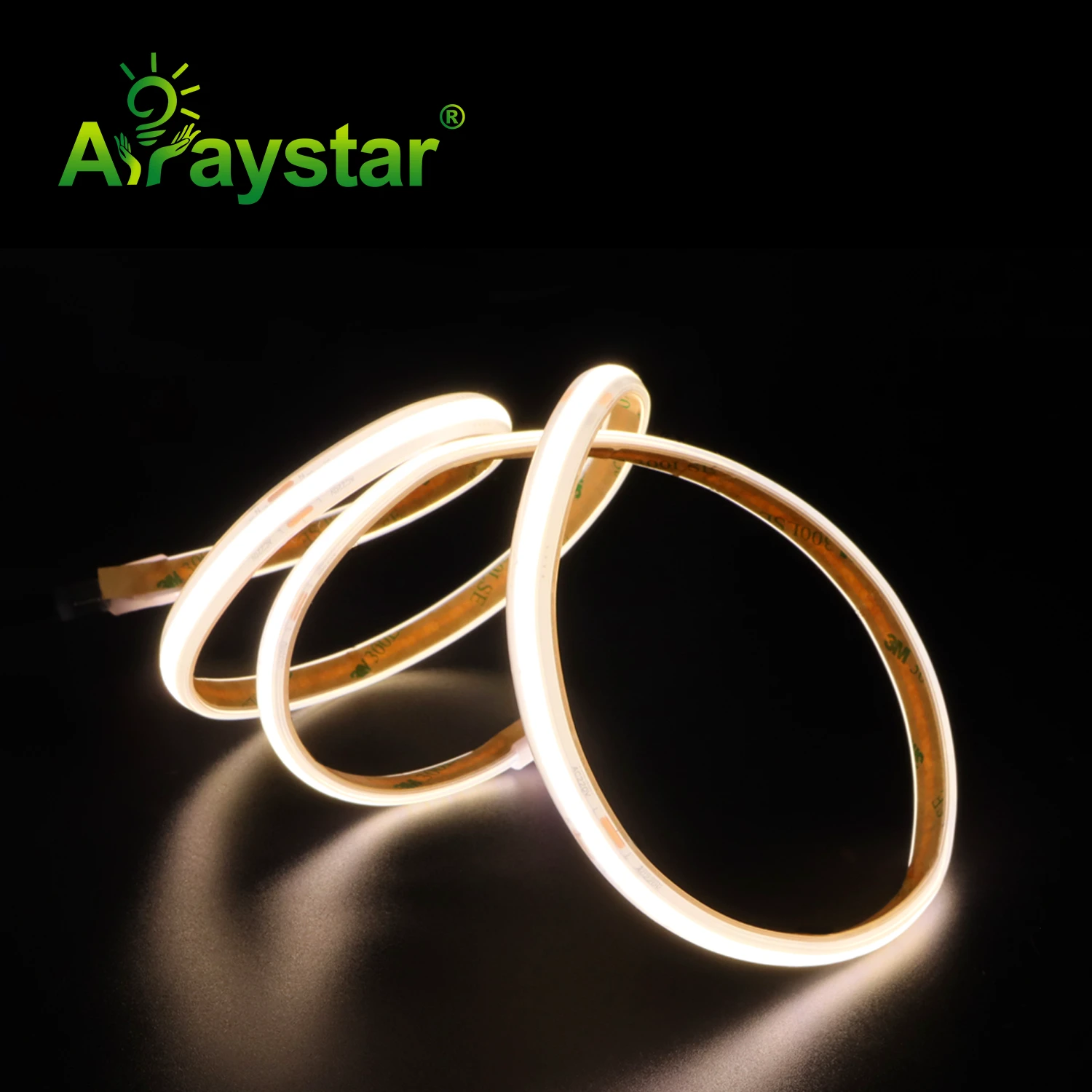
Roof edges see the worst of everything - direct rain, snow, UV all day, condensation and freeze-thaw. The strip and its terminations must be genuinely exterior-rated, not indoor tape tucked under a gutter. For exposed fascia and soffit I specify 220V IP67 solid-silicone COB rather than hollow sleeved product: the solid extrusion has no cavity to flood, survives UV far better, and the sealed ends and feed points are made for outdoor termination. Mount it where the channel or soffit gives some mechanical shelter from driving rain and ice.
- Use IP67 solid extrusion on exposed edges; reserve lesser ratings for fully sheltered soffits.
- Seal every feed and end with exterior-rated glands; face terminations away from rain.
- Choose UV-stable silicone/TPU - PVC and cheap sleeves yellow and crack in a few seasons.
- Keep drivers and controllers indoors or in weatherproof boxes, never in the gutter zone.
- Allow drainage in channels so water cannot pool around the strip.
Getting a Premium Dot-Free Line
The difference between a high-end outline and a cheap-looking one is dot visibility. Low-density strip aimed straight out shows individual points and scallops on the fascia; a continuous high-density source aimed into a channel or across the surface gives a smooth line. For long straight roof edges I use 220V high-voltage SOB (strip-on-board continuous) product, which presents a seamless glowing line with no visible individual emitters even when viewed from across the street.
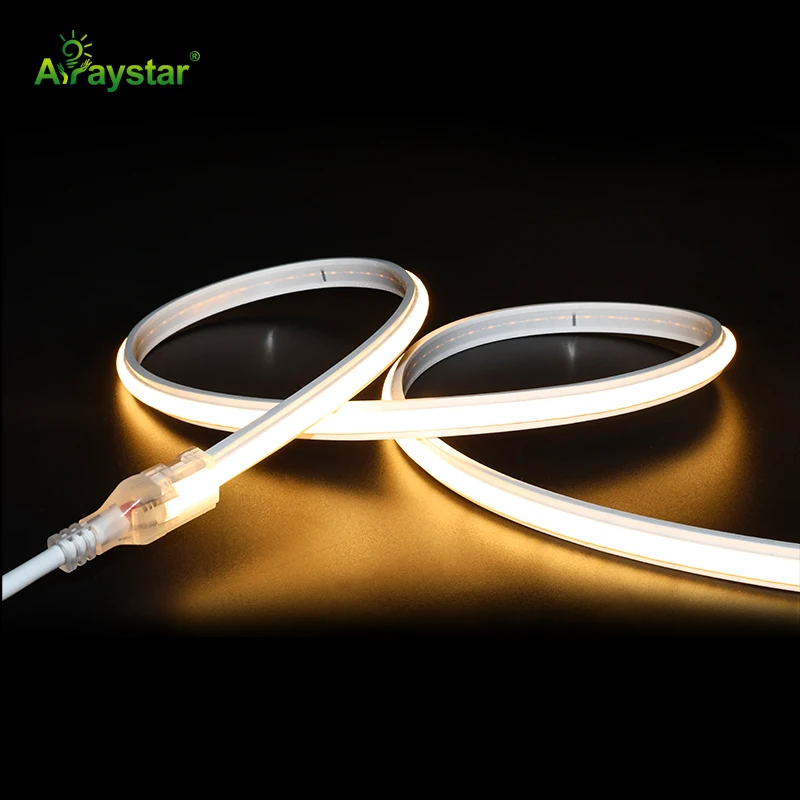
Long continuous roof edges are the textbook high-voltage application; use low voltage for short accents.
| Factor | 220V high-voltage | 24V low-voltage |
|---|---|---|
| Run length from one feed | Tens of metres | ~5-10m before injection |
| Drivers around a roof | Usually one / few | Multiple, placed along eaves |
| Facade penetrations | Minimal | Many feed points |
| Voltage-drop dimming tail | Virtually none | Needs careful injection |
| Safety / code | Requires rated exterior install | SELV, simpler wiring |
| Best for | Long full-perimeter outlines | Short local accents, porches |
Channels, Colour, Control and the Install Sequence
Mount the strip in purpose aluminium channels or clips that hold a consistent beam angle and hide the source from direct view - angled to wash the fascia or soffit rather than shine out into the garden. Colour is a client choice I frame carefully: warm 2700-3000K white is the timeless architectural default and suits most homes year-round; colour-capable versions add holiday capability but cost more and need an app/controller. Whatever the choice, put it on a timer or smart relay with dimming so the line is not blazing at full power at 2am.
- Fit channels first and keep them perfectly level - the eye reads every wiggle in a roofline.
- Plan cable routing and facade penetrations before drilling; seal every penetration to the envelope.
- Prefer one warm-white default; sell colour as an optional layer for seasons.
- Use a photocell/timer and dimmer; aim for a subtle glow, not floodlight brightness.
- Commission on a wet night and check for glare, dark joins and any visible feed cables.
Done well the outline disappears into the architecture during the day and gives the house a calm, finished presence at night - the exact opposite of temporary holiday strings.
On gables, dormers and multi-level roofs, treat every change of plane as its own straight run joined with mitred corner pieces rather than forcing one flexible length around sharp roof angles, which exposes the LEDs and breaks the clean line. Match the channel colour to the fascia or soffit so the hardware disappears by day; point light down across light-coloured soffits, and use a slightly brighter continuous source on dark fascias so the outline still reads from the street without spilling into neighbouring windows.
Leave the system slightly dimmer than you first think you need to: a subtle glow reads as more expensive than a bright outline, and it keeps neighbours and local light-spill rules firmly on your side.
Recommended Products
Frequently Asked Questions
Can I use 220V LED strip for permanent roofline lighting?
Yes - long eaves, fascia and soffit outlines are one of the best applications for 220V high-voltage COB, because a single run can extend tens of metres from one feed with virtually no voltage drop, needing far fewer drivers and facade penetrations than 24V. It must be genuine exterior-rated IP67 solid-extrusion product with rated terminations, installed to local exterior-wiring code (often by a qualified electrician). Use low-voltage 24V for short, local accents instead.
What is the difference between permanent roofline lights and Christmas lights?
Permanent roofline lighting is sealed, UV-stable product installed once in aluminium channels or clips and left up year-round, typically warm white with optional colour for holidays. Clip-on Christmas strings are temporary, fade and fail in UV, droop and need fitting and removal twice a year. The permanent system gives a straight, dot-free architectural line and removes repeated ladder work, though it costs more up front and needs proper exterior wiring.
How do I stop LED roofline lights from showing individual dots?
Use continuous high-density or SOB (strip-on-board) high-voltage product rather than low-density tape, mount it in an aluminium channel that aims the light across the fascia or soffit instead of straight out, and keep the source slightly recessed or shielded from direct view. Continuous emitters plus a channel that spreads the beam give a smooth seamless line from street level; bare low-density strip aimed outward always shows points and scallops.
How waterproof do permanent eaves LED strips need to be?
Exposed fascia and eaves need IP67 solid-silicone or TPU extrusion with UV-stable jackets and sealed end caps and cable glands, because they take direct rain, snow, UV and freeze-thaw. Fully sheltered soffits can sometimes use a lower rating, but I default to IP67 across the roof edge for longevity. Hollow sleeved tape, unsealed ends and indoor drivers in the gutter zone all fail early and let water in through terminations.
Should permanent house outline lights be white or colour-changing?
Warm 2700-3000K white is the timeless default that suits most architecture every night and is what I recommend as the base. Colour-changing (RGB/RGBW) versions add holiday and event capability but cost more, require a controller or app, and can look dated if left in multicolour mode. A common compromise is colour-capable hardware run on warm white day to day, switched to colour only for seasons, all on a timer with dimming for late night.
Need help with your LED project?
Get factory-direct pricing, free samples and engineering support within 24 hours.
Email: info@arraystarled.com | Phone: +86-0755-2103-6746 | WhatsApp: 0086 1581 8514 077
Need to size your power supply? Use our LED Strip Power Calculator to find the right driver in seconds.







