
IP20 vs IP65 vs IP67 vs IP68 for LED Strip: What Each Rating Actually Lets You Do
- 2026-10-08 17:37
- /
- Arraystar LED
The IP (Ingress Protection) rating is the single most misread spec on LED strip: 'waterproof' on a listing tells you nothing, and overpaying for IP68 in a dry ceiling is as much a mistake as putting IP20 tape in a bathroom. The code is two digits - the first against solids and dust, the second against water - so IP65 is dust-tight and jet-resistant for splash zones, IP67 is dust-tight and survives temporary immersion for wet rooms and outdoors, and IP68 is continuously submersible for pools and fountains. Crucially, the rating only holds if the ends, cable entries and connectors are sealed to match, and a sealed jacket also traps heat - so choose the lowest rating that genuinely fits the environment and seal every termination properly.

Reading the IP Code Correctly
An IP rating is two separate digits. The first rates protection against solid objects and dust (6 is fully dust-tight, which is what sealed strip carries); the second rates water on a scale from dripping water to continuous immersion. Marketing terms like 'waterproof' or 'outdoor' are not ratings - always look for the actual IP number and match the second digit to the real exposure. A strip in a bathroom splash zone, a strip under eaves and a strip in a swimming pool need three different levels of protection.
Match the second digit to the actual water exposure; the first is 6 on all sealed strip.
| Rating | Dust (1st digit) | Water (2nd digit) | Typical LED strip use |
|---|---|---|---|
| IP20 | None | None | Dry indoor: cove, cabinets, furniture |
| IP54 | Dust-protected | Splashes from any direction | Light splash, protected indoor |
| IP65 | Dust-tight | Low-pressure water jets | Kitchen/bath splash, signage, wash-down |
| IP67 | Dust-tight | Temporary immersion (1m/30min) | Wet rooms, outdoors, garden, marine splash |
| IP68 | Dust-tight | Continuous submersion (maker's depth) | Pools, fountains, underwater features |
IP20 and the Dry Indoor World
Unsealed IP20 strip is the right product for the majority of interior work - coves, pelmets, shelving, furniture and any dry profile where it will never see water. It is cheaper, runs cooler because heat escapes directly, is easier to cut and connect, and gives the cleanest thermal life. The mistake is using it where occasional moisture is inevitable (a bathroom cabinet, a kitchen plinth near a sink) 'because it is mostly dry' - condensation and cleaning spray are enough to corrode bare PCB over time.
- Use IP20 in dry profiles and enclosed indoor fixtures for best value and cooling.
- Move up a rating wherever cleaning spray, steam or condensation is realistic.
- Do not assume 'indoors' means dry - kitchens and bathrooms create their own moisture.
- Keep unsealed strip away from concrete and masonry that can wick damp.
IP65 - Splash and Jet Protection
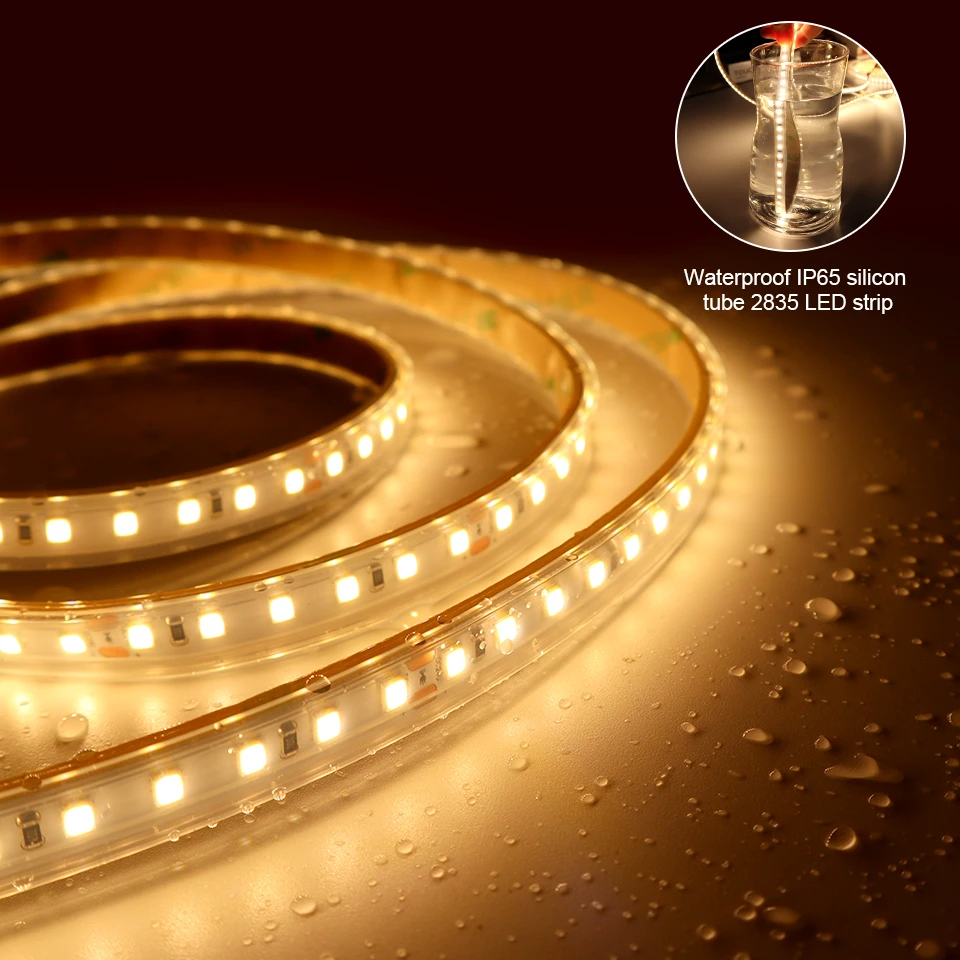
IP65 strip is dust-tight and withstands low-pressure water jets, which covers direct splash and regular wipe-down: kitchen work areas, bathroom zones outside the immediate shower/tub, commercial displays, signage and areas that get hosed lightly. It is commonly built as a silicone-coated or sleeved product. It is not built to be submerged or to sit in standing water, and the end and cable entries still need sealing - a coated strip with an open cut end is not protected where water actually enters.
IP67 - Temporary Immersion for Wet Rooms and Outdoors
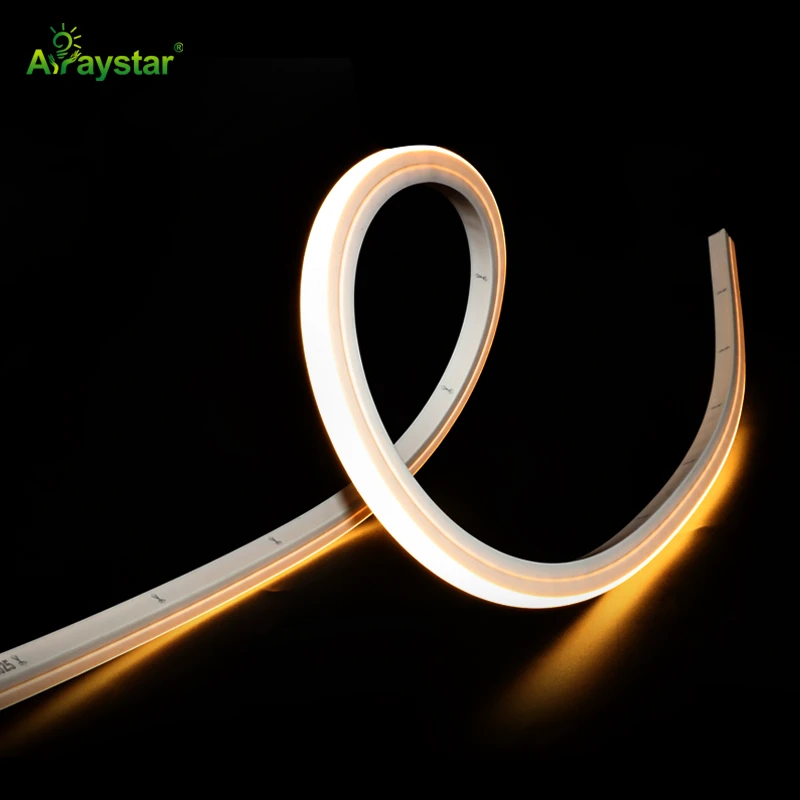
IP67 is dust-tight and rated to survive temporary immersion, which in practice makes it the workhorse for genuinely wet locations: showers, bath surrounds, saunas, garden and facade lighting, decking, boats and marine-splash areas, and anywhere subject to heavy rain or wash-down. The best versions use solid silicone or PU extrusion (SOB) rather than a hollow sleeve, because there is no tube to flood or trap condensation. IP67 handles being wet repeatedly; it is not, however, rated for permanent underwater pressure - that is IP68.
- Default to solid silicone/PU extrusion outdoors; hollow sleeves can flood and yellow.
- IP67 suits showers, facades, decking, signage and marine splash - not permanent submersion.
- Seal cable glands and end caps to the same standard or the jacket rating is meaningless.
- Allow the sealed strip adequate profile/heat path - jackets retain some heat.
IP68 - Continuous Submersion for Pools and Fountains
IP68 means the product is rated for continuous immersion to the manufacturer's specified depth and time, which is the requirement for swimming pools, ponds, fountains and underwater features. Real IP68 strip uses thick solid TPU or silicone extrusion with factory-moulded or fully potted heads and dedicated waterproof connectors - it is a safety product, not a slightly better version of outdoor tape. Underwater electrical work also demands safety extra-low voltage through an isolating transformer and compliance with pool wiring zones, often with a qualified electrician; the IP rating of the strip is only one part of a safe submerged install.
The Rating Is Only as Good as Its Terminations
Water does not usually come through the jacket - it travels in through cut ends, cable entries and connectors. A single unsealed cut on an IP68 reel drags the whole run down to effectively no protection. Use factory-made sealed leads where possible, pot or glue every field cut with the rated end caps and adhesive, use IP-matched connectors and glands, and test sealed runs before enclosing them. Remember also that sealing traps heat, so sealed strip benefits from aluminium profiles and conservative wattage, and that ratings describe the strip - the driver still belongs in a dry or separately rated enclosure.
Choose the lowest rating that truly fits, then seal every termination to match.
| Environment | Minimum I'd specify | Notes |
|---|---|---|
| Living-room cove / bedroom | IP20 | In a dry profile, best cooling/value |
| Kitchen splash / display | IP65 | Withstand jets and wipe-down |
| Shower room / sauna | IP67 solid extrusion | Seal all ends and glands |
| Facade / decking / boat | IP67 UV-stable solid | Weatherproof box for driver |
| Pool / pond / fountain | IP68 + SELV isolating tx | Safety-critical, qualified install |
Condensation, UV and Two Persistent Myths
Two things catch people out beyond the IP number. First, condensation: an outdoor run can still draw moist air through terminations, and that moisture condenses inside a hollow sleeve on cold nights - which is why solid extrusion beats hollow tube and why outdoor runs need drainage and correctly placed glands rather than being hermetically sealed with nowhere for moisture to go. Second, UV: an IP rating says nothing about sunlight resistance. Outdoor strip needs a UV-stable silicone or TPU jacket, because PVC and cheap sleeves yellow, crack and go brittle in a couple of seasons however waterproof they were on day one.
Two myths are worth killing. 'Waterproof' printed on a listing is not a rating and can mean little more than a coated surface; always read the actual IP digits. And a higher IP number is not 'better strip' for indoors - sealed product runs hotter and costs more, so IP20 in a dry cove is the correct engineering choice. Finally, an IP68 jacket does not make the power supply or connectors submersible; every single component in a wet or underwater system has to be rated and sealed for that environment on its own.
Recommended Products
Frequently Asked Questions
What is the difference between IP65, IP67 and IP68 LED strip?
The first digit (6) means fully dust-tight on all three; the second digit is the water protection. IP65 resists low-pressure jets and splash for kitchens and signage; IP67 survives temporary immersion for showers, outdoors, decking and marine splash; IP68 is rated for continuous submersion in pools and fountains. Use the lowest rating that genuinely fits the exposure, and remember the rating only holds if cut ends, glands and connectors are sealed to match.
Can I use IP65 or IP67 LED strip in a swimming pool?
No - permanent submersion requires genuine IP68 strip with thick solid TPU/silicone extrusion, factory or fully potted heads and waterproof connectors, running on safety extra-low voltage through an isolating transformer and installed to pool wiring codes, usually by a qualified electrician. IP65 and IP67 handle splash and temporary immersion only; relying on them underwater is both a failure risk and an electrical safety hazard.
Is IP67 LED strip suitable for outdoor facade and garden use?
Yes, IP67 solid silicone/PU extrusion is the standard for facades, eaves, decking, gardens and marine-splash areas that see heavy rain and wash-down, provided it is UV-stable and the ends and cable glands are sealed and the driver is in a weatherproof or indoor enclosure. Prefer solid extrusion over hollow sleeved tape, which can flood and yellow. IP67 is not for permanent underwater use - step up to IP68 there.
Do I need waterproof LED strip inside a bathroom or kitchen?
In direct splash and wash-down zones yes - IP65 for kitchen splash areas and light bathroom splash, IP67 solid extrusion inside showers and bath surrounds where the product gets repeatedly wet. Dry areas and enclosed profiles can use IP20, which runs cooler and costs less. Do not use bare IP20 where steam, cleaning spray or condensation is routine, and always seal the ends of any rated strip - an open cut defeats the jacket.
Does cutting waterproof LED strip ruin the IP rating?
It opens an unprotected end, so a field cut must be resealed with the rated end cap, adhesive/potting and an IP-matched connector or gland - otherwise water enters through the cut and the jacket rating is effectively lost. Prefer factory-sealed leads where you can, and test or inspect sealed terminations before enclosing the run. The same applies to cable entries; the strip's IP number is only as good as its weakest termination.
Need help with your LED project?
Get factory-direct pricing, free samples and engineering support within 24 hours.
Email: info@arraystarled.com | Phone: +86-0755-2103-6746 | WhatsApp: 0086 1581 8514 077
Need to size your power supply? Use our LED Strip Power Calculator to find the right driver in seconds.







