LED Strip Cable Run Length: Max Distance Driver to Strip
- 2026-09-18 18:22
- /
- Arraystar
Quick Answer
The maximum cable distance between driver and LED strip is set by voltage drop, not by a fixed number. As a guide: 12 V ≈ 3–5 m, 24 V ≈ 8–12 m, 48 V ≈ 20–50 m — thicker cable stretches these, power injection doubles them, and high-voltage AC strips run 50–100 m from one feed.
📑 Table of Contents
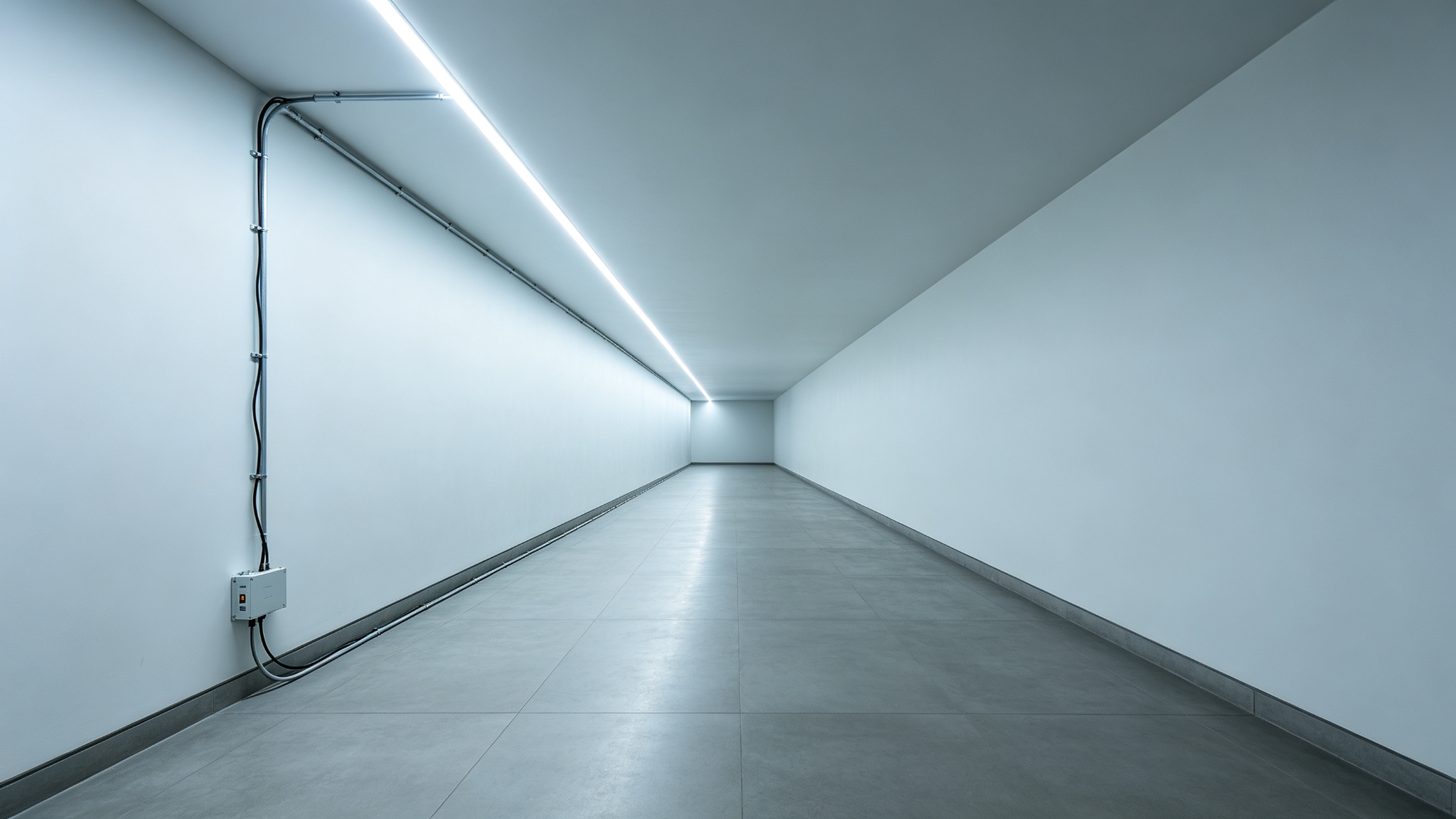
How far the driver can sit from the strip depends on voltage, cable gauge and load — not on guesswork.
What Limits Driver-to-Strip Distance
There is no hard “maximum length” — the limit is voltage drop in the cable between driver and strip. The longer and thinner the cable, and the higher the current, the more volts are lost before they reach the LEDs. Once the strip receives noticeably less than its rated voltage, it dims and shifts warm. This is the same effect described in our voltage drop guide, applied specifically to the cable run between driver and strip rather than along the strip itself.
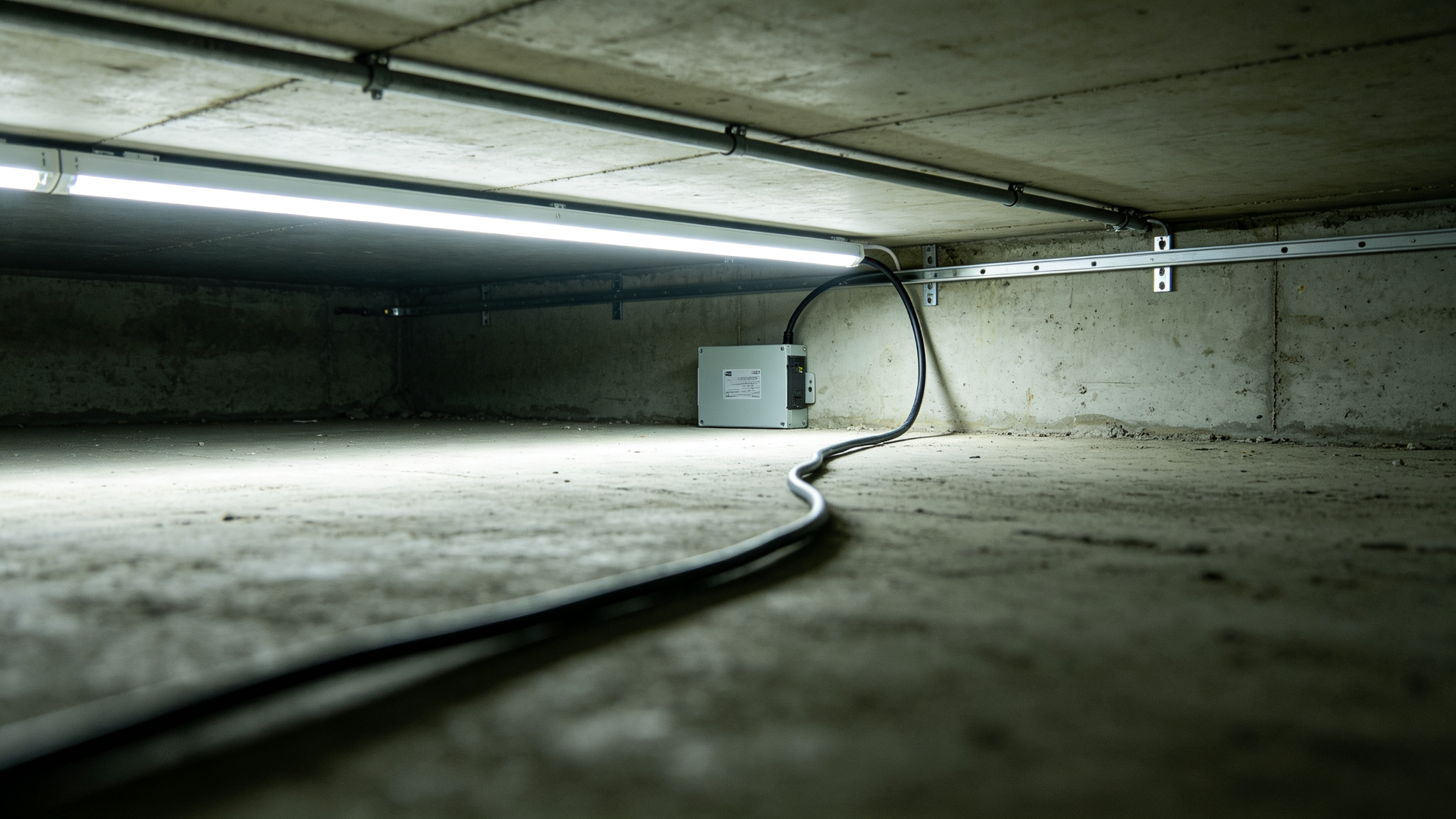
A remote driver in a ceiling void — the longer this cable, the more voltage drops before the strip.
Maximum Cable Run by Voltage: Reference Table
The table below gives practical one-way driver-to-strip distances for a typical load kept under ~3% voltage drop, using adequately sized cable. Real figures depend on watts per meter and gauge — treat these as starting points.
| System Voltage | Typical Max One-Way Cable | With Thicker Cable | Notes |
|---|---|---|---|
| 12 V DC | 3–5 m | ~8 m | High current, drops fastest |
| 24 V DC | 8–12 m | ~15–20 m | Best all-round choice |
| 48 V DC | 20–30 m | Up to ~50 m | SELV-safe long runs |
| 110/220 V AC (HV strip) | 50 m standard | Up to 100 m | Line voltage on the strip |
For the wider voltage trade-off, read 12 V vs 24 V and our high-voltage vs low-voltage guide.
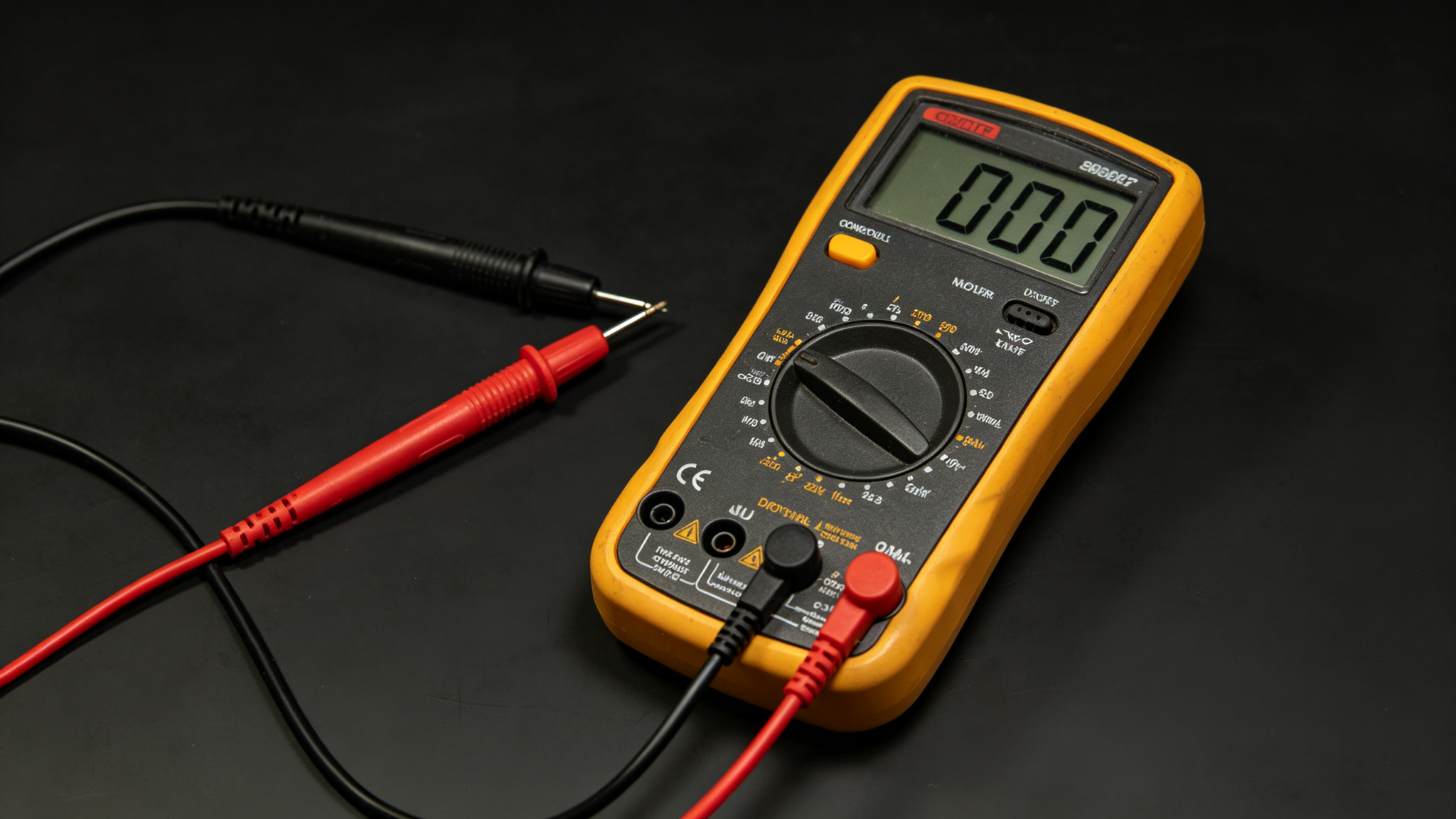
Measure the voltage at the strip end under full load — that single number tells you if the run is acceptable.
How to Extend the Distance Without Losing Brightness
When the distance is too great for one feed, you have four levers: thicker cable (lower resistance), higher voltage (lower current for the same watts), power injection partway along, or move the driver closer. Often the cheapest and cleanest fix is to relocate the driver near the strip rather than run a very long, fat cable. For injection detail, see our power injection guide, and match the cable to the load with the wattage and cable guide.
Rule of thumb: if your driver-to-strip cable is longer than ~5 m on 12 V or ~10 m on 24 V, prefer moving the driver closer or injecting power before you simply buy thicker wire.

Long, even runs are achievable — but they need the right voltage, cable and injection plan, not a single thin feed.
Cable, Conduit and Installation Tips
- Size the feed cable for the round-trip current — both legs count toward voltage drop.
- Run cable in conduit where it is hidden or in-wall; never leave unprotected low-voltage power loose.
- Avoid coiling excess driver wire — coils heat up and behave like inductors.
- Use a junction box mid-run to split branches — see below.
- Keep outdoor feeds in weatherproof glands and boxes, with RCD/GFCI protection.
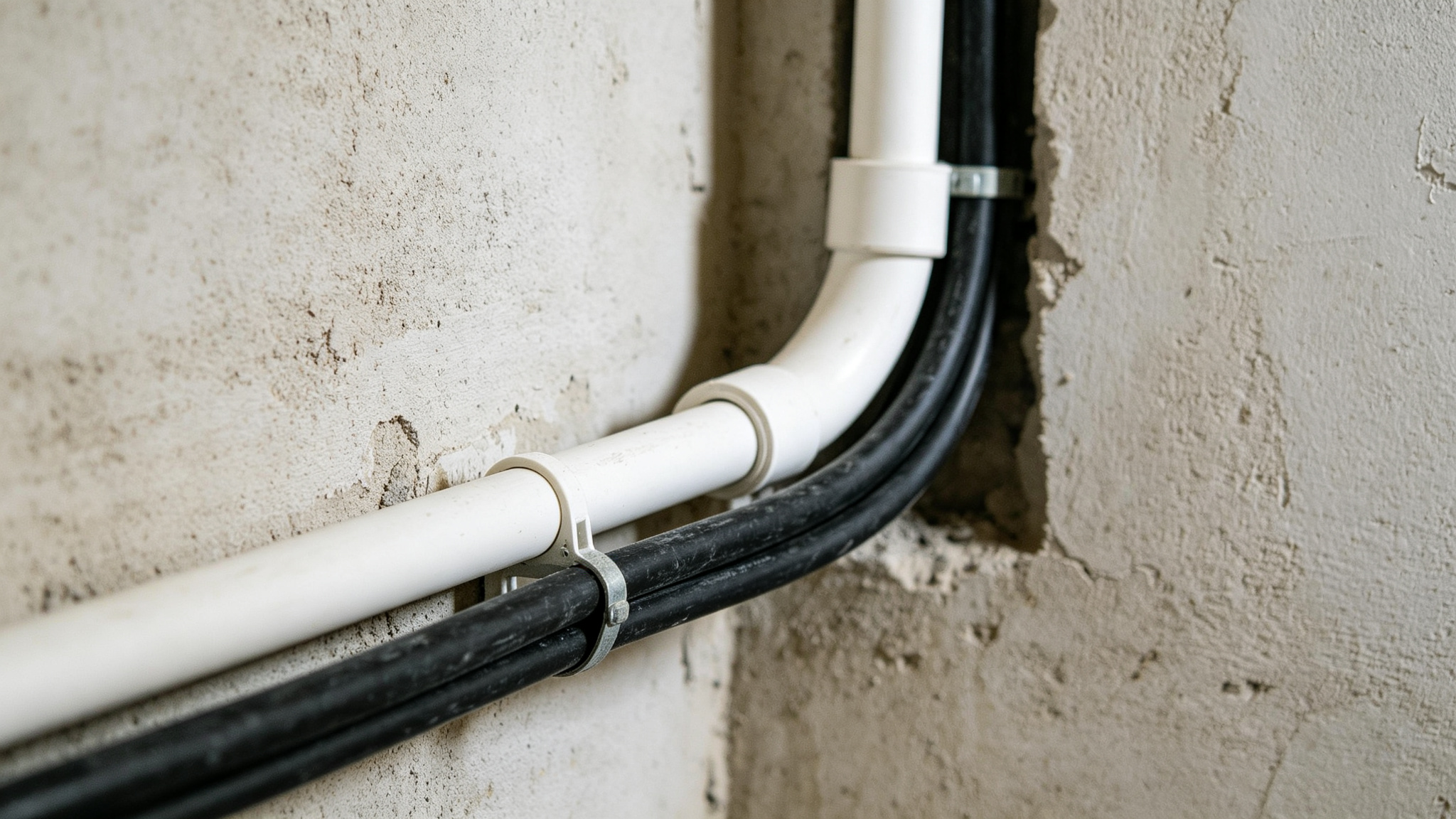
Conduit keeps long feeder runs protected and serviceable — thick enough gauge, neat bends, proper clips.
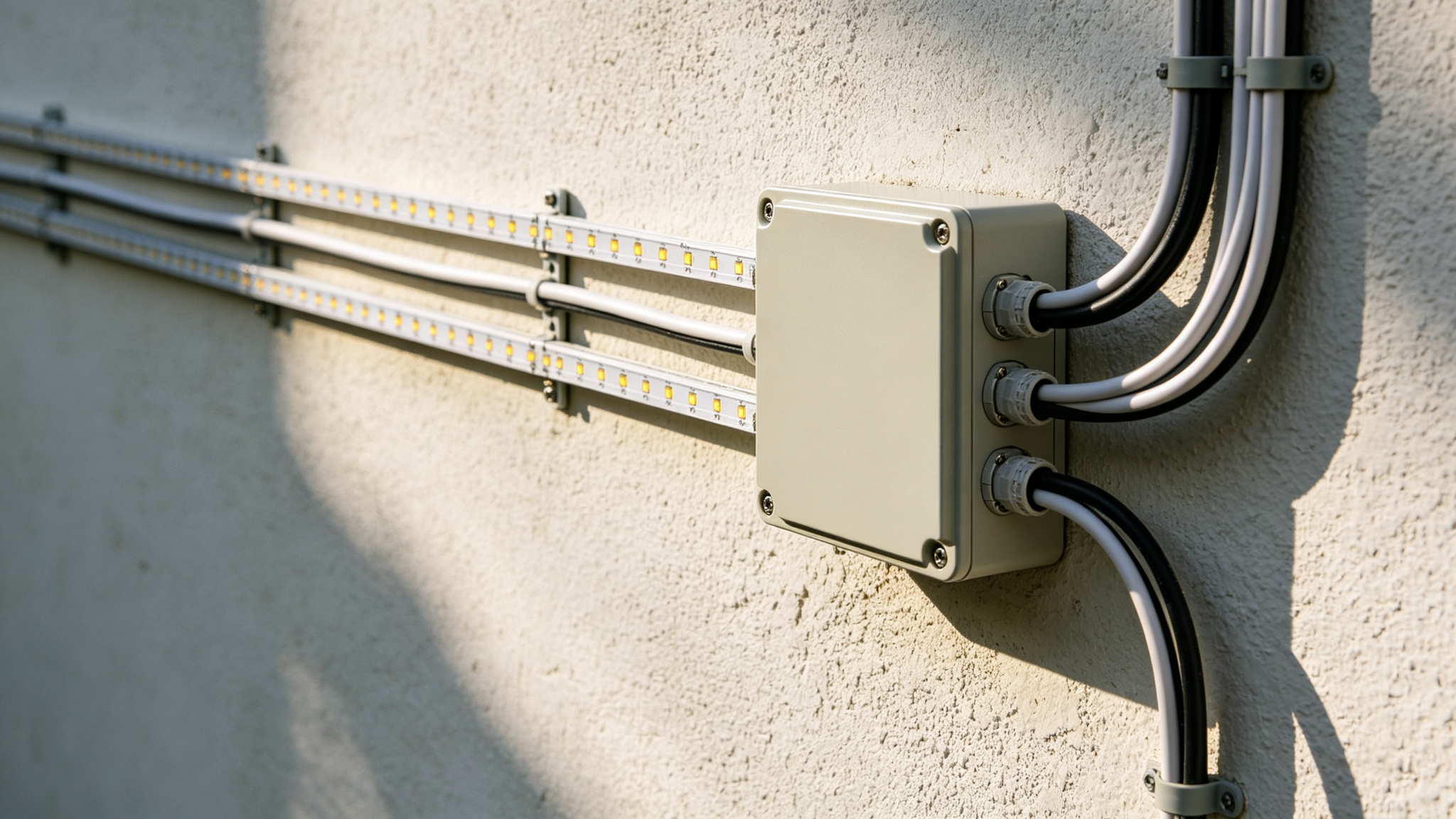
A mid-run junction box lets you split one long feed into shorter, independent branches.
When to Switch to 48V or High-Voltage
Once driver-to-strip distance grows past ~15–20 m on 24 V, the cable gets expensive. The elegant step is 48 V SELV: still touch-safe, but half the current means far less drop and much thinner cable for the same distance. Beyond that — facades, rooflines, 50–100 m lines — a high-voltage AC strip runs straight from mains with almost no drop. Choose the lowest voltage that still reaches, for safety and flexibility.
Recommended Products
Frequently Asked Questions
What is the maximum distance between LED driver and strip?
It depends on voltage and cable: about 3–5 m on 12 V, 8–12 m on 24 V, and 20–50 m on 48 V, using adequate cable and keeping voltage drop under 3%. High-voltage AC strips run 50–100 m from one feed. Thicker cable and power injection extend these figures.
Can I just use a longer cable between driver and strip?
Yes, but longer thin cable drops more voltage. Either use a thicker gauge for the longer run, inject power partway along, or move the driver closer. A longer cable on its own usually means a dim, warm strip at the far end.
Does 48V really double the cable distance?
Roughly. For the same wattage, 48 V draws half the current of 24 V and a quarter of 12 V, so resistive losses are far lower. That is why 48 V strips can run 20–50 m from one driver while remaining touch-safe SELV.
Should the driver be as close to the strip as possible?
Generally yes — a short, fat DC cable beats a long, thin one. When the strip and driver must be far apart, prefer 48 V, thicker cable or power injection rather than running a long 12 V feed.
Planning a long cable run for your LED project?
Get factory-direct distance and driver advice plus a custom quote within 24 hours.
Get a Quote