High Voltage vs Low Voltage LED Strip: 110V/220V AC vs 12V/24V DC Guide 2026
- 2026-09-18 18:00
- /
- Arraystar
Quick Answer
Choose high-voltage (110 V/220 V AC) strips for sealed 50–100 m outdoor runs — building outlines, facades and large signs: they run from mains power with almost no voltage drop. Choose low-voltage (12 V/24 V DC) strips for indoor, close-view, high-CRI or color-changing lighting: touch-safe and dimmable, but limited to 5–10 m per feed.
📑 Table of Contents
- What “High Voltage” and “Low Voltage” Actually Mean
- Full Spec Comparison Table: 110/220 V AC vs 12 V vs 24 V vs 48 V
- Voltage Drop and Maximum Run Length: The Real Reason to Choose
- Safety, Certifications and Waterproofing (IP Ratings)
- Light Quality and Control: CRI, CCT, Beam Angle and Dimming
- Where Each System Wins: Project-by-Project Selection
- Recommended Products
- Frequently Asked Questions
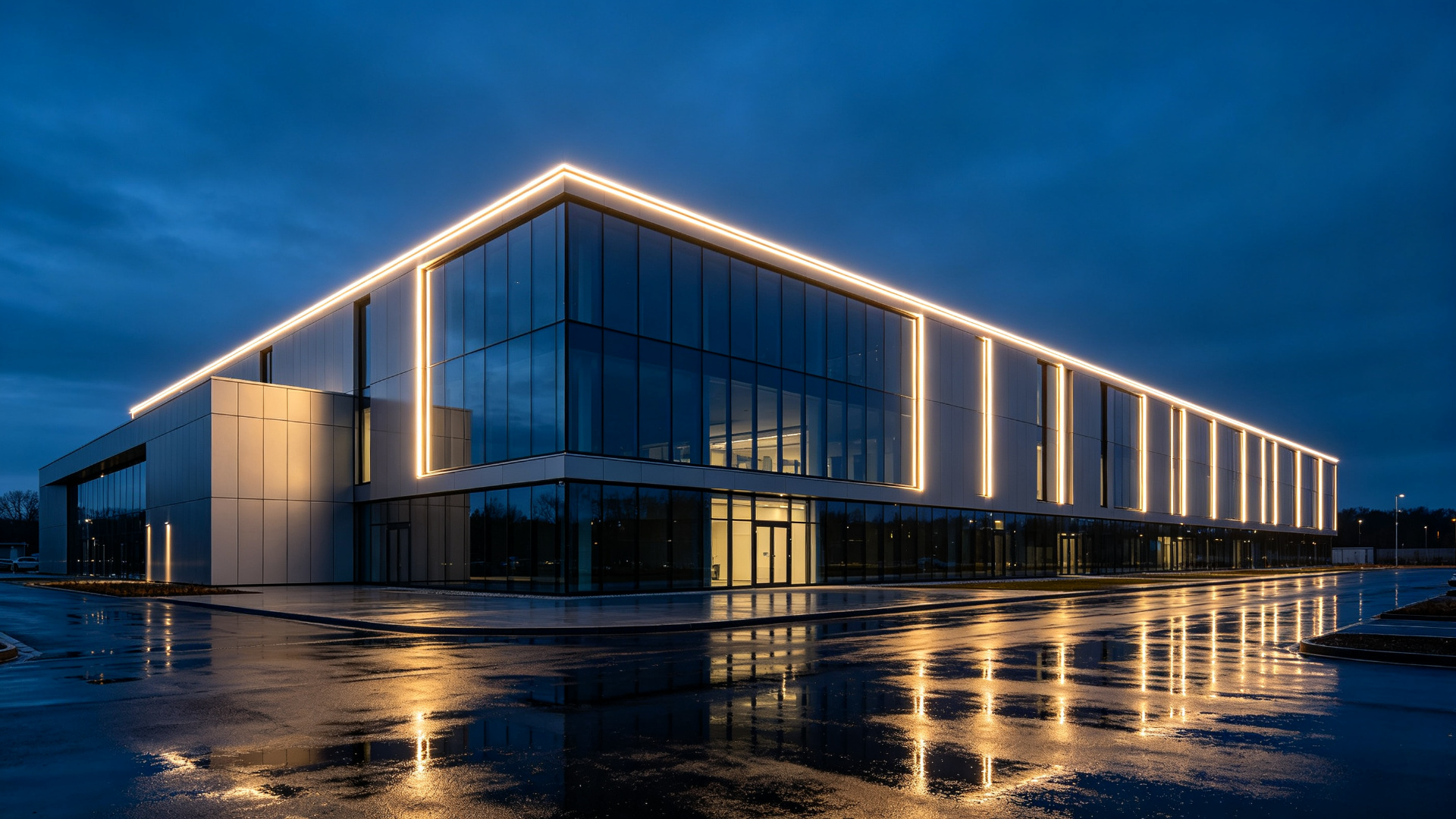
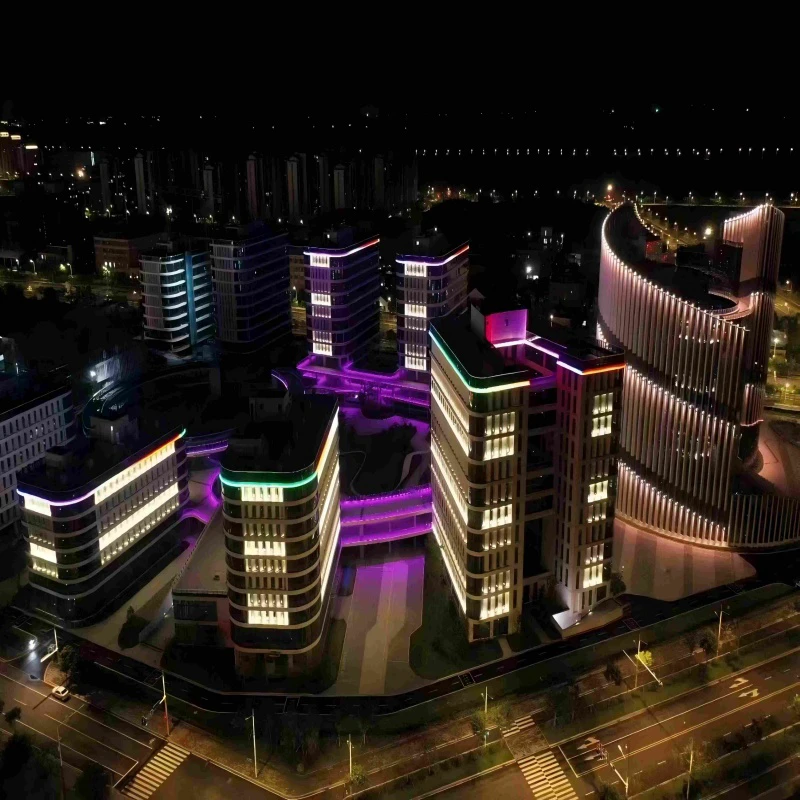
A single high-voltage LED line tracing a building facade — uniform brightness across the full run, with no power supplies along the facade.
What “High Voltage” and “Low Voltage” Actually Mean
LED strip lights divide into two electrical families, and the difference is far more than a number on the datasheet — it changes how you wire, protect, dim and physically install the light.
High-voltage (HV) strips run directly on mains AC — 110 V in North America and parts of Japan, and 220–240 V across Europe, the UK, China, Australia and most of Asia. The strip itself carries line voltage: small rectifier circuits (and, on premium versions, constant-current ICs) are distributed along the PCB, and a factory-molded power lead with a built-in rectifier connects the reel straight to the mains. There is no separate transformer.
Low-voltage (LV) strips run on safe 12 V or 24 V DC — and increasingly 48 V DC for very long SELV runs. Mains power feeds an external LED driver (power supply), which steps the voltage down and rectifies it before it ever reaches the strip. The tape itself never carries dangerous voltage.
That single architectural difference — mains voltage on the strip versus a driver feeding safe low voltage — drives every other decision in this guide.
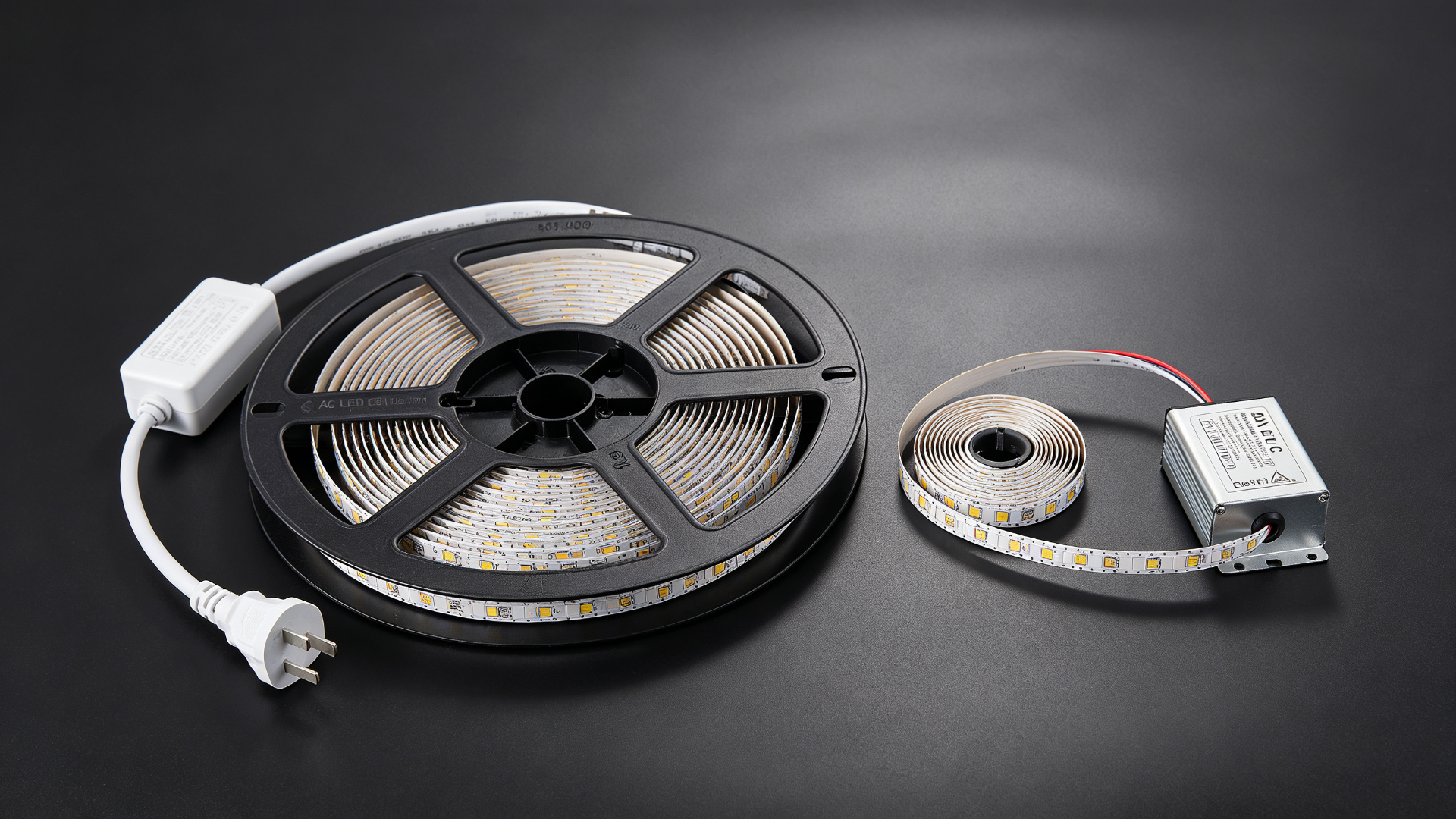
Left: a 50 m high-voltage AC reel with its rectifier power lead. Right: a low-voltage DC reel that requires an external driver.
High Voltage vs Low Voltage LED Strip: Full Spec Comparison
The table below compares the four systems professionals actually specify — 110/220 V AC, 12 V DC, 24 V DC and 48 V DC — across voltage, maximum run, CRI, correlated color temperature (CCT), IP rating, beam angle, dimming and cost. Figures are typical professional-grade ranges; exact values vary by model.
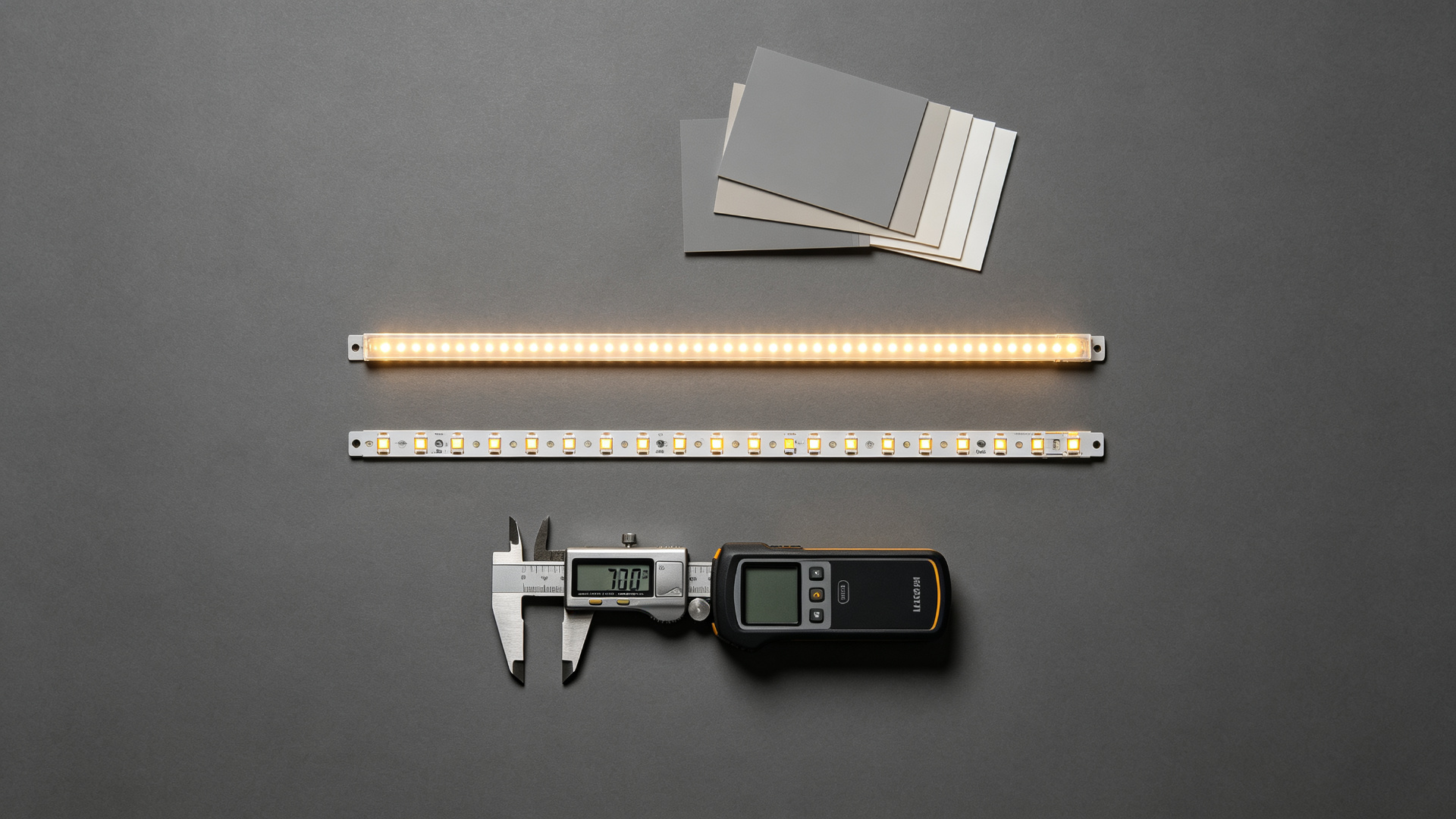
| Specification | High-Voltage AC | 12 V DC | 24 V DC | 48 V DC |
|---|---|---|---|---|
| Operating voltage | 110 / 220 / 230 V AC, 50–60 Hz | 12 V DC | 24 V DC | 48 V DC |
| Touch safety | Mains voltage — sealed fixed install, licensed electrician | SELV, touch-safe | SELV, touch-safe | SELV, touch-safe |
| Max run per feed | 50 m standard, up to 100 m (qualified 220 V) | ~5 m | ~10 m (longer with injection) | Up to ~50 m |
| External driver | None (rectifier in power lead) | Required | Required | Required |
| Voltage-drop risk | Very low over rated run | High | Moderate | Low |
| Typical LED density | 60–144 SMD/m; 400–480 COB/m | 60–240 SMD/m; up to 1,000+ COB/m | 120–480/m | |
| CRI (Ra) | Ra 80 standard; Ra 90+ on HV COB | Ra 80–95+ | ||
| CCT options | 2700K–6500K; RGB limited | 1800K–6500K, tunable white, RGB / RGBW | ||
| IP rating | Commonly IP65 / IP67, IP68 available | IP20 bare; IP65–IP68 optional | ||
| Beam angle | ~120° strip; ~180° in silicone neon | ~120° standard; 180° in neon / diffused profiles | ||
| Cut increment | 0.5–2 m SMD; ~100 mm high-density COB | 25–100 mm | 50–100 mm | ~100 mm |
| Dimming / control | TRIAC phase-cut, 0–10 V (AC side) | PWM, TRIAC, 0–10 V, DALI, DMX, Zigbee, WiFi, voice | ||
| Best for | Facades, rooflines, long signage, perimeter | Cabinets, short indoor runs, DIY | Coves, retail, hotels, RGBW | Extra-long SELV runs |
| Installed cost on long runs | Lowest for 50–100 m outdoor | Low for short runs | Medium | Medium |
The key point: voltage determines run length and safety — not light quality. CRI, color temperature, LED density and beam angle are specified separately on both families, so you never have to accept poor color to get a long run.
Voltage Drop and Maximum Run Length: The Real Reason to Choose
Every cable and PCB trace has resistance. As current travels along the strip, voltage is lost as heat (V = I × R): the LEDs at the far end receive less voltage, dim, and in RGB/tunable products shift color. This is voltage drop — the single most common complaint on long strip installations.
On a 12 V strip, losing 1 volt is an 8% error and becomes visible within roughly 5 m. On 24 V the same loss is only 4%, which pushes the visible threshold to about 10 m, and further with power injection from both ends or every 5–10 m. On a 110/220 V strip, losing a few volts is under 2% of the supply, and the distributed rectifier / constant-current design compensates along the reel — which is why qualified high-voltage strips hold even brightness for 50 m, and up to 100 m from one feed.
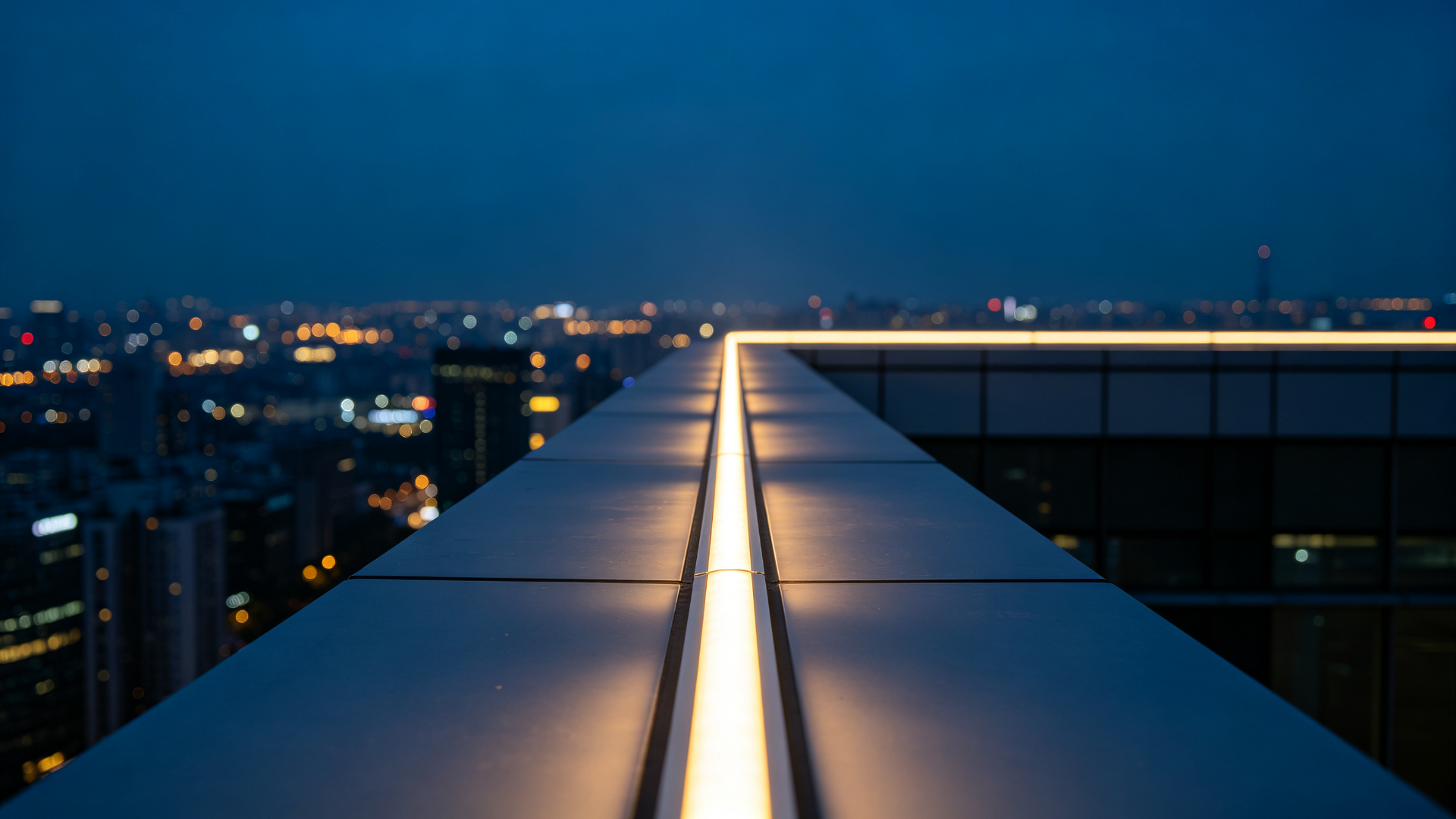
Even brightness to the far end of a rooftop run — the core advantage of high-voltage and 48 V systems.
This is also why 48 V DC has become the smart middle option: still SELV-safe to touch, but capable of runs up to about 50 m from one driver, with none of the mains-voltage safety burden. It is increasingly specified for long coves, retail chains and sheltered outdoor details where clients refuse line voltage within reach.
Rule of thumb per single feed: 12 V ≈ 5 m | 24 V ≈ 10 m | 48 V ≈ 50 m | 220 V ≈ 50–100 m. De-rate for high wattage per meter and long feed cables.
Whichever family you choose, use generously sized feed cables, never coil excess driver wire, feed long runs from both ends and place drivers centrally. For the full cable-sizing and injection math, see our 12 V vs 24 V selection guide.
Safety, Certifications and Waterproofing (IP Ratings)
Putting mains voltage on the strip changes the safety model completely. A damaged 12/24 V strip is a maintenance issue; a damaged 220 V strip is a shock and fire hazard. High-voltage strips must be treated as fixed electrical wiring: installed by a licensed electrician, protected by an RCD/GFCI breaker, mounted out of reach, and never cut or joined outside the factory-marked points using the matching sealed accessories. Low-voltage SELV strips are safe to touch while lit and are the default for living spaces, furniture and anything within arm’s reach.
Waterproofing is specified by IP rating in both families, but high-voltage outdoor strips are almost always supplied pre-sealed:
- IP20 — bare PCB, dry indoor use only (typical low-voltage interior tape).
- IP65 — silicone sleeve or epoxy coating, splash and water-jet resistant; covered awnings, bathrooms and dust-heavy spaces.
- IP67 — solid silicone extrusion or glue-filled sleeve, dust-tight and protected against temporary immersion; the standard for facades and landscape.
- IP68 — continuous immersion protection; fountains, in-ground and underwater linear details.
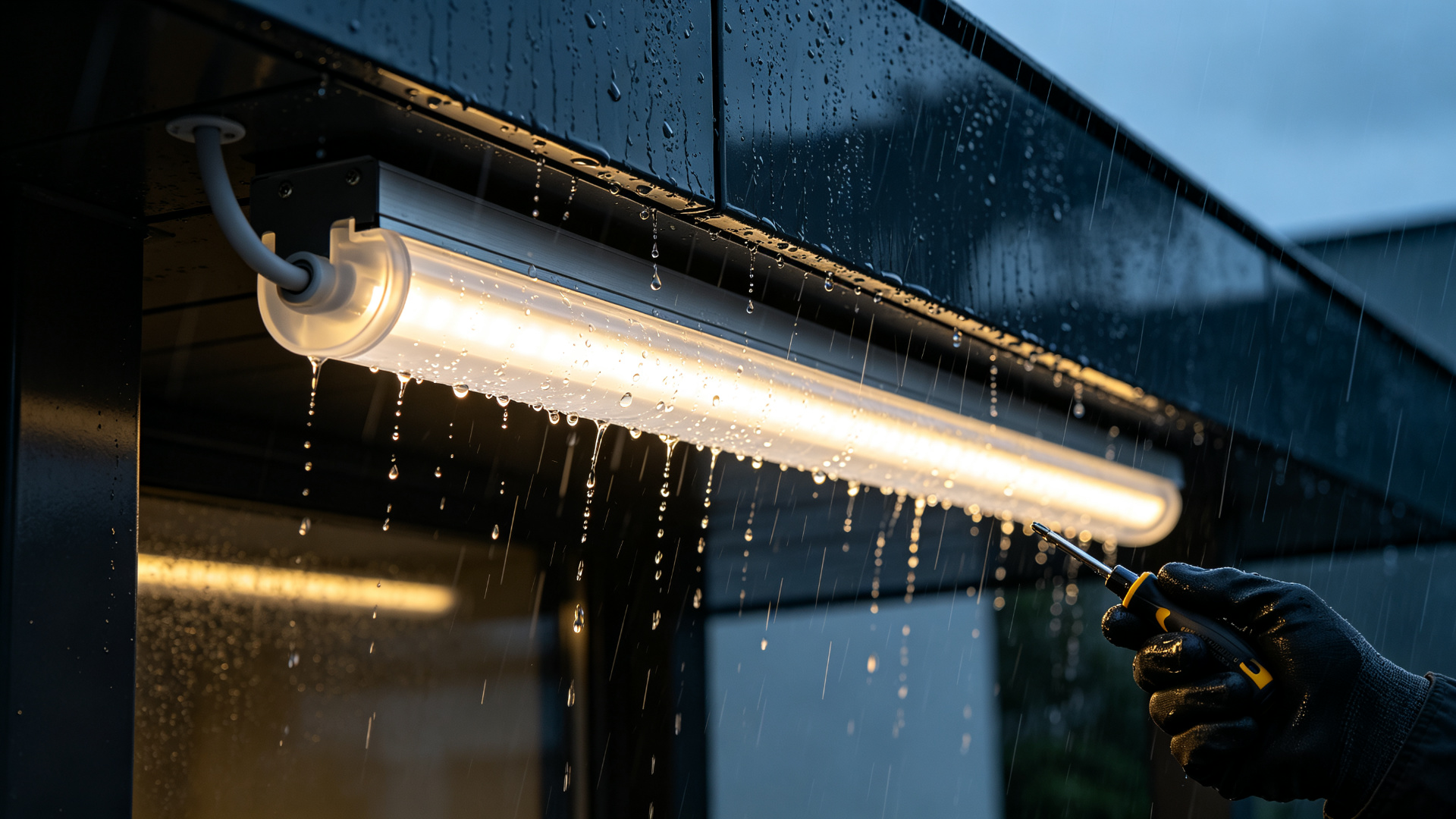
An IP67 solid-silicone-extrusion strip under a building eave — water beads off the fully encapsulated line.
On high-voltage jobs, every cut end, power lead and joiner must use the manufacturer’s IP-rated caps and connectors: a single unsealed joint is both an electrocution path and a corrosion failure point. Specify CE/ETL/UL-recognized product and document the electrician’s sign-off for facade work. Full definitions and application charts are in the LED strip IP rating guide.
Light Quality and Control: CRI, CCT, Beam Angle and Dimming
Voltage does not lock you into low-quality light — but the two families lean differently.
- CRI (color rendering): budget strips sit at Ra 80; specify Ra 90+ for hotels, retail, kitchens and anywhere skin tones, food or finishes must render truthfully. Premium 220 V COB high-voltage strips now match the best 24 V product at Ra 90+ (see why CRI matters here).
- CCT (color temperature): fixed white from 1800 K candle-tone to 6500 K daylight is available in both families. Tunable white (adjustable warm-to-cool) and RGB/RGBW mixing remain far more developed on 24 V DC, where multi-channel controllers are mature and inexpensive.
- Beam angle: a bare top-emitting strip gives roughly 120°; housed in silicone neon or a diffused aluminum channel it becomes a soft 180° line, while side-emitting and wall-washer versions redirect the beam. Read the 120° vs 180° beam-angle explainer.
- Dimming and flicker: simple high-voltage strips rectify AC cheaply and can show 100/120 Hz flicker; dimming is limited to TRIAC (phase-cut) or 0–10 V on the AC side. Constant-current HV strips eliminate the flicker, but for ultra-deep dimming, dim-to-warm behavior, scenes and smart protocols (DALI, DMX, Zigbee, WiFi, voice), 24 V DC with a PWM dimmable driver is still the most flexible platform.
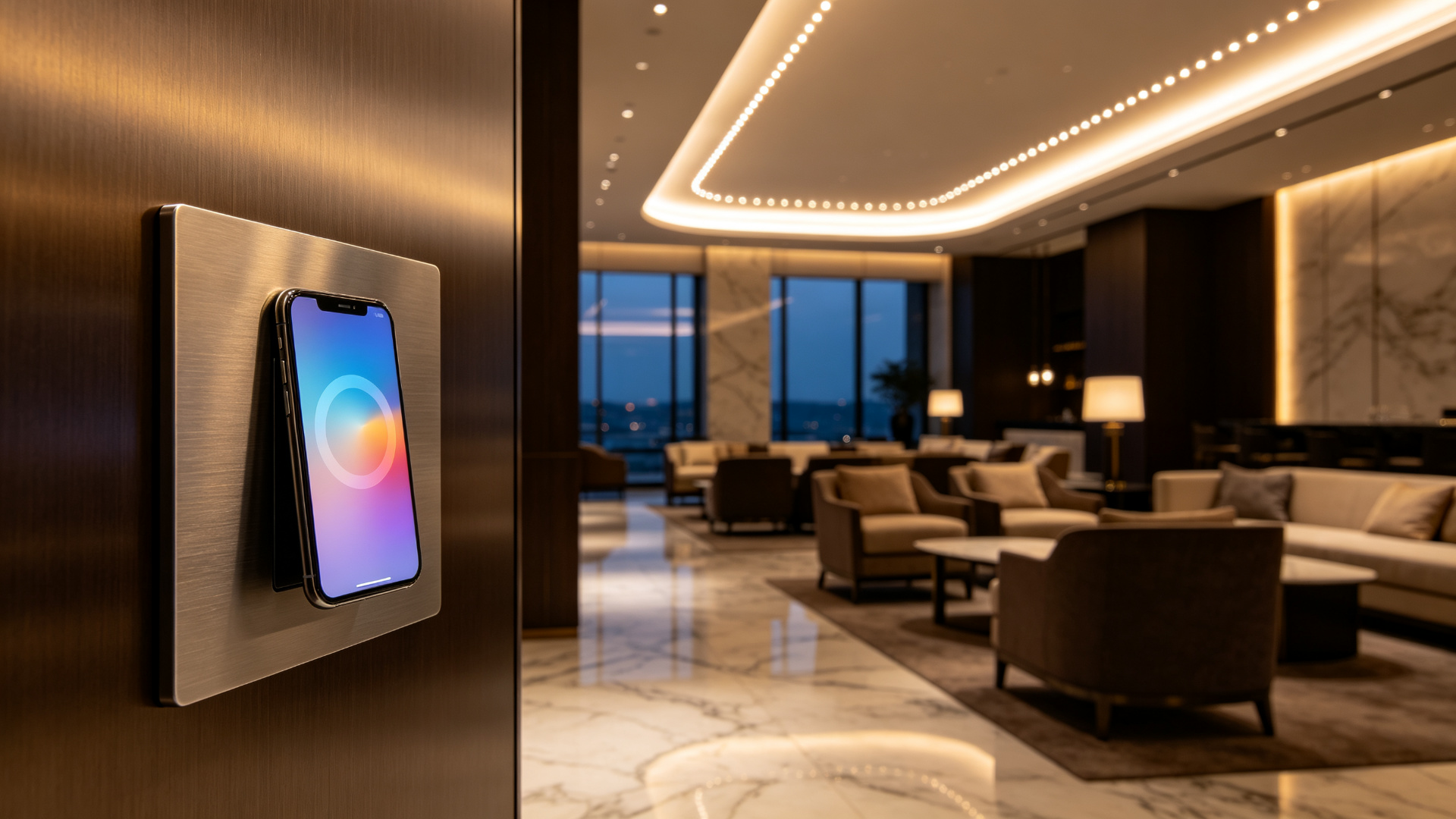
Smooth dimming and warm-dim scenes in hospitality are most often built on 24 V DC with PWM drivers.
For protocol details and wiring, see the smart LED strip control comparison. And if the seamless “dot-free” look is the priority, the chip technology matters more than voltage — start with COB vs SMD LED strips.
Where Each System Wins: Project-by-Project Selection
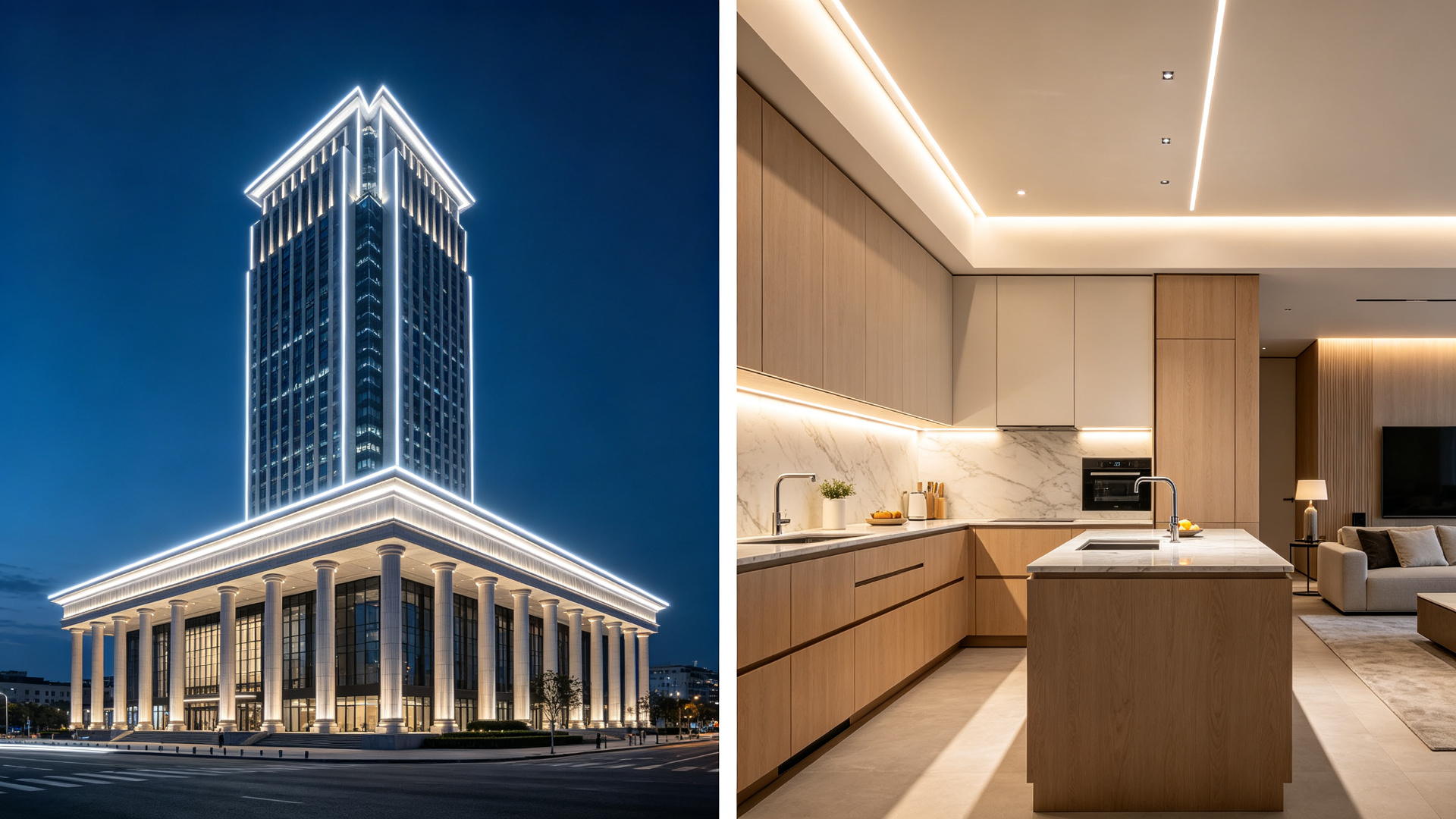
High voltage owns the long outdoor line; low voltage owns the close-view, high-quality interior.
High-voltage AC wins for:
- Building rooflines, eaves and facade outlines on hotels, towers, villas and clubhouses
- Bridges, perimeter and boundary lighting, industrial parks and security runs
- Large channel letters, sign cabinets and light boxes spanning 20–100 m
- Long corridors, warehouses and parking structures where mounting dozens of drivers is impractical
- Outdoor high-voltage neon flex for commercial signage
Low-voltage DC wins for:
- Ceiling coves, bulkheads and hidden troughs delivering the dot-free COB look
- Kitchen under-cabinet, wardrobes, shelving and furniture-integrated lighting
- Retail displays, restaurants, hotel rooms and guest-facing hospitality spaces
- Bathrooms and wet zones (IP67 SELV), bedrooms and any surface within reach
- Tunable white, dim-to-warm, RGBW, pixel and music-reactive effects
The 30-second decision
1) One continuous outdoor line over 20 m with nowhere to hide drivers → 110/220 V AC (or 48 V DC if touch safety matters). 2) Visible, close-view, high-CRI or color-changing interior → 24 V DC COB. 3) Short, cost-sensitive indoor run → 12 V DC.
Browse the full high-voltage LED strip range, and for outdoor placement rules see the outdoor landscape lighting guide. Pair 24 V/48 V runs with an appropriately sized IP67 waterproof LED driver.
Recommended Products
220V IP67 Solid Silicone Extrusion COB LED Strip — 480 LEDs/m, 8 mm
Seamless dot-free 220 V COB line, fully sealed to IP67 — the premium choice for long outdoor facades, rooflines and columns.
220V AC COB Strip ART-HSC0B08-480-W
High-density 480 LEDs/m high-voltage COB with CRI 90+ options and constant-current design for flicker-free 50–100 m runs.
220V SMD LED Strip ART-HS2835-120
The cost-effective 220 V workhorse for perimeter lighting, sign cabinets and long coves where discrete dots are acceptable behind a diffuser.
48V Ultra Long LED Strip ART-2835-120-X
The SELV-safe compromise: up to ~50 m from one 48 V driver for projects that need long runs without mains voltage on the strip.
Frequently Asked Questions
What is the longest continuous run for a high-voltage LED strip?
Most 110 V/220 V AC strips are rated for 50 m per power lead, and qualified 220 V models can run 100 m continuously from a single feed. Never exceed the rated length or join reels with ordinary connectors — beyond that point the distributed current-limiting design can overheat. For longer facades, use several independent feeds from a weatherproof junction box.
Do 220 V LED strips need a separate driver or transformer?
No external DC driver is required. High-voltage strips use a factory power lead with a built-in rectifier that converts AC to the DC the chips need, and the lead connects directly to mains power. The connection must still be made by a qualified electrician with RCD/GFCI protection and, outdoors, an IP67/IP68 sealed connector.
Are high-voltage LED strips safe outdoors in rain and wet locations?
Yes, when the strip is rated IP67 (solid silicone extrusion or glue-filled sleeve) or IP68 and every cut end and joint is sealed with matching end caps and connectors. Because the strip carries mains voltage it must stay fully encapsulated, be fixed out of reach and be installed by a licensed electrician. For low, touchable installations, specify 24 V or 48 V DC instead.
Can high-voltage strips be dimmed, and are CRI 90+ versions available?
Yes. 220 V COB high-voltage strips are available with CRI 90+ and TRIAC (phase-cut) or 0–10 V dimming; choose constant-current models for flicker-free performance. For tunable white, RGBW scenes, app/voice control or ultra-deep dimming, 24 V DC offers the widest driver and controller choice.
Planning a long-run or facade LED project?
Get factory-direct pricing, free layout advice, samples and a custom quote within 24 hours.
Get a Quote