Hiding Neon Flex in a Surface Groove: Depth and Diffuser Rules
- 2026-10-28 10:03
- /
- Arraystar LED
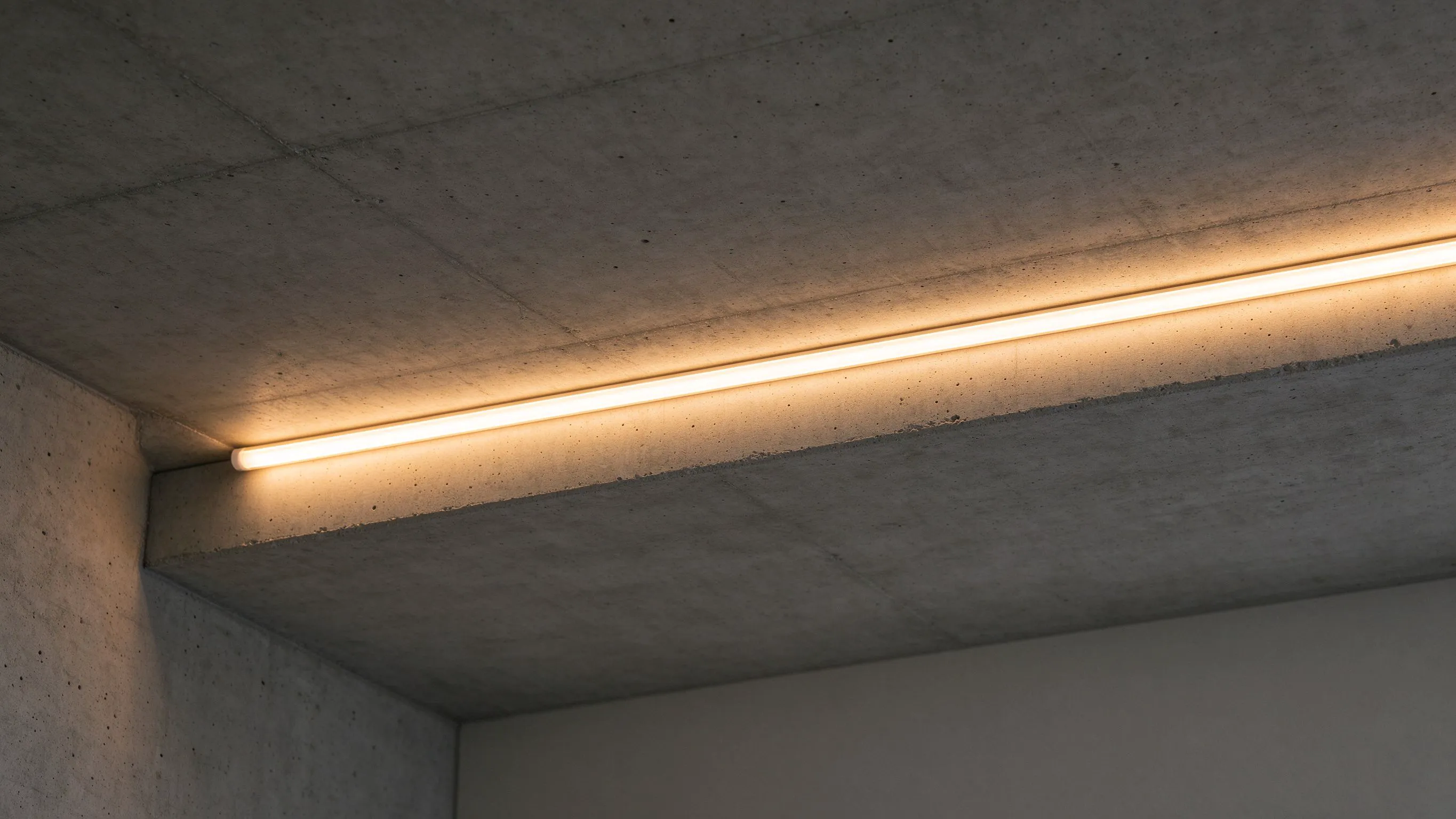
Groove depth decides whether hidden neon flex glows or disappears. I set the slot width a touch wider than the flex, the depth shallow enough to see the diffuser, and the viewing angle so the light reads as a clean line instead of a hidden dot.
Why a groove either sings or vanishes
A recessed neon line is a reveal, not a hole. If the slot is too deep, you only see darkness and a faint glow at the lip; if it is too shallow, the flex sits proud and looks cheap. The sweet spot puts the diffuser slightly below the surface, with enough clearance that the light spills out without showing the LED dots. I have seen whole walls of cove lighting read as 'broken' because the slot was routed 10 mm too deep. The fix is always the same: raise the flex or shallow the groove, because a deep slot shows shadow, not light.

Slot width, depth and clearance
- Make the slot 1–2 mm wider than the flex on each side, so it drops in without binding.
- Set the depth so the diffuser sits 1–3 mm below the finished surface — visible glow, hidden dots.
- Leave a 2–3 mm air gap behind the flex in the groove for heat and cable slack.
- Angle the groove base towards the viewer if the light needs to wash a surface, not just edge-lit.
For a 10–12 mm profile, I route roughly a 12–14 mm slot, set 3–5 mm deep, with the flex bottomed on a small clip. That keeps the diffuser just under the line of sight while the glow spills out. A 360° round profile like the D22 mm needs a round or wide-enough slot so its full barrel can breathe. I always mock the depth on a scrap before the joiner cuts the whole run, because moving a routed slot after plaster is agony.
Viewing angle and diffuser choice
Match the diffuser to how deep the groove sits.
| Profile | Diffuser | Slot depth | Effect |
|---|---|---|---|
| Top-bend 12×12 mm black | Smooth side diffuser | 3–5 mm | Clean edge line |
| Top-bend 10×10 mm black | Narrow diffuser | 2–4 mm | Fine reveal line |
| 360° D22 mm | Full barrel | Wide slot | Round glowing rod |
The black-housing top-bend profiles are my go-to for hidden reveals, because the black body disappears into a dark groove and only the lit diffuser shows. The 10×10 mm version gives a finer line on tight joinery; the 12×12 mm carries more light on longer runs. A 360° barrel needs a wider slot and reads as a floating rod rather than an edge line. I match the diffuser to the groove depth: a deeper slot gets a wider diffuser so the glow still reaches the lip.

Heat and cable in the groove
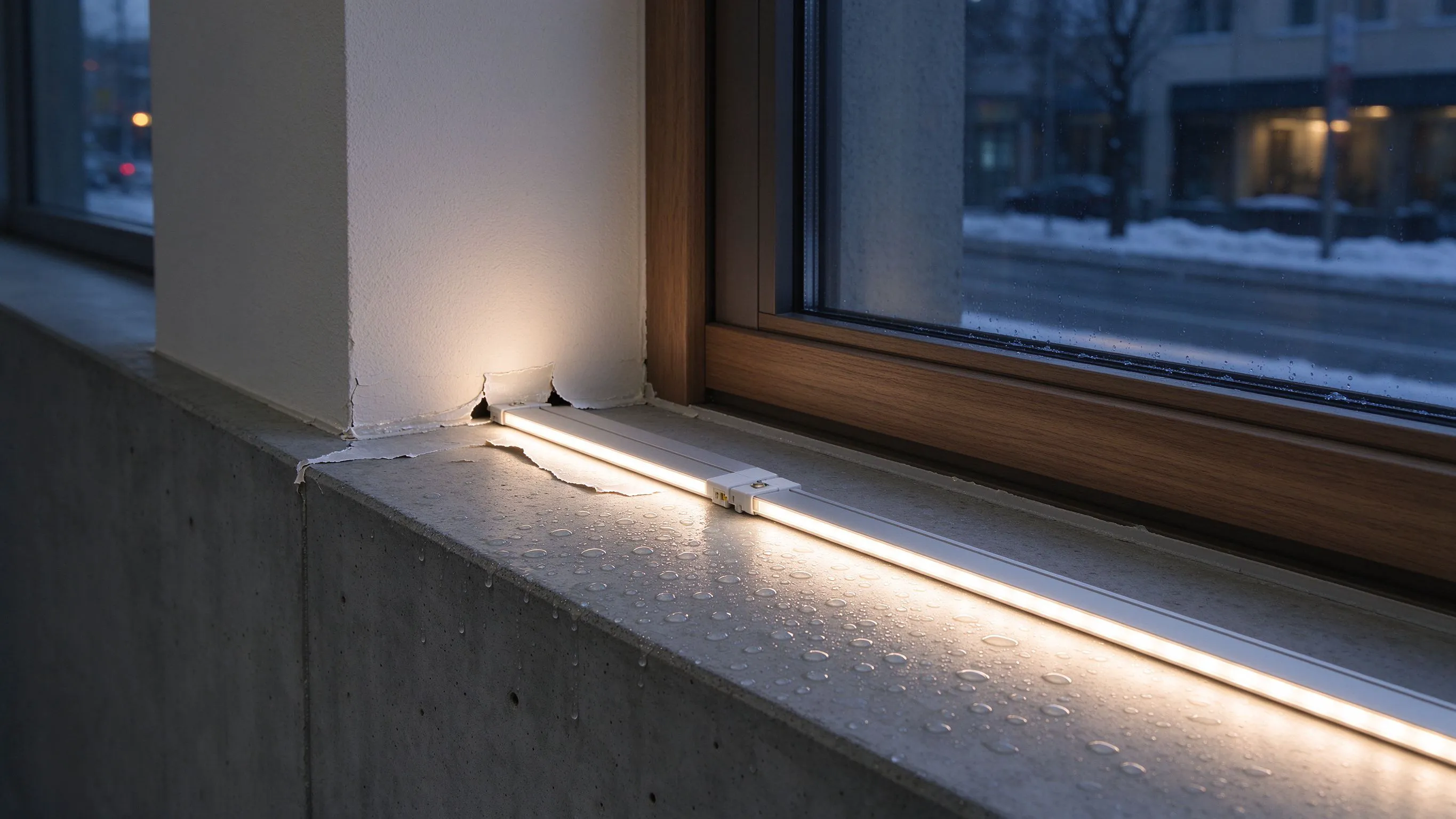
A groove is a partial enclosure, so I treat it like one. I keep the driver derated by 15–20% for the trapped ambient, and I leave a small vent or weep at the low end so condensation does not sit in the channel. I feed the 24V cable through a routing chase behind the groove, not along the slot itself, so a join never sits in the dampest part of the reveal. Voltage drop of 0.3–0.5V per metre still applies; long reveals get a centre feed. On a 6 m reveal that is about 0.3 V of drop, keeping the far end near 23.7 V — even enough to hide the slot depth.
Mock it up before the joinery goes in
The cheapest fix is a 300 mm offcut taped into a sample groove on the bench, lit at the real viewing height. I do this before the wall is finished, because moving a routed slot after the plaster goes up is agony. The 10×10 mm black profile is easy to mock up and tells me within minutes whether the depth is right. Once the sample reads correctly, I mark the depth on the drawings and the joiner routes to that. I also check the mock at night, because a groove that looks fine at 4 pm can disappear once the sun goes and only the glow is left.
Viewing height changes the answer too. A groove seen from standing eye level reads differently from one looked down on from a staircase or looked up at from a low sofa. I mock it at the actual eye level of the room, because a diffuser that is invisible at 1.2 m can be fully visible at 2 m. If the line runs behind a floating shelf, I also check what happens when the shelf is loaded with books; a few centimetres of stored goods can shadow the slot and turn a clean reveal into a dim line. Mocking the finished room, not just the empty slot, is what keeps a hidden neon job from being touched up after handover.

Recommended Products
Frequently Asked Questions
How wide should a groove be for neon flex?
1–2 mm wider than the flex on each side, so it drops in without binding. For a 10–12 mm profile that is roughly a 12–14 mm slot.
How deep should the flex sit in the groove?
With the diffuser 1–3 mm below the finished surface. That hides the LED dots while the glow spills out; deeper and the line disappears.
Why does my hidden neon line look broken?
Usually the slot is too deep or the flex sits too low, so you see the groove shadow instead of the diffuser. Raise the flex or shallow the groove.
Do I need to vent a recessed groove?
Yes. Treat it as a partial enclosure: derate the driver 15–20%, and add a small vent or weep at the low end so condensation does not pool.
Can I use a 360° round neon in a groove?
Yes, but it needs a wider slot so the barrel can breathe and reads as a floating rod, not a pinched edge line.
Need help with your LED project?
Get factory-direct pricing, free samples and engineering support within 24 hours.
Email: info@arraystarled.com | Phone: +86-0755-2103-6746 | WhatsApp: 0086 1581 8514 077
Need to size your power supply? Use our LED Strip Power Calculator to find the right driver in seconds.