Neon Tube Standoff Spacing: How Far Is Too Far from the Back Panel?
- 2026-10-28 10:02
- /
- Arraystar LED
Space the standoffs too wide and long tubes vibrate and crack; too close and the back panel glows like a halo behind the letters. I have a range I use by tube size, and I tune it once the panel material is known.
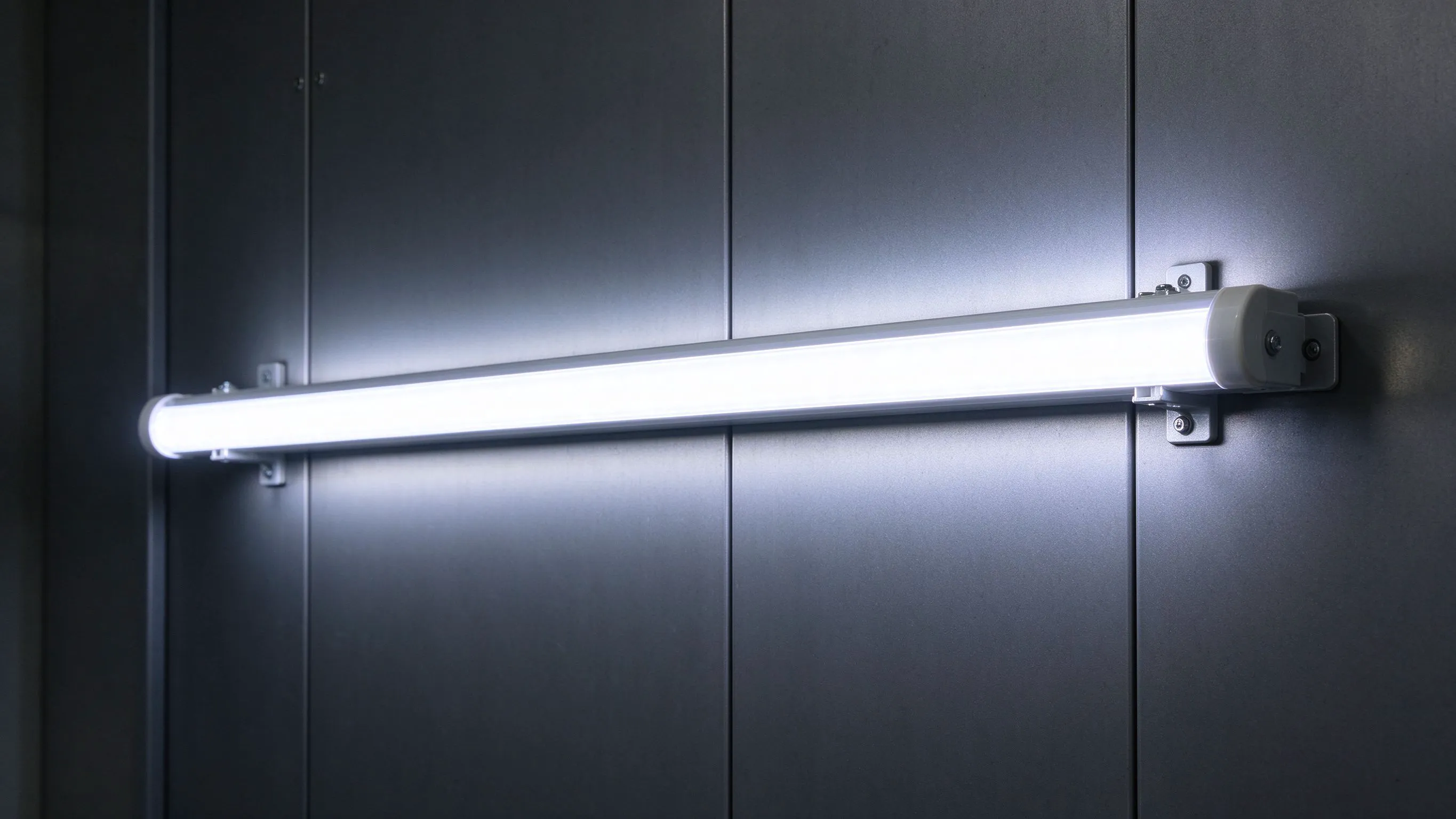
The two failure modes standoffs cause
Interior neon on a panel usually hangs on two end clips and looks fine. Once you get above a 1.5 metre straight run, that stops working. Too few standoffs and the tube sags or vibrates, which fatigues the end cap. Too many, too close, and the back panel behind the tube lights up, because the diffuser is essentially pressed against it.
The job is finding the rhythm where the tube is mechanically stable but optically free. That rhythm depends on tube section, panel material, and whether the panel is reflective or matt.
The spacing range I work to

For panel-mounted neon I start at 300 to 400 mm centre-to-centre on small sections (10 to 12 mm), and up to 450 to 500 mm on bigger sections (18 to 25 mm). The tube should not visibly flex between clips when you press it with a finger. If it deflects more than 2 mm, the spacing is too wide.
Spacing scales with section; gap controls halo.
| Tube section | Standoff spacing | Wall gap from panel |
|---|---|---|
| 10-12 mm | 300-350 mm | 10-12 mm |
| 14-16 mm | 350-450 mm | 12-18 mm |
| 18-25 mm | 450-500 mm | 18-25 mm |
The gap off the panel matters as much as the spacing. I keep the back of the tube 10 to 25 mm from the panel. Below 10 mm, even a matte panel picks up a glow; above 25 mm, the standoffs themselves start to read as dots against the panel.
Panel material changes the maths

A white or light panel reflects the tube back and makes the halo look worse, so I open the gap by a few millimetres and use a standoff with a black gasket. A dark powder-coated or black acrylic panel absorbs the spill, and I can sit the tube a little closer because nobody sees the halo. Brushed aluminium is in between; it scatters the spill sideways rather than back, so the gap can be on the tighter side.
- Light panel: add 3 to 5 mm to the gap; use a black standoff base.
- Dark panel: gap can be on the minimum side.
- Reflective or mirror panel: keep gap at 20 mm minimum and add a black backing strip.
Corners, ends and long runs
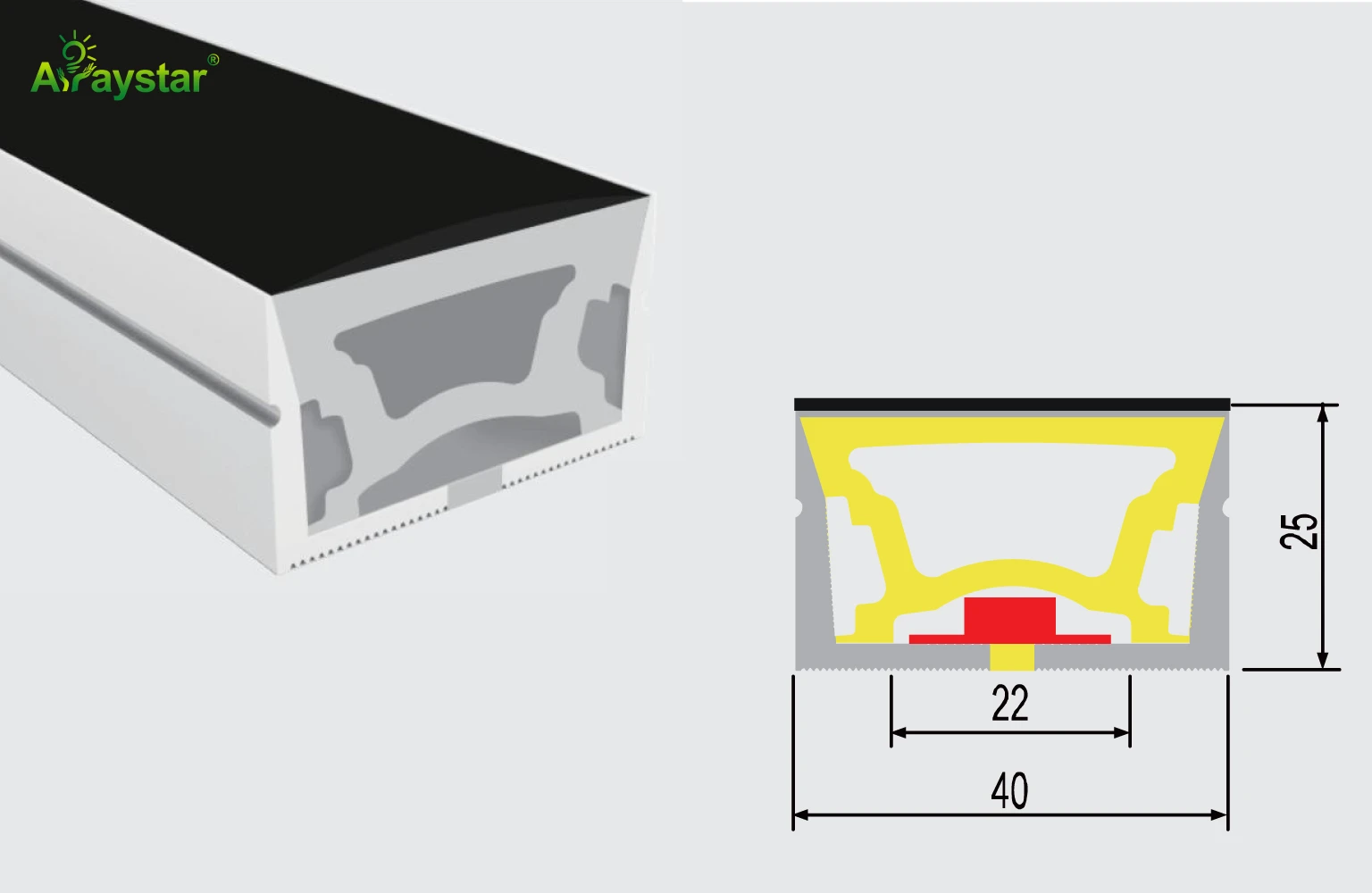
I add a standoff within 50 mm of every bend, and I never put a clip exactly at a corner, the corner is already stressed. On runs longer than 3 metres, I treat the middle as the fixed point and let the two ends float, which helps with thermal movement. For RGB pixel tubes like the 4025, I also check that the standoff does not cover a pixel; a clipped pixel reads as a dead dot.
On a panel, the standoff screws go into the panel itself, not into a hollow aluminium extrusion with thin walls. I back the screw position with a nut or a rivet nut, otherwise the first service visit strips the thread.
The on-site adjustment
After I power the sign on, I step back about 3 metres and look for two things: any visible standoff as a dark or bright dot, and any halo behind the tube. If I see a dot, that clip is too close to the panel. If I see a halo, the gap is too small. I have loosened and moved clips on the ladder more often than I care to admit, and it is a ten-minute adjustment that makes the sign look finished.
- Press the tube between clips; deflection should be under 2 mm.
- Check bends have an extra standoff within 50 mm.
- Step back 3 metres at night and look for dots and halo.
- On RGB tubes, confirm no pixel is hidden under a clip.
Recommended Products
Frequently Asked Questions
How far apart should neon standoffs be on a back panel?
I use 300 to 350 mm centres for 10 to 12 mm tubes and up to 450 to 500 mm for 18 to 25 mm tubes. The quick test: press the tube between clips; if it flexes more than 2 mm, add a standoff. Add an extra clip within 50 mm of every bend.
Why does my back panel glow behind the neon tube?
The tube is sitting too close to the panel. Below about 10 mm gap, even a matte surface picks up a halo. Open the standoff gap to 12 to 25 mm depending on tube size, and use a black gasket on light panels. If the panel is white, also consider a black backing strip behind the run.
Can I space standoffs wider on a thick 25 mm tube?
Yes, within reason. A stiffer section supports itself better between clips, so I go to 450 to 500 mm instead of 350 mm. But the gap off the panel also grows, because the thicker tube throws more light. If you go to 500 mm spacing, keep the panel gap at 20 to 25 mm.
Should I put a standoff exactly at a 90-degree corner?
No. The corner is already a stress point, and clamping it makes the stress worse. Put an extra standoff within 50 mm on either side of the bend, but leave the corner itself free. That lets the bend flex slightly with temperature instead of being locked.
Does RGB neon need different standoff spacing?
The spacing is the same, but you must make sure the clip does not cover a pixel. RGB tubes run pixels every few tens of millimetres, and a covered pixel reads as a dark dot on a chasing colour. I align clips in the gaps between pixels and double-check at night.
Need help with your LED project?
Get factory-direct pricing, free samples and engineering support within 24 hours.
Email: info@arraystarled.com | Phone: +86-0755-2103-6746 | WhatsApp: 0086 1581 8514 077
Need to size your power supply? Use our LED Strip Power Calculator to find the right driver in seconds.