Parallel Wiring LED Strips: Daisy Chain vs Home Run
- 2026-09-18 18:08
- /
- Arraystar
Quick Answer
For most LED strip projects, wire every branch home-run — each section returns independently to the driver or a distribution bus. Daisy-chaining strips in one series loop is simple but accumulates voltage drop and current on every segment, so the far end dims. Home-run parallel wiring keeps each branch bright and independent.
📑 Table of Contents
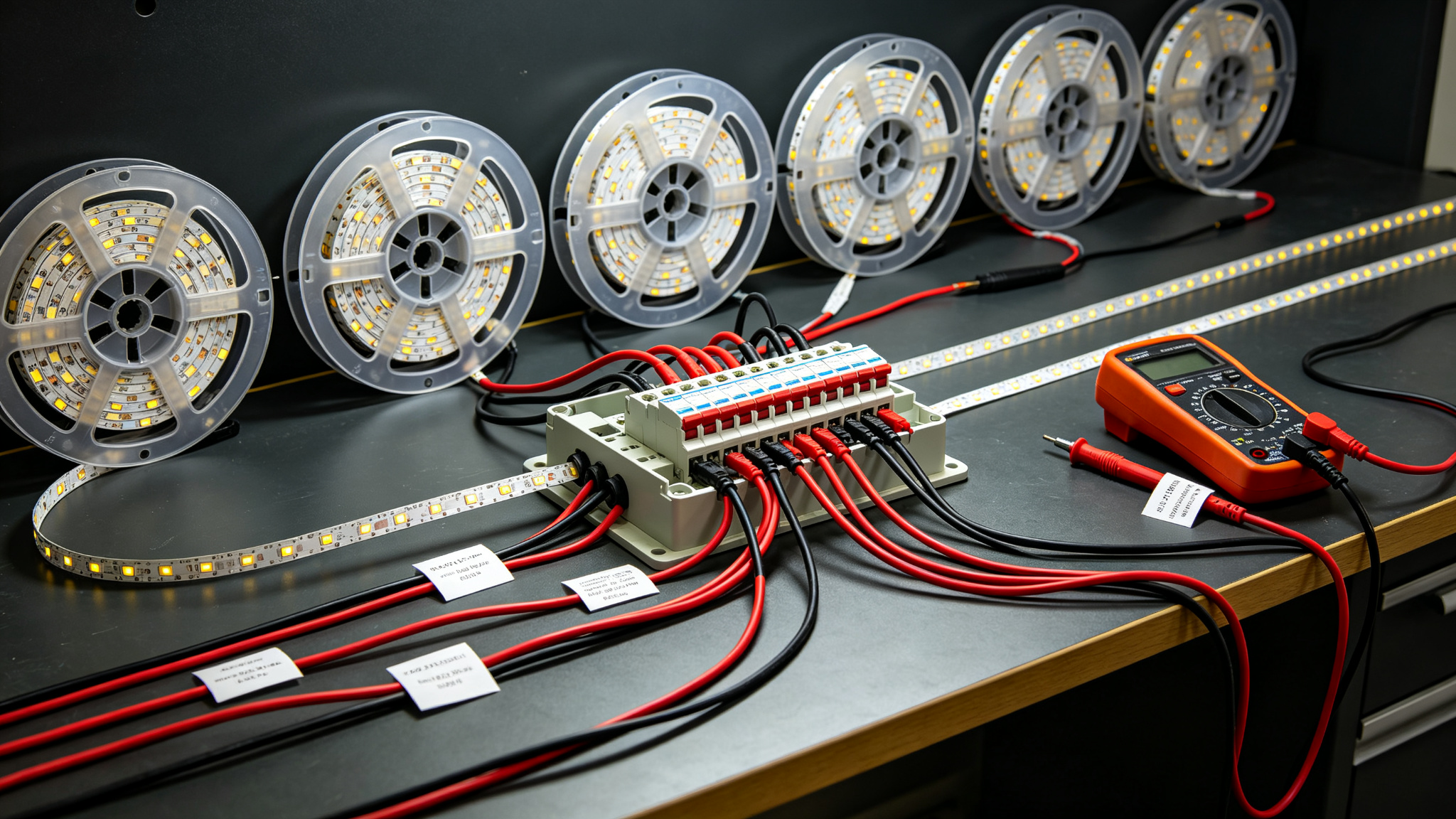
Parallel home-run wiring — every branch fed independently back to a common distribution point.
Daisy Chain vs Home Run: What They Actually Mean
Two words get used loosely on job sites, so let’s pin them down. A daisy chain means you link the output of one strip segment to the input of the next — like a train, where current passes through each section on its way to the end. A home run (parallel wiring) means every strip or branch has its own pair of wires running back to a central power source or distribution bus.
The difference is not cosmetic. In a daisy chain, the first segment’s feed wire carries the current for everything behind it — the wire heats and voltage drops cumulatively. In parallel, each branch only carries its own current, so one branch’s dimness never drags down the others. For a deeper look at the underlying physics, see voltage drop in LED strips.
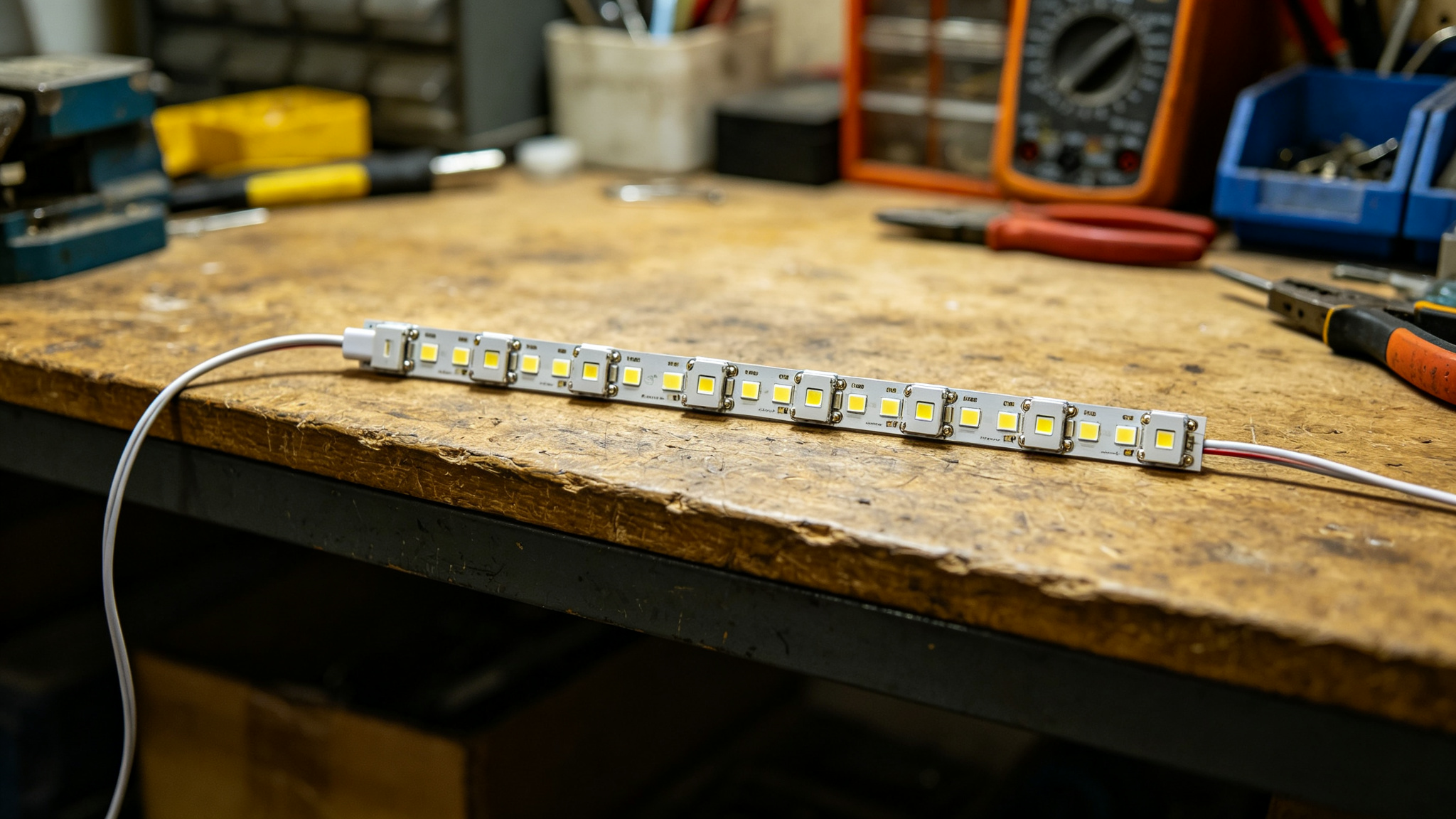
A daisy chain: one feed carries the full current for every segment downstream — simple, but cumulative.
Daisy Chain vs Home Run: Side-by-Side Comparison
| Factor | Daisy Chain (Series Loop) | Home Run (Parallel) |
|---|---|---|
| Wiring effort | Low — link segment to segment | More wire, planned layout |
| Voltage drop | Cumulative — worst at the end | Per branch — stays small |
| Current on first wire | Total for whole run | Only that branch |
| Brightness uniformity | Dims toward the end | Even to the last segment |
| Single-point failure | Bad joint kills the rest of the loop | One branch fault stays isolated |
| Cost of wire | Less wire | More wire, smaller gauge per branch |
| Best for | Short, low-power, single reels | Multi-branch, long or high-power projects |
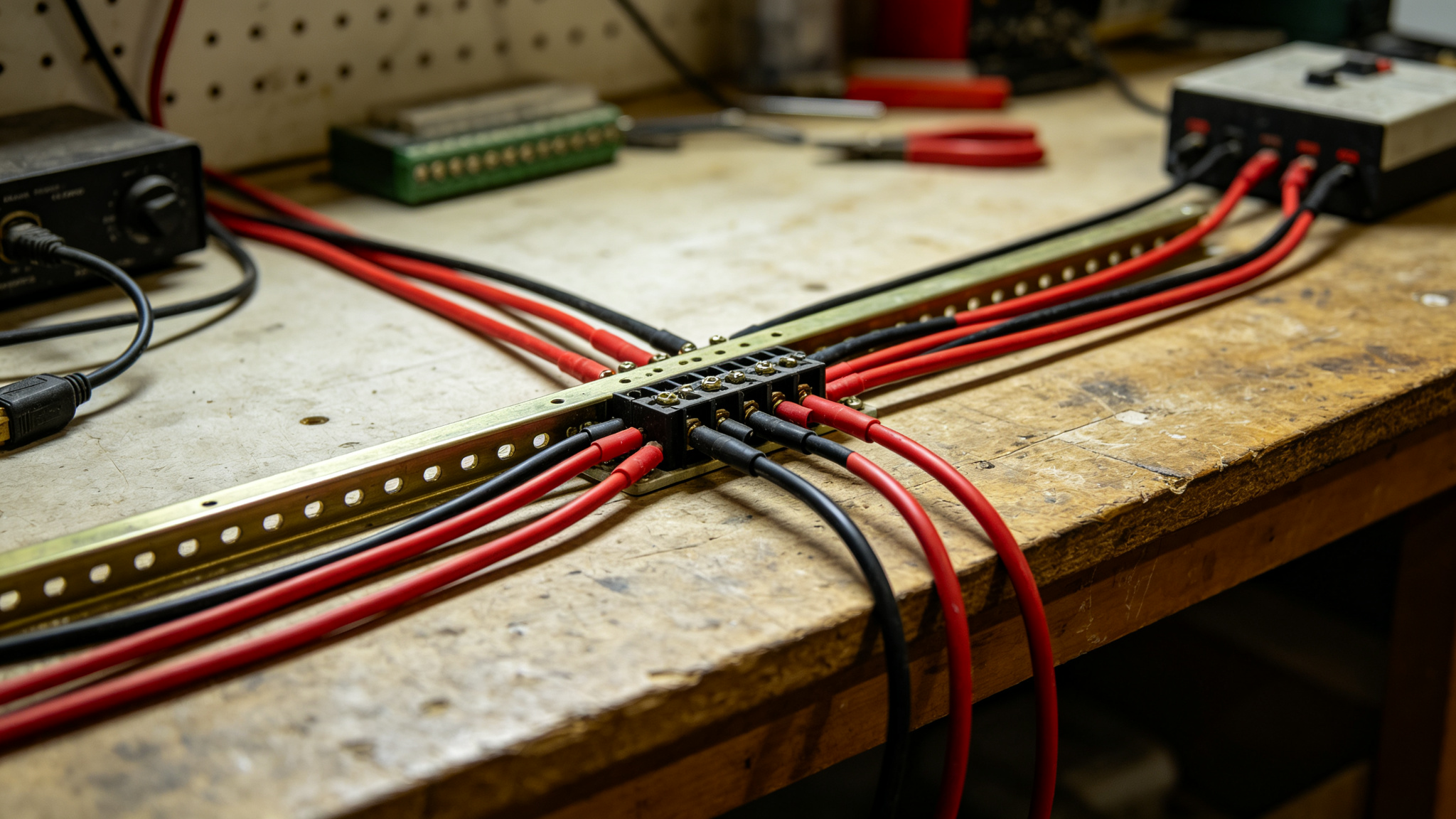
Home-run layout: each branch returns independently, so no segment carries another segment’s current.
Why Daisy Chains Fail at the Far End
Picture a 10 m daisy chain of 24 V strip. The wire feeding meter 1 must carry the current for meters 1 through 10; the wire feeding meter 5 only carries meters 5 through 10; the last meter’s link carries just itself. Because each upstream conductor carries more current over a longer path, voltage loss piles up, and the LEDs at the far end visibly dim and warm-shift. In the worst cases, the first conductor in the chain also runs hot.
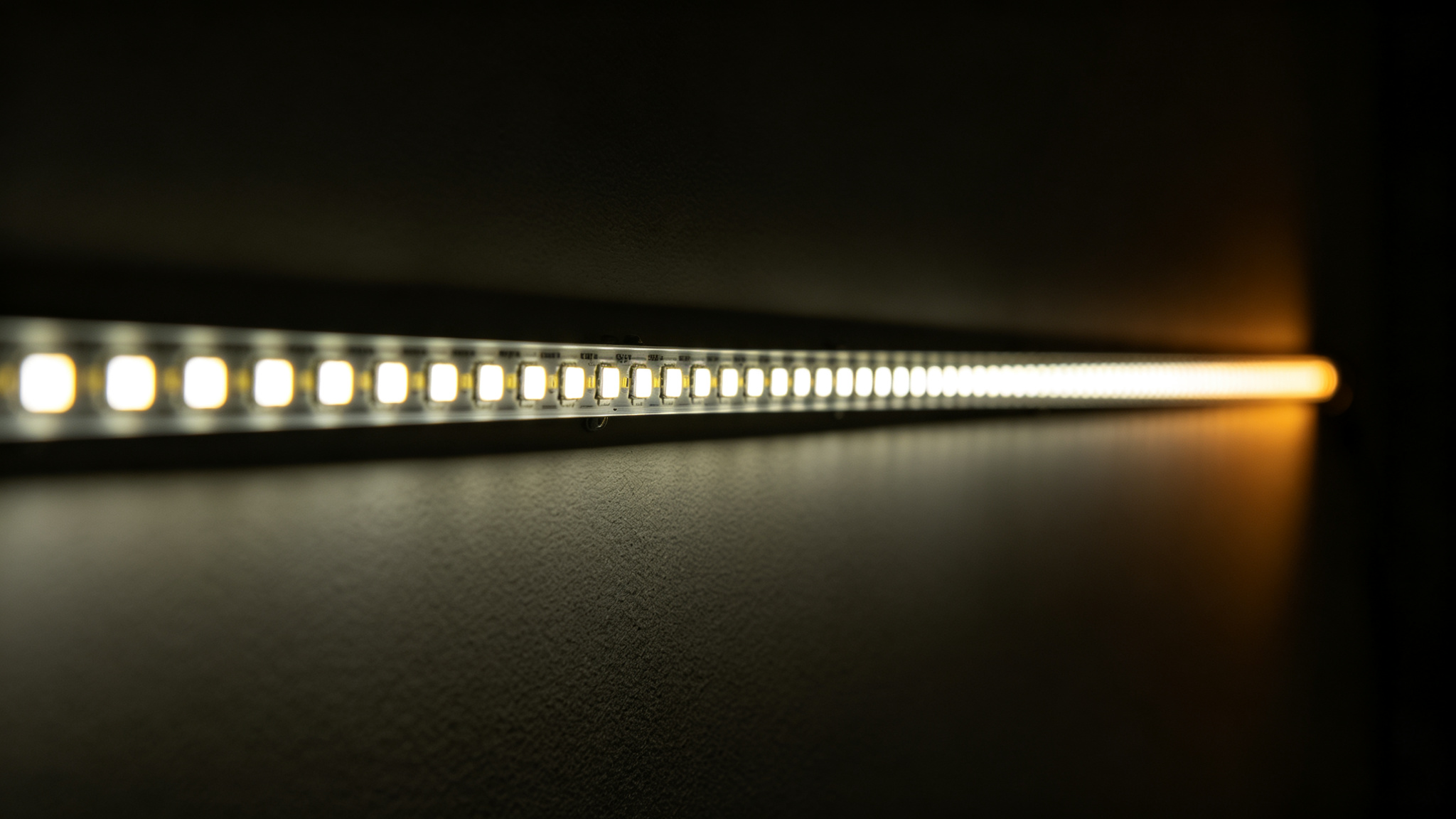
The classic symptom: bright at the feed, fading and warming toward the far end of a long daisy chain.
Rule of thumb: if a run is longer than ~5 m on 12 V or ~10 m on 24 V, stop daisy-chaining. Either home-run each branch, inject power mid-run, or move to 48 V — see the voltage guide.
How to Wire a Proper Parallel Home-Run System
Build a star, not a train. Start from the driver’s + and − terminals and distribute power to a bus bar or distribution block; from there, run an independent pair of wires to each strip branch. Use appropriately sized gauge per branch’s current (see our wire gauge and power guide), and keep each branch short enough to stay within its voltage-drop budget. When strips are far from the driver, add a power repeater or inject power instead of extending a single thin loop.
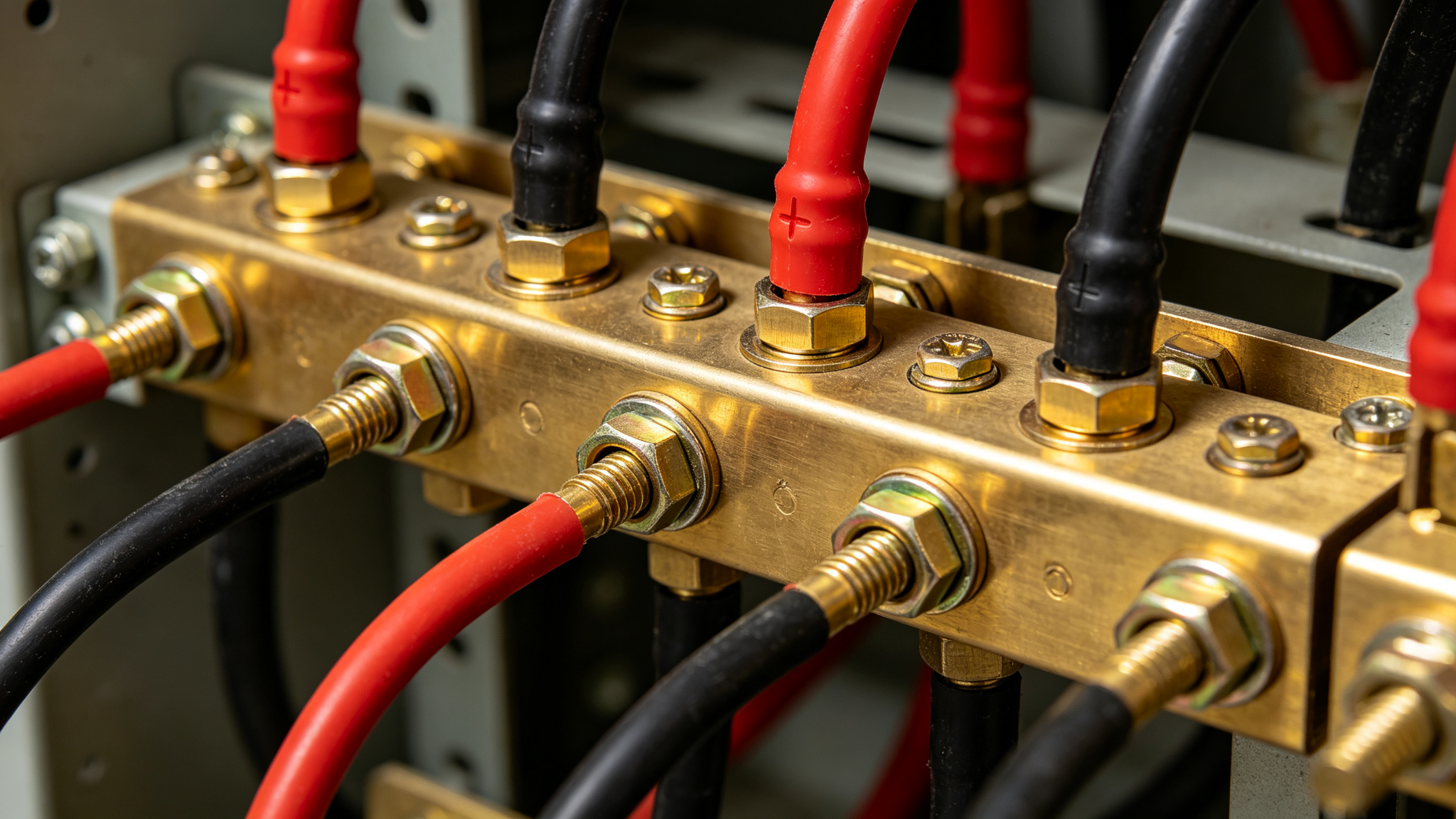
A distribution bus bar is the clean way to split one driver into many independent parallel branches.
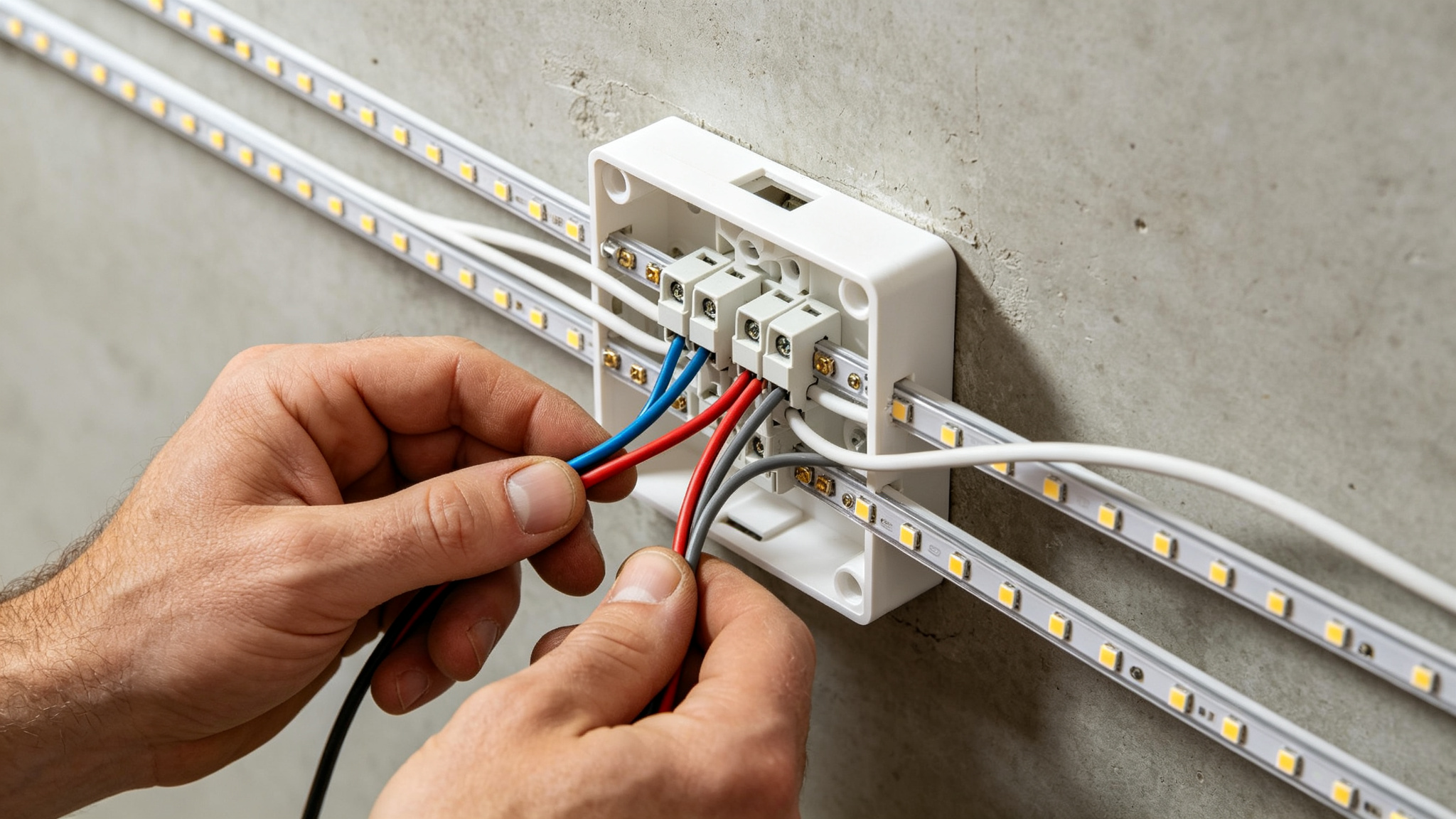
A junction box as the local distribution point — branch out neatly, label each circuit.
For connections between branches and the strip itself, reliable solder-free connectors or proper soldering beats taped twists. Read our LED strip connectors guide for the right joint per cable type.
When a Daisy Chain Is Actually Fine
This is not to say daisy chains are always wrong. They are perfectly acceptable when:
- The whole load is a single reel under its rated length (e.g. a 5 m 24 V strip fed from one end).
- Power is fed from both ends of a longer line, so each segment only sees half the loop.
- The branches are low wattage and short, so cumulative drop stays under 3%.
- You deliberately accept a slight gradient for a decorative effect.
Once you add multiple furniture runs, long coves or high-power bars, switch to home-run parallel wiring — it costs a little more in cable and planning and pays back in uniform light and reliability.
Recommended Products
Frequently Asked Questions
Is it OK to daisy-chain LED strips together?
Yes for a single reel within its rated length or a short, low-power run. It is not ideal for long or multi-branch projects, because the feed wire carries cumulative current and voltage drops toward the end. For anything longer than ~5 m on 12 V or ~10 m on 24 V, use home-run parallel wiring or power injection.
What is the difference between series and parallel LED strip wiring?
In a daisy chain (series loop), current passes through each segment in turn, so upstream conductors carry the whole run’s current. In parallel (home run), each branch returns independently to the power source, so each conductor only carries its own branch. Parallel is more efficient and keeps every branch bright.
Do parallel LED strips need their own wires back to the driver?
Ideally yes — each branch runs its own pair of wires to a distribution bus or the driver terminals. If runs are very short, a common bus bar with short drops is an acceptable, compact version of the same idea.
Can I daisy-chain from both ends of a long LED strip?
Yes — feeding power from both ends of a single long strip is a standard trick that roughly halves the voltage drop and brightens the middle. It is a form of two-point injection and works well on 24 V runs up to about 10 m.
Planning a multi-run LED lighting layout?
Get factory-direct wiring advice, repeaters, drivers and a custom quote within 24 hours.
Get a Quote