
RGB vs RGBW vs RGBCCT vs Tunable White LED Strips: The 5 Architectures Explained
- 2026-09-29 12:07
- /
- Arraystar LED
Most color problems come from buying the wrong color architecture. Pure RGB makes weak, tinted white; RGBW fixes white but only at one temperature; RGBCCT (5-in-1) adds warm and cool white for full color plus tunable white; and dedicated tunable-white strip gives the best whites with no color channels you'll never use. Buy the minimum architecture that produces the white quality and color you actually need.
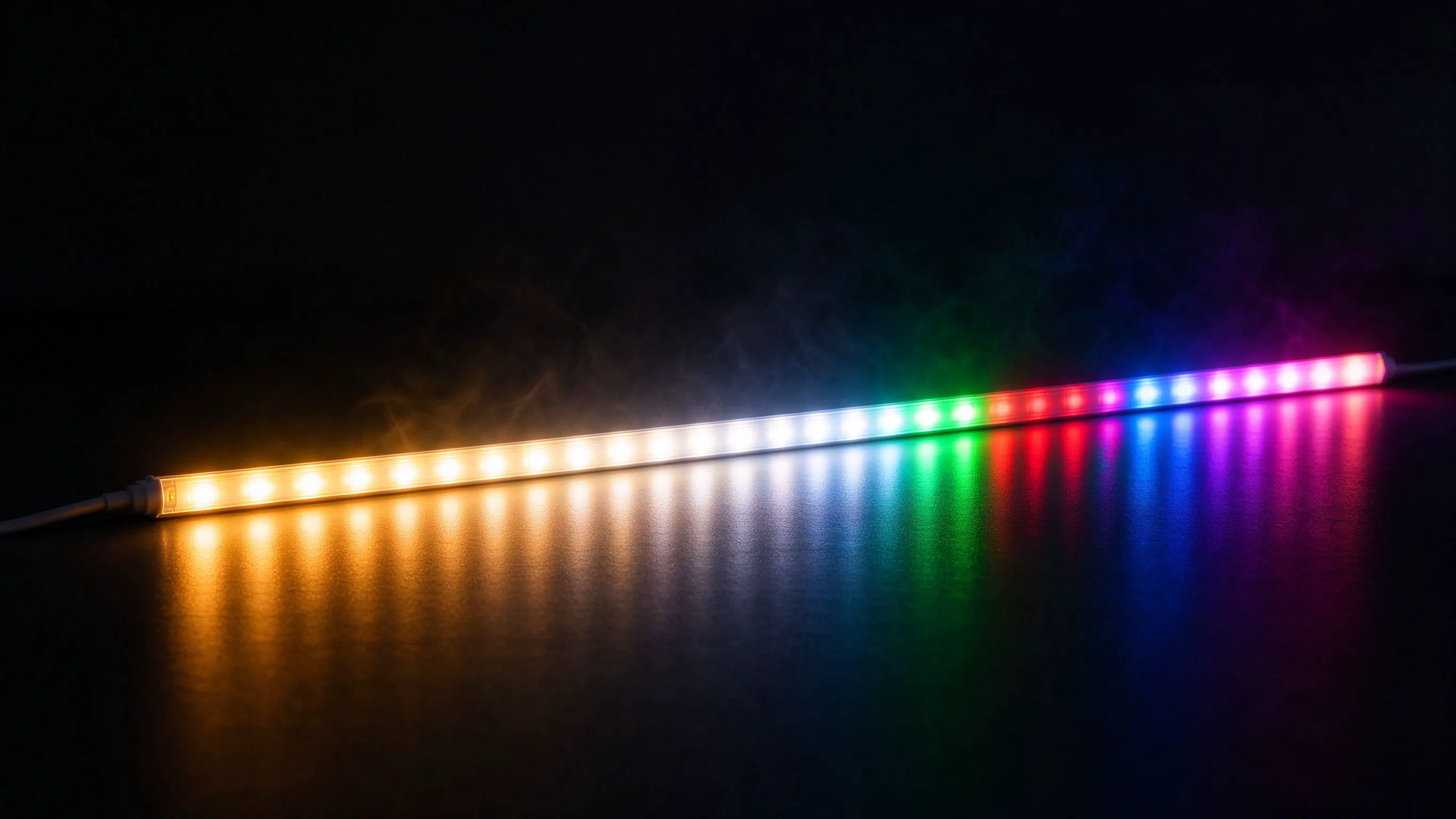
The Five Color Architectures on the Shelf
Walk a strip catalog and the color options look like alphabet soup, but there are really five architectures, each trading color range against white quality, channel count and price. Understanding what each chip physically contains makes the choice obvious.
The five architectures compared.
| Type | Channels / chips | Color | White quality | Best for |
|---|---|---|---|---|
| Single-color white | 1 | White only | Excellent, fixed CCT | General lighting |
| CCT / tunable white | 2 (warm+cool) | White 2700-6500K | Excellent, tunable | Rooms needing warm/cool |
| RGB | 3 (R/G/B) | Full color | Poor, tinted mix | Pure color effects |
| RGBW | 4 (R/G/B+white) | Color + one white | Good at fixed white CCT | Color plus usable white |
| RGBCCT (5-in-1) | 5 (R/G/B+warm+cool) | Color + tunable white | Very good, tunable | One-strip-does-all premium |
Single-Color and Tunable White: When You Don't Need Color at All
If a space only ever needs white - which is most homes, offices and task lighting - single-color or CCT-tunable strip is the correct, cheapest, highest-quality answer. Tunable-white strip carries warm and cool white LED strings and blends them to any CCT from warm to daylight, with far better CRI and efficiency than any RGB product trying to fake white. Adding RGB channels you never use just lowers white density and adds controller cost.
- Choose tunable white where scenes shift between warm evening and neutral task light.
- Fixed single-color is cheapest and gives the densest, most efficient white.
- Never use RGB as a general white source - the mixed white is the giveaway.
RGB: Maximum Color, Compromised White
Classic RGB combines red, green and blue emitters and can mix a huge color gamut - but to make white it fires all three at once, producing a tinted, lower-CRI, slightly dim 'white' that reads as lavender or pink against real white light. RGB is the right buy for saturated accent color, gaming setups and signage where white barely matters, and the wrong buy for ambient lighting you'll run in white most of the time.

- Use where saturated color is the point and white is rare.
- Expect tinted, lower-CRI white if you don't add a white channel.
- Needs an RGB controller; dimming and color handled over 3 channels.
RGBW: Color Plus a Genuine White
RGBW adds a dedicated white LED to the RGB trio so whites come from a proper white emitter instead of a color mix. That single addition makes the strip usable for both ambient white and color scenes - the reason RGBW COB is popular in cove, media rooms and hospitality. The catch is the white is one fixed CCT (commonly 3000K, 4000K or 6000K - choose when ordering), so you can't warm and cool it.

- Pick the built-in white CCT to match the room - it can't be changed later.
- Good compromise where you mostly want white with occasional color.
- RGBW controllers are needed; 4 channels rather than 3.
RGBCCT / 5-in-1: One Strip, Color and Tunable White
RGBCCT (also called RGBCW or 5-in-1) puts red, green, blue, warm white and cool white emitters in one package - five channels. You get full color plus genuinely tunable, high-quality white from warm to daylight, so a single run can be a cozy 2700K cove on Monday and a brand-color feature on Friday. It's the most versatile architecture and the most expensive, and it needs a 5-channel controller and enough LED density to keep both color and white smooth.

- Best for multi-use spaces that genuinely switch between white and color.
- Requires a 5-in-1 (RGBCCT) controller - an RGBW controller won't drive it fully.
- Higher cost and slightly lower per-color density than dedicated strip.
Matching Controller, Wiring and Density
Controllers must match channel count - a common ordering mistake.
| Strip type | Controller channels | Typical control |
|---|---|---|
| Single white | 1 (dim) | Standard dimmer |
| CCT tunable white | 2 | CCT dimmer/panel |
| RGB | 3 | RGB controller / remote / app |
| RGBW | 4 | RGBW controller |
| RGBCCT 5-in-1 | 5 | RGBCCT controller (e.g. SP63x series) |
Two practical traps: first, the controller channel count must match the strip or channels go dead; second, in multi-channel strips each color shares PCB space, so check the white output density - premium high-LED-count COB packs enough emitters to keep white bright and even.
Recommended Products
Frequently Asked Questions
What's the difference between RGB, RGBW and RGBCCT?
RGB has red/green/blue for color but makes only a tinted white; RGBW adds one fixed-CCT white chip for usable white plus color; RGBCCT (5-in-1) adds both warm and cool white, giving full color plus fully tunable high-quality white, at the cost of a 5-channel controller and higher price.
Is RGB white light any good?
No for general lighting - mixing red, green and blue produces a tinted, lower-CRI, dimmer white that looks lavender or pink next to real white. If you need both color and proper white, step up to RGBW or RGBCCT, or run separate dedicated white strip.
Do I need RGBW or tunable white strip?
If you mostly need white but want to shift between warm and cool, use dedicated CCT tunable-white strip for the best white quality. If you want color scenes plus white at one fixed temperature, use RGBW; if you want color plus fully tunable white, use RGBCCT.
Can I use an RGB controller on an RGBW or RGBCCT strip?
Not fully. An RGB controller drives only three channels, so the extra white channel on RGBW (4-channel) or warm/cool whites on RGBCCT (5-channel) won't work. Match the controller to the strip's channel count - RGBW needs a 4-channel and RGBCCT a 5-in-1 controller.
Which is best for a bedroom or living room, RGBW or RGBCCT?
For living spaces that run mostly in white, dedicated tunable-white gives the best and most efficient white; if you want occasional color plus white, RGBW with a white CCT chosen to match the room works, and RGBCCT is the premium pick if you want both full color and freely tunable warm-to-cool white in one run.
Need help with your LED project?
Get factory-direct pricing, free samples and engineering support within 24 hours.
Email: info@arraystarled.com | Phone: +86-0755-2103-6746 | WhatsApp: 0086 1581 8514 077
Need to size your power supply? Use our LED Strip Power Calculator to find the right driver in seconds.







