
Solderless Connectors vs Soldering for COB & Neon LED Strips: Reliability in the Field
- 2026-09-29 12:07
- /
- Arraystar LED
Solderless connectors win on speed and rework in dry, accessible installs; soldering wins on permanent, high-current, wet or high-vibration joints. The failures people blame on 'bad connectors' are usually mis-matched connectors, unsealed outdoor joints, or joints carrying more current than the clip was rated for. Match the joint to the environment and you'll stop chasing intermittent lights.
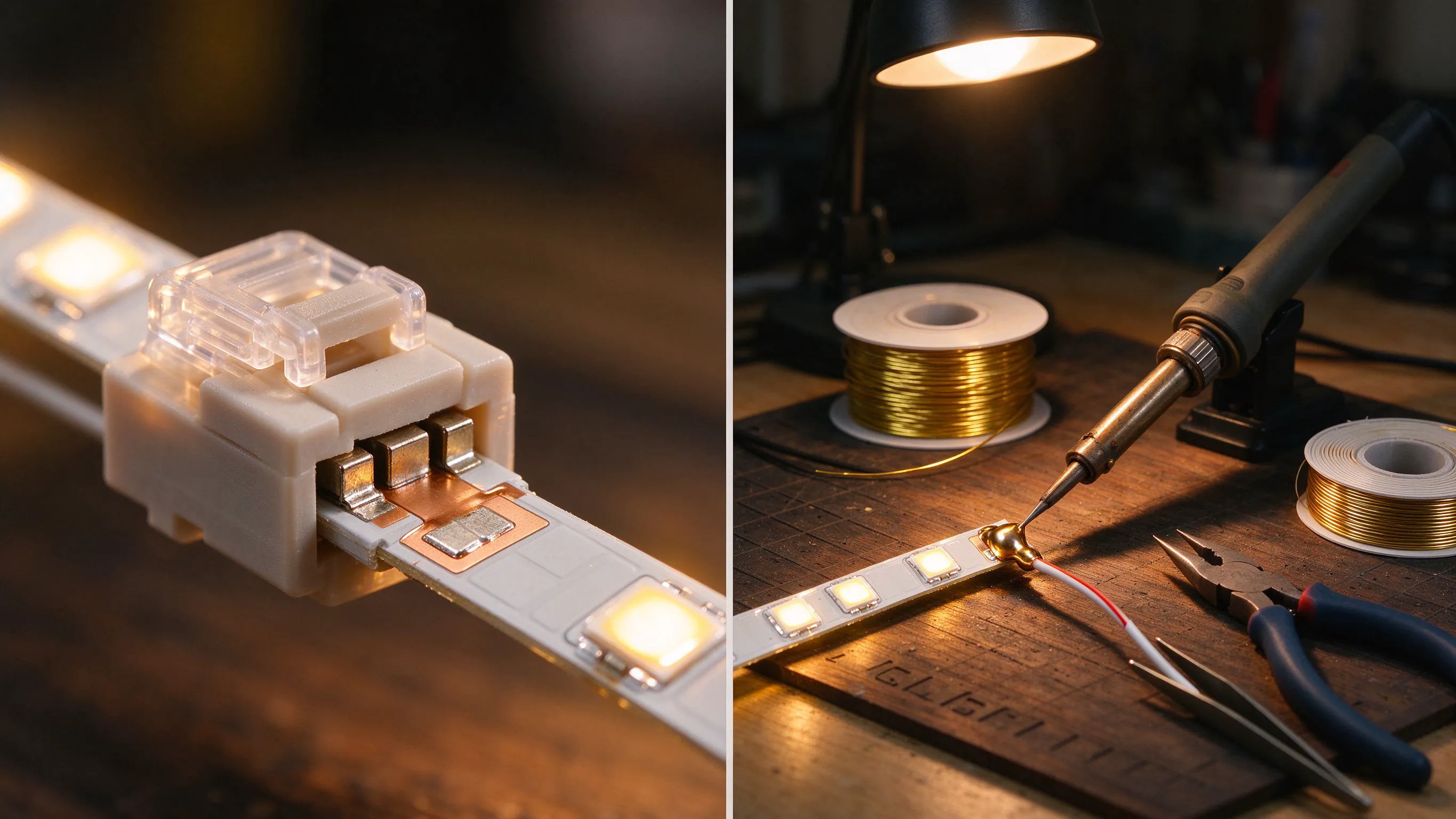
Two Ways to Join a Strip
Every strip install needs joints - between lengths, around corners, from strip to lead wire, and at power feeds. You either solder the copper pads directly, or use a mechanical solderless connector that clamps piercing contacts or spring pins onto the pads. Both are legitimate; they're optimized for different jobs, and most failures come from using the wrong one in the wrong place.
Where each joining method genuinely wins.
| Factor | Solderless connector | Soldered joint |
|---|---|---|
| Speed on site | Very fast, no tools/iron | Slower, needs iron + skill |
| Rework / reposition | Easy, reusable-ish | Permanent, must re-tin |
| Electrical reliability | Good if matched & dry | Excellent, lowest resistance |
| Current capacity | Limited by clip contacts | High, sized by wire/solder |
| Waterproofing | Only sealed outdoor types | Heat-shrink + glue, fully sealed |
| Vibration / long-term | Can loosen over time | Most robust |
When Solderless Connectors Earn Their Keep
Snap-on connectors are the sensible default for quick indoor jobs, rented spaces, prototypes, and anywhere you might reconfigure - under-cabinet runs, exhibitions, shelving and free-cut strip that gets trimmed on site. They need no soldering iron, no skill, and they come apart if a length changes. For free-cut COB where every cut point is a possible join, clip connectors make an install genuinely field-adjustable.
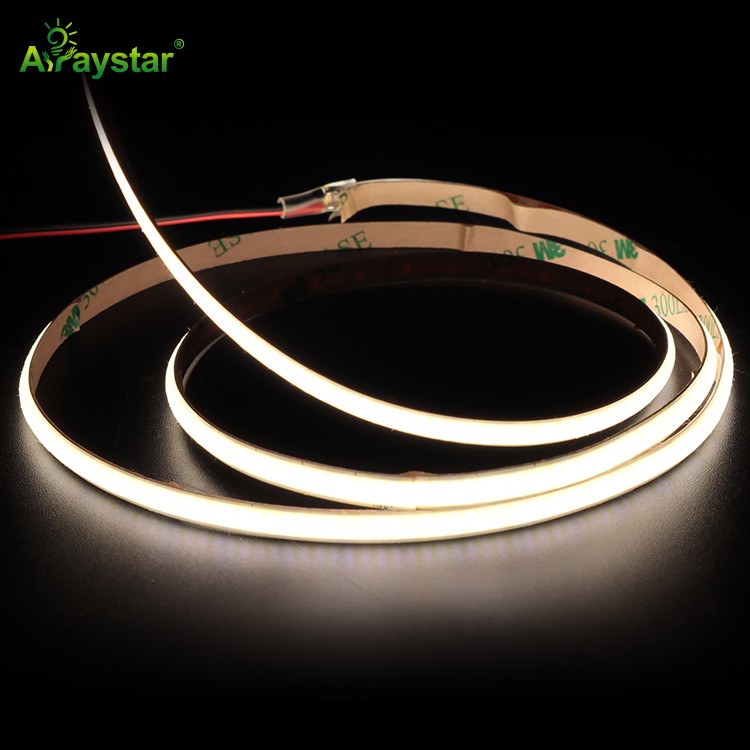
- Indoor, dry, accessible and likely-to-change installations.
- Fast turnaround jobs where bringing an iron is impractical.
- Free-cut and custom-length strip trimmed on site.
- Low-to-moderate current runs within the connector rating.
The Connector Failure Modes (and How to Avoid Them)
Connectors get a bad reputation, but the root causes are predictable. The number-one issue is mismatch - a connector built for 8mm single-color strip forced onto 10mm RGB, or a top-contact clip on bottom-pad strip - so the pins don't land on the pads. Second is current: a tiny clip has real resistance and isn't meant to carry a long high-wattage run. Third is using indoor clips outdoors where moisture and corrosion do the rest.
- Match connector to exact PCB width, pad layout and number of channels.
- Clean the pads, fully insert the strip, and close the clip squarely.
- Respect current limits - feed power at multiple points on long runs instead.
- Never use non-sealed clips in wet locations; corrosion = intermittent light.
- Check the joint by gently pulling and by measuring voltage after a heat cycle.
Soldering: The Reliable, Permanent Joint
A properly tinned solder joint gives the lowest-resistance, highest-current, most durable connection, which is why permanent installs, high-wattage runs, outdoor and mobile (vehicle, marine) work default to it. Solder both the strip-to-wire feed and strip-to-strip joins, then insulate and, outdoors, seal with glue-lined heat-shrink. It takes skill and an iron, but a soldered joint correctly made outlasts the strip.
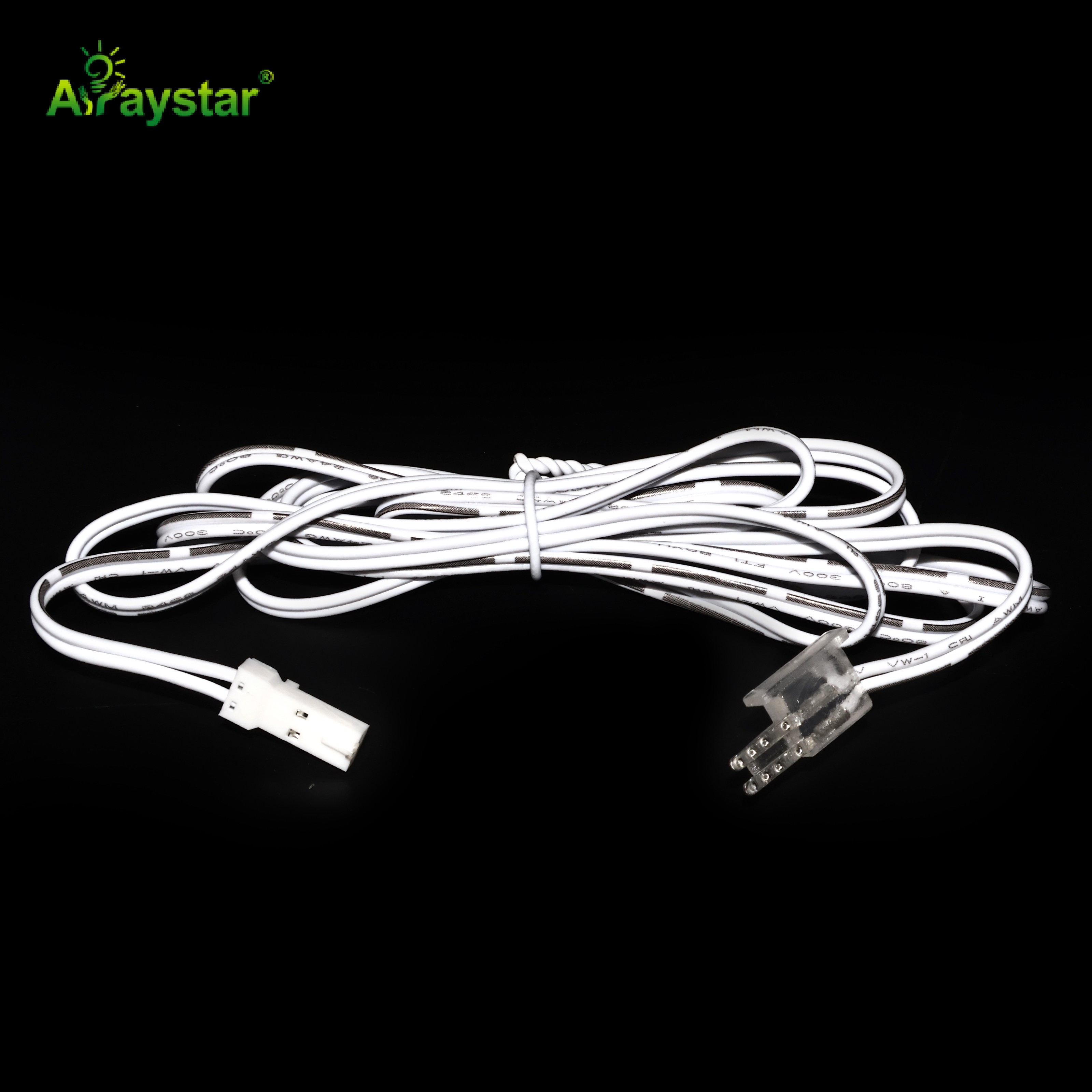
- Use for permanent, hidden, high-current or long-run power feeds.
- Essential in wet, outdoor, marine and high-vibration applications.
- Pre-tin pads and wire, use low-temperature iron to avoid lifting pads.
- Seal outdoor soldered joints with glue-lined heat-shrink, not plain tape.
Neon Flex Connectors Are a Special Case
Silicone neon flex uses purpose-made end caps and couplers that clamp and seal around the neon cross-section - a generic flat strip connector will not work and will leak. Use the exact connector for the neon profile dimensions (e.g. 6x12, 8x16, 10x10), and for outdoor runs choose the sealed/IP-rated versions with the end cap glued or screwed per the manufacturer's instructions.
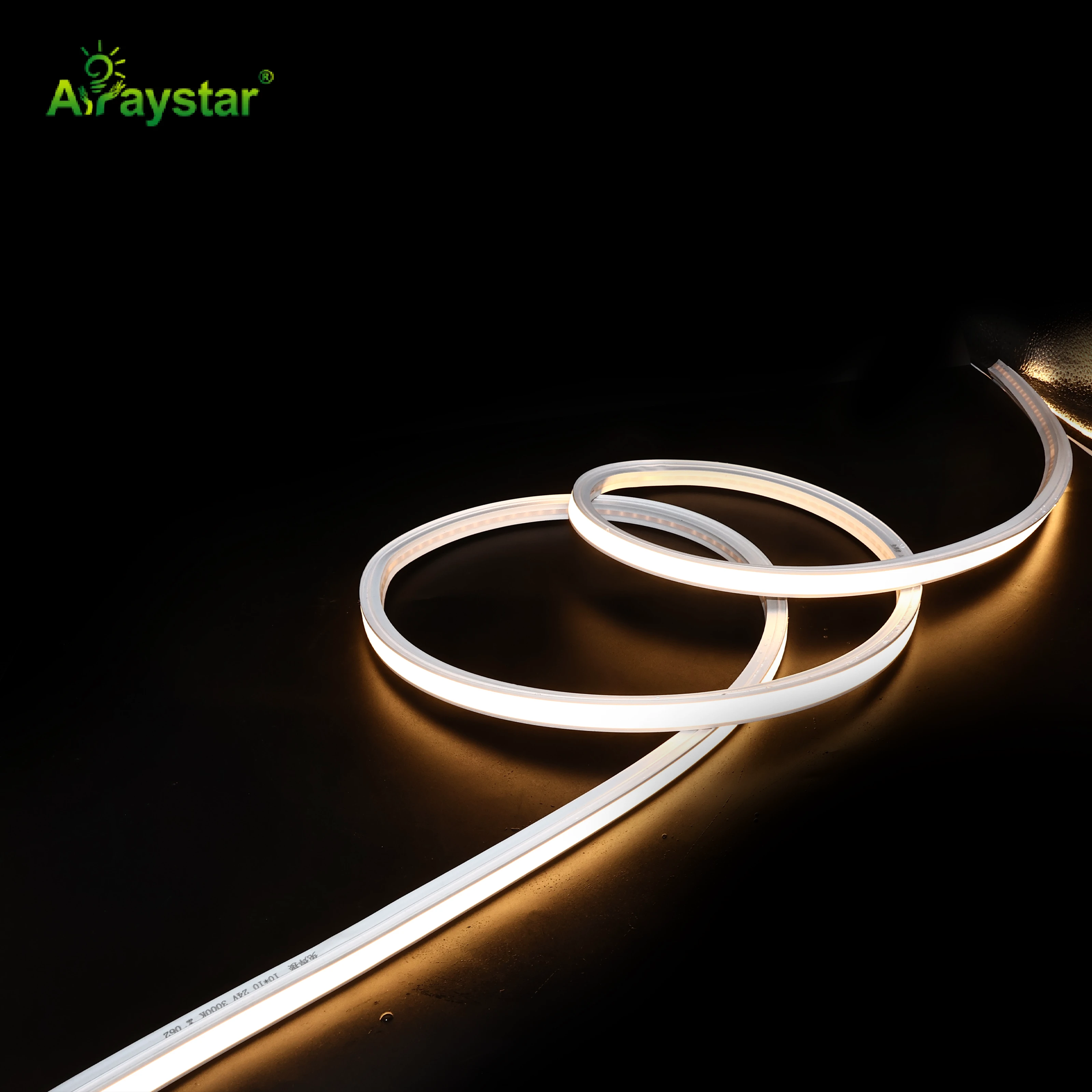
- Match the connector to the exact neon width x height - sizes aren't interchangeable.
- Sealed couplers and end caps are mandatory outdoors and in wet signage.
- A poorly seated neon connector is the most common point of water ingress.
- For permanent submerged or critical neon, soldered leads plus molded sealing win.
A Practical Decision Rule for the Job Site
Quick selection by installation environment.
| Situation | Use |
|---|---|
| Indoor, dry, may be reconfigured | Solderless clip |
| Free-cut COB trimmed on site | Matching clip, verify after closing |
| Long high-wattage power feed | Solder |
| Outdoor / bathroom / kitchen wet zone | Solder + sealed heat-shrink, or sealed IP connector |
| Vehicle / marine / vibration | Solder |
| Neon flex joins | Exact-fit sealed neon coupler |
| Permanent hidden install | Solder |
Whichever you choose, do the boring verification: power the full run, flex each joint, check voltage at the far end, and after the space goes through a heating cycle, re-check. Intermittent joints almost always reveal themselves in the first week - catch them on the bench, not after the ceiling is closed.
Recommended Products
Frequently Asked Questions
Are solderless LED connectors reliable?
Yes when matched exactly to the strip width, pad layout and channel count, used within their current rating in dry indoor conditions, and seated squarely on clean pads. They become unreliable when mismatched, overloaded with long high-wattage runs, or used outdoors without sealed IP-rated versions.
Is it better to solder LED strip lights or use connectors?
Solder for permanent, high-current, outdoor, wet or high-vibration joints because it gives the lowest-resistance, most durable connection; use solderless connectors for fast, dry, indoor and reconfigurable installs, especially free-cut strip trimmed on site.
Why do my solderless LED connectors keep failing?
Usually a mismatch (wrong width, pad layout or channel count so pins miss pads), overloading the small contacts with a long high-wattage run, or corrosion from using indoor clips in damp locations. Use the exact matching connector, clean and square the pads, feed power at multiple points, and seal outdoor joints.
Can solderless connectors be used outdoors or on neon flex?
Only sealed IP-rated connectors rated for the exact neon cross-section (such as 10x10) with sealed couplers and end caps; generic indoor clips will leak and corrode. For critical or submerged neon, soldered leads with molded or glue-sealed ends are the safer choice.
How many amps can an LED strip connector handle?
Small solderless clips are intended for modest, usually single-run currents (commonly just a few amps per contact) - exact figures vary by model, so check the datasheet. For long or high-wattage runs, don't push power through one clip; inject power at multiple points or solder the main feed and use clips only for short extensions.
Need help with your LED project?
Get factory-direct pricing, free samples and engineering support within 24 hours.
Email: info@arraystarled.com | Phone: +86-0755-2103-6746 | WhatsApp: 0086 1581 8514 077
Need to size your power supply? Use our LED Strip Power Calculator to find the right driver in seconds.







