Rigid LED Bars on Display Shelves: Uniformity vs Flexible Strip
- 2026-10-28 10:04
- /
- Arraystar LED
I used to default to flexible strip under every shelf, and I kept seeing hot spots above the product and dark gaps at the shelf ends. Switching to rigid bars solved that overnight. The bar holds distance and angle; the strip just lies there.
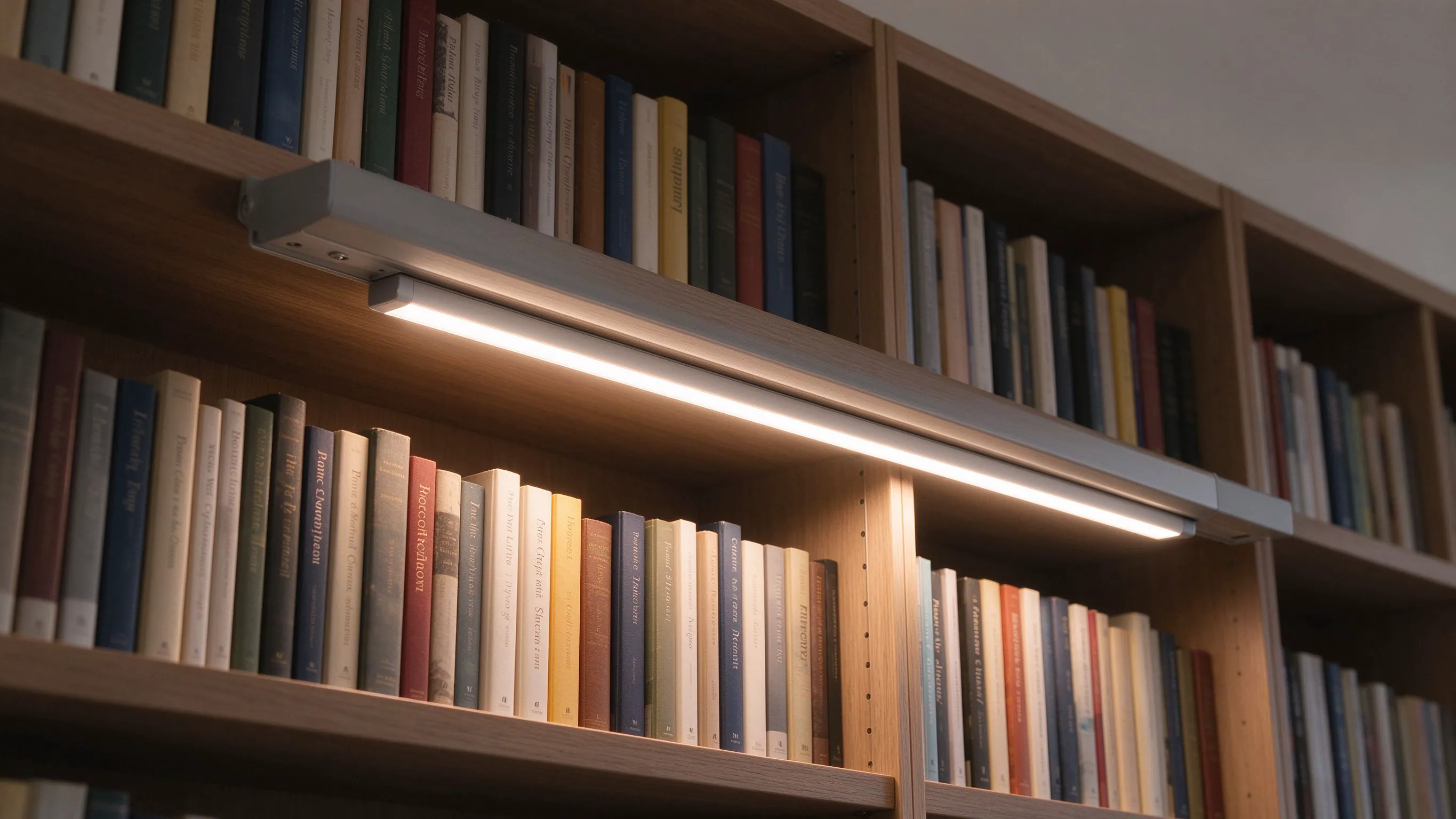
Why flexible strip disappoints on shelves
A flexible strip stuck to the front lip of a shelf emits at whatever angle the LEDs happen to point at. If the adhesive sags over a warm summer, or the strip is bent around a price-tag channel, the light lands on the shelf front edge rather than on the product face. You end up with a bright line below the bottle and a shadow on the label.
Rigid bars solve that because the extrusion fixes the LED position at a set height and a set optical angle. The bar screws or clips into a routed groove and stays there for years. On retail shelving, that repeatability is worth more than a small saving on strip.
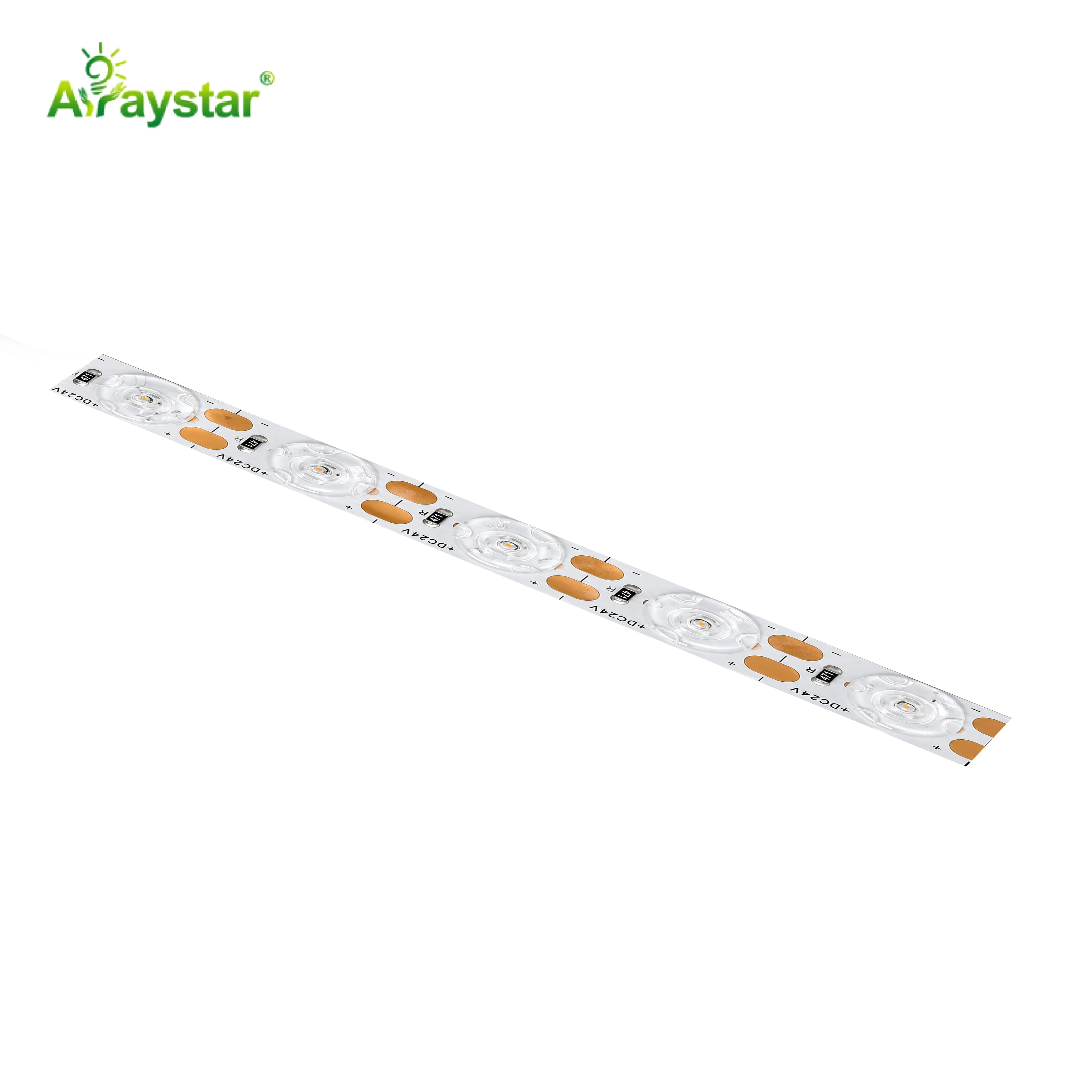
Distance, angle and the evenness budget
The three numbers I set before ordering anything are the bar height above the product, the tilt angle, and the gap between bars. For a standard 400 mm deep shelf with products standing upright, I run the bar 60 to 80 mm back from the front edge and tilt it down about 30 degrees. That puts the brightest patch on the label, not on the shelf board.
Setback and tilt scale with shelf depth; deeper shelves need two bars.
| Shelf depth | Bar setback from front | Tilt angle | Typical bar spacing |
|---|---|---|---|
| 300 mm | 40-50 mm | 25 deg | whole shelf one bar |
| 400 mm | 60-80 mm | 30 deg | whole shelf one bar |
| 500 mm | 90-110 mm | 35 deg | two bars per shelf |
I have learned not to trust a 30-degree guess. On site I hold a sample bar up with a piece of adhesive putty and walk the shelf from the customer eye line. If I can see the LED dot directly, the bar is too low or too shallow; I re-angle it until the dot disappears.
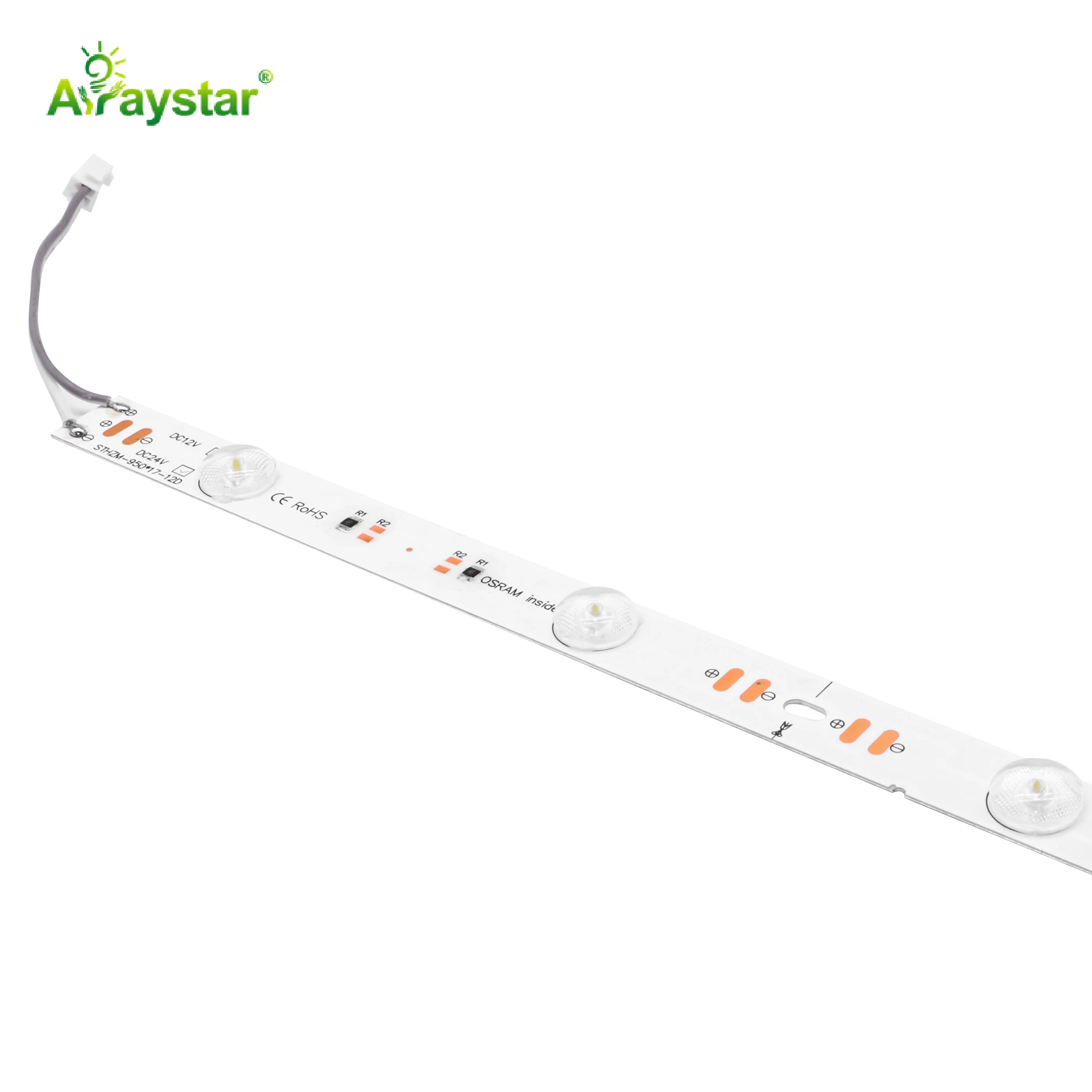
COB vs lens on a rigid bar
A COB bar looks seamless up close but throws a narrow, hot beam. A lens bar with individual optics spreads the light wider and flattens the hot spot. On a shelf where the customer is 300 to 500 mm away, the lens bar wins every time because you do not want a bright dot on the wine bottle label.
- COB bars: use for coves and feature lines where seamless light is the brief.
- Lens bars: use for shelves, display cabinets and any product-facing task.
- Diffuse lens bars: best for glossy products where a visible LED dot reads as a defect.
I once specified COB bars on a perfume counter because the client loved the seamless look. They came back two weeks later because every glossy bottle had a bright reflection. We swapped to a lens bar and the problem vanished.
Ends, corners and shelf breaks
The most common shelf lighting failure is a dark triangle at each end of the bar. That happens when the bar stops 50 mm short of the shelf end and the optics have no falloff built in. I order bars 20 mm shorter than the clear shelf width, or I add a small end lens so the spill continues.
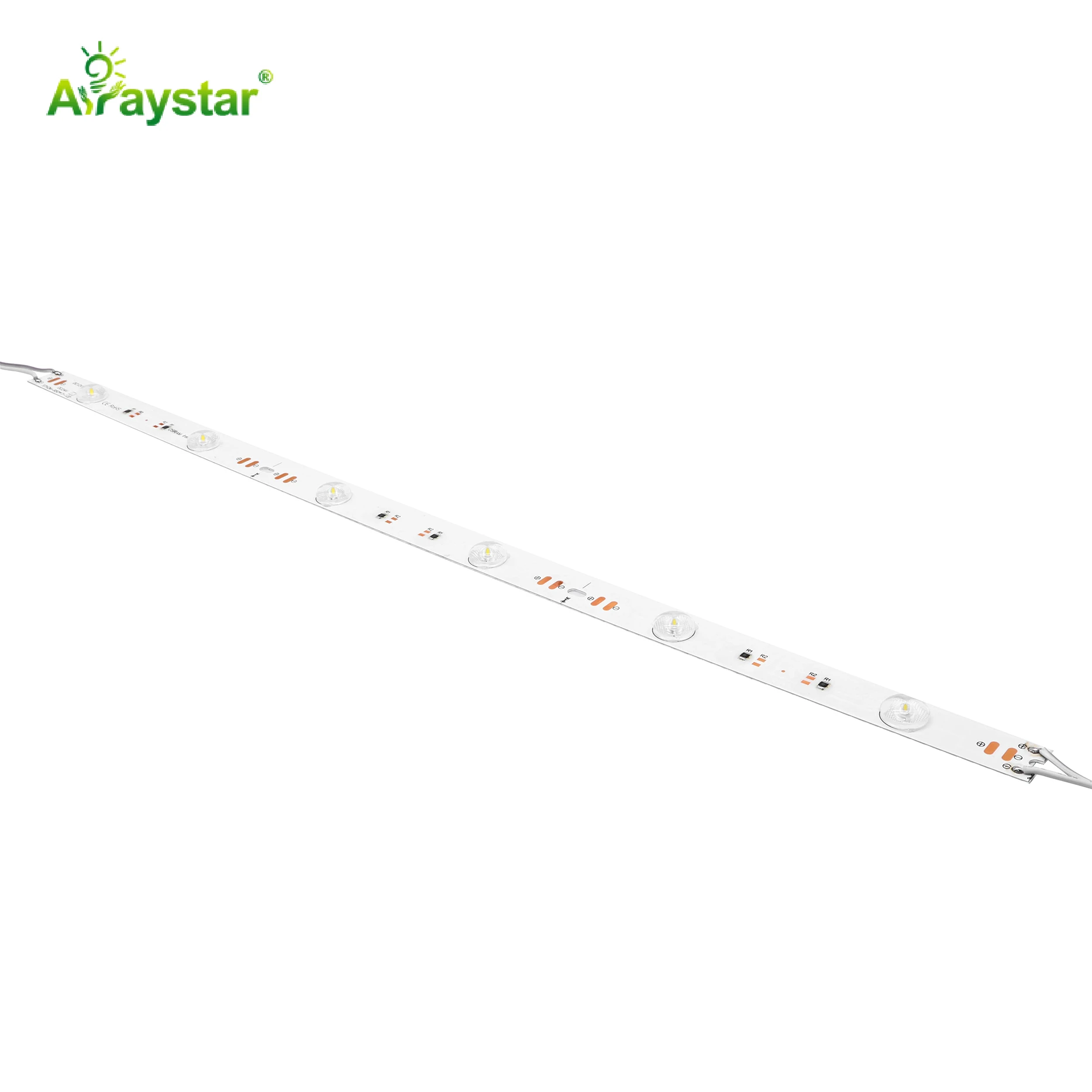
Where shelves break around a vertical divider, I do not try to run one bar through. I fit a separate short bar on each side and power them in parallel. A continuous bar bent around a divider is the first thing to fail in winter.
Powering the shelf run
Rigid bars are 24V, so you need a driver somewhere. On a run of six shelves I put one driver in the plinth at the end of the cabinet and daisy-chain the bars from the rear. Keep the total load under 80 percent of the driver rating; that derate keeps the driver cool and the colour consistent.
Recommended Products
Frequently Asked Questions
Why does my flexible strip show hot spots on the shelf?
A flexible strip lies flat and emits through a wide, untamed angle. The LEDs near the centre of the strip project straight down, while the ones closer together at the dense centre create a bright patch. A rigid bar with a lens fixes the angle and distance, so the beam lands where you aim it instead of where it falls.
How far back from the shelf front should the bar sit?
On a 400 mm shelf, I set the bar 60 to 80 mm back from the front edge and tilt it down about 30 degrees. On a 300 mm shelf, 40 to 50 mm back and 25 degrees is enough. On a 500 mm shelf, use two bars rather than pushing one further back; a single bar past 110 mm setback leaves the product face dim.
COB or lens bar for a display shelf?
Lens bar, almost always. A COB bar looks seamless but throws a narrow hot beam that creates bright reflections on glossy products. A lens bar spreads the light across the label face and hides the individual LED dot. Reserve COB for coves and feature lines where the product reflection is not the concern.
How do I stop dark triangles at the shelf ends?
Order the bar 20 mm shorter than the clear shelf width rather than running it flush to the divider. Add an end optic if the shelf is wider than the bar. Never push the bar to the very edge; the cut end caps the light and the corner goes dark. A small setback reads as even spill rather than a dark wedge.
What driver size do I need for six shelves?
Add up the wattage per bar and multiply by 1.25. If each shelf bar is 12W, six shelves is 72W connected, so I specify a 100W driver. Keep the driver in the plinth or end gable, not above the ceiling, so it is serviceable without pulling the cabinet apart. The derate keeps the driver cool for years.
Need help with your LED project?
Get factory-direct pricing, free samples and engineering support within 24 hours.
Email: info@arraystarled.com | Phone: +86-0755-2103-6746 | WhatsApp: 0086 1581 8514 077
Need to size your power supply? Use our LED Strip Power Calculator to find the right driver in seconds.