Cabinet Drawer Light Wiring That Fatigues and Breaks After Months of Sliding
- 2026-11-02 15:54
- /
- Arraystar LED
The light works the day you finish the cabinet, then starts flickering six months later when the drawer opens. That is not a loose connector; it is a copper wire bent at the hinge every day for a few thousand cycles, and the strands are snapping one by one.
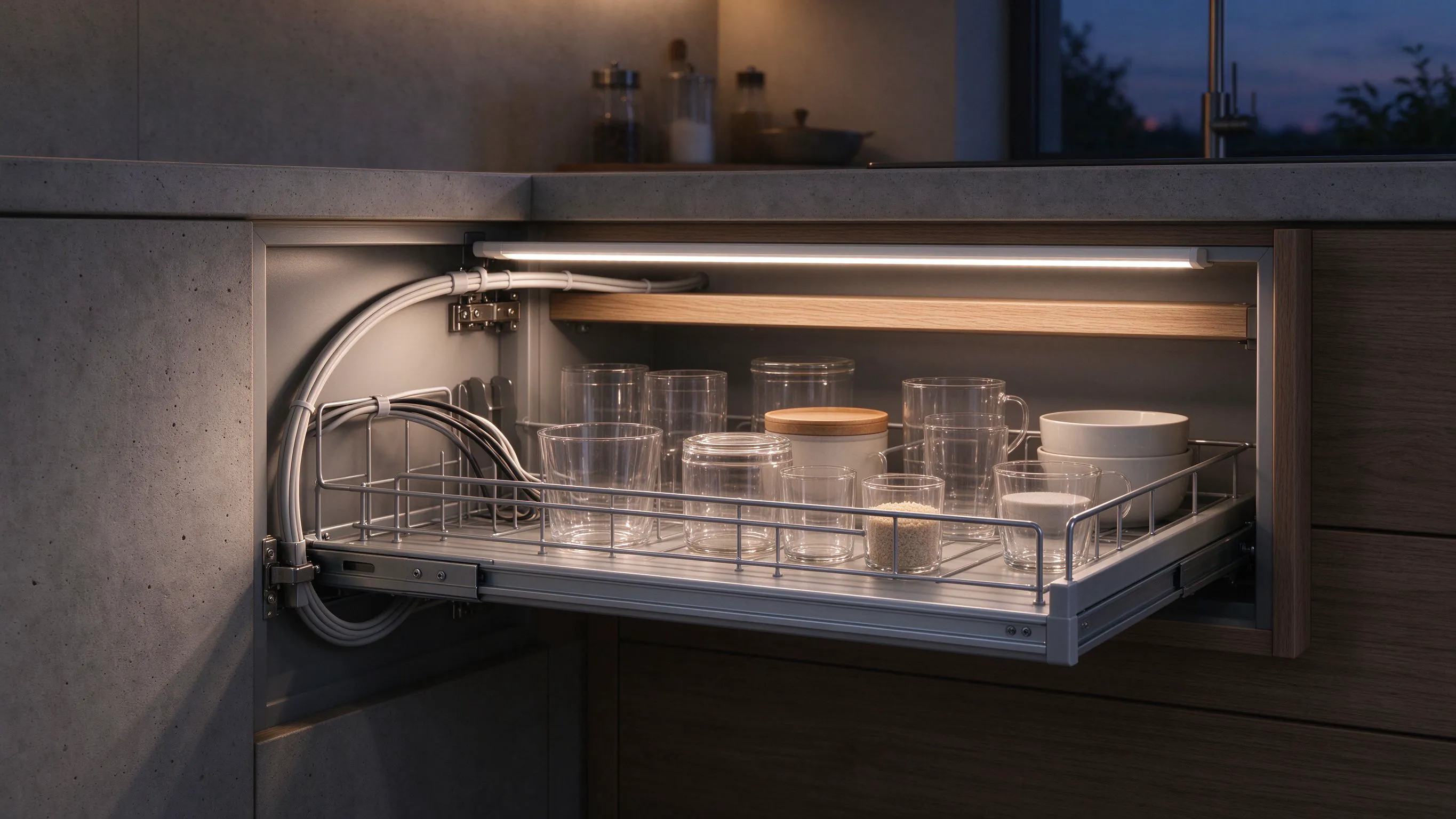
The flicker that shows up only when you slide the drawer
You wired LED strip inside a kitchen drawer, ran the feed through the hinge gap, and it worked perfectly on day one. Six months later, the light cuts out for a second when the drawer opens, then comes back when it closes. Jiggle the wire and it flickers. The connector at the driver end is solid, the strip is fine, and the problem lives inside the wire you did not think about.
That wire is being flexed at the same point, every time someone opens the drawer. A fixed solid-core hookup wire survives maybe 500 to 1,000 bends before a strand parts. A kitchen drawer opened 20 times a day racks up 7,000 cycles a year. The math is not on your side.
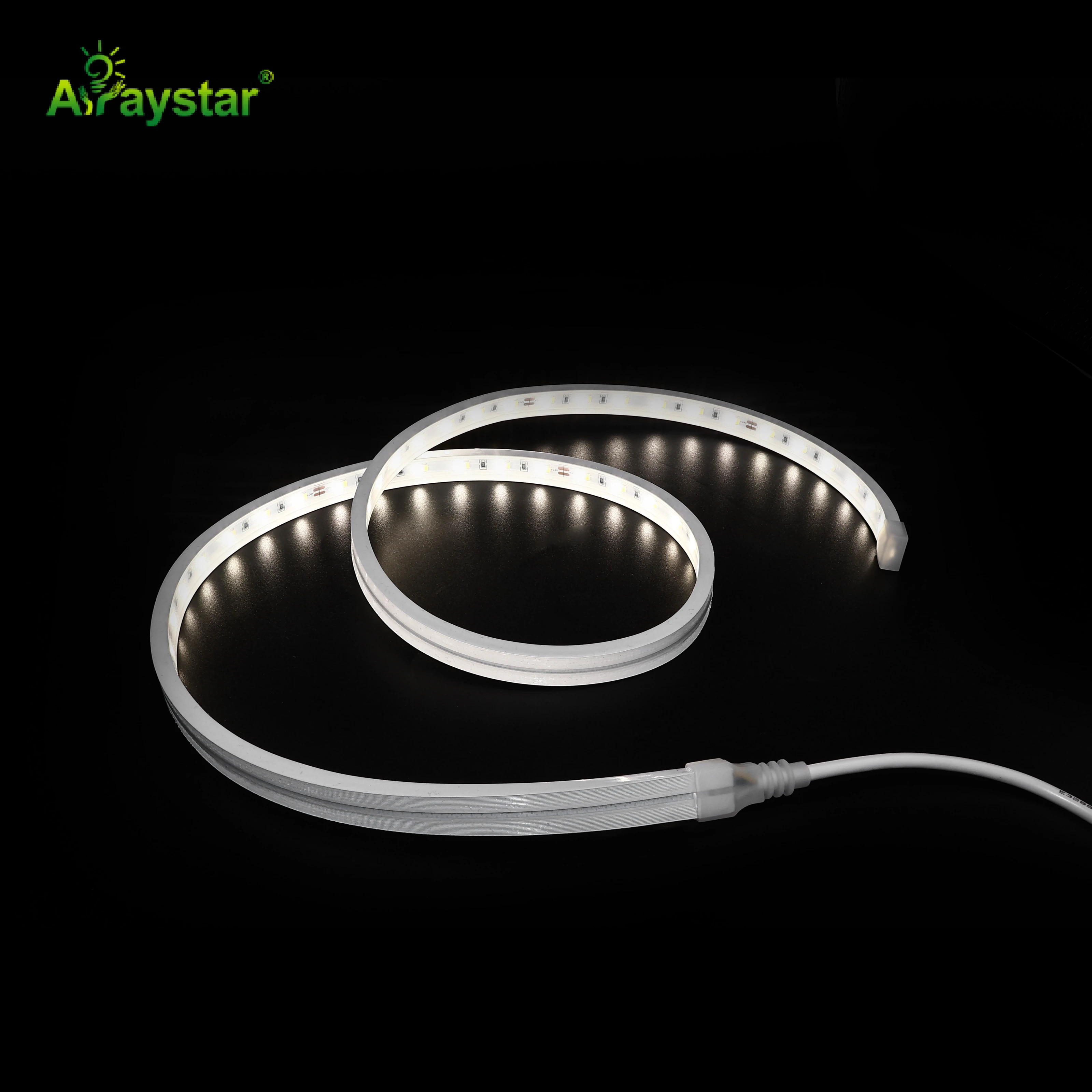
Why the hinge point is where wires die
Wire fatigue is a numbers game. Each bend at the hinge flexes the copper at the same radius, and the outer strands of the cable take the most stress. First one strand snaps, then two, then five. The contact is intermittent, the light flickers, and by the time half the strands are gone the resistance has climbed enough to drop voltage on the whole run.
The failure points I look for
- The wire pinched between drawer box and cabinet carcass, flexing at one radius.
- A stiff solid-core hookup wire run straight through the hinge gap.
- The wire pulled taut from strip to feed, with no slack to absorb the travel.
Routing a service loop that absorbs the travel
The fix is mechanical, not a better wire. You leave a 100 to 150 mm service loop between the drawer strip and the fixed cabinet side, so the drawer travel pulls the loop open and closed instead of bending the wire at a fixed point. The loop wants a gentle curve, not a kink, and it wants to hang free inside the carcass, away from the drawer slides and the screws.
A service loop multiplies the life of any cable by spreading the bend over length.
| Wire type | Bend cycles before fail | Where it belongs |
|---|---|---|
| Solid core hookup | 500-1,000 | Never on moving parts |
| Standard stranded flex | 10,000+ | Drawers with a service loop |
| High-flex robot cable | 100,000+ | High-use commercial drawers |
Choosing the right cable for the flex
I use a fine-stranded tinned-copper flex, 22 AWG for short drawer runs, 20 AWG for runs over a metre. The fine strands bend further before fatigue. I avoid ribbon cable and solid-core wire on any moving part, and I avoid cheap lamp wire with stiff PVC jacket that goes brittle inside a year. For a drawer light that only runs 12 V at 1 to 2 A, 22 AWG high-flex is more than enough.
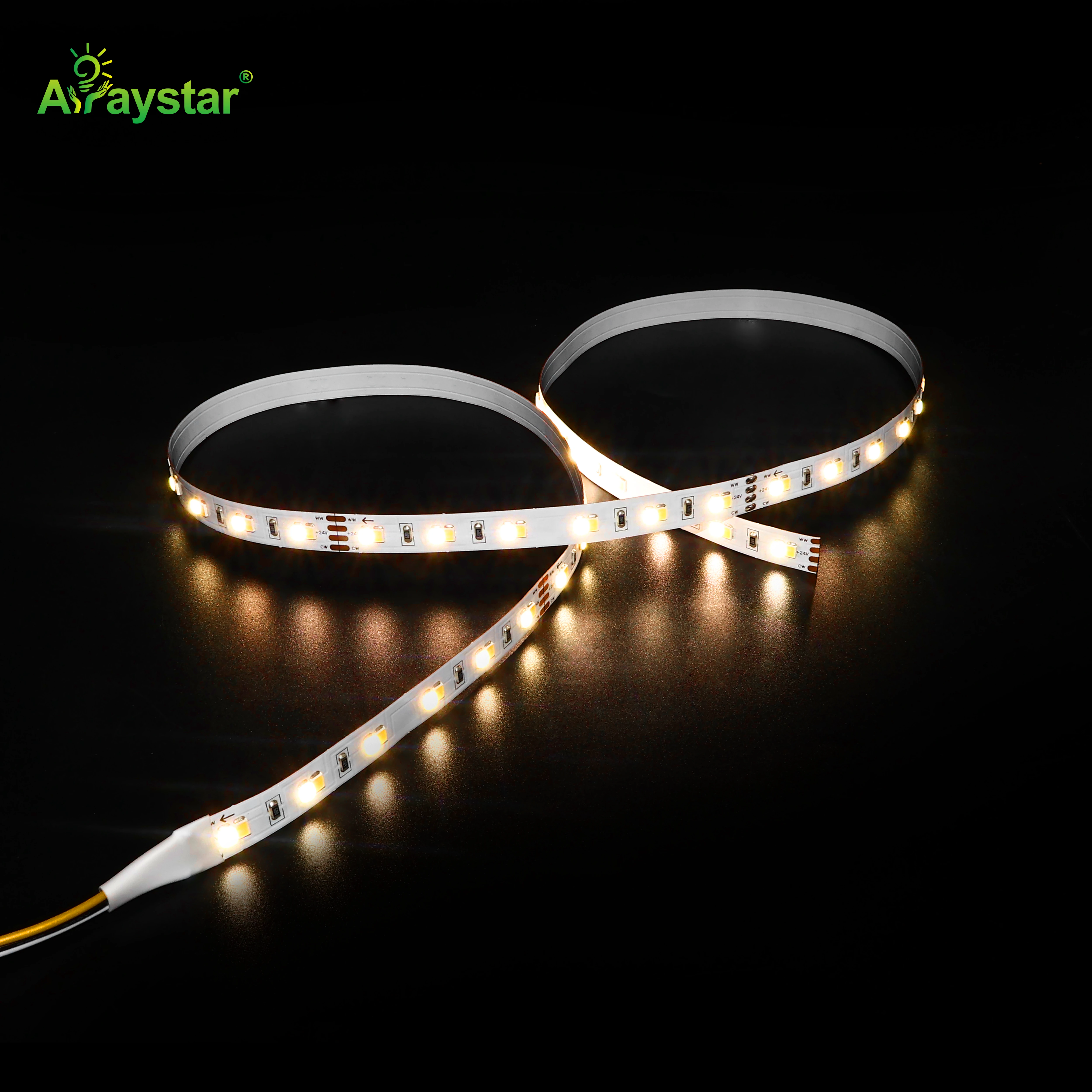
At the hinge, I also add a small strain relief: a 5 mm P-clamp screwed to the fixed carcass, with the wire passing through it loosely. The clamp means the flex happens inside the loop, not at the solder joint on the strip.
What I do on a drawer that already flickers
When I get a callback, I do not just splice in a new wire at the flicker point. The fatigue has worked its way along the whole flexed section. I cut out the last 200 mm of cable, strip back to clean copper, resolder to the strip, and retro-fit a proper service loop. Nine times out of ten, that drawer then goes another three years without a callback.
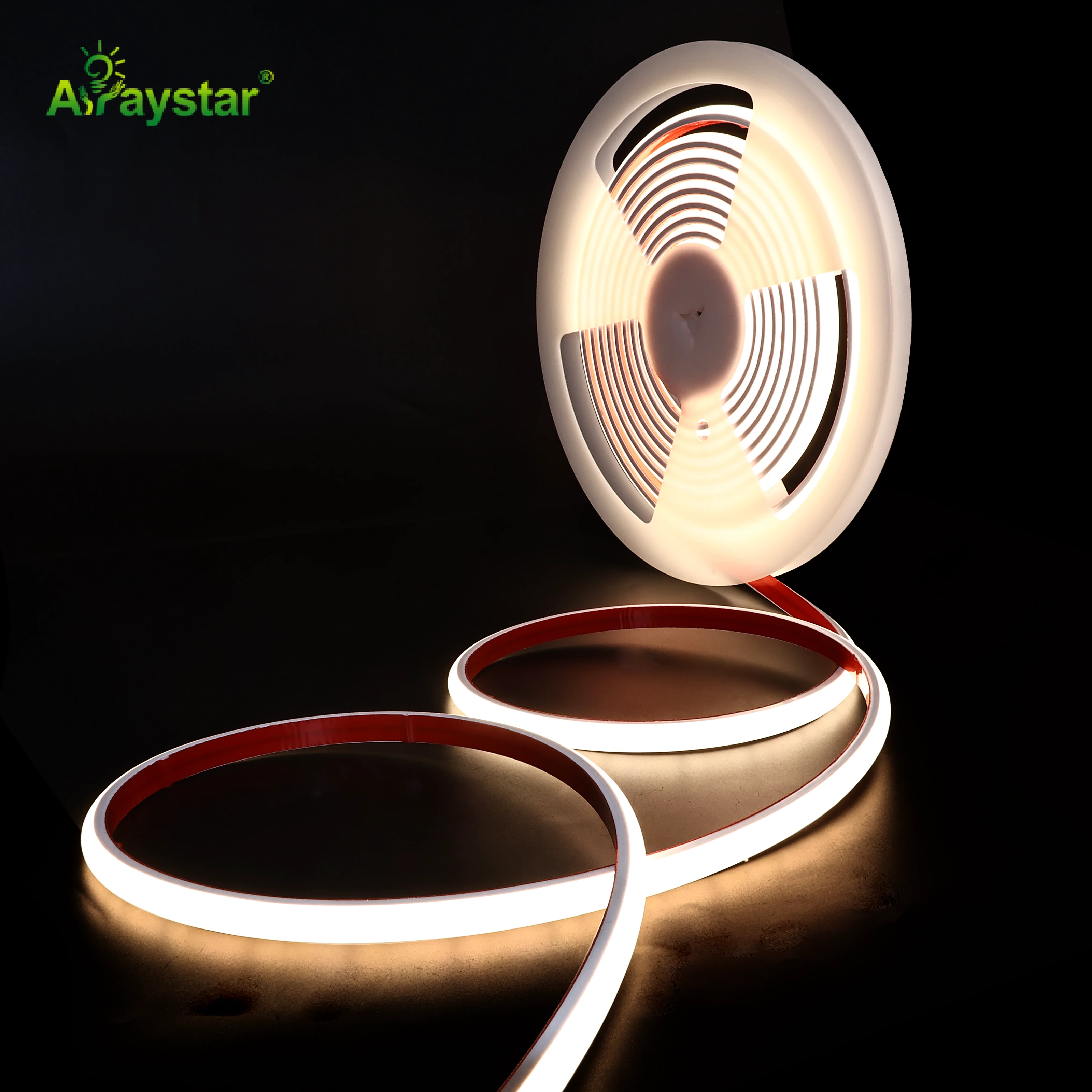
- Leave 100 to 150 mm of slack; the drawer travel should open and close a loop.
- Clamp the fixed end at the carcass, not at the strip solder joint.
- Inspect the loop every year; jacket cracks show before copper does.
Recommended Products
Frequently Asked Questions
Why does my drawer light flicker only when I open the drawer?
Because the feed wire is being flexed at the hinge every time the drawer moves, and the copper strands are part-broken. Opening the drawer shifts the break, the contact opens, and the light cuts out. Closing it presses the strands back together. It is mechanical fatigue, not a driver issue.
How long should the service loop be in a drawer?
100 to 150 mm of slack, routed so the drawer travel opens and closes the loop without the wire touching the slides or screws. The loop absorbs the motion instead of the wire bending at a fixed point. Too short and you are back to a fixed bend; too long and the loop gets caught on the drawer.
What gauge wire do I use for drawer LED strip?
22 AWG fine-stranded tinned-copper flex for short runs under 1 m, 20 AWG for runs over 1 m or pulls over 2 A. The fine strands matter more than the gauge here, because they flex further before fatigue. Avoid solid-core hookup wire on any moving part.
Can I just solder a new wire at the flicker point?
No. Fatigue has worked its way along the whole flexed section, so you are soldering into copper that will break again next month. Cut out the last 200 mm of cable, strip back to clean copper, resolder, and retro-fit a proper 100 mm service loop. Treat it like a harness repair, not a splice.
Should I use a hinge-side connector for drawer lights?
A small flex hinge-side connector is fine if it carries the loop, but do not rely on it as the only flex point. Add the 100 mm service loop on the strip side and a P-clamp on the carcass side. The connector just makes future service easier; the loop still has to do the flexing.
Need help with your LED project?
Get factory-direct pricing, free samples and engineering support within 24 hours.
Email: info@arraystarled.com | Phone: +86-0755-2103-6746 | WhatsApp: 0086 1581 8514 077
Need to size your power supply? Use our LED Strip Power Calculator to find the right driver in seconds.