Splicing Mains 220V Strip Between Runs: Weatherproof Junction Practice
- 2026-11-02 15:55
- /
- Arraystar LED
Joining two 220V strip runs outdoors with a butt crimp under tape fails every winter. The splice belongs inside a sealed, rated junction box with a proper cable gland, and the work has to look like an electrical joint, not a DIY join.
Why the taped butt connector fails by February
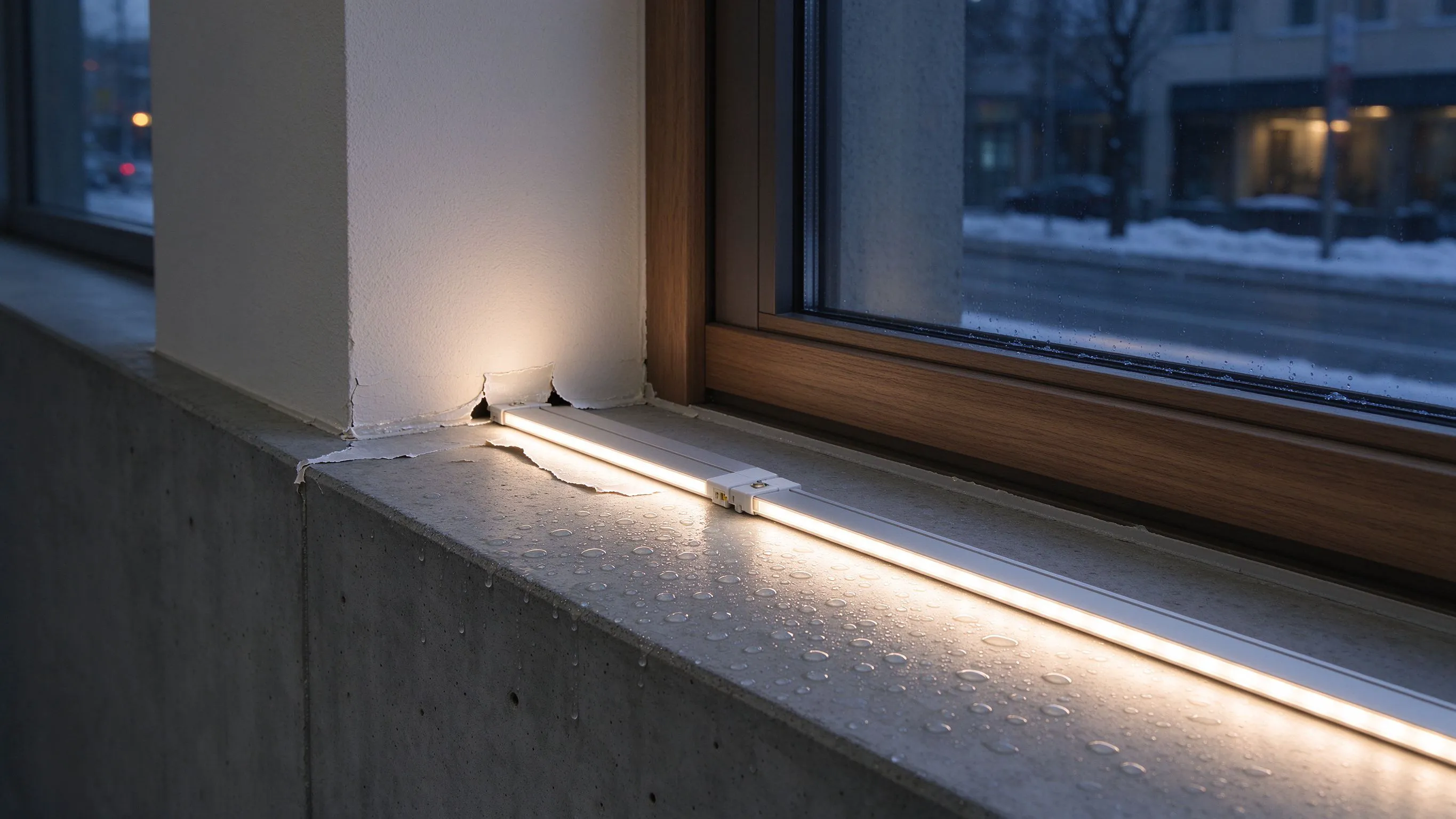
The classic outdoor splice I see on jobs is: cut the strip, butt-connect the two ends with a push connector, wrap it in three layers of self-amalgamating tape, and walk away. It works in October. By January water has climbed the cable core through capillary action and condensed inside the wrap, and by February the joint has gone green or tripped the RCD. Tape is not a junction box.
A mains strip carries line voltage directly into the joint. Even a small amount of moisture at the solder pads turns into leakage current, tracking on the PCB surface, and eventually a trip or a burn. The joint needs to stay dry forever, and the only way to guarantee that is a box you can open, inspect and refill.
- Never splice a mains strip with a naked push connector, even IP67 ones.
- Never point a cable entry upward; water follows gravity into the box.
- Plan the joint at a serviceable height, not buried behind cladding.
The right box, gland and fill for a mains outdoor joint

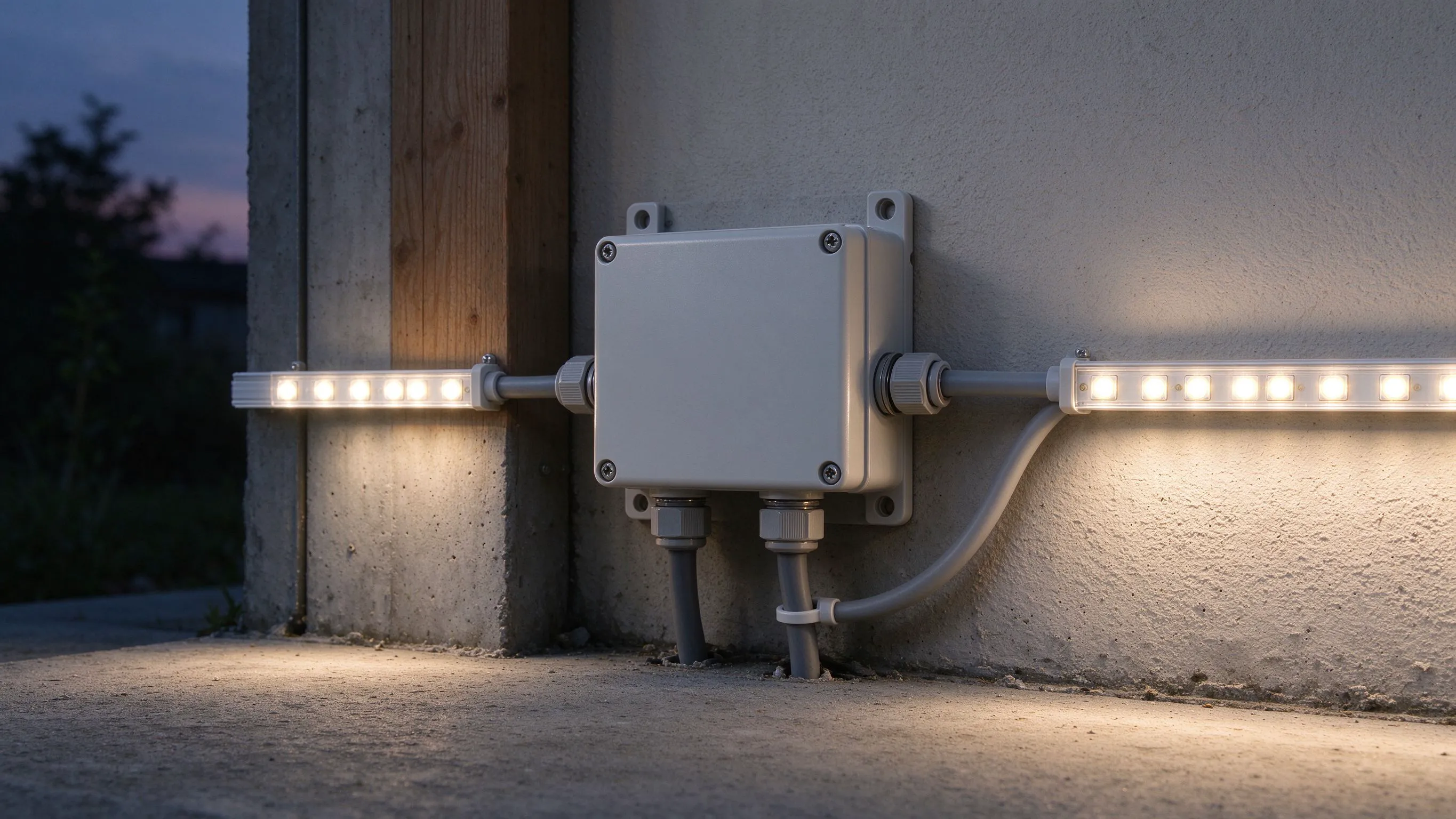
I use a small UV-stable polycarbonate or glass-reinforced nylon box rated IP65 minimum, with a true 3 to 5 mm wall, not a thin hobby enclosure. The gland entry is the critical bit. Single-compression nylon glands harden in UV and weep; I use double-compression brass or stainless glands with EPDM seals, sized so the cable grips at the outer jacket, not at the inner core.
Inside the box the strip ends terminate on a small ceramic or glass-reinforced terminal block rated for the voltage, not on the strip solder pads. The two strip ends are not butt-soldered to each other; they land on terminals with the line, neutral and earth kept separate and screw-relieved. I also pot the terminal region with a two-part epoxy resin gel once the box is commissioned, so any residual moisture has nowhere to sit.
How long can a 220V run be, and where the joint must go
Longer runs need a second feed, not a longer solder joint.
| Strip type | Single-run max length | Where I put the joint |
|---|---|---|
| 220V SMD 144 LED/m | 50 m typical | At every 40 m break, in a box |
| 220V SMD 240 LED/m | 30 m typical | At every 25 m break |
| 220V COB 480 LED/m | 20 m typical | Mid-run, boxed and glanded |
| Any, on a cold windy facade | Derate 20 percent | Joint at the centre, not the end |
Cable entry, strain relief and drainage
I mount the box on the wall with the glands pointing down, never up or sideways. The cable makes a small U-bend below the gland before it enters the box, so any water running down the cable drips off the lowest point rather than being drawn in. Inside the box I strain-relieve the cable with a cable tie anchored to the box lug, so a pull lands on the lug, not on the terminals.
Condensation inside the box is the silent killer. I drill a 3 mm weep hole at the lowest point of the box floor and fit a breathable Gore-style vent plug. A fully sealed IP68 box in full sun pumps moist air in and out through gland clearance every day; a vent lets it breathe and a weep hole lets any condensate escape.
Commissioning and what I tell the installer

Before I close the box I run an insulation test between line and earth at 500 V; I want above 5 megaohms, and anything below 1 megaohm means moisture has already crept in. I also run the strip for 30 minutes, then open the box and look for droplets on the underside. If I see condensation, the vent is blocked or the glands are weeping.
I hand the client a small maintenance note: open the box once a year, check the glands, tighten the terminals, reapply dielectric grease, clear the weep hole. That is a fifteen-minute visit and it stops the February call-out. A taped butt connector has no maintenance point, which is why it fails silently.
Recommended Products
Frequently Asked Questions
Can I splice two 220V LED strips with a waterproof connector?
Only if the connector is a rated, IP67 outdoor mains connector with a true gland, and even then I prefer to land both strip ends on terminals inside a proper junction box. A naked waterproof butt connector on a wall is not a joint I would sign off for mains voltage.
Do I need an earth on a 220V silicone strip?
The strip jacket is class II double insulation, but if you mount it on an aluminium channel or metal rail that rail becomes accessible metal and must be earthed. The circuit should still be on a 30 mA RCD regardless. A separate earth on the strip itself is not required.
Why does the junction box need a vent if it is supposed to be sealed?
Sealed boxes in full sun breathe. Temperature swings pump moist air through gland clearance, and a fully sealed box traps the condensate. A 3 mm weep hole with a Gore vent lets air move but stops water droplets entering, and keeps the terminal dry.
How long can a single 220V LED strip run be before I need a joint?
Plan on 50 m for a 144 LED/m SMD, 30 m for a 240 LED/m SMD, and 20 m for a 480 LED/m COB. On a cold or windy facade I derate by about twenty percent. Beyond that, use a second feed rather than extending the joint.
What insulation test should I do before closing the outdoor box?
A 500 V megger test between line and earth, after the joint is made. Above 5 megaohms is healthy with no moisture. Below 1 megaohm means water is already on the PCB surface; open, dry, inspect the glands and retest before energising.
Need help with your LED project?
Get factory-direct pricing, free samples and engineering support within 24 hours.
Email: info@arraystarled.com | Phone: +86-0755-2103-6746 | WhatsApp: 0086 1581 8514 077
Need to size your power supply? Use our LED Strip Power Calculator to find the right driver in seconds.