
Temporary Construction Site LED Strip Lighting: 220V High-Voltage, Weatherproof Job Runs
- 2026-09-30 17:38
- /
- Arraystar LED
Job sites need long runs of bright, rugged temporary light without a forest of power supplies every few meters - which is exactly the case for mains-voltage high-voltage LED strip. 220V strip runs tens of meters from a single feed, lays along scaffolding, corridors and formwork, and side-bending high-voltage neon handles the curved and wrapped runs. Treat it with the respect mains voltage deserves (proper termination, sealed connections, professional install), and you get site-wide illumination that's faster to deploy and far more even than strings of work lights.
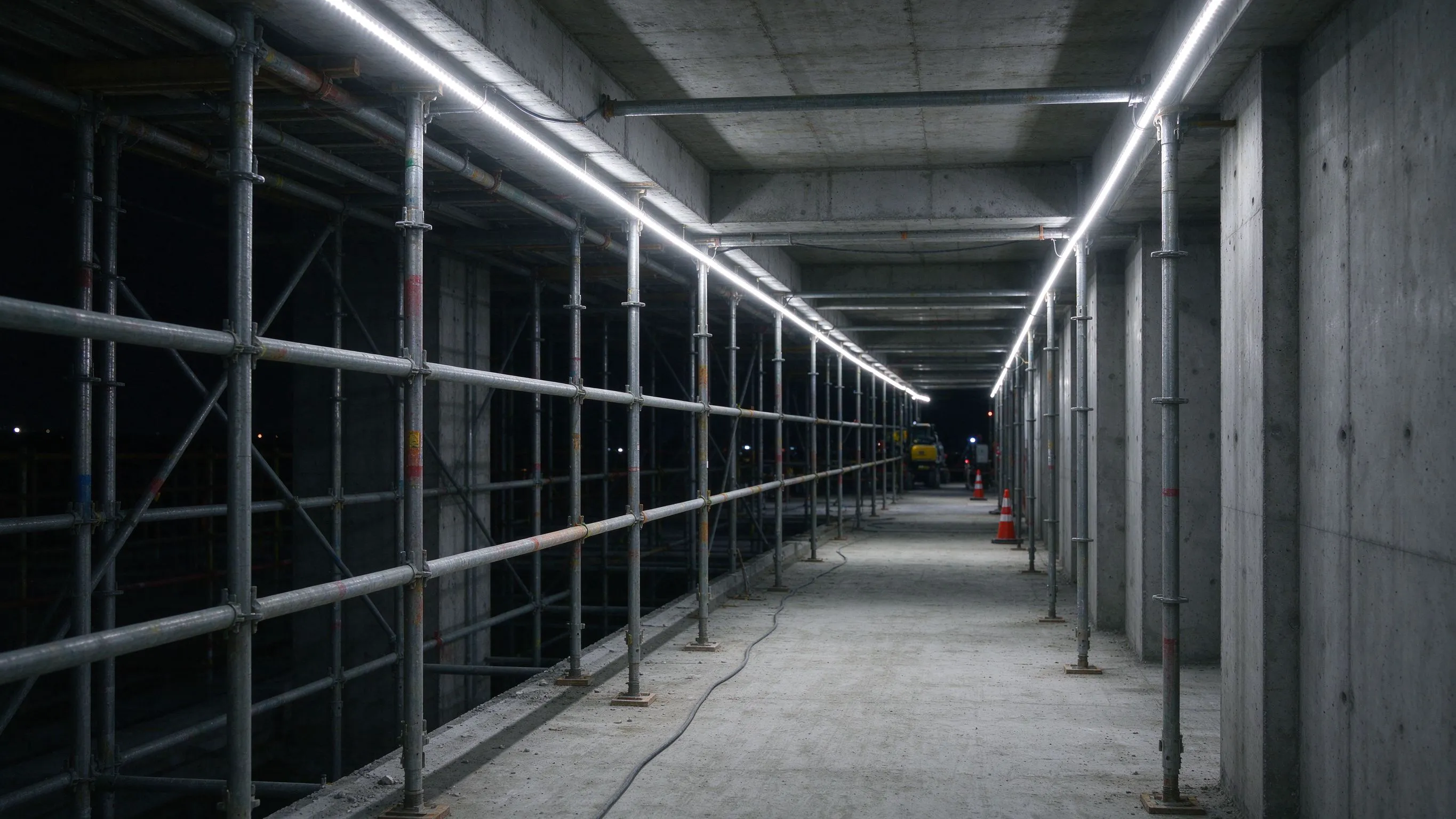
Job Sites Need Long, Even, Temporary Light
Construction corridors, scaffolding decks, tunnels and formwork need illumination over very long distances, often moved as the work progresses, in wet and dusty conditions. The default approach - strings of temporary work lights daisy-chained together - gives patchy pools of light, tangled leads and a power point every few meters.
Mains-voltage (220V) LED strip was made for this. Because it runs directly at line voltage, it can extend tens of meters from a single feed with essentially no voltage drop, laying continuous even light along a corridor or scaffold run. It's a different product category from low-voltage tape, with different safety rules, and both matter.
220V Strip for Long Corridor and Scaffold Runs
For straight long runs - site corridors, the edges of scaffolding decks, temporary walkways, the inside of formwork - 220V SMD 2835 strip provides continuous bright light over long distances from one connection. Choose the LED density to the task: a higher-density 240 LEDs/m version for close work and inspection areas, a lower 120 LEDs/m version for general wayfinding and perimeter runs where you need coverage more than intensity.
Run the 240-density version where trades are doing detailed work or finishing, and the economical 120-density version along long egress routes and scaffold edges where the priority is marking the run and providing safe background light. Both run far longer per feed than any 12/24V product, which is the whole point on a large site.
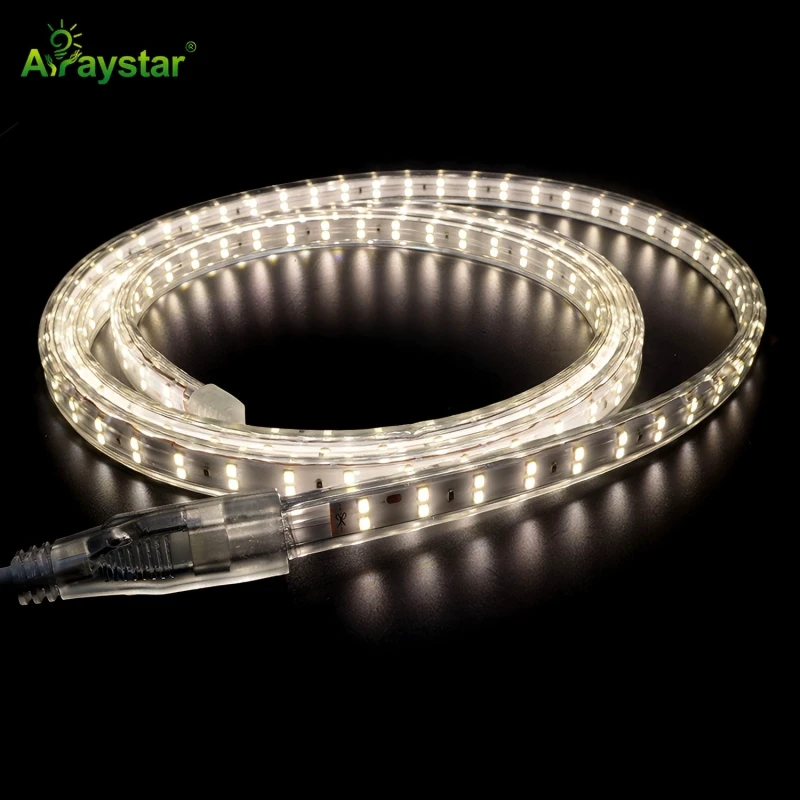
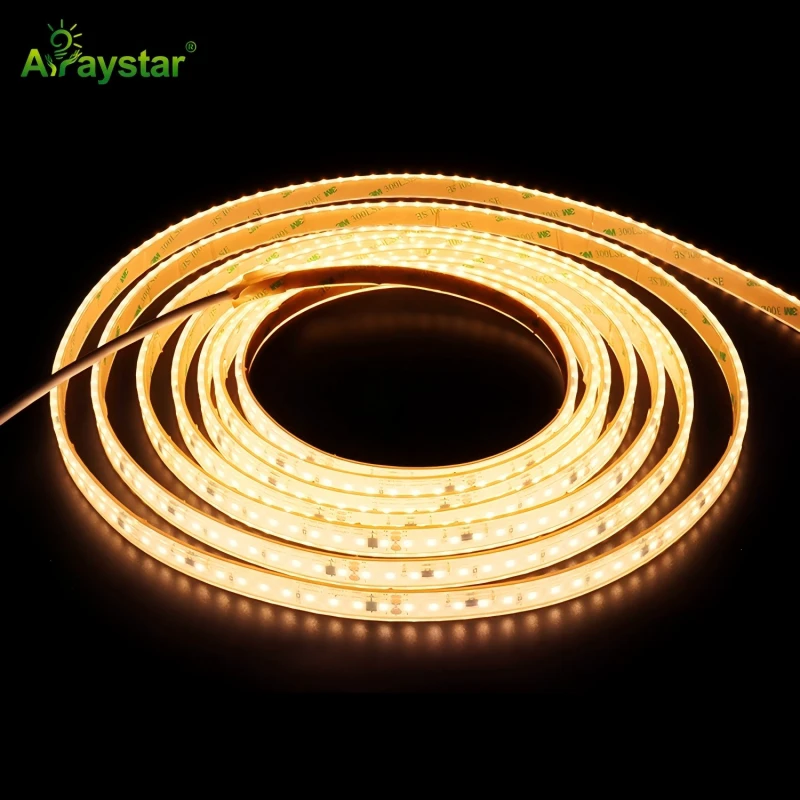
Matching high-voltage strip to job-site tasks.
| Job-site application | Product / density | Why |
|---|---|---|
| Detailed work / finishing zones | 220V 2835, 240/m | Higher brightness for inspection |
| Long corridors / egress | 220V 2835, 120/m | Economical long-run coverage |
| Curved scaffolding / wrapped edges | Side-bend HV neon (1212) | Bends around curves and columns |
| Temporary walkway marking | HV strip, warm/neutral | Continuous edge definition |
| Power feed | Single mains feed per long run | No repeated power supplies |
Side-Bending Neon for Curves and Wraps
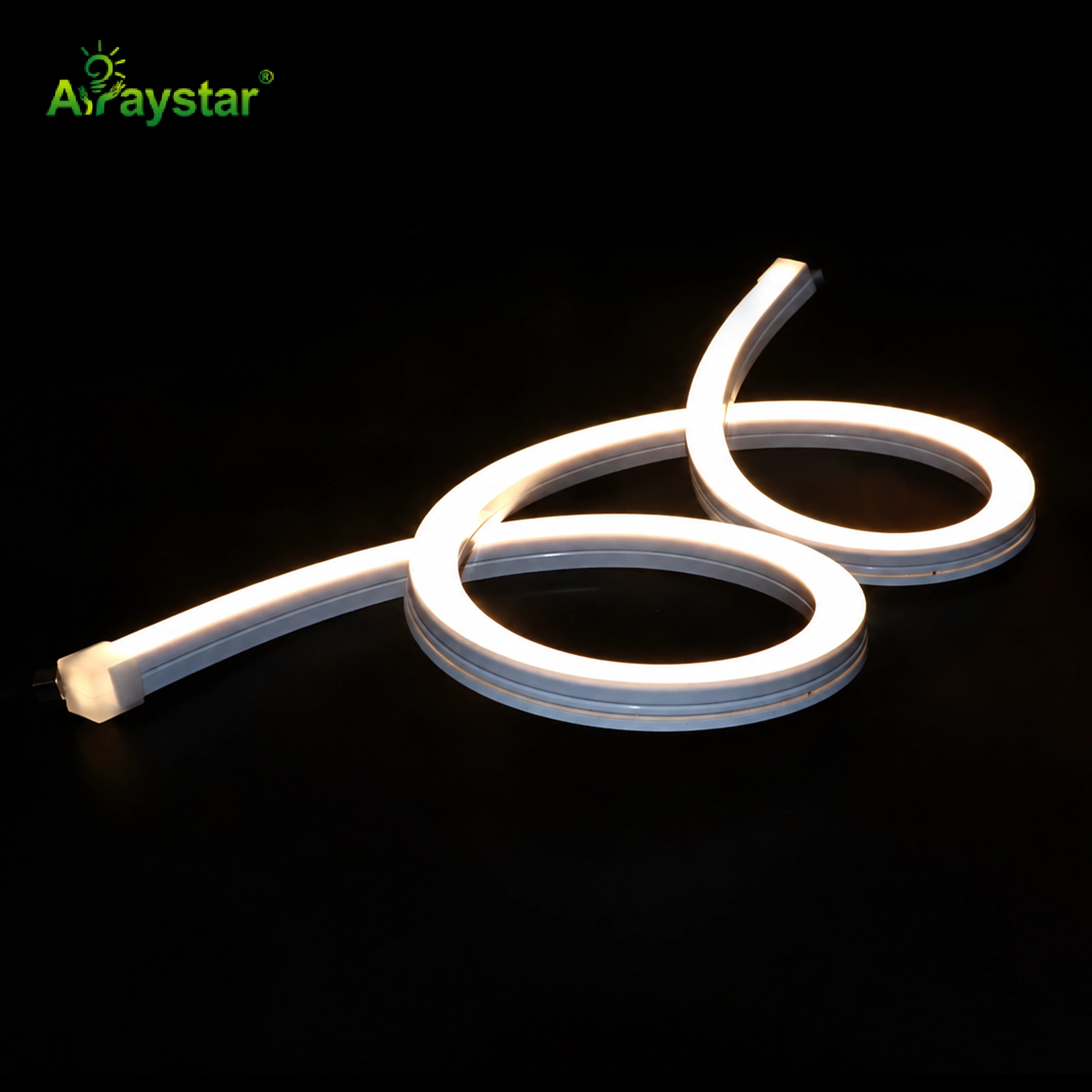
Not everything on site is straight. Pipes, curved formwork, arched scaffolding and wrapped columns need light that follows a curve. A side-bending high-voltage 1212 neon strip flexes laterally, so it can trace curved edges and wrap round structural elements while keeping the long-run advantage of mains voltage.
Use the side-bend 1212 neon to follow the contour of curved formwork, wrap safety markings around columns, or run along arched temporary structures, where straight HV strip would kink or need many short joins. The diffused neon body also gives a smoother, less glaring line than bare SMD tape in dusty site air.
Safety: Mains Voltage Is Not Low-Voltage Tape
This is the critical section. Unlike 12/24V SELV strip, 220V strip carries lethal mains voltage along its length, so it cannot be cut, connected or handled like hobby tape. Every termination must use the manufacturer's sealed end caps and rectifier/feed components, connections must be properly rated and weatherproof, and installation should be done by a qualified electrician to site safety standards.
- Use only the specified sealed connectors, rectifiers and termination kits - never bare ends.
- Have 220V runs installed and connected by a qualified electrician.
- Protect runs with RCD/GFCI residual-current protection on the supply.
- Keep strip out of reach where possible and inspect for damage each shift.
- Use IP-rated components for wet/dusty exterior and underground sites.
Deployment, Durability and Cost Logic
The business case is straightforward: one long 220V run replaces many low-voltage strips, each needing its own power supply and feed point, so deployment is faster, there's less hardware to fail or be stolen, and the light is continuous rather than patchy. High-voltage strip is also reusable - roll it up and redeploy it as the work front moves.
Mount it on clip rails or aluminium where it can be quickly attached and removed, protect it from mechanical impact and welding splatter, and keep spares of the termination components since those - not the strip itself - are the consumable parts on a moving job site.
Recommended Products
Frequently Asked Questions
Can LED strip run directly on 220V mains for a construction site?
Yes - purpose-built high-voltage 220V LED strip runs tens of meters from a single mains feed with little voltage drop, making it ideal for long corridors and scaffolding. It is not low-voltage tape: it must use the manufacturer's sealed rectifiers/connectors, RCD protection and professional installation by a qualified electrician.
What LED density do I need for job-site lighting?
Use higher-density 220V 2835 at 240 LEDs/m for finishing and inspection zones where trades need bright detail light, and economical 120 LEDs/m for long egress corridors, walkways and scaffold edges where continuous coverage and wayfinding matter more than intensity.
How do I light curved scaffolding or formwork on site?
Use side-bending high-voltage neon (such as the 1212), which flexes laterally to follow curved formwork, wrap columns and trace arched structures while retaining the long single-feed advantage of mains-voltage strip. Its diffused body also gives a smoother, less glaring line than bare SMD tape in dust.
Is 220V LED strip safe on a wet construction site?
Only when installed correctly: use IP-rated sealed components and the proper rectifier and end-cap termination kit, supply it through RCD/GFCI residual-current protection, and have a qualified electrician install it to site standards. Mains voltage is unforgiving - bare ends or improvised connectors are never acceptable, especially in wet conditions.
Why use high-voltage strip instead of regular 12/24V strip on a job site?
Run length. 220V strip extends tens of meters from one feed with negligible voltage drop, replacing many low-voltage runs that would each need a separate power supply and feed point. That means faster deployment, fewer failure points, continuous even light, and reusable rolls that move with the work front.
Need help with your LED project?
Get factory-direct pricing, free samples and engineering support within 24 hours.
Email: info@arraystarled.com | Phone: +86-0755-2103-6746 | WhatsApp: 0086 1581 8514 077
Need to size your power supply? Use our LED Strip Power Calculator to find the right driver in seconds.







