SMD Strip Under the Bed: Layout for Safe Middle-of-Night Trips
- 2026-10-28 10:03
- /
- Arraystar LED
I used to fit a bright cool strip under every bed until a client told me it woke her fully at 3am. The fix was not a dimmer but a different layout: low wattage, warm colour, and a sensor that ramps rather than snaps on.
Why a bright under-bed strip is the wrong answer
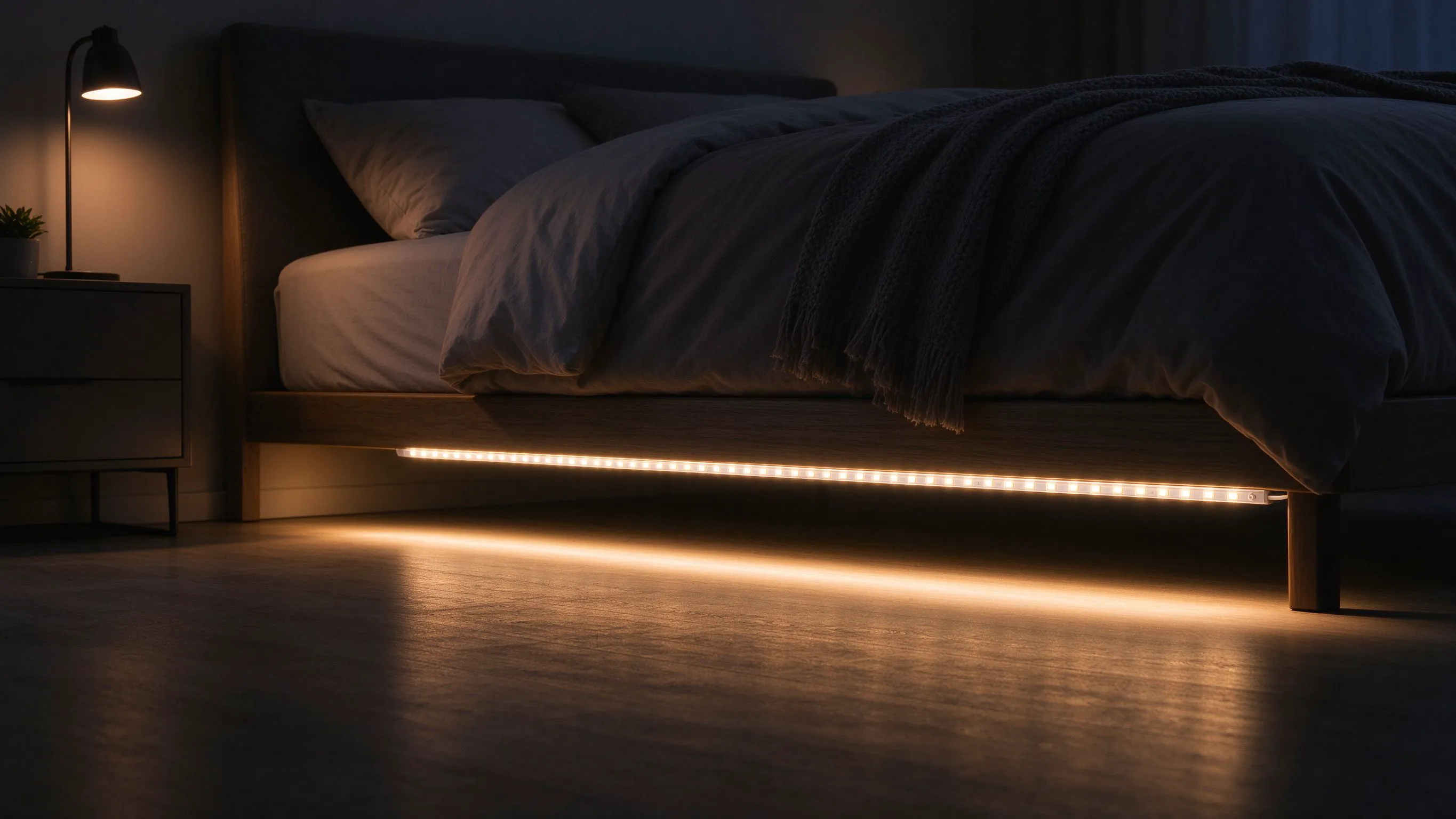
A 24V high-density 2835 run under the frame looks great in the daytime but at 3am it is a floodlight aimed at your heels. Rod cells in your eye are fully adapted to darkness, so even ten lux tells your brain to suppress melatonin. I stopped fitting anything above 5W per metre for under-bed use after three clients complained they could not get back to sleep.
The goal is not to illuminate the whole bedroom. It is to put just enough light on the floor between the bed and the door so you can avoid the cat, the rug edge and the suitcase that lives there. That is a task for a low-output run, not a showroom strip.
- Target output: 60 to 100 lumens per metre, warm 2700K.
- Run it only along the two long sides, not across the foot.
- Point the emitters at the floor, never up at the bedding.
Where to stick the strip on the frame
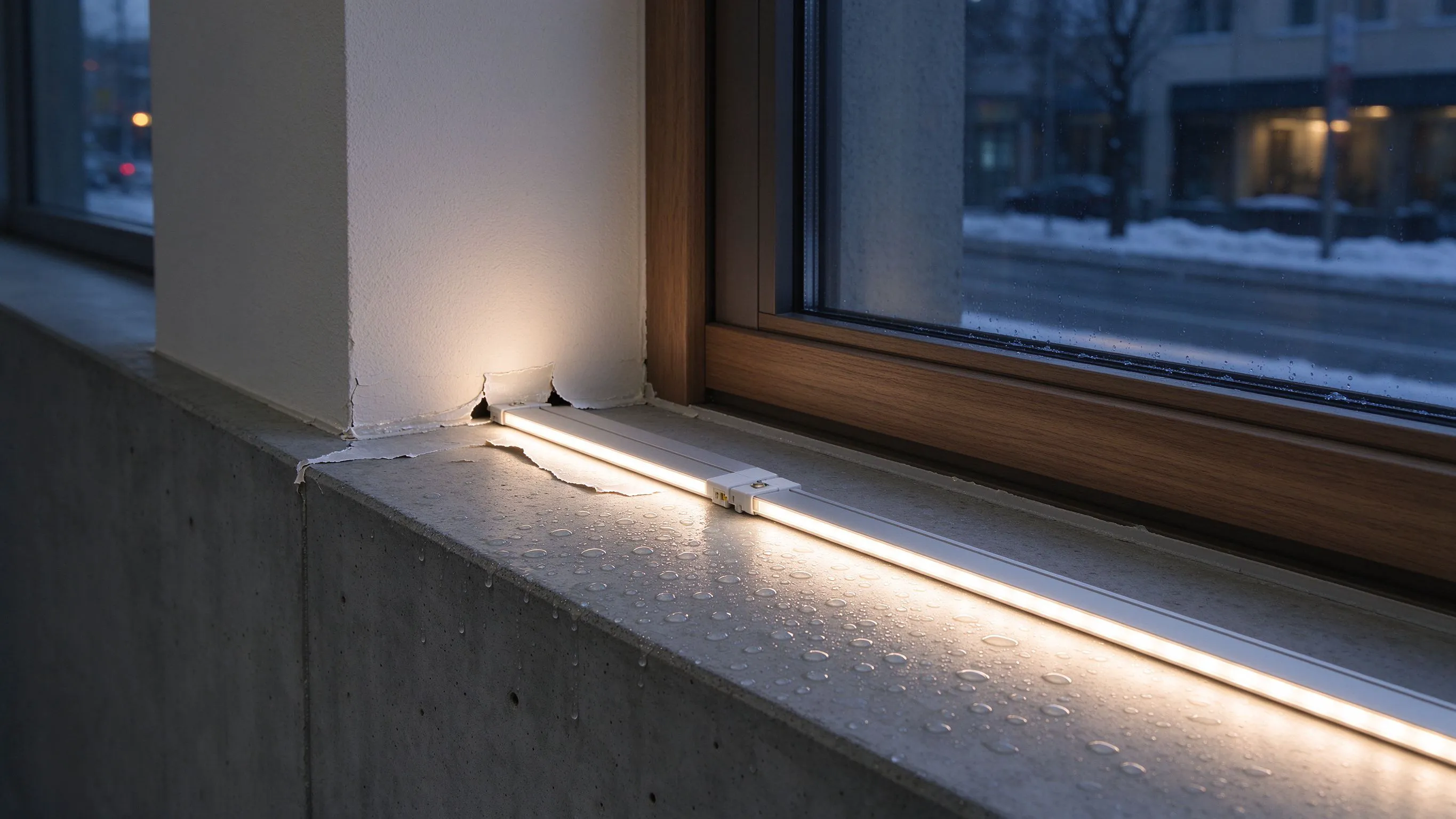
I mount the strip on the inner face of the side rail, about 50 mm up from the floor, facing down and outward. If you stick it on the bottom edge facing straight down, the shadow line sits exactly at the wall of the bed base and you see a hard bright strip rather than a soft pool. Tilt it 30 degrees outward and the pool spreads across the walking path.
Angling the run outward gives a usable pool without a glare line.
| Mounting position | Pool spread | What you see |
|---|---|---|
| Bottom edge, facing down | Narrow, 200 mm | Hard bright line at the foot |
| Inner rail, 50 mm up, angled out | Wide, 600-800 mm | Soft pool on the path |
On fabric upholstered beds I use a slim aluminium channel rather than adhesive directly to the textile. Foam and fabric soak the light and the strip never sticks cleanly after a year of people sitting on the edge.
Sensor behaviour, not sensor location
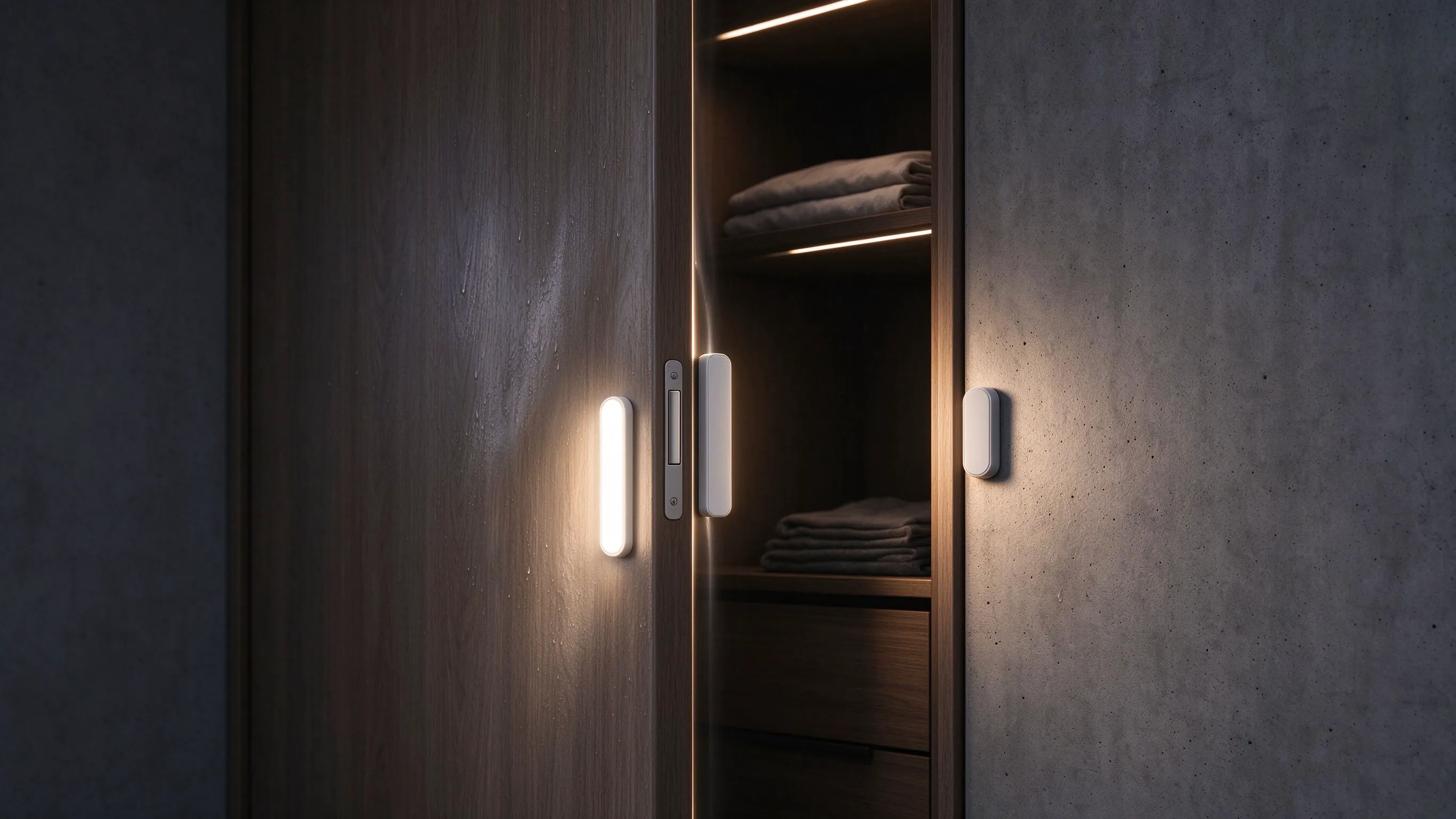
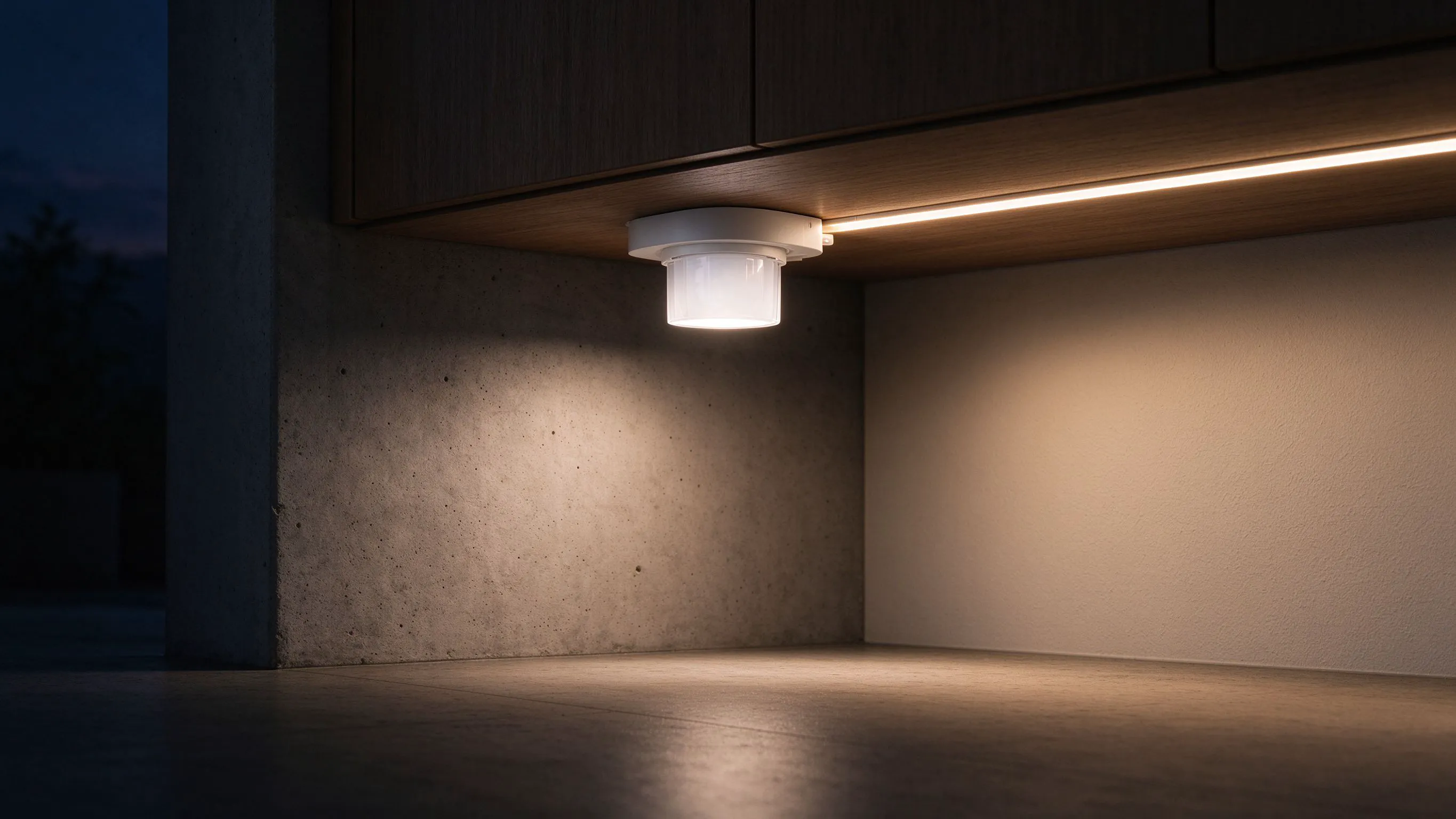
The common mistake is fitting a PIR under the bed and expecting it to catch a foot dropping to the floor. A PIR sees heat movement, and a foot sticking out from under a duvet is a small, slow target. I use a microwave or radar sensor rather than a passive PIR here, and I wire it to a driver with a soft ramp on: two seconds up, fifteen seconds down after you leave.
- Set the hold time to 60 seconds, not 300.
- Dim to 20 percent before turning off, not hard off.
- Keep the sensor clear of the duvet draught excluder.
On one joinery job I hid the sensor in the plinth and it triggered every time the central heating clicked on and the air moved. A radar unit fixed directly to the frame, away from curtains and duvet folds, stopped the false triggers.
Power and run length
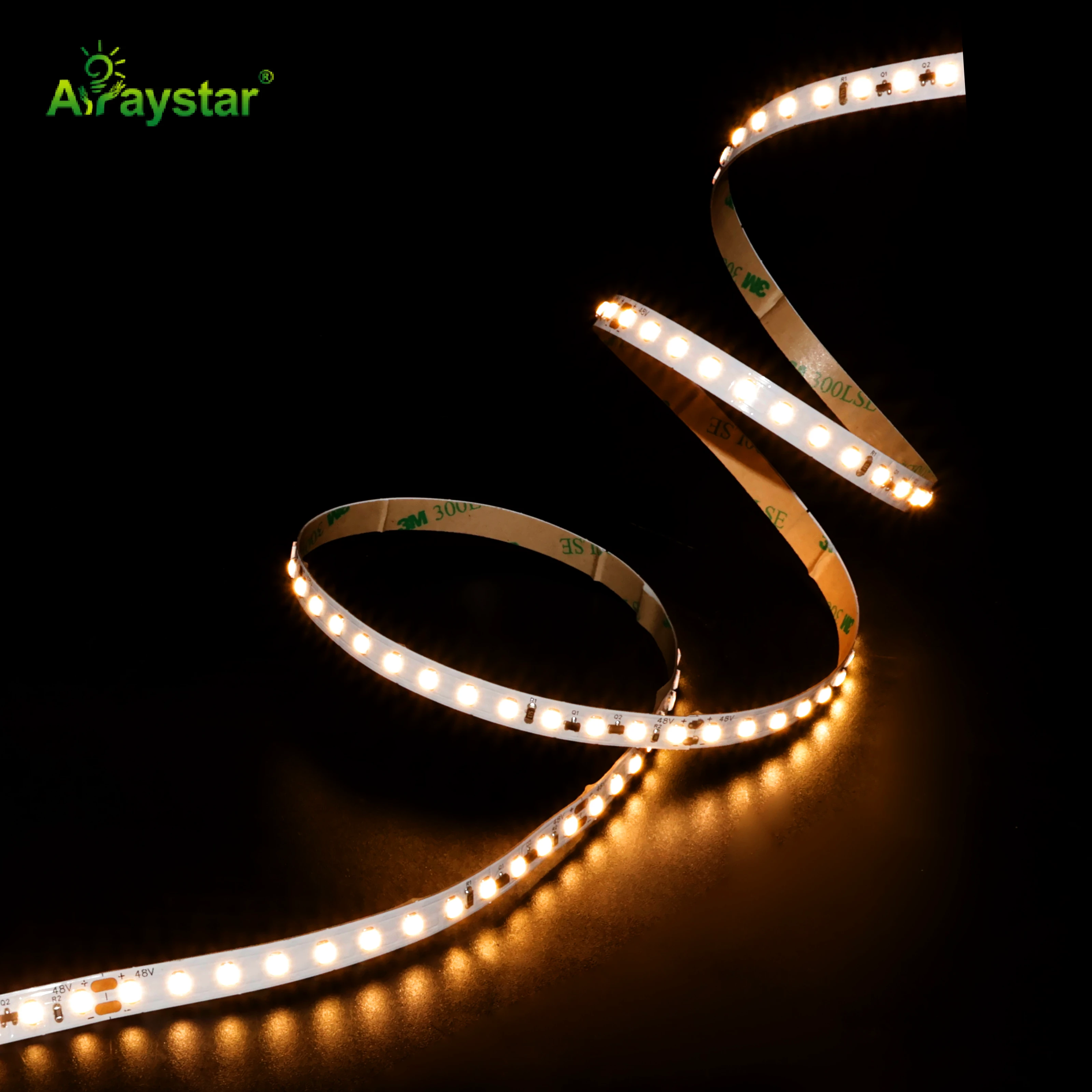
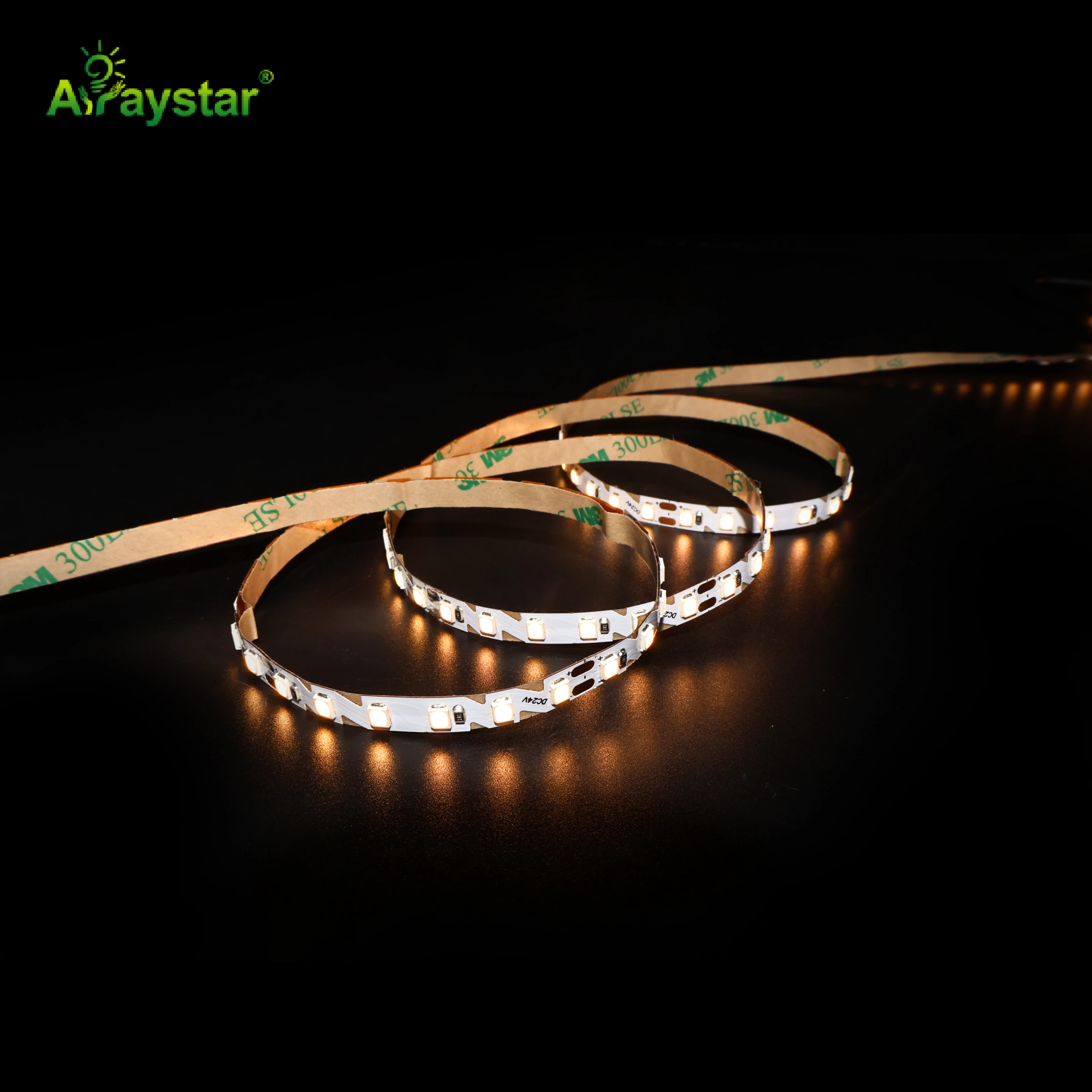
A typical double bed needs a 2.4 metre run split across two sides. A standard 12V 60-LED 2835 strip starts to brown off at the far end beyond three metres, and you see a warm tail fading towards the headboard. For runs longer than two metres I run 24V, and for a king bed wrapped around three sides I use the 48V long-run strip so there is no voltage sag at all.
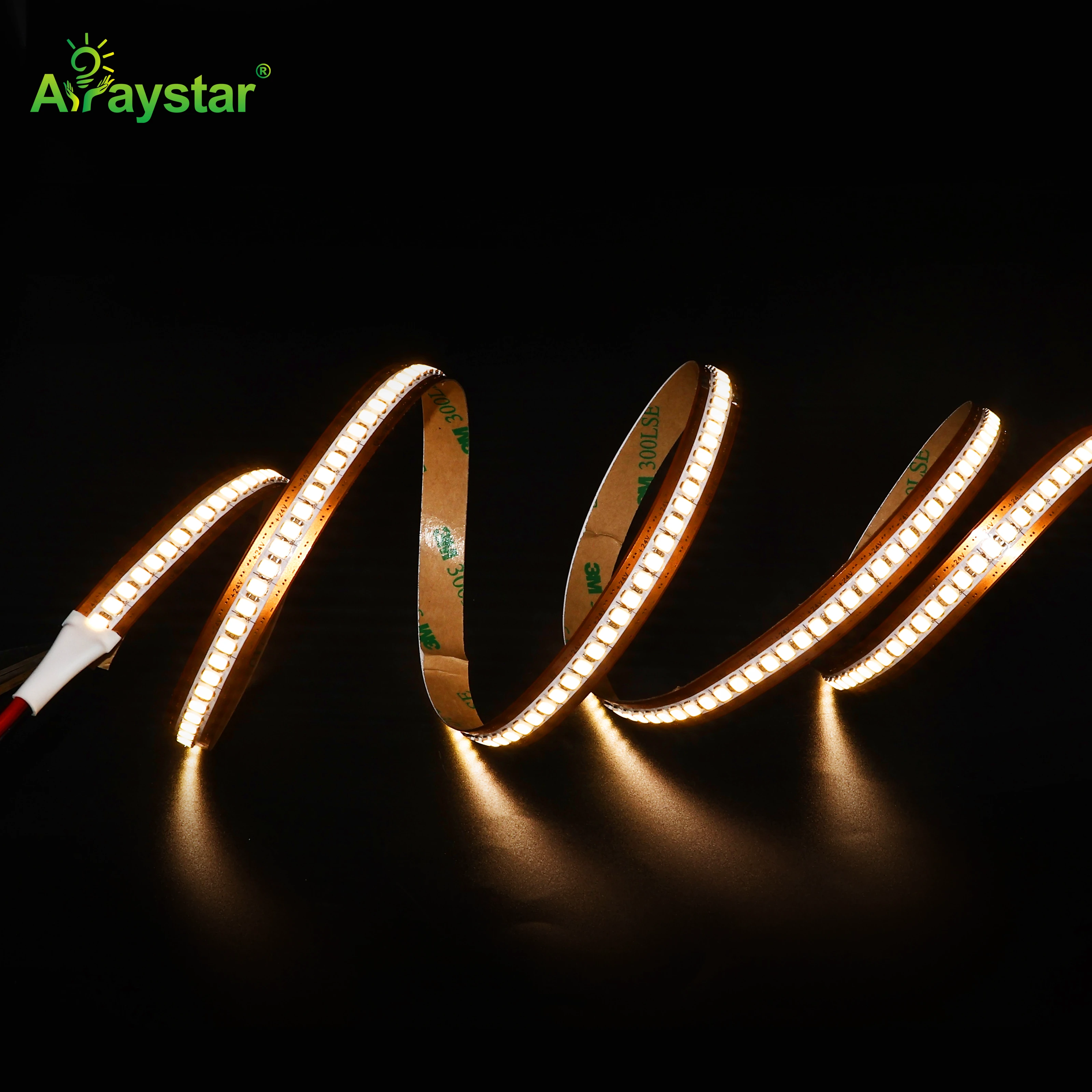
Feed power at the middle of the run, not at one end. Mid-feed halves the current on each leg and keeps the far side at the same brightness as the near side. It costs one extra connector and saves you a callback.
The pre-handover bedtime test
Before I leave, I lie down on the bed, kill the lights, and wait ten minutes for my eyes to adapt. Then I drop my feet to the floor and watch the strip come up. If it makes me blink, I lower the driver. If I cannot see the rug edge, I raise it.
- Check the strip never shows as a visible dot from the pillow.
- Walk the path to the door; the pool should cover it.
- Confirm the off-ramp finishes before you reach the toilet.
Recommended Products
Frequently Asked Questions
What colour temperature should an under-bed night light be?
2700K warm white, and nothing cooler. Any colour above 3000K suppresses melatonin more aggressively and you will lie awake wondering why. I have fitted a few tunable strips where the client can set 1800K in evening mode, and that is the nicest result I have seen, but 2700K is the floor for standard stock.
Should I run the strip on all four sides or just the long sides?
Just the two long sides. Running a strip across the foot creates a bright line exactly where you stand up, and that line hits your eye at ankle height as you rise. The long-side run puts light on the path ahead of you rather than under your heels. Skip the foot run entirely; it buys nothing.
PIR or radar sensor under the bed?
Radar every time for this location. A PIR under a low frame sees very little of a foot moving under a duvet, and it reads draughts from heating vents as movement. Radar sees through the duvet and the upholstery and triggers reliably the moment your toes leave the mattress. It costs a little more but I have never had a callback.
How bright is too bright for middle-of-night trips?
Anything that makes you blink is too bright. The target is 60 to 100 lumens per metre across a 2.4 metre run, which is roughly 150 to 240 lumens total. That is enough to see the floor and not enough to read a book. If you can read the time on your phone screen without squinting, the strip is doing its job.
Can I stick the strip directly to a wooden bed frame?
On a sealed or painted wooden frame, yes, with the self-adhesive backing, but clean the rail with isopropyl first. On raw pine or MDF the adhesive pulls away within months because the surface absorbs dust and wax. On fabric or leather upholstered frames I always use a slim aluminium channel screwed to the hidden timber, never the sticky pad directly to the textile.
Need help with your LED project?
Get factory-direct pricing, free samples and engineering support within 24 hours.
Email: info@arraystarled.com | Phone: +86-0755-2103-6746 | WhatsApp: 0086 1581 8514 077
Need to size your power supply? Use our LED Strip Power Calculator to find the right driver in seconds.