My Neon Flex Sags Between the Clips on a Long Straight Run
- 2026-11-02 15:54
- /
- Arraystar LED
A shallow wave between clips on a long straight run is almost always a spacing problem, not a defective tube. Heavy 12 by 12 or RGBW flex hangs in the gaps when clips are 400 mm apart. I tighten the rhythm to 150 mm, support every corner, and check the cross-section against the run length.
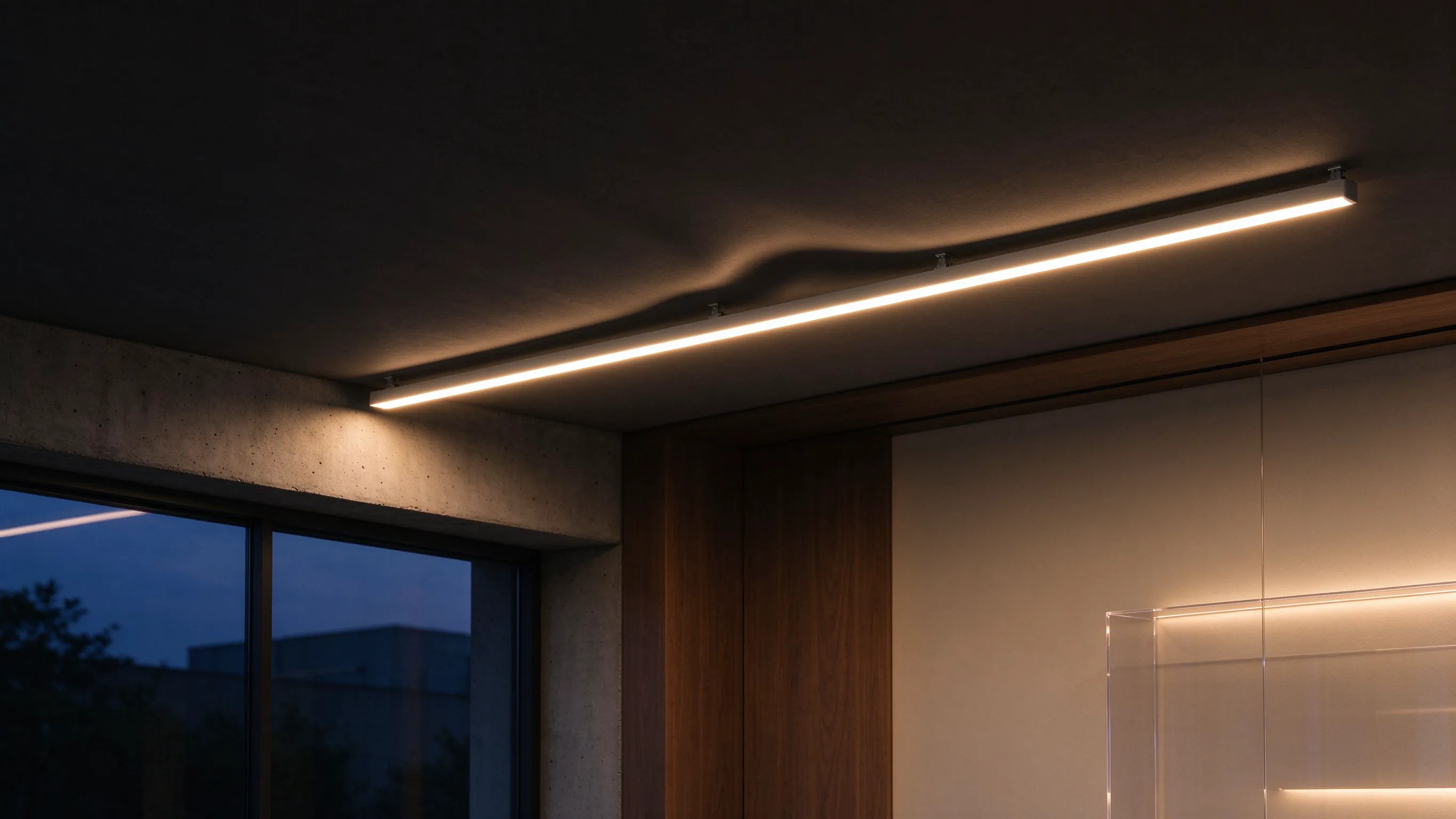
The wave that shows up a week after install
Clients describe it as a soft sag, not a dramatic droop. The flex sits proud of the wall at each clip and bows down 5 to 15 mm in the middle of each gap, like a string held up at two points. On a 6 metre straight run across a shopfront, the eye catches the wave in daylight and it looks cheap, even though the glow itself is even.
This is purely a mechanical issue. The flex is fine, the driver is fine, and the voltage is fine. The tube weighs 80 to 150 grams per metre depending on cross-section, and over a long gap that weight is enough to deflect the silicone jacket. Gravity does not care how good the LEDs are.
Why heavy flex needs a tighter clip rhythm
Small 5 by 8 mm mini flex weighs about 60 grams per metre and will hold straight at 250 mm spacing. A 12 by 12 mm anti-glare flex weighs closer to 140 grams per metre, and an RGBW pixel flex with a denser PCB can hit 160 grams. Double the weight and the sag between two clips increases by roughly eight times, because sag scales with the fourth power of the gap.
What actually sets the sag
- Weight per metre of the flex jacket and inner copper PCB.
- Gap between clips; halve the gap and sag drops to about one sixteenth.
- Orientation: vertical runs sag nothing, horizontal runs sag the most.
- Temperature: hot silicone is softer and sags more on a summer afternoon.
The spacing I use on long straight runs
I stop eyeballing clip positions and measure them. On a long horizontal run I lay out a string line on the wall first, mark every clip centre with a pencil, and only then drill. That alone removes the lumpy install look. The spacing depends on the flex cross-section and the orientation of the run.
- 5 by 8 mm mini flex on a horizontal run: 250 mm maximum spacing.
- 10 by 10 or 12 by 12 mm flex: 150 to 200 mm spacing, never beyond 200 mm.
- RGBW or pixel flex over 12 mm wide: 150 mm spacing on horizontal, 250 mm on vertical.
- Within 50 mm of every end cap and within 30 mm of every corner or bend.
Cross-section versus run length
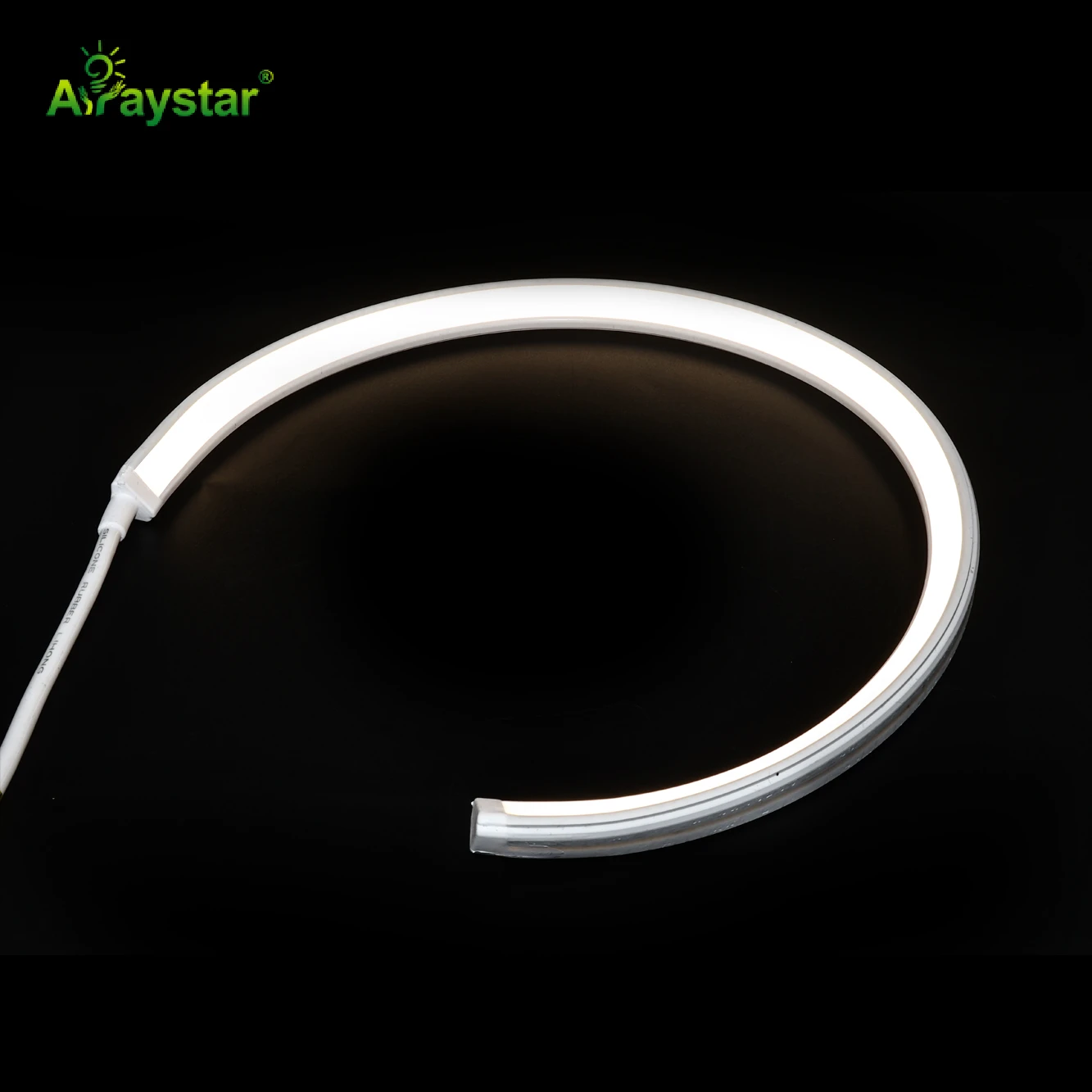
If your sag is bad despite tight clips, the flex itself may be too light for the run. A narrow 6 by 12 mm pixel strip is stiff along its length but thin across, so it twists in the gaps. A fatter 12 by 12 mm tube is self-supporting over the same gap. Pick the flex by the run, not just by the beam angle.
Fat, heavy flex is self-supporting; thin pixel flex wants closer clips.
| Flex size | Weight per metre | Max clip gap (horizontal) | Sag risk at 300 mm |
|---|---|---|---|
| 6 x 12 mm RGB | ~90 g | 200 mm | High, twists |
| 12 x 12 mm RGBW | ~140 g | 150-200 mm | Moderate |
| 1213 160 degree beam | ~120 g | 180 mm | Low |
| 5 x 8 mm mini | ~60 g | 250 mm | Low |
Supporting corners and end feeds
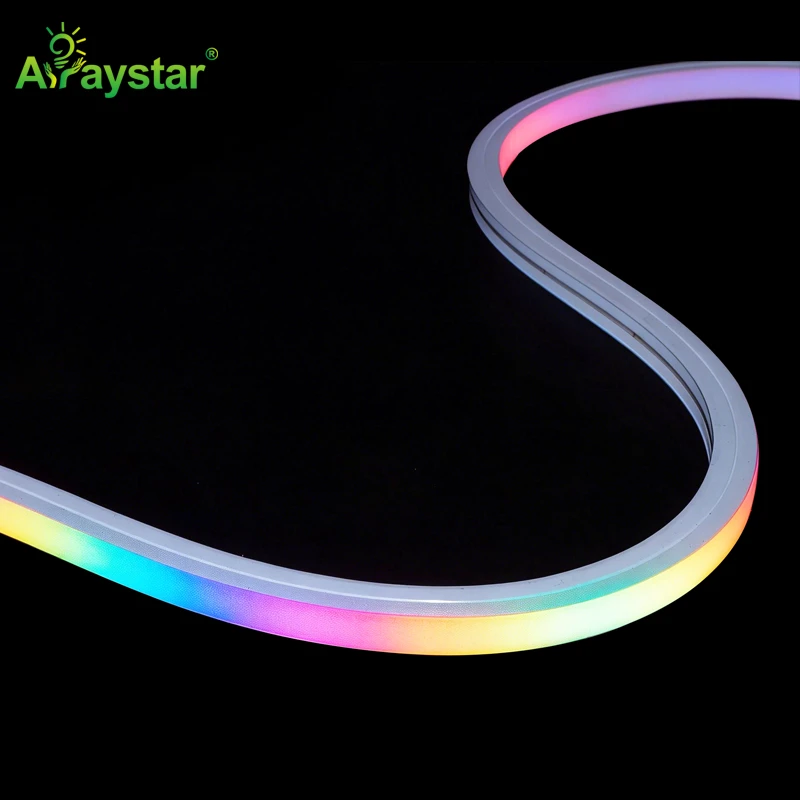
The corners of a long run are where sag starts. At a 90 degree corner the flex changes direction and the weight of the next horizontal run pulls on the corner joint. I always add a clip within 30 mm of the corner on both arms, and I avoid a solder joint directly at the corner where possible; solder joints are rigid and stress-concentrating.
- Add a clip within 30 mm of every corner on both arms, not just one side.
- Support the feed end cap with a saddle so the driver cable does not hang off the flex.
- On runs over 5 metres, add a centre support hanger from the ceiling or wall.
- Check the sag at dusk the first night; silicone relaxes and settles over 48 hours.
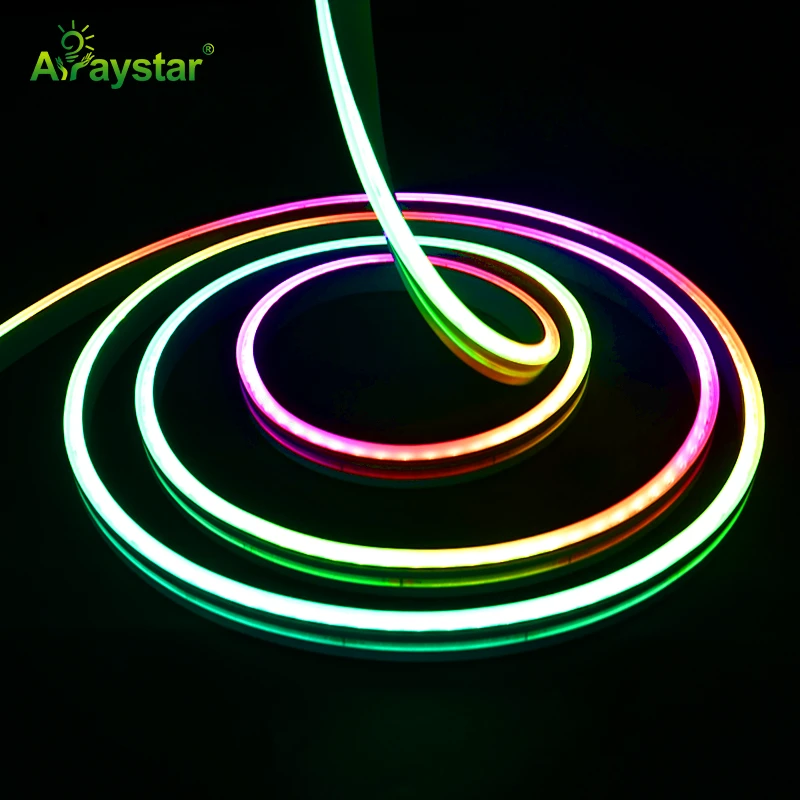
Recommended Products
Frequently Asked Questions
Can I just use stronger adhesive instead of closer clips?
No, because the sag happens between the fixing points, not at them. Adhesive fixes the flex to the wall at one point; the span between two glued points still sags under the weight. Clips are discrete fixings and the gap between them sets the sag. Tape or glue does not solve that.
How much sag is actually acceptable?
Under 5 mm over a 200 mm gap is invisible from two metres away. Above 10 mm over the same gap the eye catches it on a straight wall. If you can see a wave in daylight from across the room, tighten the clip rhythm. On a feature wall, clients notice sag immediately.
Does vertical neon flex sag between clips?
Almost none. Vertical runs are held by every clip along their length, and gravity pulls the flex straight down rather than sideways. You can space vertical clips at 300 to 400 mm on a 12 by 12 mm flex and still look clean. Horizontal runs are where the spacing matters.
Should I add a centre support on a 6 metre straight run?
Yes. Even at 150 mm clip spacing, a 6 metre horizontal run will relax over the first summer and may show a soft droop at the middle. Add one or two stand-off brackets from the ceiling or wall at the midpoint, and let the flex slide through them so thermal movement is not locked.
Does summer heat make sag worse?
Yes. Silicone softens as it warms, and a black flex on a sun-facing wall can run 15 to 20 degrees above ambient. A run that looks taut at 15 C in April may sag 5 mm more at 35 C in July. I plan clip spacing for the hottest day the sign will see, not the install day.
Need help with your LED project?
Get factory-direct pricing, free samples and engineering support within 24 hours.
Email: info@arraystarled.com | Phone: +86-0755-2103-6746 | WhatsApp: 0086 1581 8514 077
Need to size your power supply? Use our LED Strip Power Calculator to find the right driver in seconds.